Walk into any hatchery catalog and you will find hundreds of breeds, colors and crosses. The good news is that nearly all of them fall into a handful of practical groups, and knowing those groups tells you most of what you need to know about how a bird will lay, grow, forage and behave.
This guide walks through the main types of chickens, what each is good for, and which ones earn their keep on pasture. Use it as a map, then follow the links to individual breed guides when you are ready to narrow down.
Quick answer: The main types of chickens are egg layers (Leghorns, sex-link hybrids), dual-purpose breeds (Plymouth Rock, Orpington, Australorp, Wyandotte), meat birds (Cornish Cross and slower heritage broilers), bantams (miniature chickens) and ornamentals. For pasture-based systems, dual-purpose heritage breeds and active layer types generally forage best, while fast-growing meat hybrids need careful management on grass.
Why the type of chicken matters more than the breed name
Breeds are bundles of traits that people selected over generations. Some lines were pushed toward egg numbers, some toward fast muscle growth, some toward cold hardiness or looks. Those priorities shaped how a bird uses feed, how active it is, how it handles weather and how it behaves around people and predators.
For a regenerative operation, the questions that matter are practical ones. Will this bird walk out and eat grass, bugs and seeds, or will it stand at the feeder? Can it handle your climate? Will it fit your moves, your fencing and your market? Choosing the right group first saves you from buying a flock that fights your system.
The main groups at a glance
| Group | Typical purpose | Typical laying (hens) | Foraging ability | Pasture fit |
|---|---|---|---|---|
| Egg layers | Maximum eggs, light body | Roughly 250-320 eggs a year in good conditions | Often excellent in active lines | Strong, with good fencing and predator protection |
| Dual-purpose | Eggs and a usable carcass | Roughly 150-250 eggs a year | Good to very good | Strong, the usual choice for diversified farms |
| Meat birds | Fast, efficient carcass growth | Not kept for eggs | Varies: low in hybrids, better in slow-growing types | Workable with daily moves and heat management |
| Bantams | Small size, pets, broody mothers | Small eggs, often fewer | Good, but vulnerable to predators | Niche; best for small spaces |
| Ornamentals | Looks, shows, hobby breeding | Varies widely, often low | Varies | Mixed; some are fragile |
Egg numbers vary with age, season, feed, genetics and stress. Treat the figures above as typical ranges, not promises.
Egg layers: built for production
Egg-type chickens are lightly built birds that convert feed into eggs efficiently and mature early, often starting to lay around 16-22 weeks. They tend to be lean, active and nervous, which is a mixed blessing: they range widely and forage hard, but they can be flighty and harder to handle.
Heritage egg breeds
The classic example is the Leghorn, a white-egg specialist known for stamina and foraging drive. Our guide to the Leghorn hen covers laying and pasture behavior in more detail. Other lightweight Mediterranean-type breeds follow the same pattern: high output, small body, active temperament.
Hybrid layers
Many commercial and backyard flocks run on hybrid crosses, often sold as sex-links, where chick sex can be told by color at hatch. These crosses typically start laying early and lay heavily, with brown eggs common. A side-by-side look at Golden Comet chickens and their relatives will help if production is your priority.
The trade-off with hybrids is longevity and breeding. They often burn hot in their first one to two years, then decline faster than heritage lines, and their offspring do not breed true. If you want to raise your own replacements, hybrids are the wrong tool.
Colored-egg layers
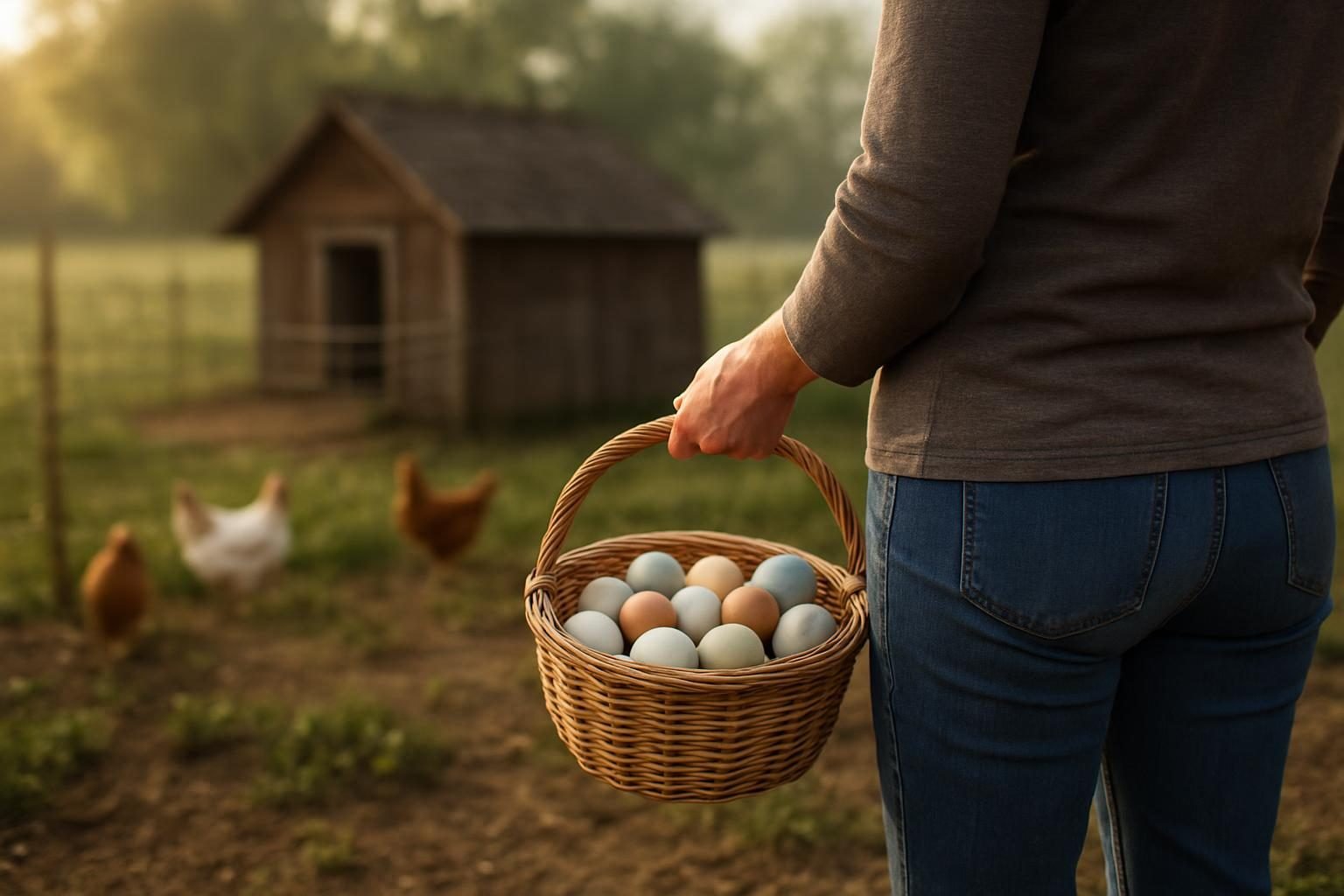
Blue, green and olive eggs sell well at farmers markets and delight kids. These birds are usually mixed or specialty lines, so quality varies. Our upcoming comparison of the Easter Egger chicken and its relatives explains what you are actually buying.
Dual-purpose breeds: the workhorses of diversified farms
Dual-purpose chickens are heavier than egg specialists, lay a respectable number of eggs, and produce a carcass worth eating when hens are retired or cockerels are raised out. They are generally calmer, hardier in cold and more willing to go broody.
Common examples include Plymouth Rock (often seen as the Barred Rock), Rhode Island Red, Buff Orpington, Wyandotte, Sussex and Australorp. Each has its own personality. The Barred Rock hens comparison against Orpingtons and Rhode Island Reds is a good starting point if you are choosing a first flock.
Individual breeds worth knowing:
- Australorp: Black, calm and a strong layer; see the Australorp hen guide for temperament and cold hardiness.
- Wyandotte: Rounded, cold-tolerant and attractive, available in laced, golden and silver patterns; details in the Wyandotte chick guide.
- Sussex: Friendly, curious and good foragers; read more about the Speckled Sussex chicken.
- Brahma and Cochin: Big, feathered-footed and gentle, suited to cold climates; see the Brahma hen comparison.
- Jersey Giant: Slow-growing and large, best if you accept long timelines; see the Jersey Giant hen guide.
- Maran: Known for dark brown eggs, though marketing often outruns reality; the Black Copper Maran hen article sorts fact from hype.
For most small regenerative farms, a dual-purpose flock is the safest bet. You get eggs, you can raise replacement chicks under a broody hen, and surplus birds have real value on the table.

Meat birds: fast hybrids and slower alternatives
Meat chickens fall into two camps, and the difference matters enormously on pasture.
Cornish Cross and other fast-growing hybrids
The standard commercial broiler is a Cornish-Rock cross, bred to reach processing weight in roughly 6-9 weeks. Growth that fast comes with costs: these birds are prone to leg problems, heart and heat stress, and they are poor, lazy foragers compared with other chickens. They can absolutely be raised on pasture, and many farms do, but expect daily moves, shade, clean water, careful feed management and attention to hot weather.
The payoff is efficiency and a familiar product. If you sell direct and need predictable carcass size, a Cornish Cross on well-managed pasture works. Our guide to chicken tractors shows one proven way to move broilers onto fresh grass every day.
Slow-growing and heritage meat types
Slower-growing broiler lines and heritage dual-purpose crosses take roughly 10-16 weeks or longer to finish. They forage more, handle heat better and develop firmer, more flavorful meat, but they cost more in feed and time and yield a smaller breast. Whether the premium is worth it depends on your market. Check whether local customers will pay for the difference before committing.
Bantams: small birds with a place
Bantams are miniature chickens, about a quarter to a third the weight of standard birds. Some are true bantams with no large counterpart, while others are scaled-down versions of standard breeds. They lay small eggs, eat less and fit in tight spaces, which makes them popular with urban and suburban keepers.
They also make excellent broody mothers, and a few bantam hens can hatch and raise chicks for a standard flock. The downside is vulnerability: their size makes them easy prey for hawks, and they are more likely to roost in trees if you let them. The bantam hen guide covers whether they suit a small yard, and the Silkie bantam chickens article covers the fluffy, famously broody breed that many people start with.
For commercial production, bantams rarely pencil out. For a homestead where feed cost, space and charm matter more than egg size, they have a role.
Ornamentals and exhibition breeds
Some chickens were developed primarily for appearance: crests, feathered feet, unusual plumage, dramatic tails. Many ornamental breeds lay modestly or seasonally, and some have traits that complicate pasture life, such as crests that block vision or feathering that holds mud.
That does not make them bad birds; they are valuable for hobbyists, breeders and educators. Just be honest about whether they fit a working system. If you are drawn to unusual looks, our guide to black chicken breeds shows how striking birds can still be practical.
Which chickens suit pasture-based systems?
Pasture changes the equation. A bird that does fine in a barn may struggle outdoors, and a bird that thrives on grass may look unremarkable in a catalog. When you evaluate a type for pasture, weigh these traits:
- Foraging drive: Active birds eat more greens, insects and seeds, which can trim feed bills and improve yolk color and nutrition.
- Hardiness: Look for birds that handle your region’s heat, cold, humidity or wind.
- Predator awareness: Alert, athletic birds survive better than heavy, docile ones.
- Temperament: Calm birds handle moves and handling well, but overly docile birds can be slow to escape danger.
- Roosting and broodiness: Decide whether you want hens that hatch their own chicks.
In general, active heritage layers and dual-purpose breeds are the most pasture-friendly, while heavy ornamental breeds and fast-growing broilers need the most management. Our dedicated guide to the best chicken breeds for pasture goes deeper on specific recommendations.
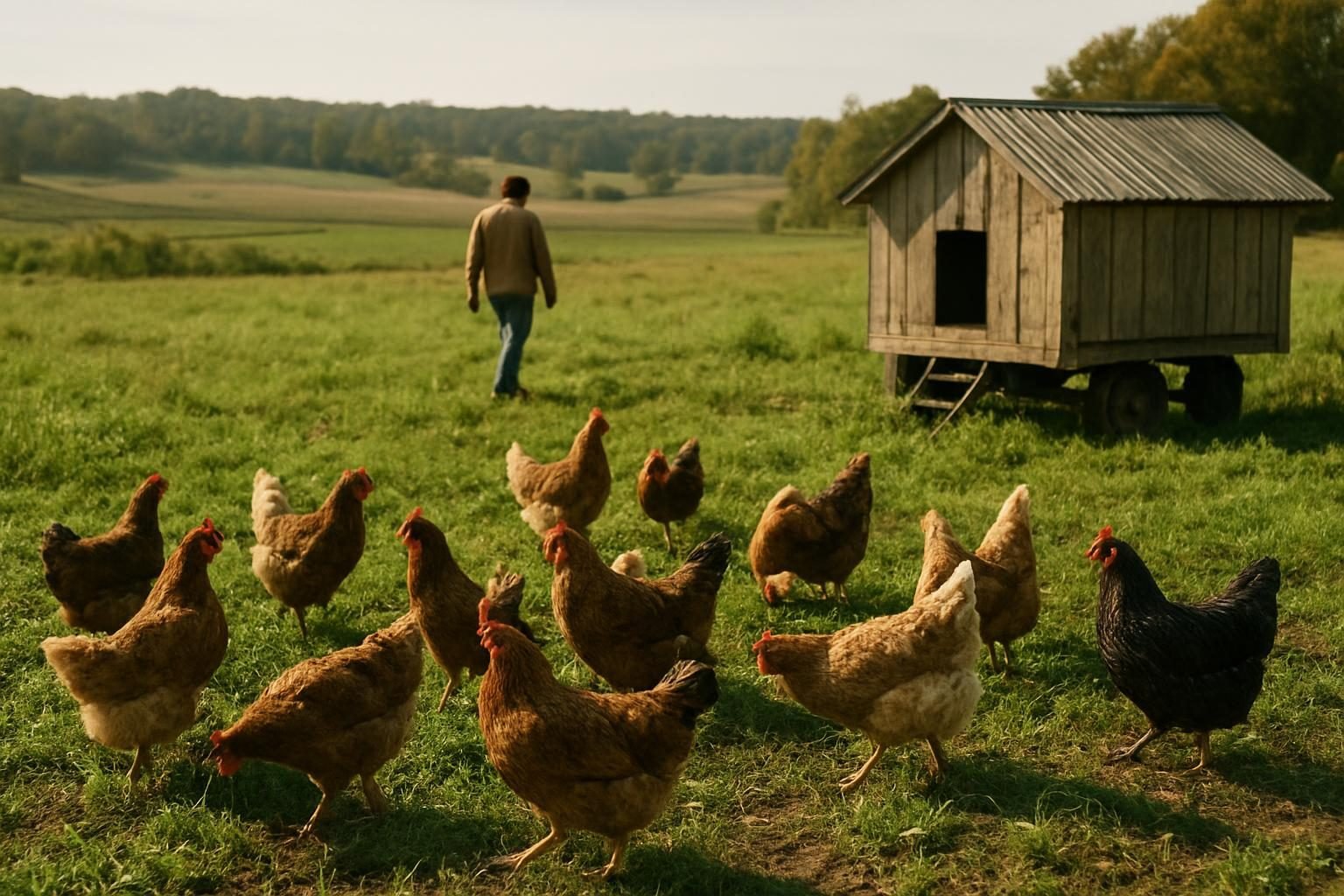
Housing style matters as much as breed. Mobile systems such as a chicken wagon or eggmobile let layers follow cattle or sheep, scratching through manure and cutting fly pressure, which fits neatly with rotational grazing. If you plan to move birds regularly, favor breeds that are alert, active and not too heavy to herd back to the coop at night.
Regional considerations
In the humid East and South, heat and parasite pressure favor lighter, more active birds with good feathering for airflow. In the northern tier and Mountain West, cold-hardy breeds with small combs and dense feathering do better. In arid regions, shade and water access matter more than breed, and rangy foragers need enough cover to feel safe. Talk to your state extension service and local keepers to see what actually performs in your area.
Matching the type to your goals
Start with the question you actually need answered, not the breed you like best.
- Eggs for your family or farm stand: Dual-purpose heritage breeds or a mix of heritage and a few hybrids.
- High-volume egg sales: Hybrid layers or Leghorn-type birds, with a plan to replace hens every one to two years.
- Meat for the freezer or market: Cornish Cross if you want speed, slow-growing crosses if you want foraging and flavor.
- Self-sustaining flock: Dual-purpose heritage breeds that go broody and breed true.
- Small space or kids: Calm standards or bantams in a secure run.
If you are weighing whether to keep a rooster for breeding and flock protection, the upcoming guide on tractor supply roosters and flock management covers the pros and cons.
Getting started: a short beginner roadmap
- Define your goal. Eggs, meat, both, or pets? Write down how many eggs a week or birds a year you actually want.
- Check local rules. Zoning, flock-size limits and rooster restrictions vary by city and county. Confirm with your local government.
- Pick a group, then a breed. Use the table above, then read an individual breed guide.
- Plan housing and fencing first. Review our guides to the chicken coop buyer’s guide and chicken pens and runs, and consider a DIY chicken coop if you build your own.
- Decide chicks versus pullets. Chicks are cheaper but need brooding; pullets cost more and arrive nearer to laying. See buying pullets vs chicks.
- Prepare for arrival. Read about chick days and brooding baby chicks before you order.
- Plan feed and winter. Our chicken feed guide and winter chicken care article will keep the flock productive through the year.
Common mistakes when choosing chickens
- Buying on looks alone. A beautiful bird that lays poorly or struggles in your climate becomes an expensive hobby.
- Ignoring predators. Foraging birds are only productive if they survive. Budget for fencing, a secure coop and, where appropriate, electric netting.
- Underestimating feed. Pasture reduces feed needs but rarely eliminates them. See our notes on poultry feed costs, forage and bulk buying.
- Mixing incompatible birds. Heavy, gentle breeds can get bullied by lighter, flightier ones.
- Expecting hybrids to breed true. If self-reliance matters, choose heritage lines.
How chickens fit a regenerative system
Chickens are one of the fastest ways to add a livestock layer to a small farm. They scratch, spread and fertilize, eat pests and fly larvae, and turn waste into protein. Followed behind ruminants, laying hens in a mobile coop can help break parasite cycles and spread manure more evenly. Their manure is rich in nitrogen and, handled properly, becomes a valuable input; see our guide to composting chicken manure for safe use.
On very small properties, chickens are a natural fit for small-scale regenerative farming, feeding into the broader goal of building soil health. Birds are not a silver bullet, though. Overstocking, leaving birds too long in one spot or ignoring manure loads can cause bare ground and nutrient hot spots rather than healing.
Key takeaways
- Chickens fall into five practical groups: egg layers, dual-purpose, meat birds, bantams and ornamentals.
- Dual-purpose heritage breeds are the safest all-round choice for diversified, pasture-based farms.
- Hybrid layers lay heavily but decline sooner and do not breed true.
- Fast-growing meat hybrids can go on pasture but need daily moves and heat management; slower types forage better at higher cost.
- Match the type to your goal, climate and housing before you pick a breed.
- Fencing, predator protection and a realistic feed plan matter as much as genetics.
Explore more in our Grazing & Livestock section, where we cover everything from chickens to cattle, sheep and goats.
Frequently asked questions
What are the main types of chickens?
Most chickens fall into five groups: egg layers, dual-purpose breeds, meat birds, bantams and ornamentals. Egg layers are light and productive, dual-purpose birds balance eggs and meat, meat birds are bred for fast growth, bantams are miniature, and ornamentals are kept mainly for appearance.
Which type of chicken is best for pasture?
Active dual-purpose heritage breeds and lightweight egg layers generally forage best and handle outdoor life well. Fast-growing meat hybrids can be raised on pasture but need daily moves, shade and careful feed management, while heavy or highly ornamental breeds often need extra protection.
What is the difference between dual-purpose and egg-laying chickens?
Egg layers are lighter, mature earlier and lay more eggs per year, but have little meat value. Dual-purpose breeds are heavier, lay somewhat fewer eggs, and yield a better carcass, which makes them more flexible for farms that want both products.
Are bantam chickens worth keeping?
Bantams suit small spaces, children and keepers who value personality and broody mothering over egg size. They lay small eggs and are more vulnerable to predators, so they rarely make sense for commercial production but can work well on a homestead.
How many eggs does a hen lay per year?
It depends on the type. Heavy egg-laying breeds and hybrids may lay roughly 250-320 eggs in their first year, dual-purpose hens often lay about 150-250, and ornamentals or bantams may lay less. Production usually declines each year and drops in winter without added light.