Chicken feed is the biggest ongoing cost of any flock, and the most common place new keepers go wrong. The right ration changes as birds age and as their job changes, from growing a frame to laying an egg a day. This guide walks through each stage, how much pasture can honestly replace, and how to store and feed without waste.
Quick answer: Feed a 18-20% protein starter for the first 6-8 weeks, a 14-16% grower until about 18-20 weeks, then a 16-18% layer feed with free-choice oyster shell once hens start laying. Pasture and kitchen scraps typically replace only a modest share of the ration (often 10-30%), so a balanced commercial or custom feed stays the foundation.
Chicken feed by age and purpose
Chickens are not small cattle. They are monogastric birds with no rumen, so they cannot turn grass into complete nutrition the way ruminants do. They need specific amino acids, vitamins and minerals in a concentrated, balanced form. That is why feed is sold by life stage, and why feeding the wrong one causes real problems.
| Stage | Typical age | Protein (typical range) | Notes |
|---|---|---|---|
| Starter | Hatch to 6-8 weeks | 18-22% | Fine crumble; medicated or non-medicated |
| Grower / developer | 6-8 weeks to 18-20 weeks | 14-16% | Slows early laying so frames develop first |
| Layer | First egg onward | 16-18% | Contains 3.5-4.5% calcium for shells |
| All-flock / flock raiser | Mixed ages | 16-20% | Lower calcium; offer oyster shell on the side |
| Broiler (meat bird) | Hatch to processing | 20-23% early, 18-20% later | Fast growth; not for long-lived layers |
Always check the tag on the bag. Protein, calcium and any medication are listed there, and formulations vary by mill and region.
Starter feed for chicks
Chicks need a high-protein crumble from day one, with clean water always available. Medicated starter contains amprolium, which helps chicks build immunity to coccidiosis. Whether to use it is a judgment call: vaccinated chicks should not get medicated feed, and many small flocks raised on clean, dry ground do fine without it. Ask your hatchery or local extension office what makes sense for your climate and housing. Our guide to brooding baby chicks covers brooder setup, heat and the first six weeks, and the chick days planning guide helps you prepare before they arrive.
Grower feed for pullets
From roughly 6-8 weeks, switch to a lower-protein grower or developer. The goal is steady skeletal and organ development without pushing pullets into lay too early. Starting layers on high-calcium feed too soon is hard on young kidneys, so hold off on layer ration until the first eggs appear or the birds are around 18-20 weeks. If you buy started birds instead of chicks, ask what they were fed; our comparison of buying pullets versus chicks explains the trade-offs.
Layer feed
Layer feed at 16-18% protein, with added calcium, supports daily egg production. Laying hens use a lot of calcium, and the shell is mostly calcium carbonate. A complete layer ration is formulated so that hens eating it as their main diet get what they need.
Calcium and grit for layers
Calcium and grit are two different things and they do two different jobs. Mixing them up is a frequent mistake.
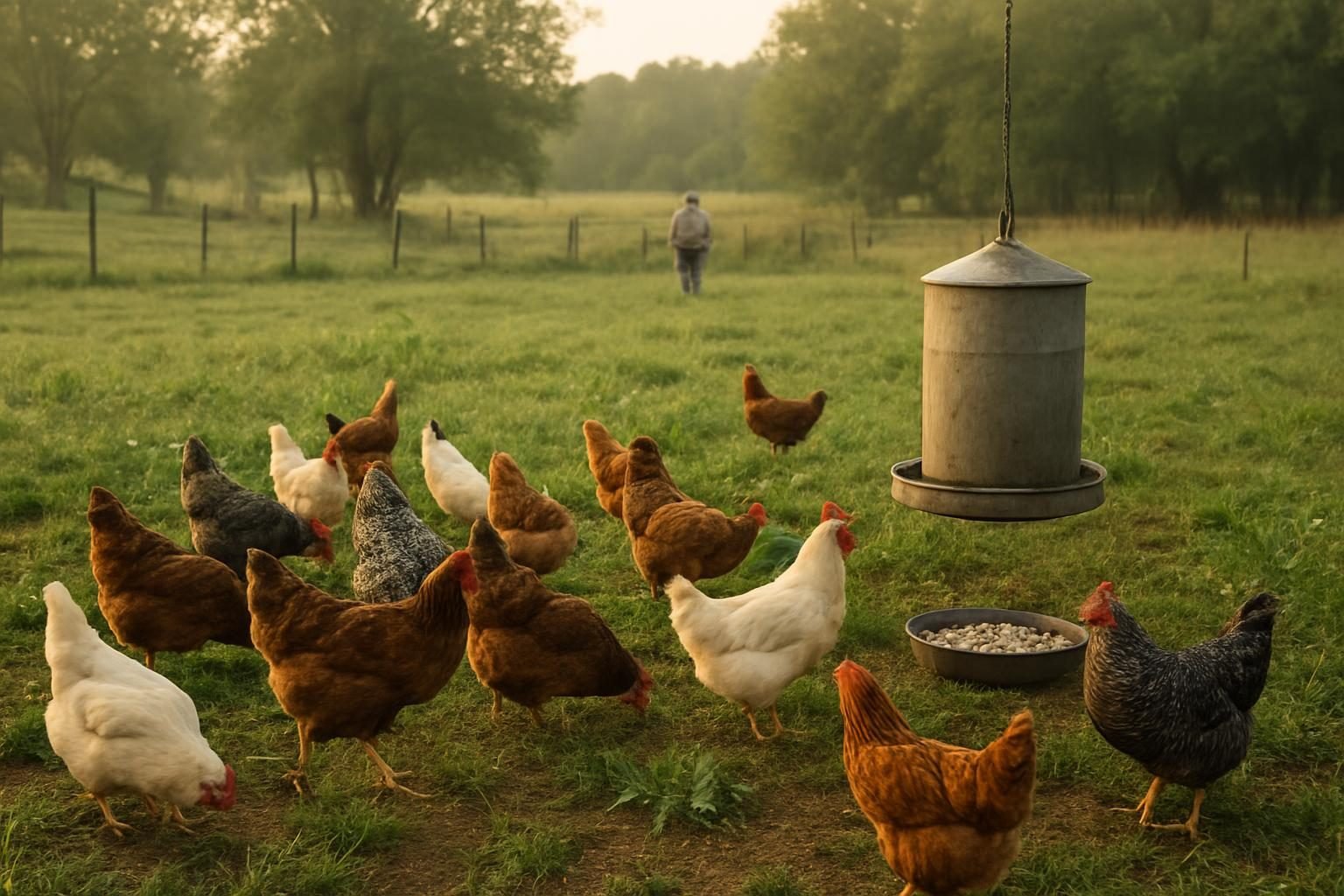
- Oyster shell (calcium): Offer it free-choice in a separate dish. Hens regulate their own intake, and a hen making shells will eat more. Non-laying birds usually ignore it.
- Grit (insoluble stone): Small stones lodge in the gizzard and grind whole grains, seeds and fibrous forage. Birds on pasture pick up natural grit; birds on pure crumble or pellet in a bare run may benefit from a small dish of granite or flint grit.
Do not feed oyster shell to chicks or young pullets, and do not rely on grit as a calcium source. If shells turn thin or soft, check the ration first, then rule out stress, heat, age, and illness. Persistent problems are worth a call to a vet or your extension poultry specialist.
How much forage can replace commercial chicken feed?
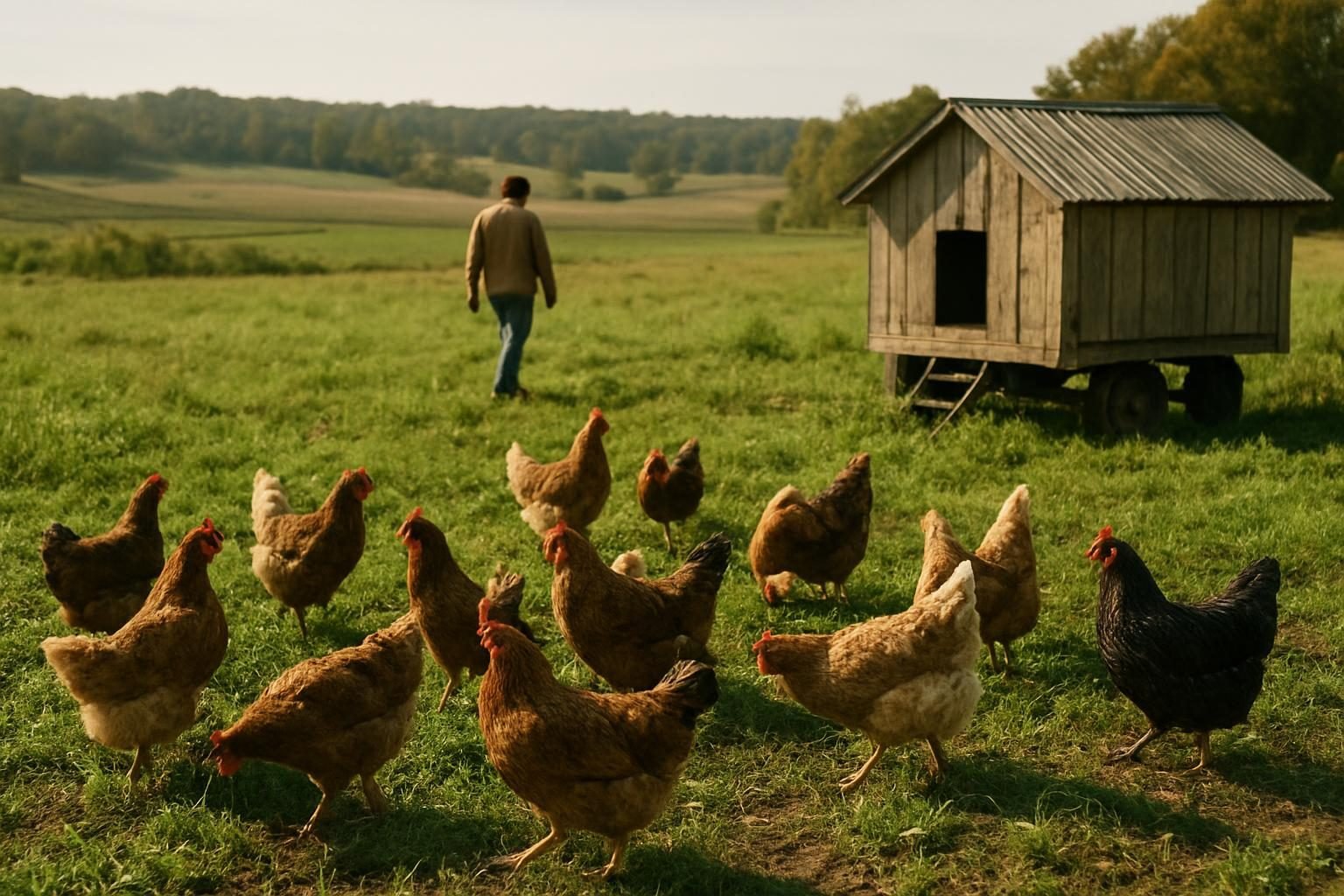
Pasture is wonderful for birds and for the land, but it supplements feed rather than replacing it. Hens on good, diverse pasture eat insects, seeds, clover, greens and the occasional worm, which improves yolk color and cuts feed intake somewhat. Typical savings are modest and vary widely with season, stocking density, forage quality and breed.
Consider these realities:
- Protein and amino acids: Grass is low in methionine and lysine, which laying hens need. Insects help, but not reliably, especially in winter or drought.
- Season: In the humid East and South, forage may be abundant much of the year. In the arid West or under deep snow, there may be almost nothing to eat for months.
- Stocking density: Too many birds on one patch will strip it to dirt within weeks. Rotate frequently. A chicken tractor or a movable pen makes this practical, and well-sized pens and runs protect birds while they forage.
- Breed: Active foragers do better on range than heavy, docile birds. See our list of the best chicken breeds for pasture.
A reasonable planning assumption is that forage trims the feed bill by a modest percentage, not most of it. Treat any gains as a bonus, and keep a full feeder available so production and body condition never depend on the weather. For ways to stretch the budget further, see our upcoming piece on cutting poultry feed costs with forage, fermenting and bulk buying.
Pasture quality starts below ground. Healthy sod grows more diverse plants and hosts more insects, which is one more reason to invest in soil health. Birds also fit well into a larger grazing plan, following ruminants to scatter manure and break parasite cycles, as described in our guide to multi-species grazing.
Safe extras and what to skip
- Good extras: Garden surplus, leafy greens, squash, mealworms and sprouted grains in moderation.
- Limit: Scratch grains and treats. Keep these to roughly 10% of intake so they do not dilute the balanced ration.
- Avoid: Moldy food, avocado pits and skins, raw or dried beans, chocolate, salty processed foods, and anything spoiled.
Storing chicken feed so it stays good
Feed is perishable. Fats go rancid, vitamins degrade, and moisture invites mold, including mycotoxins that can sicken birds. Rodents also turn a feed room into a liability.
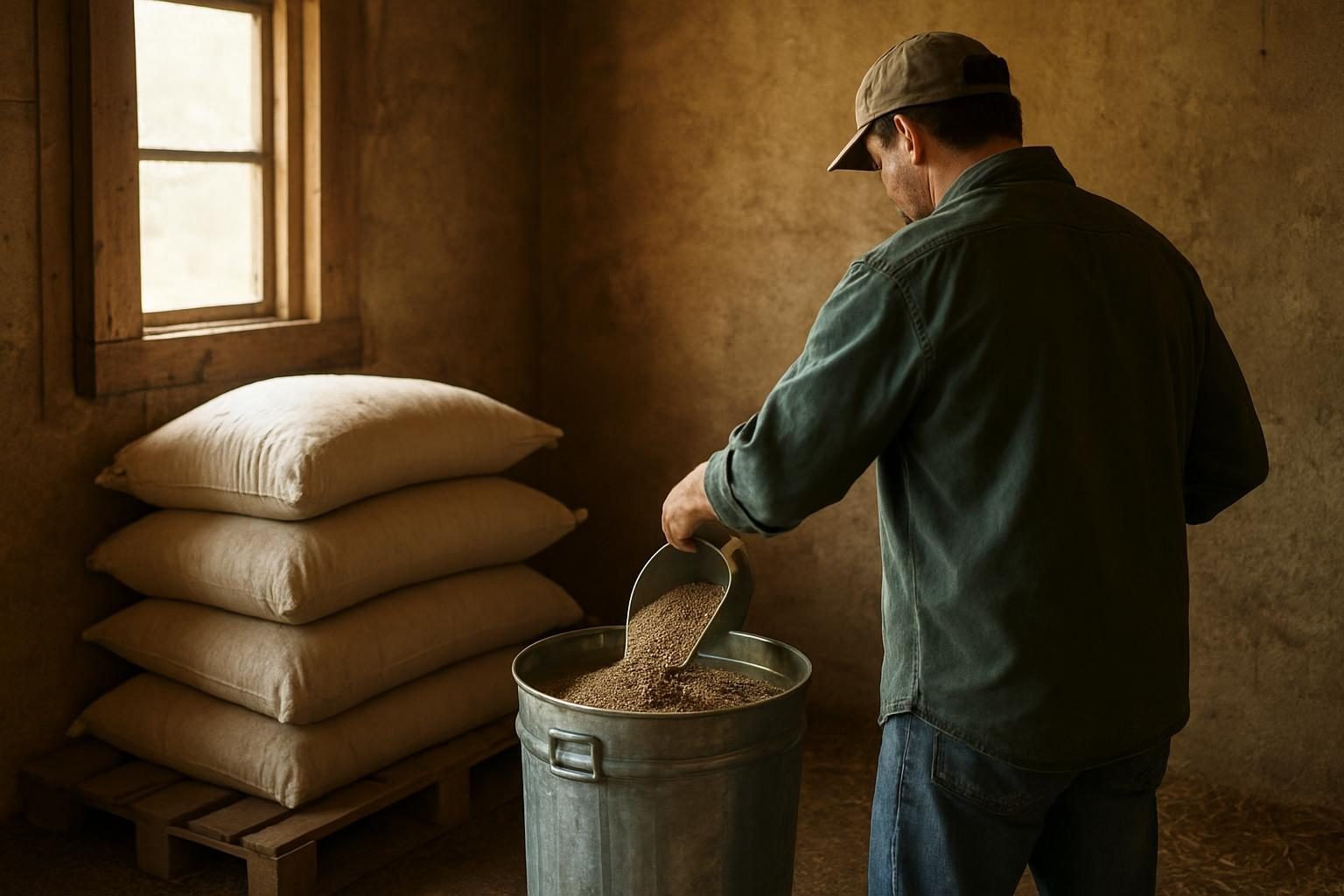
- Use metal or heavy plastic containers with tight lids. Galvanized cans with locking lids stop rats and mice.
- Keep it cool, dry and off the floor. Pallets or shelves prevent moisture wicking from concrete.
- Buy what you will use in about 4-6 weeks in warm, humid climates. Cooler, drier regions can often store longer.
- Check the mill date on the tag, and rotate stock first in, first out.
- Inspect before feeding. Discard anything musty, clumped or sour-smelling.
- Clean feeders regularly so old, damp feed does not build up in corners.
Bulk buying saves money only if you can store it properly. Spoiled feed is never a bargain.
Common chicken feeding mistakes
- Feeding layer feed to chicks or growing pullets. Excess calcium can damage kidneys and cause long-term harm.
- Over-treating. Too much scratch, bread or kitchen waste lowers protein intake and can leave hens fat and laying poorly.
- Skipping oyster shell for layers on mixed or all-flock feed, and then wondering about weak shells.
- Letting feed get wet. Rain-soaked feeders grow mold fast.
- Ignoring water. A hen needs a steady supply; restricted water cuts egg production quickly. In cold climates, see our notes on keeping chickens in winter, including water and feed adjustments.
- Assuming free-range means free food. Foraging supplements, but does not replace, a complete ration.
- Not watching intake. Sudden drops can signal illness, heat stress or a predator problem. Birds eat more in cold weather and less in extreme heat.
- Mixing flocks without a plan. Roosters, layers and young birds have different needs. If you keep roosters, our upcoming guide on whether you need a rooster will help you weigh flock management options, and an all-flock feed with free-choice oyster shell is a common solution for mixed groups.
Medicated, organic and soy-free options
Feed labels carry plenty of marketing. A few practical points:
- Organic feed must meet USDA National Organic Program standards and costs more. If you sell eggs as organic, confirm certification requirements with the USDA or your certifier.
- Soy-free, corn-free and non-GMO rations are available from some mills, usually at a premium. They can be a fit for customer preferences, but balanced amino acids still matter most.
- Local mills and custom mixes may beat retail pricing and offer fresher feed. Ask what formulations they use and whether they can supply a nutritionist-reviewed recipe. Home-mixed rations are tricky; get help from extension before experimenting.
If you run poultry as an income stream, feed is a major line item. Track it carefully, and if you need capital for equipment or storage, our upcoming guide to ag loans explains your options. Mobile housing also helps manage range, so keep an eye out for our piece on the chicken wagon, and our chicken coop buyer’s guide covers fixed housing. For fencing birds in, see our coming comparison of poultry wire options.
Key takeaways
- Match feed to age: starter, grower, then layer, with a switch around first eggs or 18-20 weeks.
- Layers need calcium; offer oyster shell free-choice and grit when birds lack access to natural stones.
- Pasture improves bird health and cuts feed use somewhat, but it does not replace a balanced ration.
- Keep treats to about 10% of the diet.
- Store feed cool, dry, rodent-proof and fresh, and buy only what you will use in a few weeks.
- Ask your extension poultry specialist or vet about local conditions, disease pressure and medication choices.
For more on managing livestock and forage together, browse the full Grazing & Livestock section.
Frequently asked questions
What is the best chicken feed for backyard laying hens?
A complete layer feed at 16-18% protein with added calcium is the standard choice for hens in lay. Pair it with a separate dish of oyster shell and clean water. For mixed flocks with roosters or young birds, an all-flock feed plus free-choice oyster shell is often easier.
Can chickens live on pasture alone?
No. Pasture, insects and scraps help, but grass lacks enough protein and key amino acids for productive hens, and winter or drought can remove forage entirely. Treat forage as a supplement and keep a balanced ration available at all times.
When do I switch from starter to layer feed?
Move from starter to grower around 6-8 weeks, then to layer feed at the first egg or about 18-20 weeks. Switching too early gives young birds more calcium than their bodies can handle. Different chicken breeds may reach laying age at slightly different rates.
Do chickens need grit?
Birds eating whole grains, seeds or coarse forage need insoluble grit to grind food in the gizzard. Free-ranging birds usually find enough natural stones. Birds confined to a bare run or fed whole grains often benefit from a small dish of grit. Pelleted or crumbled complete feed needs less.
How long does chicken feed last?
Fresh commercial feed is usually best used within about 4-6 weeks in warm, humid weather, and can last longer in cool, dry storage. Check the mill date, keep it in a sealed container, and throw out anything musty, wet or rancid-smelling.