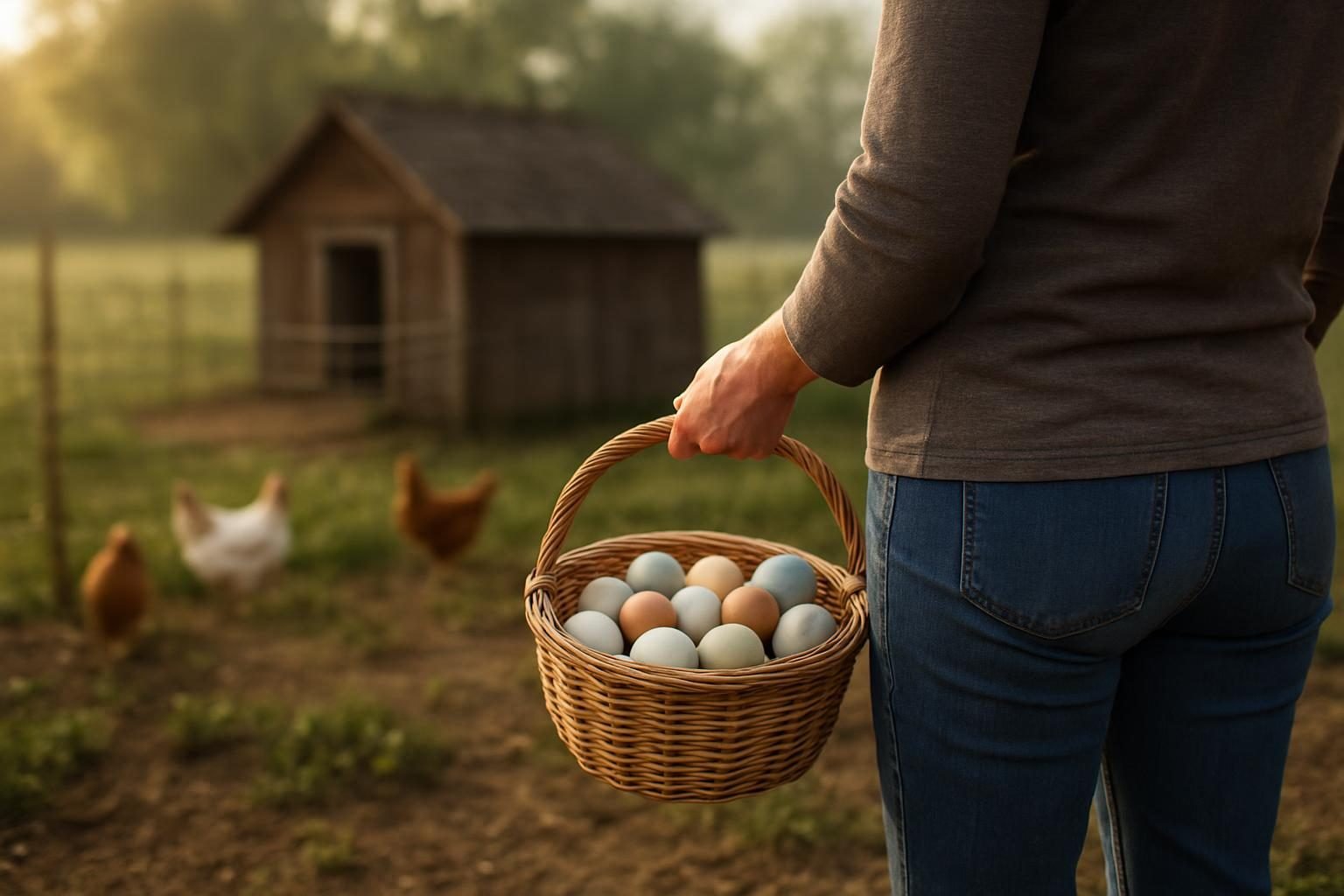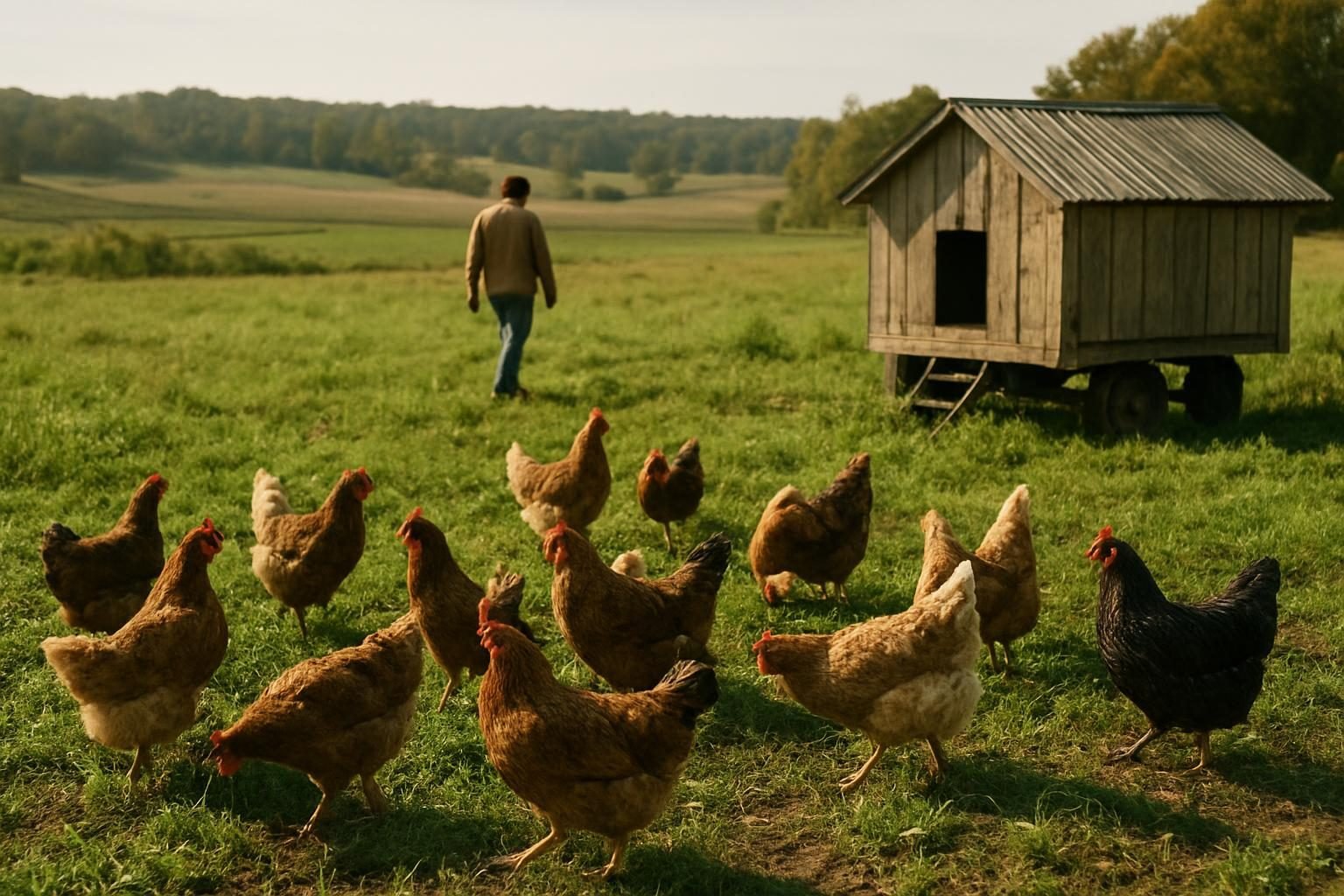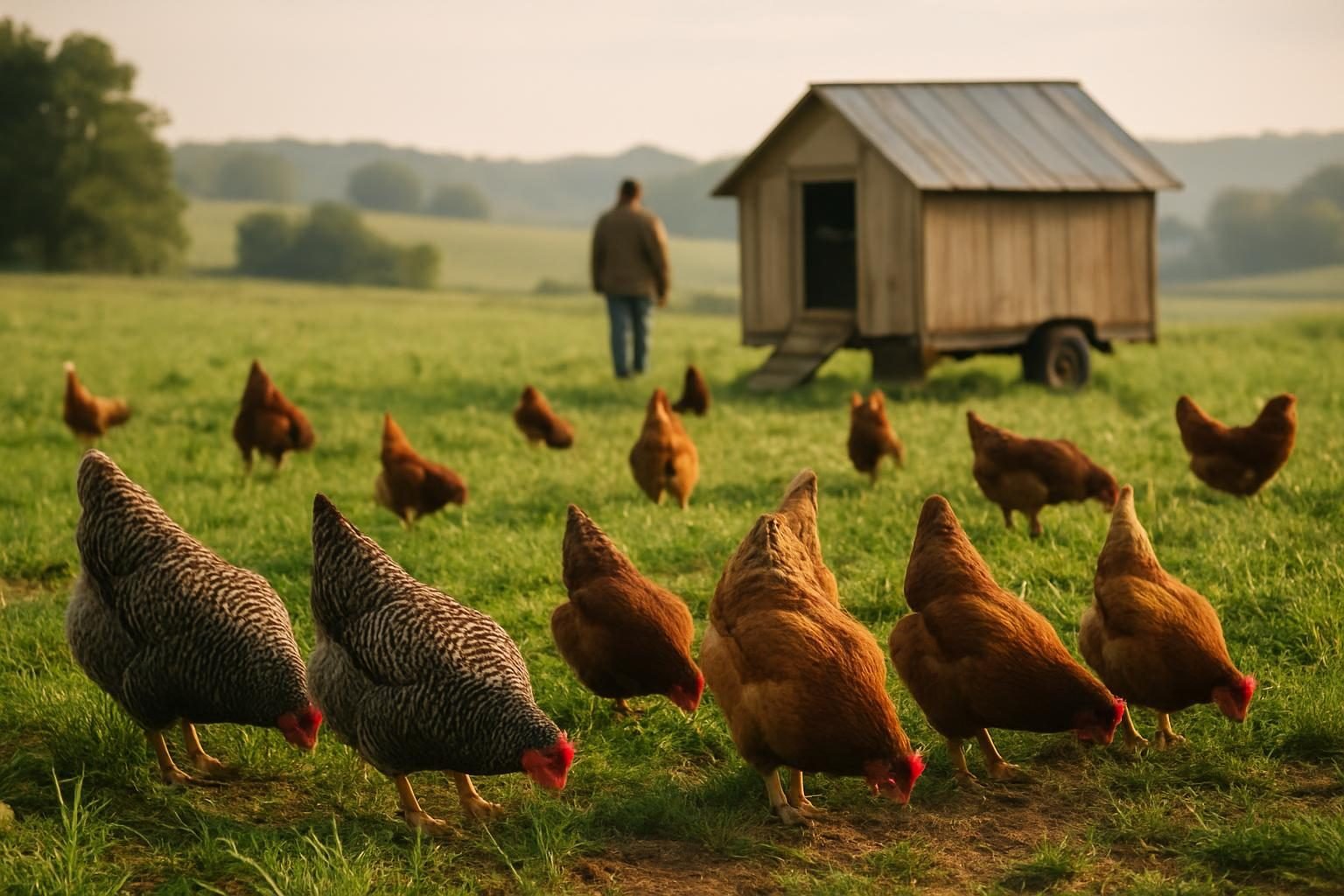
The best chicken breeds for pasture are the ones that actually walk out, scratch, and come home at dusk. A breed that thrives in a brooder and a barn can sulk or struggle once it meets wet grass, hawks and a 90-degree afternoon. This guide rates the breeds that tend to do well on range, and is honest about what you give up compared with the fast-growing meat birds most of the market runs on.
Quick answer: For eggs on pasture, Rhode Island Red, Barred Plymouth Rock, Australorp, Ameraucana and Welsummer are reliable, hardy foragers. For a homestead flock that does both, Delaware, New Hampshire, Dominique and Buckeye are strong dual-purpose picks. Redbro-type slower-growing broilers work for meat, but heritage breeds take 14 to 20 weeks to reach a modest carcass.
What makes a breed good for pasture?
Pasture is not just a bigger pen. Birds have to find a meaningful share of their food, handle weather, and stay alive when a red-tailed hawk or a fox shows up. When you compare breeds, look at five traits, and also consider your chicken coop setup:
- Foraging ability: how readily they scratch, hunt insects and graze green forage rather than waiting at the feeder.
- Hardiness: tolerance of heat, cold, damp and the stress of being moved.
- Output: eggs per year, or carcass size and growth rate.
- Temperament: calm enough to handle, not aggressive to flockmates or you.
- Predator awareness: alert, quick to take cover, and willing to roost properly.
Genetics set the ceiling, but management sets the result. Even a great forager will not do much with a bare, overgrazed paddock. Pair good birds with good grass, and see our guide to pastured poultry on grass for the system side of the equation.
Best laying breeds for pasture
Rhode Island Red
A long-time farm staple. Active, hardy and productive, with typical output in the range of 200 to 280 eggs a year in good conditions. Hens are decent foragers and tolerate most climates. Roosters can be pushy, so watch temperament around children.
Barred Plymouth Rock
Calm, cold-hardy and dependable layers of brown eggs, often in the 200 range per year. Good in the humid East and Midwest. They are steady rather than flashy foragers, and their barred pattern is not especially camouflaged against hawks.
Australorp
Gentle, productive and reasonably heat and cold tolerant. A strong choice for homesteads that want a quiet flock that still ranges. Expect solid brown egg production and decent body size for stewing hens.
Ameraucana and Easter Egger types
Alert, active foragers with good predator sense, laying blue or green eggs. Production is usually lower than the production browns, but they cope well with free-range conditions. Note that true Ameraucanas are rarer than the mixed-heritage Easter Eggers sold by many hatcheries.
Welsummer and Leghorn types
Welsummers are active, alert foragers with dark brown eggs. White Leghorns are prolific layers and excellent foragers, but they are flighty, light-bodied and poor candidates for meat. They do best where you want maximum eggs from the least feed.
Best dual-purpose breeds for pasture
Dual-purpose birds give you eggs now and a respectable carcass from surplus cockerels and spent hens. They are the natural fit for small diversified farms.
Delaware
Fast-ish for a heritage breed, good layers and reasonable table birds. Calm and good in cooler climates.
New Hampshire
Early maturing, active and a good forager. Often grows a bit faster than other heritage breeds, which helps if you want a meat component.
Dominique
One of America’s oldest breeds. Hardy, cold tolerant, calm and a competent forager. Slower to mature, but resilient and low-maintenance.
Buckeye
An active, hunting-minded bird that is notably good at catching insects and even rodents. Hardy and efficient, with moderate laying and a lean carcass.
Chantecler and Jersey Giant
Chanteclers were bred for cold climates and do well in the northern states. Jersey Giants are very large and calm, but they grow slowly and eat a lot, so the feed math is hard on a pasture budget.
Side-by-side comparison
Ratings below are general tendencies based on common breeder and extension descriptions, not guarantees. Strain, hatchery and management change results a lot.
| Breed | Foraging | Hardiness | Output | Temperament | Predator sense |
|---|---|---|---|---|---|
| Rhode Island Red | Good | High | Eggs, 200-280/yr | Active, can be pushy | Moderate |
| Barred Plymouth Rock | Moderate | High (cold) | Eggs, about 200/yr | Calm | Moderate |
| Australorp | Good | High | Eggs, good | Gentle | Moderate |
| Ameraucana / Easter Egger | Very good | High | Eggs, moderate | Alert | High |
| Welsummer | Very good | Good | Eggs, moderate | Alert | High |
| Delaware | Good | Good | Dual purpose | Calm | Moderate |
| New Hampshire | Good | Good | Dual purpose | Active | Moderate |
| Dominique | Good | Very high | Dual purpose, slow | Calm | Good |
| Buckeye | Excellent | High | Dual purpose | Active | Good |
Heritage breeds versus fast-growing meat birds
Most commercial chicken is Cornish Cross or a similar hybrid, bred to reach market weight in roughly 6 to 8 weeks. They convert feed very efficiently, but the same genetics make them poor foragers, prone to leg and heart problems, and sensitive to heat. On pasture they tend to eat and lie down rather than range.
Heritage and dual-purpose birds flip those trade-offs:
- Time to market: 14 to 20 weeks or more, versus 6 to 8 for Cornish Cross.
- Feed cost: noticeably higher per pound of meat, though foraging offsets some of it.
- Carcass: smaller, leaner and often darker, with a firmer texture some customers love and others find tough.
- Resilience: better heat tolerance, mobility and survival without intervention.
A middle path is the slower-growing broiler (often sold as Redbro, Freedom Ranger or similar types), which usually finishes in about 9 to 12 weeks and forages far better than Cornish Cross. Check with your hatchery for current strains and expected timelines. If your customers will pay a premium for pasture-raised birds, the economics can work, but run your own numbers. The regenerative farming business guide covers pricing and sales channels.
Matching breed to your system
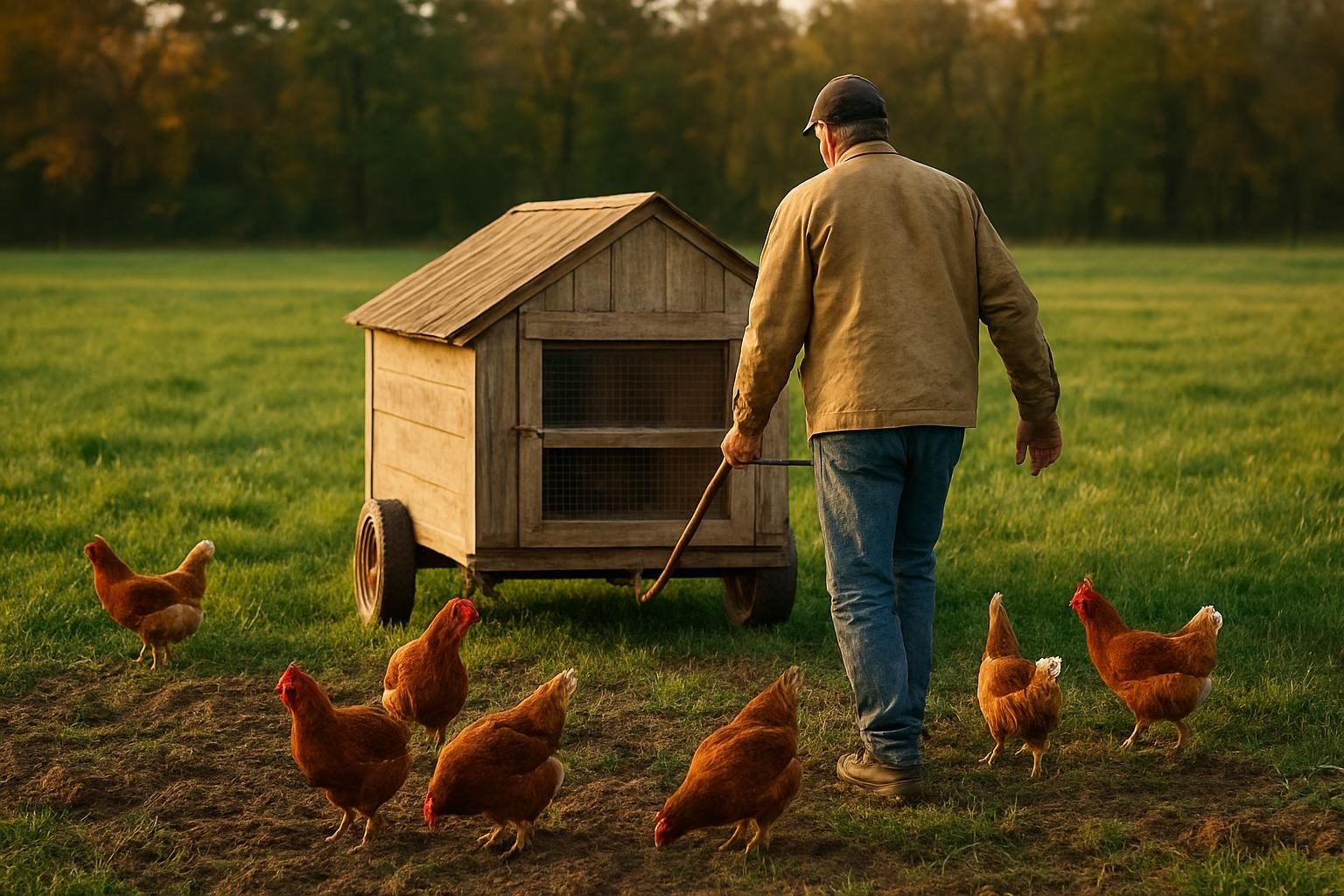
Chicken tractors and daily moves
If you move birds daily in a small pen, foraging reach is limited, so calm temperament and moderate size matter more than range instinct. Dominiques, Australorps and Barred Rocks are comfortable in this setup. See chicken tractor designs and moves for housing and rotation details.
Free range behind livestock
Active foragers like Buckeyes, Welsummers and Easter Eggers shine when they follow cattle or sheep through a paddock, scratching dung and picking up fly larvae. That pairs naturally with rotational grazing and multi-species grazing. Birds following a few days behind ruminants can help break up manure and reduce some fly pressure, though results vary with weather and parasite cycles.
Orchards and silvopasture
Tree cover reduces hawk pressure and gives shade, which most breeds appreciate. Chickens in a young orchard can disturb mulch and nibble seedlings, so introduce them carefully. More on this in our agroforestry guide.
Regional notes
- Humid East and South: choose heat-tolerant, lighter birds and rotate often to break parasite cycles.
- Northern states and Corn Belt winters: cold-hardy breeds with small combs (Dominique, Chantecler, Barred Rock) handle frost better.
- Arid West: prioritize shade, water access and heat tolerance; Leghorn types and Welsummers often cope well.
Practical steps to start a pasture flock
- Decide your main goal: eggs, meat or both. That narrows the breed list fast.
- Match housing to the breed. Flighty birds need taller fencing or netting; heavy breeds need low, sturdy roosts.
- Plan predator defense: electric poultry netting, secure night housing and a closing-up routine. Our guide to electric fence setup covers energizer and grounding basics that apply to netting too.
- Start with a small flock, often 12 to 25 birds, and learn how they use the ground before scaling.
- Source from a reputable hatchery or local breeder, and ask about the strain’s foraging and laying performance, not just the breed name.
- Supplement with a balanced ration. Pasture rarely supplies all protein and minerals, especially for layers.
Key takeaways
- Foraging instinct, hardiness and predator sense matter more on pasture than peak production numbers.
- Rhode Island Reds, Australorps, Barred Rocks and Easter Eggers are dependable layers; Buckeyes, Dominiques and Delawares suit dual-purpose farms.
- Heritage meat birds take 14 to 20 weeks and cost more to feed than Cornish Cross; slower-growing broilers are a middle option.
- Match the breed to your system, climate and predators, and verify strain quality with the hatchery.
- Good grass, rotation and secure housing do more for results than any single breed choice.
For the wider picture on livestock and rest periods, browse the Grazing & Livestock section.
Frequently asked questions
What is the best chicken breed for free ranging?
Active, alert breeds such as Buckeye, Welsummer, Ameraucana and Easter Egger types tend to range widely and handle predators well. Rhode Island Reds and Australorps are also good, hardy foragers. The best choice depends on whether you want eggs, meat or both, and on your local climate and predator load.
Can Cornish Cross chickens be raised on pasture?
Yes, and many farms do. They are typically moved daily in floor-less pens and finish in roughly 6 to 8 weeks. They forage less than heritage birds and are sensitive to heat, so provide shade, fresh water and gentle handling. Expect to feed a complete ration alongside pasture access.
How much of their diet can chickens get from pasture?
It varies widely with season, forage quality, stocking density and breed. Birds on good, diverse pasture may pick up a meaningful portion of their diet from greens and insects, but layers and meat birds still need a balanced ration for protein and minerals. Treat pasture as a supplement, not a replacement, unless you are working with a nutritionist or extension specialist.
Which breeds are best for cold climates?
Dominique, Chantecler, Barred Plymouth Rock, Australorp and Rhode Island Red tolerate cold well. Small combs and dense feathering reduce frostbite risk. Always provide a dry, draft-free coop with good ventilation, since moisture is often a bigger problem than low temperatures.
Are heritage breeds worth raising for meat?
They can be if you have a market that values flavor, pasture-raised claims and breed diversity, and if you can price to cover longer grow-out and higher feed use. For many homesteaders, dual-purpose birds make sense because surplus cockerels and old hens become meat without a separate meat flock. Run a simple cost-per-pound calculation before committing.
If you are also thinking about other small ruminants alongside poultry, our guides to raising sheep for beginners and pygmy goat care are good next reads.