A good electric fence for cattle is the cheapest tool you will ever buy for managing grass. It lets you carve one pasture into many paddocks, move animals daily or weekly, and give plants the rest they need to recover. It also fails in boring, predictable ways, and almost every failure traces back to the energizer, the ground, or the animals never being taught to respect the wire.
Quick answer: For rotational grazing, use high-tensile wire for permanent perimeter and lanes, and polywire with step-in posts for temporary subdivisions. Size the energizer by the length of fence and weed load, not just acreage: a typical range is 0.5 to 1 stored joule per mile of clean fence, more in tall vegetation. Install at least three 6-foot galvanized ground rods, aim for 4,000+ volts on the wire, and train cattle on a small, well-built training paddock before you rely on the fence.
This guide walks through the full setup in the order you will actually build it. If you are still deciding how to divide your land, start with rotational grazing for beginners and the broader complete guide to rotational grazing, then come back here for the hardware.
How an electric fence for cattle works
An electric fence does not hurt cattle through brute strength. It works through psychology. The energizer sends a short, high-voltage, low-amperage pulse down the wire about once a second. When an animal touches the wire, the pulse travels through the animal into the soil and back to the ground rods, completing the circuit. The shock is unpleasant but brief, and cattle remember it.
That last part matters: the circuit needs the soil. A fence with a great energizer but poor grounding delivers a weak, unconvincing zap, and cattle learn that it is optional. Think of the whole system as three parts that must be balanced: energizer, wire, and ground.
Polywire vs high-tensile: which wire where
Most working grazing systems use both. Each does a different job.
| Feature | High-tensile wire | Polywire / polytape |
|---|---|---|
| Best use | Permanent perimeter, lanes, main paddock lines | Temporary subdivisions, daily or weekly moves |
| Lifespan | Decades if installed well | Several seasons; wears from sun and abrasion |
| Conductivity | Excellent (12.5-gauge steel, galvanized) | Lower; more stainless strands carry current farther |
| Setup effort | High: posts, bracing, tensioners | Low: reels and step-in posts |
| Visibility to cattle | Poor without flagging | Better, especially polytape |
| Cost | Higher upfront, lower over time | Low upfront, replaced periodically |
High-tensile for the permanent bones
Run 12.5-gauge high-tensile wire on well-braced corners and line posts. A common beef setup is two to four strands, with the hot wire roughly at nose height for the cattle you run (often 20 to 36 inches depending on the lowest and highest strand). Use quality tensioners and insulators, and keep wire off the ground and out of vegetation. Brace corners and gates properly, because most permanent fence problems start with a leaning corner and slack wire.
Polywire and step-in posts for flexibility
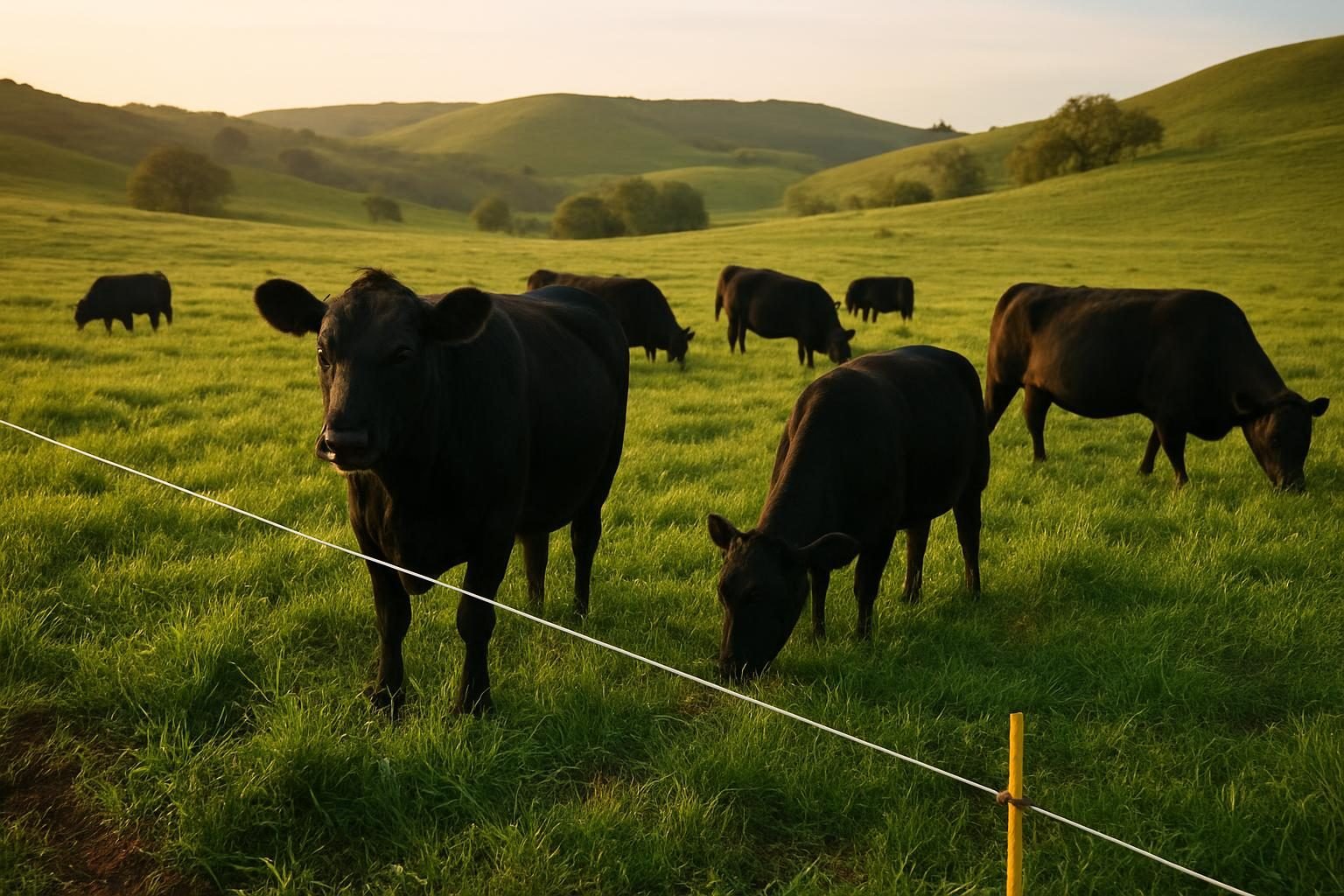
Polywire on a geared reel, strung between plastic or fiberglass step-in posts, is what makes frequent moves realistic. One person can usually move a paddock line in minutes. Use a single strand for adult cattle, set around waist to hip height (commonly 30 to 40 inches for mature cows), and choose a wire with several stainless strands for better conductivity over longer runs. Space step-in posts every 30 to 50 feet on flat ground, closer in rolling terrain, and always put a post at every change of direction so the wire does not sag into grass.
Sizing the energizer in joules
Energizer size is the choice that people most often get wrong, usually by buying too small. The key figure is stored joules, which describes how much energy the unit can hold and deliver. More joules means more power to push through vegetation touching the wire and to keep voltage high over distance.
Rather than sizing by acres, size by total fence length and conditions. As a rough, typical guide:
- Clean, short fence (under a few miles, little vegetation): about 0.5 to 1 stored joule per mile.
- Moderate vegetation or multiple wires: roughly 1 to 2 joules per mile.
- Heavy weeds, long runs, or high-vegetation seasons: plan on the high end, or step up a size.
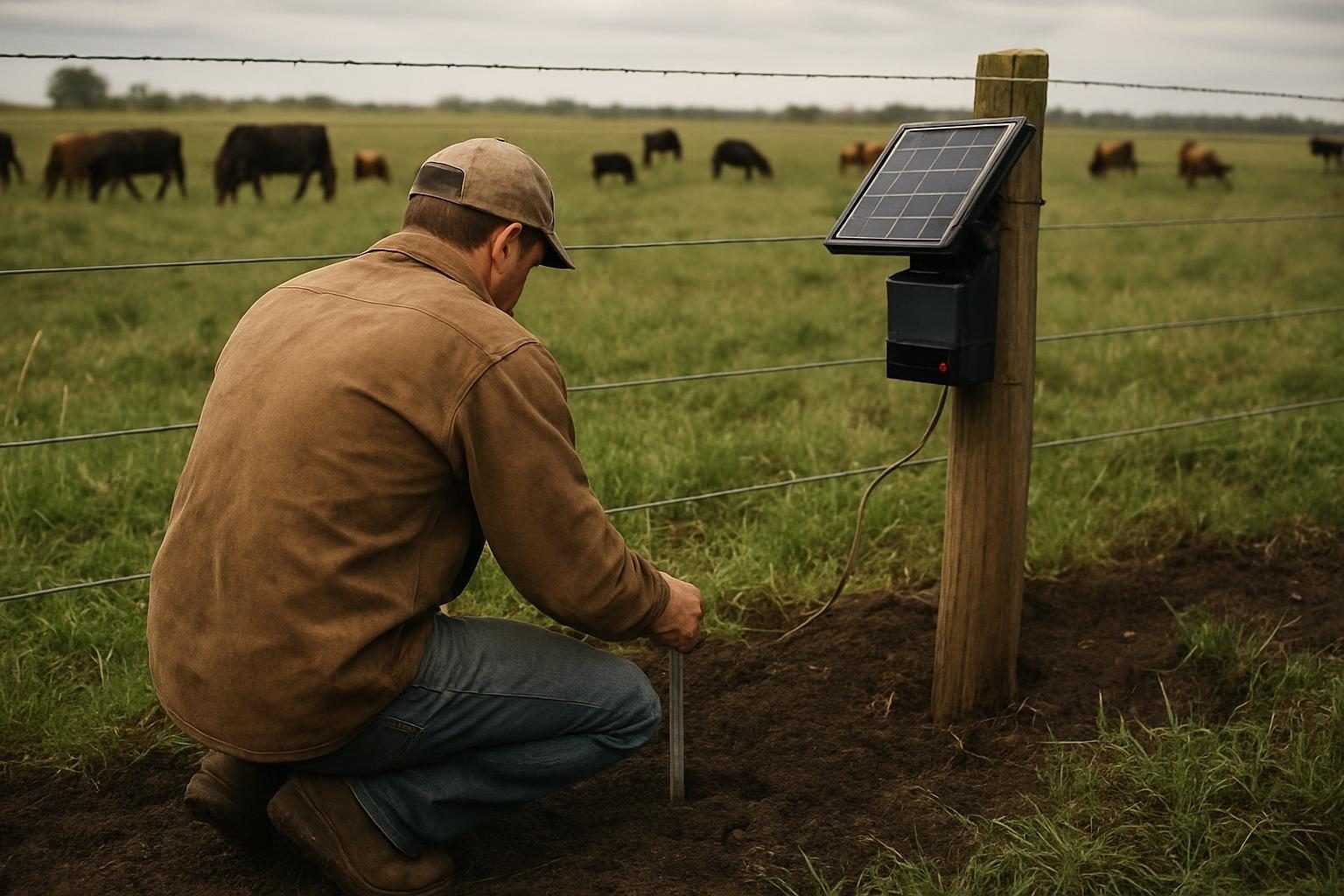
Always go bigger than the minimum. A unit running at the edge of its capacity will fail the first time summer growth grabs the wire. Choose a low-impedance energizer, which handles vegetation load better than older designs, and match power source to location: mains power where available, solar or battery for remote paddocks. Manufacturer ratings vary, so read the specs for output joules at load, and check extension recommendations for your region. For a deeper look at choosing a charger, see our upcoming guide to cattle fencers.
Grounding: the part everyone underbuilds
If your fence is weak and the energizer tests fine, the ground system is the likely culprit. Grounding is the return path for every pulse, and dry or sandy soils make it harder.
- Use galvanized ground rods, not copper mixed with galvanized. Mixing metals causes corrosion and a poor connection.
- Install at least three 6-foot rods, spaced about 10 feet apart, and connect them with insulated wire and solid clamps. Larger energizers and dry climates call for more.
- Place the rods away from utility grounds and in the most consistently damp spot you can find.
- Use proper clamps and keep connections clean and tight.
- Consider a ground return wire in very dry ground, where soil alone is a poor conductor. This is common in the arid West.
Test it. Drive a few feet of rod at least 100 feet from your ground field, short the fence with a metal rod, and check voltage on the ground rods with a meter. A reading well above a few hundred volts on the ground means you need more or better grounding.
Training cattle to respect the wire
Cattle that have never met electric fence will often walk through the first time they feel it, so do not trust a new fence on a new herd without training. A calm, deliberate introduction saves you endless chasing later.
- Build a small training paddock with a solid, well-charged, highly visible fence, such as a few strands of polytape or high-tensile with flagging. Use a corral or small pasture the animals already know.
- Verify voltage first with a tester. Aim for roughly 4,000 volts or more at the fence so the first shock is memorable rather than ineffective.
- Let the cattle find it. Curious animals will nose the wire. One good shock on the nose is the lesson.
- Keep them in for a day or two with feed and water inside, so they associate the wire with the boundary, not with hunger.
- Move to polywire with the herd calm. After training, a single strand of visible polywire usually holds, especially when fresh grass is waiting on the other side.
Flagging the wire with strips of cloth or plastic tape helps cattle see it, which makes the first encounter a nose-touch rather than a chest-first charge. Also train yourself: always walk the fence line and listen to the cattle. A herd that is bored, hungry, or short on water will test any fence, so pair your fence plan with good water systems for rotational grazing, which cattle need within each paddock or a short walk away.
Troubleshooting low voltage
Check the fence in this order. It saves time because it follows the path of the current.
- Test the energizer alone. Disconnect the fence and ground leads and measure output at the unit. If it reads healthy, the problem is downstream.
- Test the fence at the start, then walk it. Measure voltage near the energizer, then at intervals along the line. The drop pinpoints the fault.
- Look for vegetation. Weeds or branches touching the hot wire are the most common cause in summer. Mow or spray under the wire, or switch to a bigger energizer.
- Check insulators and connections. Cracked insulators, loose clamps, and corroded connections leak voltage to the ground.
- Look for shorts to metal or ground. A wire touching a steel post, a gate hinge, or wet ground bleeds current.
- Re-test the ground field. If voltage on the ground rods is high, add rods.
Keep a digital fence tester in your truck. A tester that reads in kilovolts and shows current direction (some units will point you toward the fault) is worth far more than its price during a busy grazing season.
Fitting the fence into your grazing system
Fencing is a tool, not a plan. The plan comes from your pasture, animals, and goals. In practice, many regenerative operations use permanent perimeter and lanes with temporary interior lines, which allows moves from daily to weekly depending on the system. If you are exploring higher density, read about mob grazing and adaptive multi-paddock grazing, both of which lean heavily on portable fence. To decide how many head your paddocks can carry, see how many acres per cow.
The same fence logic extends beyond cattle. If you run sheep or goats, you will need more strands or electric netting, since smaller animals are harder to hold. See our planned guides to raising sheep for beginners and raising goats, and our overview of multi-species grazing for mixed herds. Chickens on pasture usually use netting too, and a chicken tractor can follow cattle through the paddocks.
Key takeaways
- Use high-tensile wire for permanent lines and polywire with step-in posts for flexible subdivisions.
- Size the energizer by fence length and vegetation load, and go bigger than the minimum.
- Install at least three 6-foot galvanized ground rods, and add more in dry soils.
- Train cattle in a small, hot, visible paddock before relying on the fence.
- Troubleshoot in order: energizer, fence start, vegetation, insulators, shorts, ground.
- Fence is only part of the system: water, stocking rate, and rest periods decide whether grazing works.
For more on managing livestock this way, browse our Grazing & Livestock section.
Frequently asked questions
How many volts does an electric fence need for cattle?
A common target is at least 4,000 volts on the wire, with many farmers aiming for 5,000 to 7,000 at the far end of the fence. Cattle with thick hides and coats may need the higher end. Confirm with your energizer manufacturer or local extension service, since conditions and animals vary.
Can I use one strand of polywire for cattle?
Yes, once cattle are trained. A single visible strand at about waist-to-hip height commonly holds mature cattle in rotational grazing, especially when fresh forage is waiting in the next paddock. Young stock, bulls, and untrained animals may need two strands or a more visible perimeter.
What size energizer do I need for rotational grazing?
Size by total fence length and vegetation, not acreage. A typical range is about 0.5 to 1 stored joule per mile of clean fence, and more with heavy weeds or long distances. When in doubt, choose a larger unit, since it gives you reserve power during the growing season.
Why is my electric fence weak even with a strong energizer?
The usual causes are poor grounding, vegetation touching the wire, cracked insulators, or loose connections. Test the energizer alone first, then walk the fence while measuring voltage to find where it drops. Add ground rods if voltage on the ground field is high.
How do I train cattle to electric fence?
Use a small, well-charged, highly visible training paddock with feed and water inside, and keep the cattle there a day or two so they learn the boundary. Check voltage before turning them in. After training, move them to temporary fence with fresh forage as the incentive to stay put.