Rotational grazing means moving livestock through a series of paddocks so each one gets time to grow back before animals return. Done well, it lets you grow more forage, cut feed costs and keep soil covered. This guide covers the whole system, from basic rotations to adaptive management, so you can decide where to start on your own land.
Quick answer: Rotational grazing divides pasture into paddocks and moves animals on a schedule, so plants get a recovery period (often 30 to 90+ days, depending on season and region) after each short graze. The goal is to leave enough leaf behind for fast regrowth and healthy roots. Adaptive grazing goes further by changing move dates, stock density and rest periods as conditions change, rather than following a fixed calendar.
Plan your paddocks: use our free rotational grazing calculator to work out paddock size, grazing days and recovery periods for your herd.
What rotational grazing is, and why it matters
In a continuous system, animals stay on one large pasture and graze wherever they like. They tend to return to the same tasty plants before those plants have recovered, and ignore others. The result is a patchwork of overgrazed spots, rank, wasted growth elsewhere, and more bare ground than you want.
Rotational grazing changes when and how long animals are on each piece of ground. Two things do most of the work:
- Short graze periods keep animals from biting regrowth off a plant that is trying to recover.
- Long enough rest lets plants rebuild leaf area and roots, so the pasture grows more over the season.
Grazing is one of the most powerful tools in regenerative agriculture because livestock, plants and soil biology work together. Manure and urine are spread more evenly, litter and trampled forage feed soil life, and living roots stay in the ground longer. It is not magic, though. Results depend on rainfall, soils, plant community and how well you manage, and the research on how much soil carbon or productivity changes is mixed and site-specific. Treat it as a management skill you build over years, not a product you install.
Continuous vs. rotational vs. adaptive multi-paddock vs. mob grazing
These terms get used loosely. Here is how they usually differ:
| System | Paddocks | Typical rest | Stock density | Key feature |
|---|---|---|---|---|
| Continuous | 1 large pasture | None planned | Low | Animals choose where and when to graze |
| Simple rotational | 3 to 8 | Fixed, often 2 to 4 weeks | Low to moderate | Fixed schedule; easy to start |
| Intensive rotational | 10 to 30+ | Planned by season | Moderate | Frequent moves, more forage control |
| Adaptive multi-paddock (AMP) | Many, often flexible | Variable, set by plant recovery | Moderate to high | Decisions follow growth, weather and goals |
| Mob grazing | Many small | Often long (60 to 180 days) | Very high | Large herd, small area, short stays, high residual left |
For a deeper look at the flexible approach, see our explainer on adaptive multi-paddock grazing. If you are curious about the extreme high-density end of the spectrum, we cover mob grazing separately, including where it fits and where it does not.
One honest note: when researchers compare rotational and continuous grazing at the same overall stocking rate, the differences in animal gain are often modest. The bigger payoffs usually come from what rotation lets you do: control timing, adjust stocking to forage, rest damaged areas, and stretch the grazing season. The management matters more than the fence layout.
The principles that make it work
Recovery periods
The recovery period is the time between grazings of a paddock. It is the most important number in the system, and the one most often set too short.
Typical ranges, which vary a lot by region:
- Fast growth (spring, humid regions, irrigated pasture): roughly 20 to 35 days.
- Moderate growth (summer in most of the East and Midwest): roughly 30 to 50 days.
- Slow growth (heat, drought, late fall, arid rangeland): 60 to 120+ days, and in the arid West sometimes a full year or more.
Don’t use the calendar as the judge. Use the plants. A paddock is ready when grasses have regrown to a target height or stage, typically when leaves have rebuilt and roots have had time to recover. Your local extension service or NRCS office can give grazing-stage guidance for your forage species.
Stock density vs. stocking rate
These are not the same thing, and mixing them up causes endless confusion.
- Stocking rate is how many animals your whole farm carries over a season (animal units per acre per year). It determines whether you are in balance with your forage. If you want help with this number, our planned guide on how many acres per cow goes through it in detail.
- Stock density is how many animals are on a specific paddock at a given moment (often expressed in pounds of livestock per acre). Higher density with shorter stays means more even grazing and more trampling.
You can raise stock density without raising stocking rate: put the same herd on a smaller piece for a shorter time, then rest it longer. That is the core trick of rotational systems.
Residual height: take half, leave half
A common rule of thumb is to graze about a third to half of the leaf growth and leave the rest. Plants with more leaf left photosynthesize sooner, regrow faster and keep deeper roots. Many extension programs give residual targets by species. For example, cool-season grass pastures are often left at roughly 3 to 4 inches or more, while some warm-season grasses need to be left taller. Check the numbers for your forage.
Leaving a high residual may feel wasteful at first. The residual isn’t lost. It’s the engine of next month’s growth, and it ends up as litter, ground cover and food for soil organisms.
Paddock sizing and layout
Paddock size comes from three things: how much forage is in the paddock, how much your animals eat, and how many days you want them there.
A simple worked example (illustrative numbers only, so use your own measurements):
- Your herd is 30 animal units (an animal unit is roughly 1,000 lb of animal).
- Each animal unit eats about 2.5 to 3 percent of body weight in dry matter daily, which is roughly 25 to 30 lb. The herd needs about 750 to 900 lb of dry matter per day.
- Standing forage is estimated at 1,500 lb of dry matter per acre. If you plan to harvest about 40 percent and leave the rest, that is about 600 lb of usable forage per acre.
- Daily area needed: about 825 lb divided by 600 lb per acre, or roughly 1.4 acres per day.
- If you want a 30-day recovery period and one-day moves, you need about 30 to 31 paddocks of around 1.4 acres each, or roughly 42 acres.
The general formula for the number of paddocks is: recovery days divided by days grazed per paddock, plus one. Fewer paddocks means longer stays, and that is a normal place to start.
Layout tips:
- Use a hub-and-spoke or lane layout so animals can reach water and the handling area without crossing growing paddocks.
- Divide by soils and forage, not just by geometry. A wet swale and a dry ridge should not be a single paddock if they grow at very different rates.
- Keep shapes workable. Squares and rectangles are easiest to graze evenly. Long, skinny paddocks with water at one end lead to uneven use.
- Start with temporary subdivisions before committing to permanent fences. Learn how the land actually grazes first.
Fencing for rotational grazing
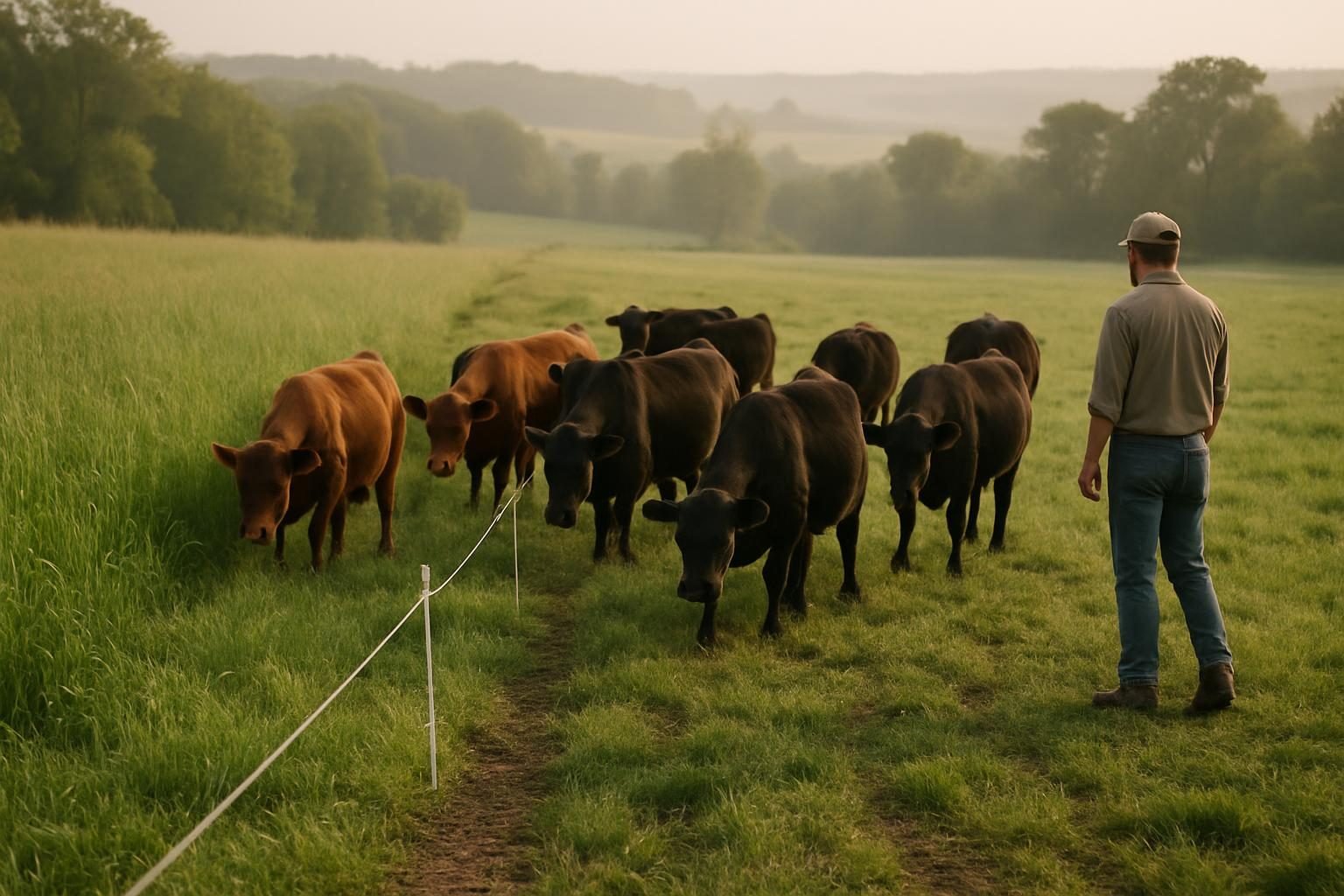
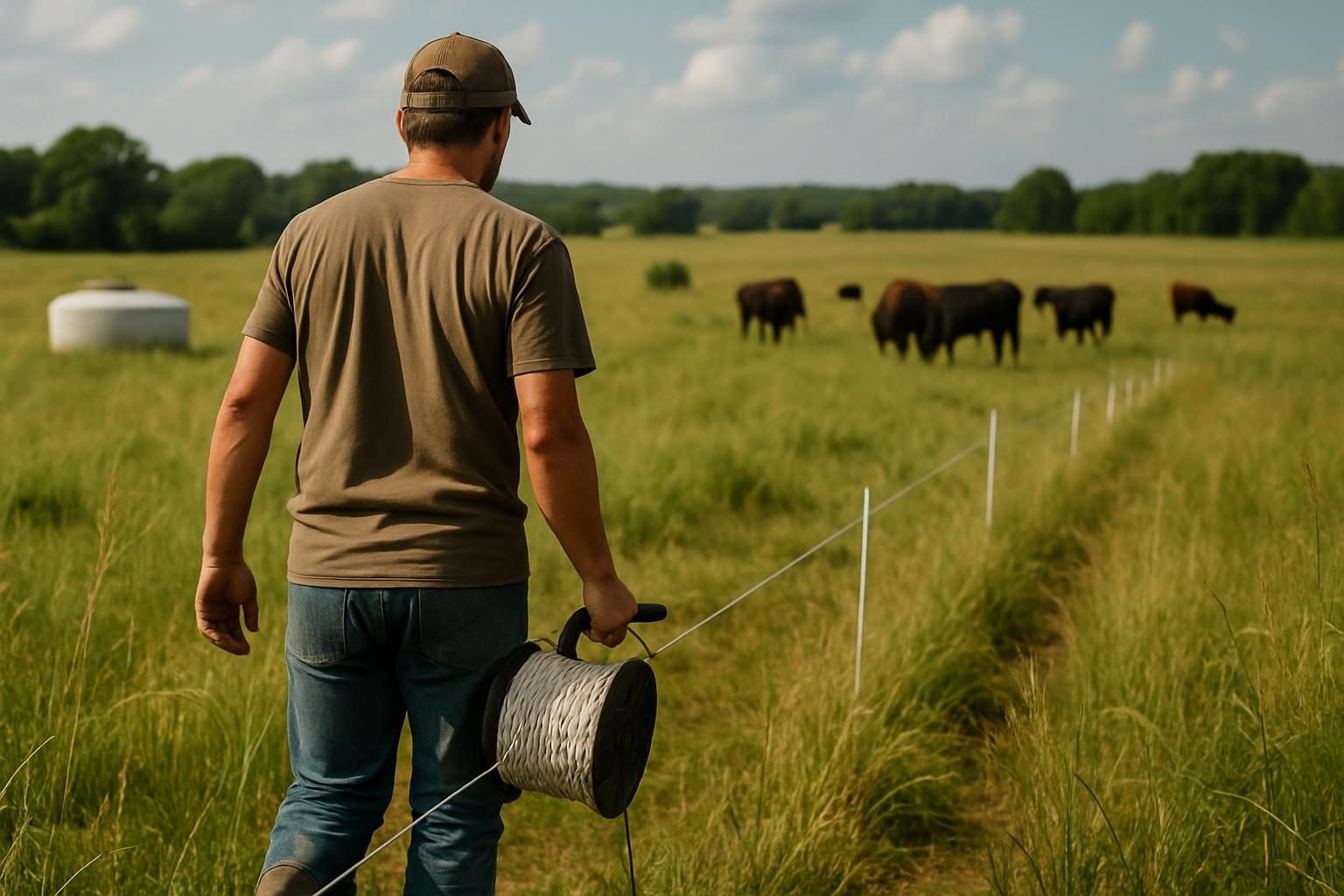
Good fencing is mostly about training and consistency. Animals respect an electric fence when they have learned to, and when it is hot every time they touch it.
- Perimeter: a solid boundary, often high-tensile wire or woven wire for sheep and goats, built to hold your species even under pressure.
- Interior paddocks: one or two strands of polywire or polytape on step-in posts is a common, low-cost option for cattle. Sheep and goats usually need more strands or electric netting, and young stock may need extra training.
- Energizer: size it for the length of fence and the amount of vegetation touching the line. Follow the manufacturer’s guidance, and keep voltage at levels recommended for your livestock. Many fencing guides suggest a few thousand volts as a minimum on the line.
- Grounding: poor grounding is the number one reason fences fail, especially in dry or sandy soils. Add ground rods as the manufacturer recommends.
- Training: let animals meet a hot wire in a small, secure pen before turning them out on open pasture.
Predators matter too. Sheep, goats and poultry usually need added protection, such as electric netting plus guardian animals or secure night housing. Check local regulations and any program requirements before building boundary fences.
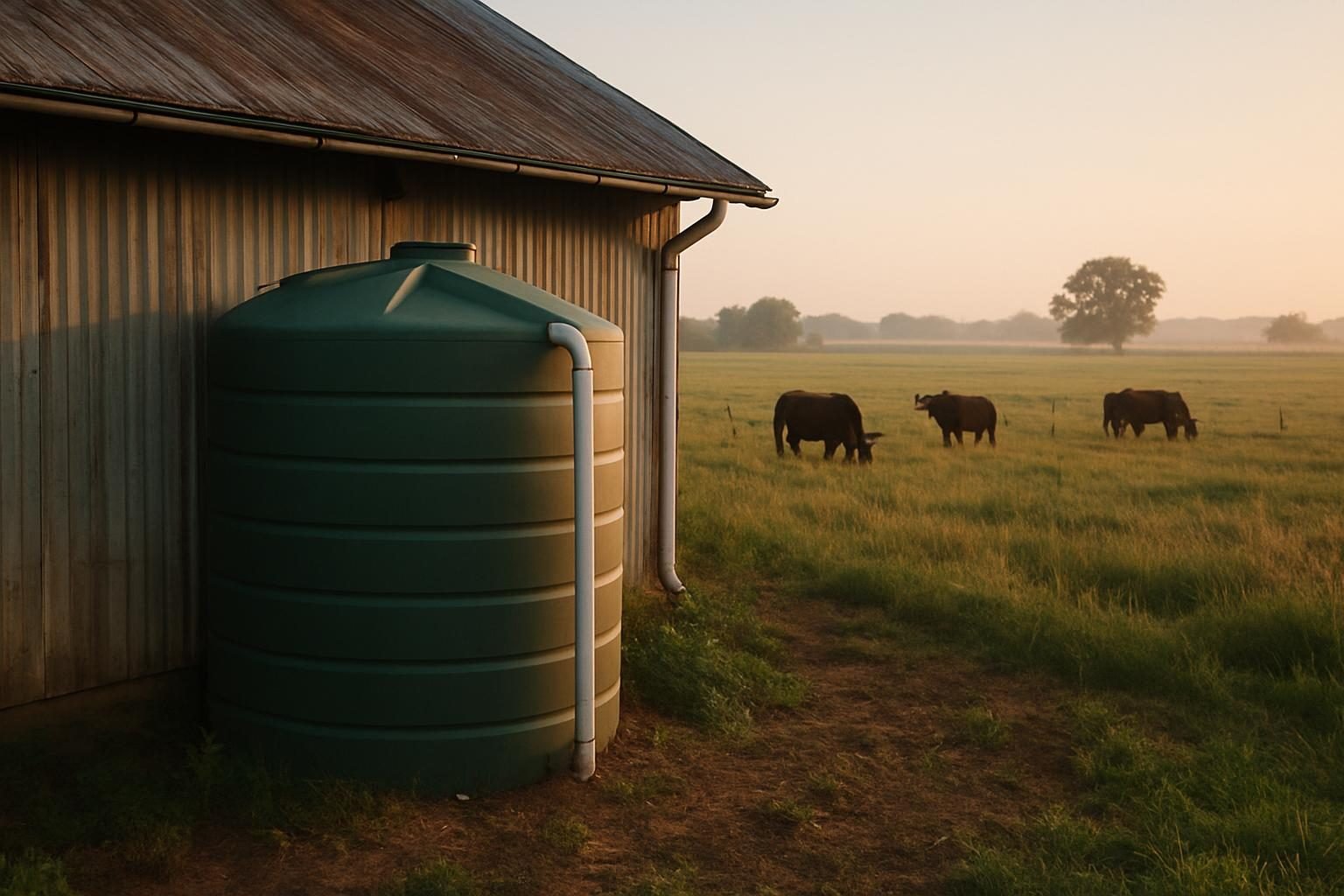
Water: the make-or-break detail
If animals have to walk long distances to drink, they graze unevenly and spend more time trailing. Water placement shapes the whole system.
- Daily need: a mature beef cow can drink anywhere from about 8 to 20 or more gallons a day depending on heat, forage moisture and lactation. Sheep and goats typically need a few gallons or less. Plan for peak summer demand.
- Distance: many grazing guides recommend keeping animals within roughly 800 to 1,000 feet of water where possible, with shorter distances for better distribution.
- Options: a pipeline with multiple hydrants, shallow buried or surface-laid hose, portable tanks that move with the herd, or gravity-fed systems.
- Flow rate: tanks need to refill fast enough for the whole herd to drink in hot weather without waiting.
- Keep ponds and streams protected: unrestricted access can damage banks and water quality. Offering alternative water, and fencing sensitive areas, is a common conservation practice.
We cover design choices, costs to think about and layouts in our planned guide to water systems for rotational grazing.
Grazing planning, step by step
A grazing plan doesn’t need to be complicated. It needs to be written down and revisited.
- Map your land. Mark soils, slopes, water, shade, existing fences, wet spots and different forage areas. A free aerial photo and a marker works fine.
- Set goals. More days on grass? Less hay? Better ground cover? Higher gains? Your goal affects your stock density and move frequency.
- Estimate forage. Walk paddocks and judge pounds of dry matter per acre by height and density. Clip and weigh a few small plots to calibrate your eye. Extension offices often offer worksheets.
- Calculate animal demand. Count animal units and daily intake, as in the example above.
- Set a grazing chart. Record the date each paddock is entered and exited, the animal numbers, and the pre- and post-graze height.
- Plan for drought and winter. Identify a sacrifice area, a destocking trigger date and your backup feed. A good starting question: at what date will you start reducing herd numbers if rain does not come?
- Monitor and adapt. Check regrowth before moving back into a paddock. If it is not ready, slow the rotation, even if that means feeding hay or using a sacrifice area.
The NRCS, local conservation districts and extension services can help with grazing plans, and some offer technical assistance or cost-share programs for fencing and water. Program availability and rules change, so confirm current details with your local office.
Winter feeding and extending the season
Grazing planning doesn’t end when growth stops. Strategies like stockpiling forage for winter grazing and feeding hay in a planned pattern can cut feed costs and spread nutrients. Plan these into your rotation so the fall paddocks you rest are the ones you graze in winter.
What to expect in years 1 to 3
Rotational grazing is a slow-building system. Here is a realistic arc, with the caveat that rainfall, starting condition and species all change the timeline.
Year 1: learning and infrastructure
- You will spend more time moving fence and checking water than you expect, especially at first.
- Expect mistakes: a paddock moved too late, a tank that runs dry, an escaped group of heifers. That’s normal.
- Forage gains may be small or invisible. Some pastures look worse as you graze the rank patches you used to avoid.
- Focus on observation. Take photos from the same spots, and keep your grazing chart.
Year 2: tuning
- You’ll know which paddocks recover quickly and which lag.
- Bare patches often begin to fill in, and you may see changes in species mix, with more desirable grasses and legumes where rest has been adequate.
- You can usually adjust paddock sizes, add water points, and fine-tune stocking.
- Many producers start to see a longer grazing season, or fewer hay days.
Year 3 and beyond: resilience
- Pastures often show more ground cover, more litter and better water infiltration, though the size of the change varies widely.
- You can respond to drought or a wet spring with more confidence because you have records and a plan.
- Labor tends to become more efficient as the layout is refined.
- Soil organic matter changes slowly and unevenly. Be wary of anyone promising fast carbon gains. If you want to measure it, use repeat soil tests taken the same way, and expect to wait years.
Livestock notes: cattle, sheep, goats, poultry and pigs
Cattle
Cattle are the easiest species to rotate on electric fence, and the basis for most of the systems above. Move frequency from daily to every few days is common. If you are building a forage-only program, our guide to grass-finished beef will go deeper into finishing, genetics and forage quality.
Sheep and goats
Small ruminants are efficient grazers, but parasites, especially barber pole worm in warm, humid regions, are the main limit. Rotation helps by keeping animals off paddocks while parasite larvae are present, and by avoiding grazing too close to the ground, where larvae concentrate. Goats browse as well as graze, and they test fences. Use more strands or netting and good predator protection. Running sheep or goats with cattle can use more of the plant community. We cover that in our planned guide to multi-species grazing.
Pastured poultry
Chickens and turkeys are rotated with movable shelters or electric netting, often daily, to stay on fresh ground and away from their own manure. They are often run behind ruminants to work through manure pats. Biosecurity and local regulations matter, so check with your state department of agriculture. Read more in our planned guide on pastured poultry.
Pigs
Pigs root, so they need strong electric fencing, good training, and a plan for the ground afterward. They can be useful for renovating brushy or compacted spots, but poorly managed they will tear up pasture. We will cover paddock design, rooting control and woodlot use in pastured pigs.
Regional differences
- Humid East and Southeast: fast growth, long seasons, high parasite pressure and summer slump in cool-season grasses. Shorter rotations in spring, longer in summer, and warm-season grasses can help.
- Corn Belt and Midwest: productive soils, strong cool-season pasture, and an opportunity to fit grazing around cropping with cover crops and crop residue.
- Great Plains and arid West: variable rainfall means the key decision is how many animals to carry, and when to destock. Recovery periods are long, and flexibility beats fixed schedules.
- South: heat, humidity and warm-season forages like bermudagrass or bahiagrass. Watch for overgrazing during droughts and match animals to the forage season.
Tree-based systems add another option in some regions. Agroforestry, including silvopasture, can provide shade and browse while you continue to rotate livestock.
Common pitfalls
- Returning too soon. The most common mistake. Check regrowth, not the date.
- Overstocking for the forage you have. No grazing system can make up for too many animals.
- Overbuilding fence before learning. Start with temporary lines.
- Ignoring water. Poor water leads to poor grazing, everywhere.
- Grazing too close. Taking plants down to the dirt weakens roots and slows regrowth.
- Weak fence training and low voltage. A bad first experience teaches animals to test the fence.
- No drought plan. Decide your trigger date and options before the stress hits.
- No records. If you do not write down dates and heights, you cannot learn from them.
- Chasing a method name. Don’t adopt a style because it is popular. Choose the version that fits your land, labor, goals and markets. If direct sales are part of the plan, see our planned guide on the regenerative farming business.
A beginner roadmap
- Observe for a season. Walk pastures, note species, bare ground, wet spots and shade.
- Get help. Contact your local NRCS office, conservation district or extension agent about grazing plans, forage guidance and possible cost-share. Confirm current program terms with them.
- Split one pasture into 4 to 6 paddocks with temporary electric fence, and get water to each one.
- Train animals to the fence and practice moving them calmly.
- Start moving every few days and lengthen rest periods as growth demands.
- Keep a simple grazing chart and take photos from fixed points.
- Add paddocks, water points and better layout as you learn.
- Review each year. Adjust stocking, rest and timing, then expand if the system is working.
You’ll find more guides across this topic in our Grazing & Livestock section. And if you run a smaller operation, our planned guide on small-scale regenerative farming will show how these ideas scale down to a few acres.
Key takeaways
- Rotational grazing is about timing: short graze periods and recovery periods long enough for plants to regrow.
- Adaptive grazing means adjusting to growth, weather and goals, not following a fixed calendar.
- Recovery period is the key number. Judge it by plant regrowth, not dates.
- Stocking rate sets your balance with the land. Stock density is how you manage grazing within it.
- Leave a healthy residual, roughly half the leaf, so plants regrow faster.
- Water and fencing decide whether the system runs smoothly. Start simple and build up.
- Expect a learning year, a tuning year and gradual change after that. Results vary by region and rainfall.
- Keep records, plan for drought, and use local NRCS and extension help.
Frequently asked questions
How many paddocks do I need for rotational grazing?
Divide your desired recovery period by the number of days animals stay in each paddock, then add one. For a 30-day recovery and one-day moves, that is about 31 paddocks. Many beginners start with 4 to 8 paddocks and subdivide with temporary fence as they learn.
How long should pasture rest between grazings?
It depends on growth rate. Fast spring growth might need 20 to 35 days, summer 30 to 50 days or more, and slow-growth periods or arid rangeland 60 to 120 days or longer. Let plant regrowth, not the calendar, tell you when to return.
Is rotational grazing the same as mob grazing?
No. Mob grazing is an extreme form of rotational grazing with very high stock density, short stays and long rest. Rotational grazing covers a wide range, from a few paddocks moved weekly to many paddocks moved daily.
Does rotational grazing really improve soil?
It can, mostly by keeping more ground covered, maintaining living roots and spreading manure more evenly. But results vary with climate, soils and management, and measurable changes in soil organic matter are slow. Research comparing rotational and continuous grazing shows mixed results, so manage for ground cover and forage regrowth first.
What is the cheapest way to start?
Use existing fences plus portable electric fence (polywire and step-in posts), a quality energizer and portable water, then divide one pasture into a few paddocks. Check with your local NRCS office or conservation district about technical help and cost-share, and confirm current details before you plan around any program.