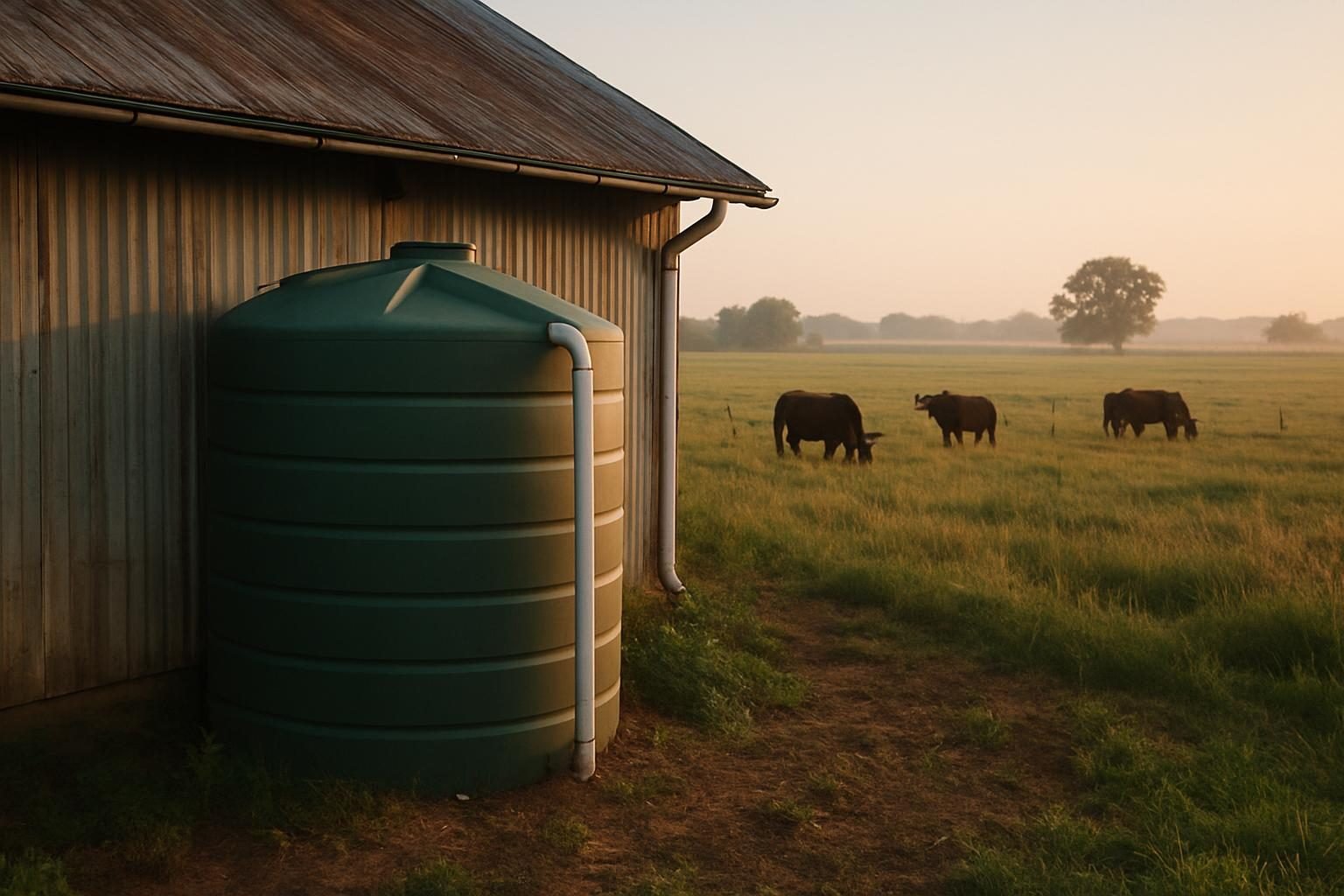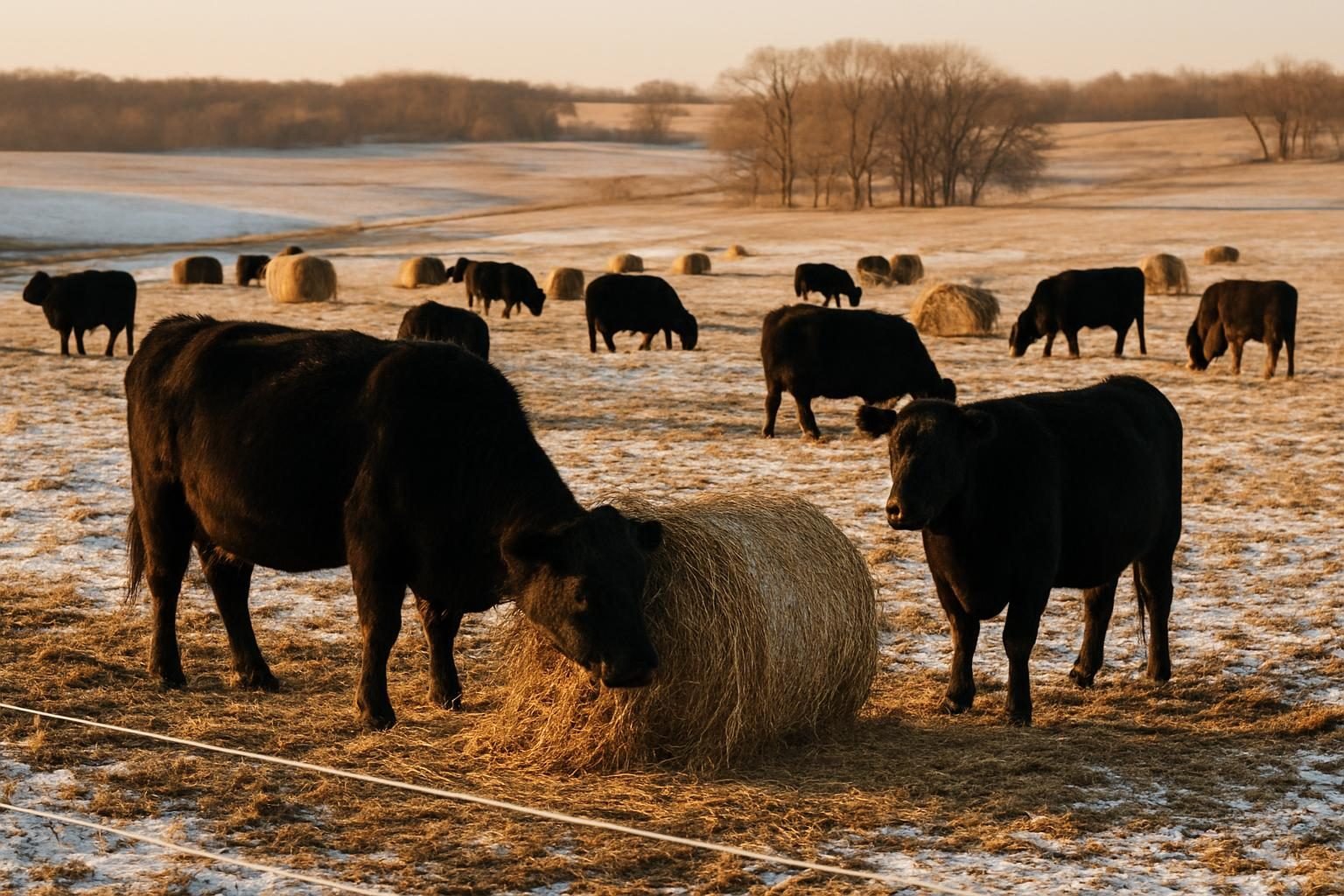
Bale grazing means setting out hay bales across a pasture in the fall and letting cattle feed on them in place through winter. Done well, it swaps the daily chore of running a tractor and feeding wagon for a few hours of setup, while spreading manure, urine and wasted hay right where your soil needs them. Done badly, it makes a muddy, nutrient-loaded mess. This guide covers how bale grazing works, how to lay it out, what it really does for soil, and where it does not belong.
Quick answer: Bale grazing is a winter feeding method where you place round bales on a field ahead of time and give animals access to a few bales at a time with temporary fence. The animals deposit manure, urine and leftover hay on the spot, which moves nutrients and organic matter onto low-fertility ground without hauling manure. It works best on well-drained, frozen or firm ground, with bales spaced and fenced so nutrients spread evenly and runoff stays low.
How bale grazing works
The idea is simple: you are feeding hay, but you are doing it on the part of the farm that benefits most from the nutrients that come out the back end of the animal. A cow eating hay returns a large share of the nitrogen, phosphorus and potassium she consumes as manure and urine. In a drylot or feedlot those nutrients pile up in one place and eventually have to be scraped, hauled and spread. With bale grazing, you skip the hauling.
The practice grew out of western Canada and northern Great Plains cattle operations, where winters are long and hay is a major cost. It has since been adopted in the Upper Midwest, the Northeast and parts of the South, with adjustments for rainfall and soil type. Extension services in several states have published guidance, and it is worth checking with your local office for region-specific recommendations.
Bale grazing sits comfortably alongside other adaptive grazing approaches. If you are already running rotational grazing in the growing season, winter bale grazing is a natural extension: you are still moving animals to fresh ground and managing where manure lands, just with stored feed instead of standing forage.
Layout and moves: setting it up step by step
Good bale grazing is mostly planning. A sloppy layout leads to wasted hay, uneven nutrient spread and mud.
- Pick the field and mark the grid. Walk the field in late summer or fall. Decide which areas need fertility and flag boundaries. Keep bales away from waterways, ditches, wells and wet depressions.
- Space the bales. A common layout is rows with bales roughly 20 to 30 feet apart in both directions. Tighter spacing concentrates nutrients; wider spacing spreads them but takes more fence. Many farmers match spacing to the nutrient load they want per acre.
- Set bales before the ground gets soft. Place them in fall while soils are firm, or on frozen ground in winter. Heavy equipment on wet soil causes compaction and ruts.
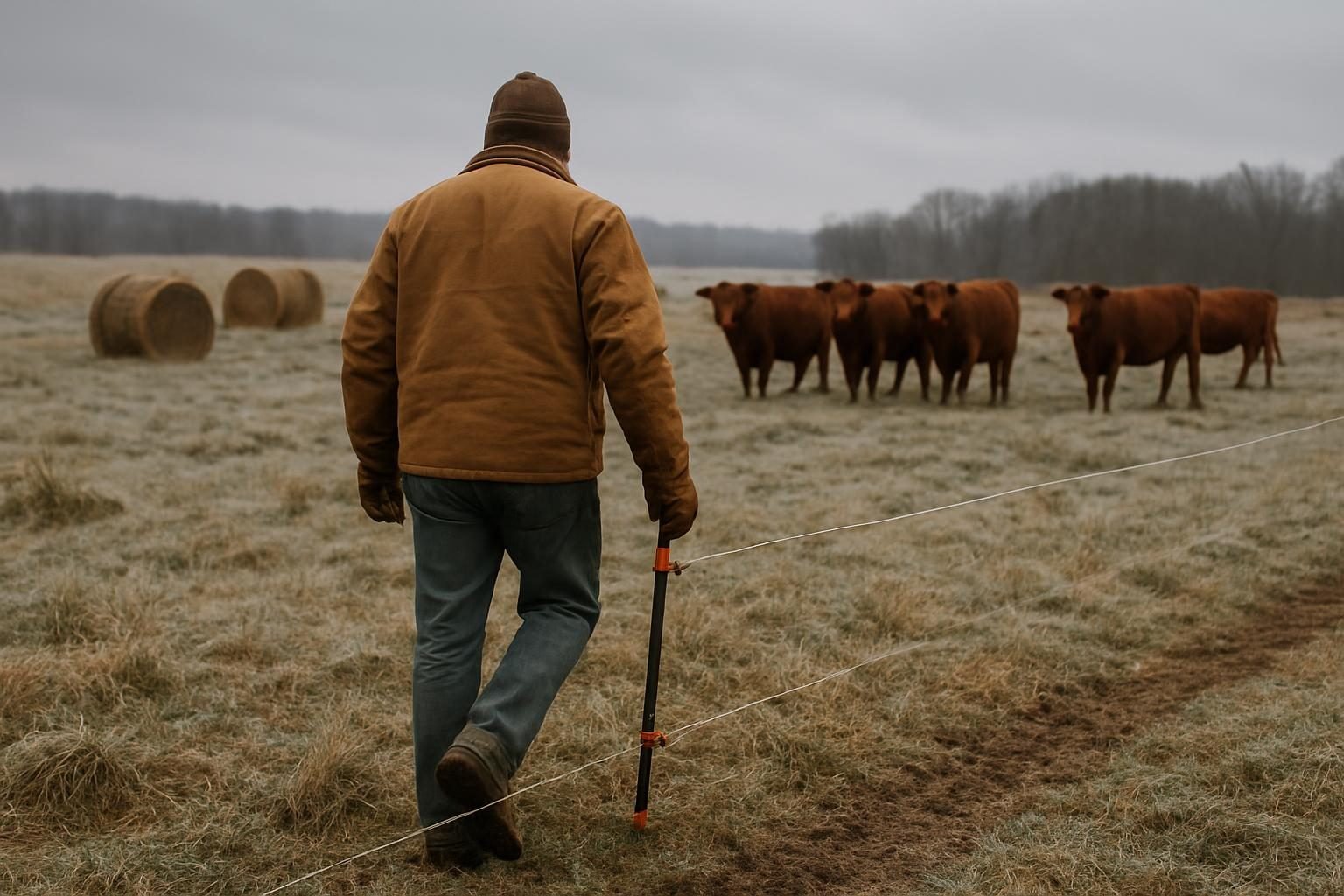
- Fence in strips or blocks. Use temporary polywire or electric tape to open access to a few days’ worth of bales at a time. Back-fencing prevents animals from returning to eaten-out areas.
- Move on a schedule. Advance the fence every one to three days, depending on herd size and bale count. Frequent moves reduce trampling, waste and mud.
- Provide water. Animals need reliable water that does not freeze. Plan access carefully; see our upcoming guide on water systems for rotational grazing for options.
Bale count and herd size
A mature beef cow typically eats somewhere around 2 to 3 percent of her body weight in dry matter daily, and more in cold weather. A 1,200-pound cow may eat roughly 25 to 35 pounds of hay per day, depending on quality and weather. A 1,000-pound round bale of average hay therefore feeds a handful of cows for a day or two. Do the math for your herd, then add a buffer for waste and hard cold snaps. Your extension office can help you estimate feed needs based on forage test results.
Nutrient transfer: what actually happens to the soil
Hay is a package of nutrients and carbon taken from one place (the hayfield) and delivered to another (the winter pasture). When cows eat it, most of the nutrients come back out as manure and urine, and a fraction of the hay is trampled into the surface. That trampled material acts like a coarse mulch layer and adds organic matter.
Keep your expectations grounded. Bale grazing is a fertility transfer, not a free lunch. Nutrients moved onto the winter pasture came off the hayfield, so if you never return fertility to the hayfield, you are slowly mining it. Soil testing on both fields tells you the real story. Our guide to soil testing for regenerative farmers explains how to sample and read results, and our piece on how to increase soil organic matter covers realistic timelines.
Waste versus benefit
Some hay will be trampled, soiled or left behind. Estimates of hay waste in unmanaged bale feeding commonly run from around 10 to 30 percent or more, depending on feeder type, weather and how long animals have access. Limiting access with frequent fence moves can cut waste. The leftover hay is not a total loss, since it becomes ground cover and organic matter, but it is feed you paid to produce.
The benefit shows up over seasons. Many farmers report improved forage growth and thicker stands in the spots where bales sat, particularly on thin, low-organic-matter ground. Results vary with soil, rainfall and hay quality, and a single winter rarely transforms a field. Treat it as one tool in a longer plan, such as the one in our guide on how to transition to regenerative agriculture.
Which fields to target
The best candidates share a few traits:
- Low fertility. Thin pasture, worn-out hayfield corners, or ground with low test levels for phosphorus and potassium.
- Good drainage. Well-drained or gently sloping soils that stay firm. Sandy loams and loams generally handle winter traffic better than heavy clay.
- Away from water. A buffer from streams, ponds, wells and ditches, and no concentrated runoff paths.
- Accessible. You can get bales in during fall or on frozen ground without tearing up the field.
- Fields you plan to renovate. Bale grazing can prepare ground before reseeding with a mix from our guide to cover crop mixes, or help reclaim a worn paddock.
Cautions: wet areas and nutrient hot spots
Bale grazing has real risks, and they are mostly about water and concentration.
- Wet or flood-prone ground. Saturated soils pug easily, and manure and urine can move to surface water. Avoid low spots, seeps and areas near streams.
- Nutrient hot spots. Tight bale spacing, long stays and heavy stocking can overload small areas. Excess nitrogen can leach or run off, and very high phosphorus builds are hard to reverse. Spread bales out and rotate fields over years.
- Frost-free thaws. A winter thaw or early spring rain on loaded ground raises runoff risk. Plan for a buffer and watch the forecast.
- Weed seeds in hay. Bale grazing can introduce weed seed from the hayfield. Know your hay source.
- Regulations. Livestock nutrient management rules vary by state and herd size. Check with your state agriculture agency, conservation district or NRCS office before setting up near water.
Regional differences matter. In the arid West and northern Plains, frozen ground and low precipitation make bale grazing relatively forgiving. In the humid East and South, wet winters and heavier soils call for tighter site selection, shorter stays or a firmer rule against using certain fields. Corn Belt farms with tile drainage should be especially careful about nutrient movement.
Cost comparison with drylot feeding
The table below uses rough, illustrative ranges. Your costs depend on fuel, labor, equipment, hay price and herd size, so run your own numbers.
| Factor | Bale grazing | Drylot feeding |
|---|---|---|
| Daily labor | Low; move fence every 1 to 3 days | Higher; feed daily |
| Equipment and fuel | Moderate in fall, little in winter | Daily tractor or feeder use |
| Manure handling | None; animals spread it | Scraping, hauling and spreading |
| Hay waste | Often 10 to 30 percent or more if unmanaged | Often lower with good feeders |
| Fencing | Temporary fence and posts needed | Permanent pens, existing infrastructure |
| Fertility benefit | Direct to field | Requires hauling to benefit fields |
| Mud and animal comfort | Depends on site and weather | Can be controlled with pad or gravel |
For many farms, the savings come from reduced labor, less machinery time and avoided manure hauling, offset by some added hay waste and fencing. The fertility value is real but hard to put a dollar figure on without soil data. Think of it as a trade: you may spend a bit more hay for a lot less work and a field that gets better rather than a pen that needs cleaning. If you are weighing it alongside other feeding options, also look at stockpiling forage for standing winter feed, which can lower hay needs further.
Bale grazing across species and systems
Most bale grazing is done with beef cattle, but it can work with other ruminants. Sheep and goats can use smaller bales or lower stocking, and multi-species grazing operations sometimes pair species to clean up waste. Pigs are a different story: they root, so bale systems for pastured pigs look quite different. Poultry are not typical bale grazers, though pastured poultry can follow cattle to work through scattered hay and manure in warmer months.
If you want animals to hit fresh ground more intensively, mob grazing and adaptive multi-paddock grazing offer frameworks you can adapt to winter by tightening your fence moves. Producers finishing animals on forage should also check how hay quality affects performance, which our upcoming guide on grass-finished beef will address. For stocking numbers, see how many acres per cow.
Key takeaways
- Bale grazing feeds animals and moves nutrients onto the soil in one step, cutting labor and manure hauling.
- Layout matters: space bales 20 to 30 feet apart, fence in small strips and move often.
- Target well-drained, low-fertility fields away from water and avoid wet or flood-prone ground.
- Expect some hay waste; frequent moves and good spacing keep it manageable.
- Test soil before and after, and return fertility to hayfields so you are not simply moving nutrients around.
- Check local nutrient management rules and ask your extension or NRCS office about region-specific advice.
For the bigger picture on managing livestock and land together, see our Grazing & Livestock section.
Frequently asked questions
How far apart should bales be for bale grazing?
A common starting point is about 20 to 30 feet between bales in both directions. Closer spacing concentrates manure and nutrients; wider spacing spreads them but requires more fence and movement. Adjust based on your herd size, soil needs and how much fertility you want to deliver per acre.
Does bale grazing really improve soil?
It can, especially on thin, low-fertility ground, by adding manure, urine and trampled hay that feed soil life and build organic matter. Results vary with soil type, weather and management, and the gains come from nutrients moved from another field. Soil testing before and after shows what is really changing.
Is bale grazing cheaper than drylot feeding?
Often it saves labor, fuel and manure hauling, but it may cost more in hay waste and temporary fencing. The comparison depends on your hay price, equipment, herd size and site. Run your own numbers and treat the fertility benefit as a bonus rather than a guaranteed return.
Can I bale graze in a wet climate or on clay soil?
You can, but it needs more care. Choose well-drained fields, keep bales away from water, use shorter stays and stay off ground that is soft or saturated. In very wet regions, some farmers skip bale grazing on heavy clay altogether or limit it to firm, frozen periods.
What are the biggest risks of bale grazing?
The main risks are runoff and leaching from nutrient hot spots, pugging and compaction on wet soil, hay waste, and weed seed carried in hay. Careful site selection, adequate spacing, frequent moves and buffers from water reduce most of these problems. Check local regulations and consult your extension or conservation office.