Agroforestry is the deliberate integration of trees and shrubs into crop and livestock systems so the farm gets the benefits of both. Done well, it adds shade, shelter, water protection, habitat and a second or third source of income to land that is otherwise producing one thing at a time. This guide covers the five USDA-recognized practices, food forests, the water-design tools that pair with them, and a realistic roadmap for getting started.
Quick answer: Agroforestry means growing trees and shrubs on purpose alongside crops or livestock. The five USDA-recognized practices are silvopasture, alley cropping, windbreaks, riparian forest buffers and forest farming; food forests are a related, more garden-scale approach. Trees take years to pay off, so start small, match species to your region and soil, and ask your local NRCS office about cost-share before you buy a single seedling.
What agroforestry is (and what it is not)
The key word is intentional. A fencerow of volunteer box elder is not agroforestry; a designed row of trees that shelters your lambing paddock and produces nuts or timber is. Agroforestry sits inside the broader idea of regenerative agriculture because it builds perennial root systems, keeps soil covered, slows water and increases diversity. If you are new to the framework, start with what regenerative agriculture is and how to start, and see how it overlaps with permaculture design and where the two differ in permaculture vs regenerative agriculture.
Agroforestry is not a quick fix and not free. Trees compete with crops for light, water and nutrients, especially while young. The payoff comes from design: putting the right tree in the right place, at a spacing that works with your equipment and your management.
The five USDA-recognized agroforestry practices at a glance
USDA recognizes five core practices. Most farms will use one or two; some will layer several over time.
| Practice | What it is | Best for | Typical time to first benefit |
|---|---|---|---|
| Silvopasture | Trees, forage and livestock managed together | Graziers needing shade, shelter, extra income | Shade and forage effects within a few years; timber or nuts take much longer |
| Alley cropping | Crops grown between wide rows of trees | Cropland with room for tree rows | Crop income continues; tree income often 5-15+ years |
| Windbreaks | Rows of trees and shrubs to slow wind | Open, windy fields, livestock yards, homesteads | Noticeable effect in roughly 3-8 years |
| Riparian forest buffers | Streamside plantings of trees, shrubs and grasses | Any farm with a stream, ditch or pond edge | Bank and filtering benefits build over several years |
| Forest farming | Cultivating shade-loving crops under a forest canopy | Landowners with existing woods | Varies widely; some crops take many years |
Timelines are typical ranges and vary with species, climate, soil and management.
Silvopasture: trees, forage and livestock together
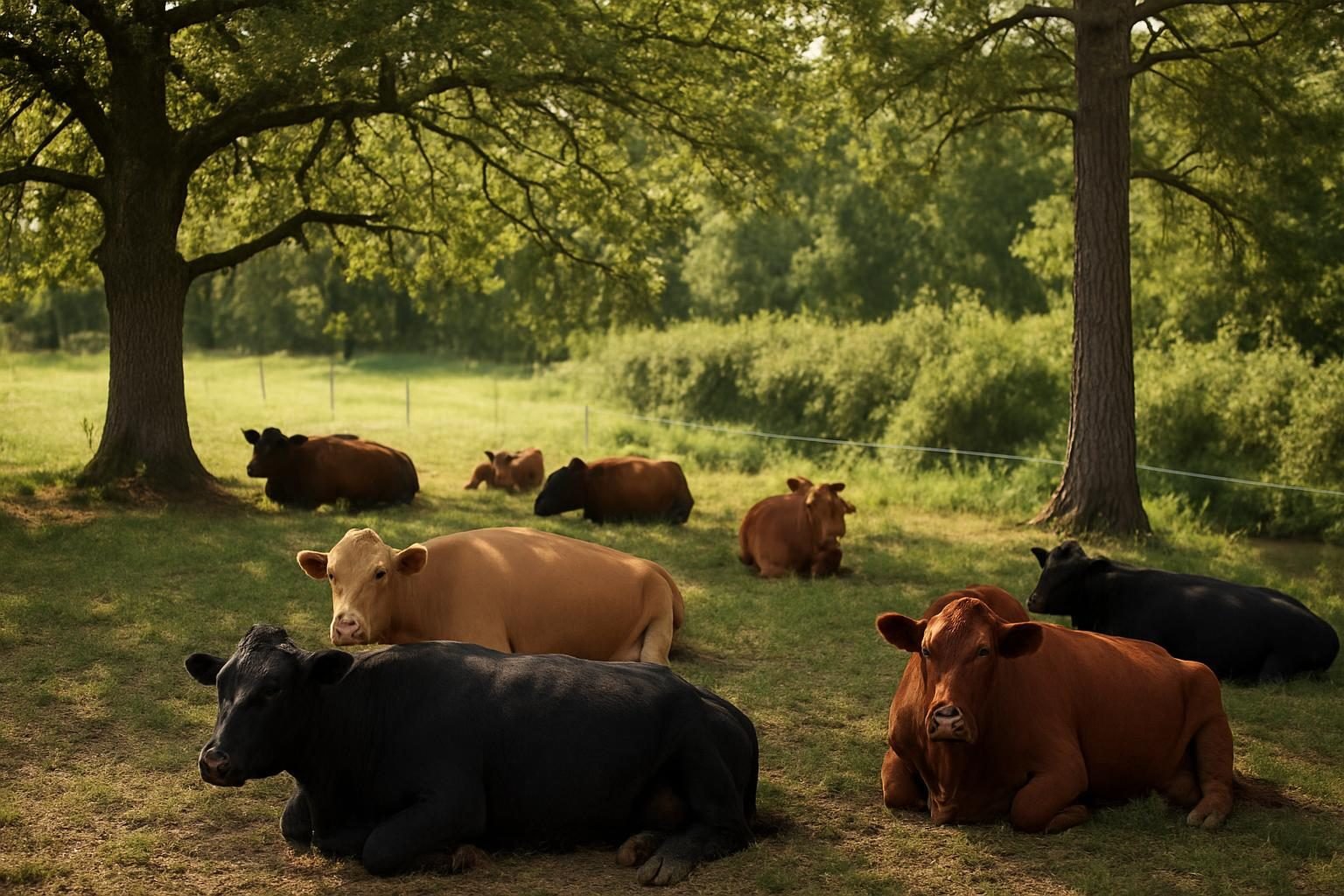
Silvopasture is often the easiest entry point for ranchers and graziers because you start with land that already carries animals. The trees provide shade and shelter, which can reduce heat stress in summer and cold stress in winter, while the forage layer keeps producing beneath a managed canopy.
There are two common routes. You can thin an existing woodlot to let enough light reach the ground for forage, or you can plant trees into an open pasture. Thinning is faster; planting gives you more control over species and spacing. In both cases, light is the limiting factor: too much shade and the grass thins out, too little and you lose the benefit.
- Protect young trees. Cattle, sheep and goats will browse and rub seedlings. Tree shelters, individual cages or temporary fencing are standard.
- Graze with intention. Rotational management keeps animals from camping under trees and compacting roots. See rotational grazing for the fundamentals.
- Match animals to the system. Pigs, goats, sheep and cattle interact with trees very differently. Pastured pigs in woodlots can be productive but need careful rooting and stocking control.
For layout, species and management detail, read silvopasture: how to combine trees, forage and livestock. If you run mixed herds, multi-species grazing pairs well with a wooded system.
Alley cropping: growing crops between rows of trees
In alley cropping, tree rows (often nut, fruit or timber species) are spaced wide enough to farm the alleys between them with annual crops, hay or forage. The trees diversify income and build deep roots; the alleys keep cash flowing while the trees mature.
Design details matter. Alley width should match your equipment, with a common rule of thumb being a multiple of your implement width plus room to turn. Orient rows east-west or north-south based on your latitude and which crops you want to protect from shade. Expect some yield reduction in the crop rows closest to the trees, especially as the canopy fills in; many growers plan to shift to shade-tolerant crops or forage over time.
Choosing tree species is the big decision. Nut crops are popular because they can fit both income and long-term planning, and our guide to nut trees for agroforestry (chestnut, hazelnut, pecan) covers what grows where. For the full design process, see alley cropping: growing crops between rows of trees.
Windbreaks and shelterbelts
A well-designed windbreak slows wind across a distance many times its height, which can protect crops, reduce soil erosion, cut winter heating costs for buildings, shelter livestock and catch drifting snow where you want it. It also provides habitat and travel corridors for wildlife.
- Density matters. A very dense planting creates turbulence on the lee side; a moderately porous one tends to protect a longer distance.
- Use multiple rows with mixed species (conifers, deciduous trees and shrubs) for year-round function and resilience against pests and disease.
- Orient across the prevailing damaging wind, which varies by region and season. Check local wind data with your extension office.
Windbreaks are a good first project in the Great Plains and Midwest, where wind is a constant. Get the design specifics in windbreaks: farm shelterbelt design, species and benefits. You can also combine shelterbelt thinking with pollinator habitat; see hedgerows for pollinators.
Riparian forest buffers
A riparian buffer is a strip of trees, shrubs and grasses along a stream, river, ditch or pond. It stabilizes banks, shades the water (keeping it cooler), filters sediment and nutrients from runoff, and creates habitat. For many farms it is the highest-impact water-quality practice available, and it is frequently eligible for conservation program support.
Buffer width is a trade-off between benefit and land taken out of production. Wider generally filters and protects more; programs often set minimums and allow flexibility. Species should be native and suited to wet soils, and layered where possible (grasses at the field edge, shrubs in the middle, trees closest to the water). Early weed control and protection from deer and livestock decide whether a buffer succeeds. Details are in riparian buffers: protecting streams while gaining habitat.
Forest farming
Forest farming means cultivating high-value understory crops in a managed woodland. Common examples include mushrooms (such as shiitake on logs), ramps, ginseng and goldenseal, and some native medicinals, plus maple syrup in the Northeast and upper Midwest. It suits landowners who already have woods and want income without clearing.
Be realistic: some crops take many years to mature, market access and regulation vary (wild-simulated ginseng, for example, has legal and trade requirements you must confirm locally), and poaching can be a real problem for valuable plants. Start with a quick-turnaround crop like log-grown mushrooms to learn the system while slower crops establish.
Food forests: agroforestry at garden scale
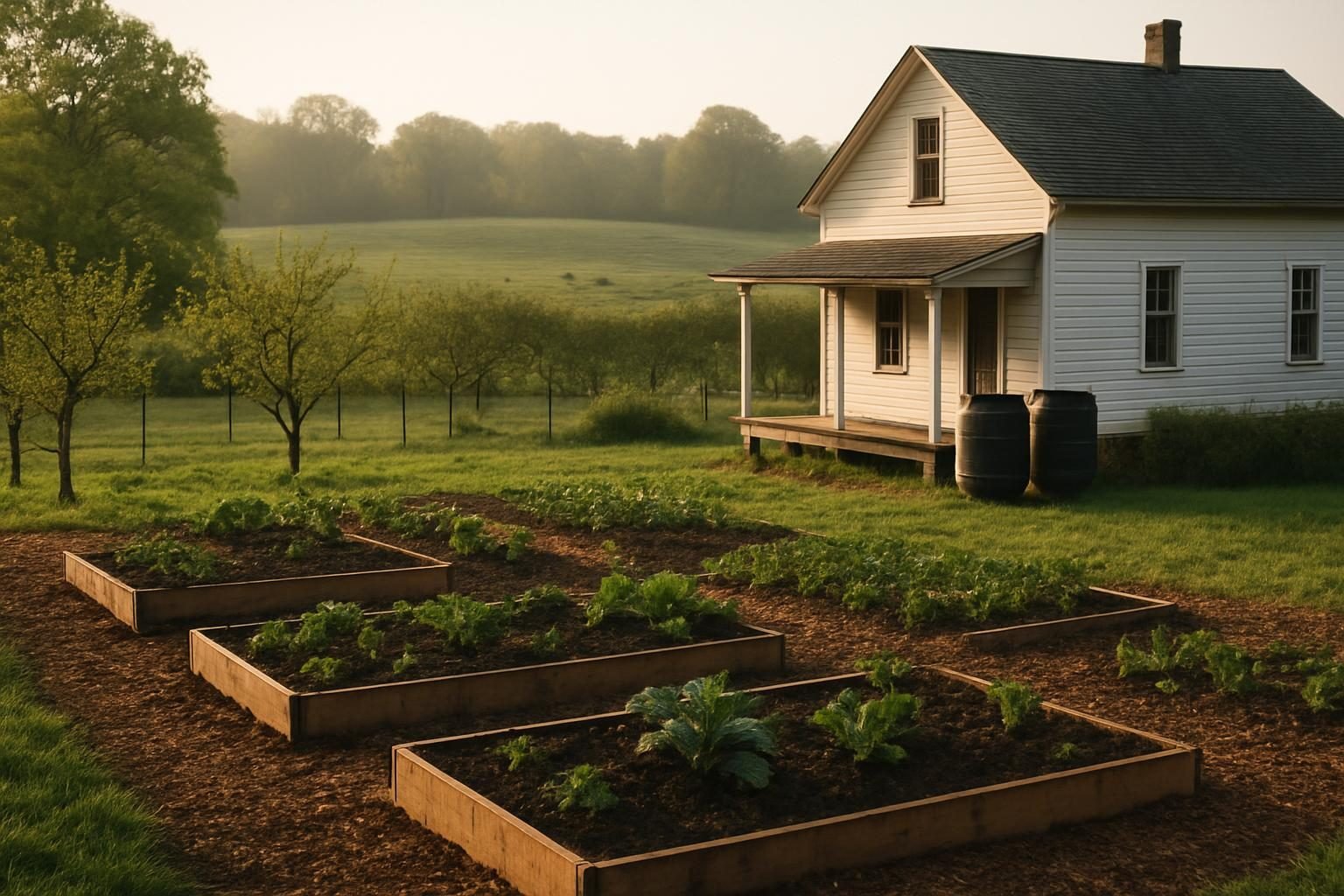
A food forest mimics a woodland structure with edible and useful plants in layers: canopy trees, understory trees, shrubs, herbaceous plants, groundcovers, vines and root crops. It is not one of the five USDA practices, but it draws on the same principles and works well on homesteads, small farms and suburban lots. See the broader context in small-scale regenerative farming.
Patience and honesty about labor help here. A food forest takes several years to fill in, needs active weed and mulch management at the start, and tends to produce modest yields of many different things rather than large volumes of one. That diversity is the appeal, but it is not a labor-free system. Learn layering, spacing and plant selection in how to plant a food forest, and look at fruit tree guild planting for orchard-scale companion design.
Water design for agroforestry sites
Trees and water are tightly linked. Young trees need reliable moisture in their first seasons, and a mature tree system can help infiltrate and slow runoff. Water design shapes where you plant and how well plantings establish.
Keyline design
Keyline design reads the contours of your land to move water from wet valleys toward drier ridges and to guide plowing, planting and pond placement. It is a planning framework more than a single structure. Learn the basics in keyline design: shaping land to hold water.
Swales
Swales are level-on-contour ditches and berms that slow and soak in runoff, with trees often planted on the berm. They can work very well in some climates and soils, and poorly in others, such as heavy clays in wet regions where they can waterlog or fail. Read swales: when they work and when they do not before you dig.
Ponds and rainwater
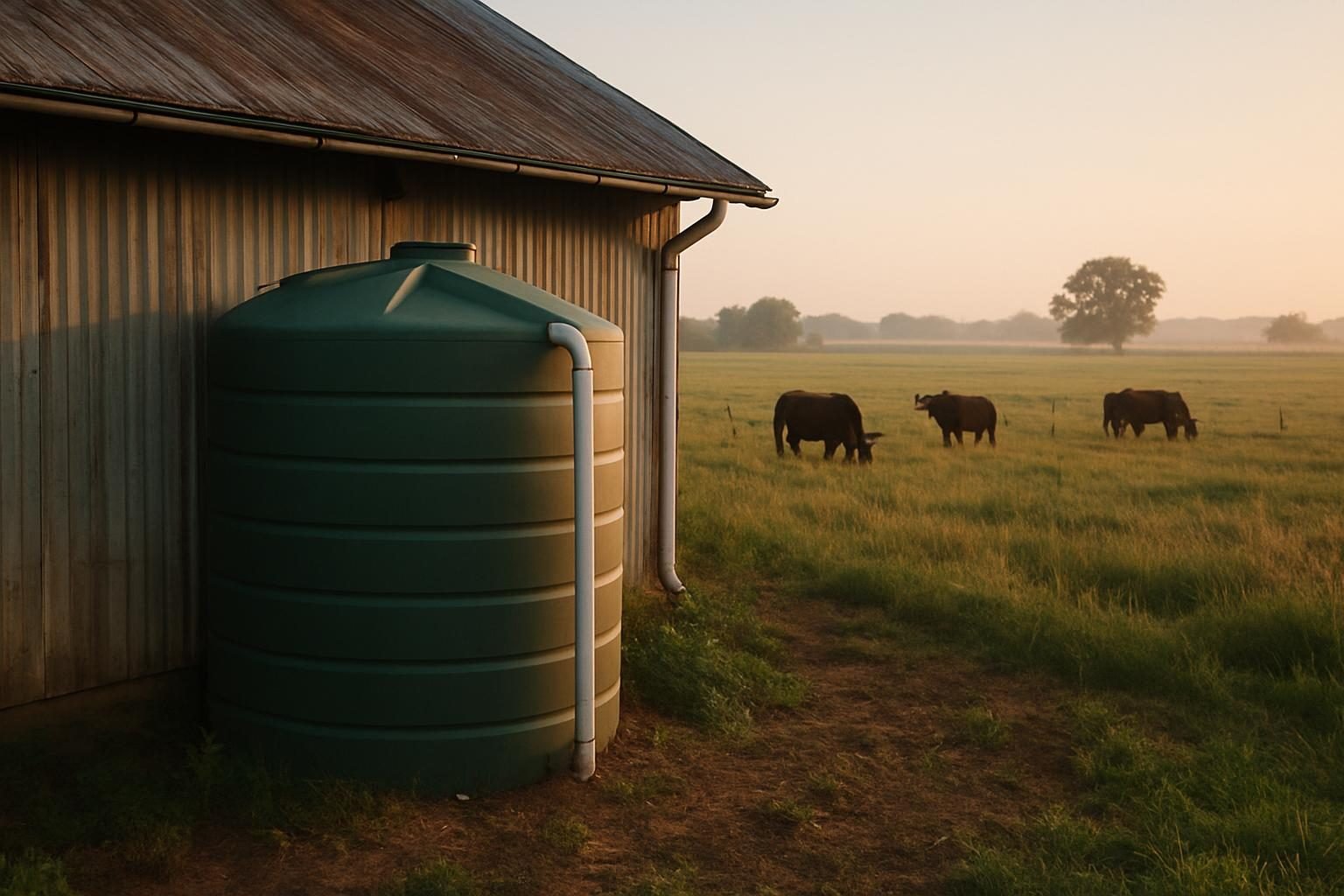
A farm pond can supply livestock water, irrigation, fire protection and habitat, but siting, soil and permitting matter, and many states regulate pond construction and water rights. Our guide to building a farm pond for water security and habitat walks through planning. For smaller-scale capture, see rainwater harvesting, and for getting water to young trees efficiently, drip irrigation for small farms.
Healthy soil is the foundation under all of this. Soil that is high in organic matter and well aggregated infiltrates and holds more water; build it with the practices in soil health: the complete guide to building living soil.
Choosing species for your region
No single species list works everywhere. Match trees to your hardiness zone, rainfall, soil and the job you need them to do. Native species usually support the most wildlife and resist local pests best, but some non-natives have long records in agroforestry. Avoid known invasives.
| Region | Common agroforestry candidates (examples) | Watch-outs |
|---|---|---|
| Humid East and Southeast | Chestnut, pecan, persimmon, black walnut, pawpaw, pine, oak | Disease and pest pressure; black walnut toxicity to some plants (juglone) |
| Corn Belt and Midwest | Hazelnut, chestnut, oak, black walnut, elderberry, cedar and spruce for shelter | Tile drainage, equipment width, deer browse |
| Great Plains | Hackberry, bur oak, ponderosa and eastern red cedar, chokecherry, plum | Drought, wind, establishment survival |
| Arid and semi-arid West | Drought-adapted pines, native oaks, mesquite, Russian olive alternatives; irrigation often needed | Water rights, fire risk, invasive species rules |
| Pacific Northwest | Douglas fir, hazelnut, apple, alder, native shrubs | Summer dry spell for young trees, deer and elk |
These are examples, not recommendations for your site. Ask your county extension office, state forestry agency or NRCS planner for species lists suited to your soils and climate.
Costs, income and timelines
Agroforestry is a long game, and the honest budget reflects that. Costs vary dramatically by region, species, scale and whether you do the work yourself, so treat any numbers as rough estimates and get local quotes.
- Upfront costs: Seedlings or whips (often from under a dollar for bare-root to several dollars or more for larger stock), tree protection, fencing, site prep, irrigation and labor. Protection and weed control frequently cost more than the trees themselves.
- Ongoing costs: Mulching, mowing or grazing management, replacing losses, pruning and, in dry regions, watering through establishment.
- Income timelines: Shade and shelter benefits can show up in a few years. Fruit, nuts and timber typically take anywhere from a few years to several decades depending on species. Many farms plan a mix of fast, medium and slow crops.
- Cash flow: Keep annual crops, hay or grazing going while trees mature, which is the logic of alley cropping and silvopasture.
Put these numbers on paper before you plant. Our guides on writing a farm business plan and on funding, certification and sales for a regenerative farming business help you model the long payback.
NRCS and other support
The USDA Natural Resources Conservation Service (NRCS) offers technical help and, in many cases, financial assistance for conservation practices that include agroforestry-type work, such as windbreaks, riparian buffers, silvopasture and tree planting. Programs commonly involved include EQIP and CSP, and some states and conservation districts offer their own tree programs and discounted seedlings.
Program rules, payment rates, eligibility, practice standards and sign-up deadlines change and differ by state. Contact your local NRCS service center, conservation district, state forestry agency and extension office to confirm current details. Apply before you start planting if you want cost-share, since work begun before approval may not be eligible.
A beginner roadmap
- Observe for a full year. Note wind direction, water flow, frost pockets, shade and where animals gather.
- Define one goal. Shade for cattle, a windbreak, a stream buffer, nut income, a home food forest. One clear job beats five vague ones.
- Call NRCS and your extension office. Ask about technical help, cost-share and species lists for your soils.
- Fix water first. Plan where water goes, and consider contour and pond options before planting.
- Start small. Plant a pilot block, row or paddock, and learn what survives and what needs more protection.
- Protect and maintain. Plan for weed control, fencing or shelters and watering for the first two to three seasons.
- Expand with evidence. Add rows, species and practices based on what worked on your land.
Common mistakes to avoid
- Planting without a plan for browse protection, then losing the whole planting to deer or livestock.
- Choosing species for novelty instead of fit with climate, soils and market.
- Spacing rows without considering equipment width, mature canopy size or shade on crops.
- Underestimating establishment labor, especially weed control and watering.
- Skipping program paperwork and missing out on cost-share.
- Ignoring local rules on ponds, water rights, wild-harvested species and invasive plants.
Key takeaways
- Agroforestry is intentional tree integration; the five USDA practices are silvopasture, alley cropping, windbreaks, riparian forest buffers and forest farming, with food forests as a garden-scale cousin.
- Trees take years to pay off, so pair them with annual crops, forage or livestock that earn while they grow.
- Design water first; keyline, swales and ponds work best when matched to your climate and soil.
- Species choice, browse protection and early weed control decide success more than anything else.
- Talk to NRCS and your extension office before you plant, and confirm current program details.
- Start with one practice, one goal and a small pilot, then expand.
Frequently asked questions
What is the easiest agroforestry practice to start with?
For most farms, a windbreak or a riparian buffer is the simplest start because the goals are clear and technical help and cost-share are often available. If you already graze livestock, thinning an existing woodlot for silvopasture can be the lowest-cost entry.
How long until agroforestry pays off?
Benefits like shade, shelter and erosion control can appear within a few years, while nut, fruit and timber income commonly takes anywhere from several years to a few decades depending on the species. Plan for interim income from crops, forage or livestock in the meantime.
Does agroforestry reduce crop yields?
Crops near trees can lose yield to shade and root competition, particularly as trees mature, but shelter from wind and improved moisture retention can offset some losses. Net results depend on species, spacing, climate and management, so start small and measure on your own land.
Can I get financial help to plant trees on my farm?
Often yes. NRCS programs, state forestry agencies and conservation districts may offer technical assistance, cost-share or low-cost seedlings for practices like windbreaks, buffers and silvopasture. Rules and payment rates change, so confirm current details with your local office before you begin work.
Can I do agroforestry on a small property?
Yes. Hedgerows, small windbreaks, a food forest, fruit trees with companion plantings or a short alley-cropped row all work on small acreage. Space limits your scale, not your options, and small plantings are a good way to learn.