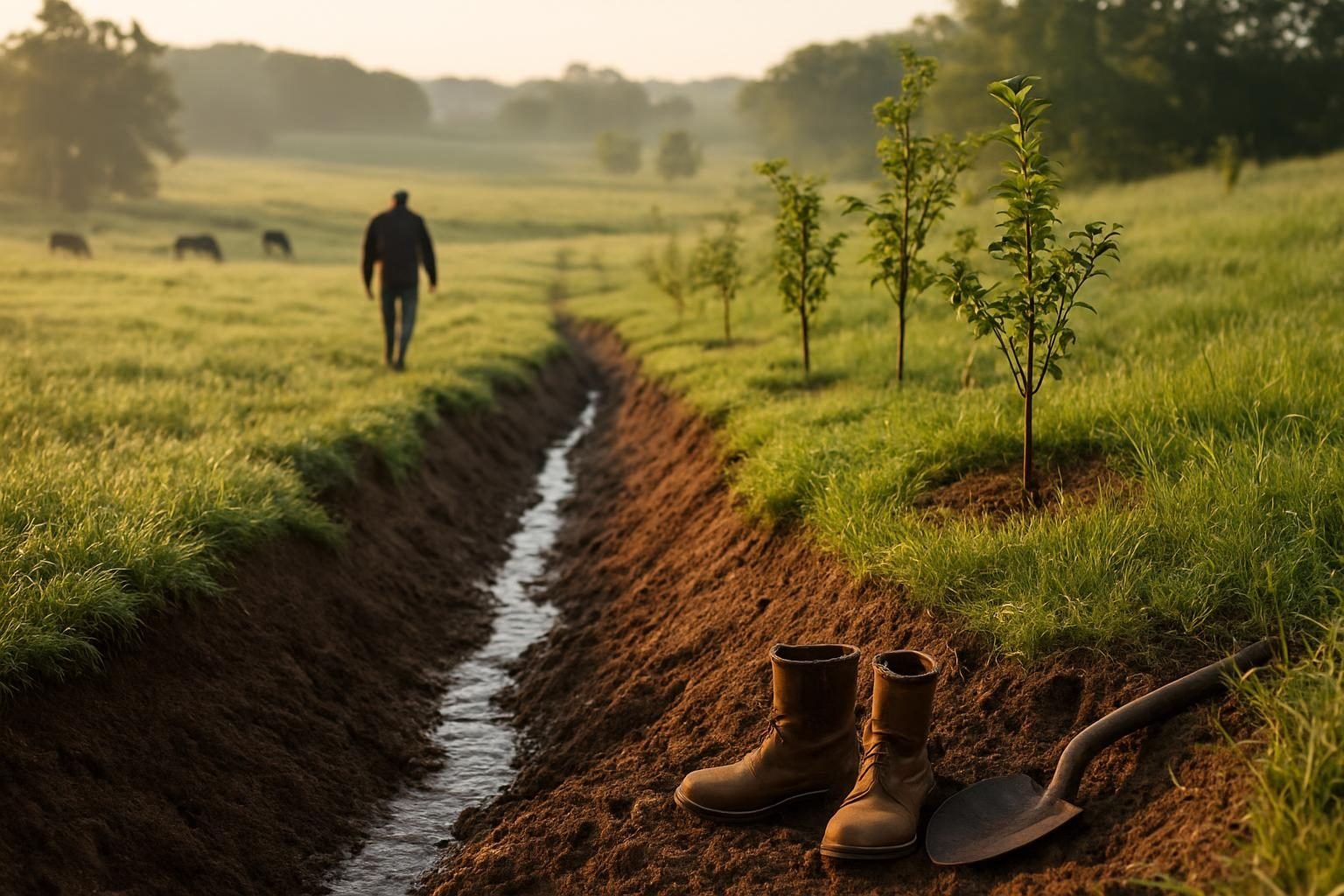
A swale is a level ditch dug on contour, with the soil piled on the downhill side as a berm. Its job is to catch runoff, slow it down, and let it soak into the ground instead of racing off your land. Swales are one of the most photographed tools in regenerative agriculture and one of the most misapplied, so this guide covers when swales work, when they fail, and what to use instead.
Quick answer: Swales work best on gentle slopes (roughly 2 to 15 percent) with well-drained, infiltrating soils in climates where runoff, not total rainfall, is the problem. They fail on heavy clay that cannot absorb water, on steep or unstable slopes, and in very wet climates where stored water causes slumping. Before digging, test your soil’s infiltration, walk the land during a storm, and consider keyline, berms, or a pond as alternatives.
What a swale actually does
A swale is not a drain and it is not a pond. A drain moves water away; a swale holds water in place long enough for it to soak into the soil profile. The berm on the downhill side adds a little extra storage and gives you a planting bed that sits just above the wettest zone.
The benefit depends on one thing: how fast your soil can take in water. If the swale drains within a day or two after a storm, you are recharging the soil and feeding whatever you planted along it. If it sits full for a week, you have built a mosquito pond that may be saturating the slope below it. For harvested water or intentional storage, proper water filtration becomes important to maintain soil and water quality.
Swales also do nothing for a problem you do not have. If your land does not shed water in meaningful volumes, earthwork will not fix thin soil or low organic matter. Building soil structure and cover comes first, which is covered in soil health principles.
When swales work well
- Gentle to moderate slopes. Roughly 2 to 15 percent is the typical comfortable range. Below 2 percent water has nowhere to go anyway; above 15 percent the berm and trench become hard to build and keep stable.
- Soils that infiltrate. Loams, sandy loams, and well-structured silt loams with decent depth to a restrictive layer. Water needs to leave the trench within hours to a couple of days.
- Semi-arid to subhumid climates with intense, episodic rain. Think parts of the Great Plains, Southwest, and the dry-summer West, where a few heavy storms deliver much of the year’s water and most of it normally runs off.
- Tree and shrub plantings. A swale-and-berm system gives young perennials extra moisture while roots establish, which suits orchards, hedgerows, and food forests.
Where swales fail
Heavy, slowly draining clay
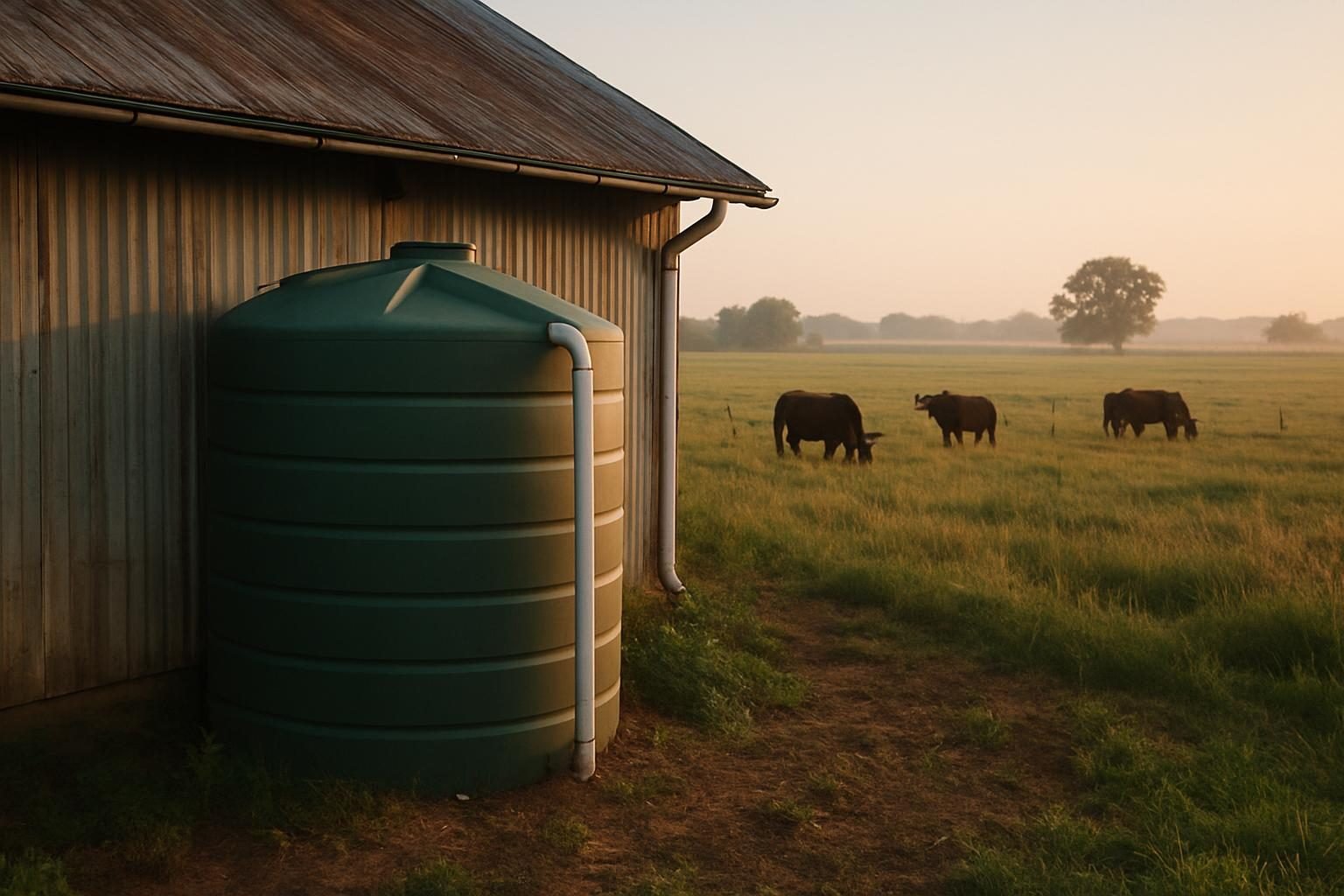
Clay soils may take in water so slowly that a swale becomes a long, shallow pond. Standing water kills tree roots, breeds mosquitoes, and can soften the berm until it fails. If a hole you fill with water is still holding it a day later, consider alternatives like a rain barrel system or think twice about building a swale.
Steep or unstable slopes
Saturating a steep hillside adds weight and lubricates the soil. Slopes with a history of slumping, landslides, or seeps are poor candidates. A berm that overtops on a steep slope can send a concentrated sheet of water downhill with more force than if the swale had never been built.
Very wet climates and shallow soils
In the humid East and Southeast, and in the Pacific Northwest’s wet season, the soil may already be near saturation when storms arrive. Adding storage makes little sense and can worsen drainage problems. Shallow soil over bedrock or a hardpan has the same issue: nowhere for the water to go.
Poorly planned overflow
Even in a good site, a swale without a stable spillway is a failure waiting for the next big storm. A breach at one low spot can cut a gully faster than the original slope ever would.
Local rules and legal limits
Diverting or storing water can trigger state water-rights rules, stormwater regulations, or wetland and floodplain restrictions. Check with your county NRCS or conservation district office and your state water agency before you build.
Design basics
The same principles apply whether you are building a 50-foot swale in a backyard orchard or a long run across a pasture.
- Observe first. Walk the site during or right after a heavy rain. Note where water concentrates, where it sheets, and where it disappears quickly.
- Test infiltration. Dig a hole about a foot deep, fill it, let it drain, fill it again, and time the second fill. Fast drainage is a good sign; water still standing after many hours is not.
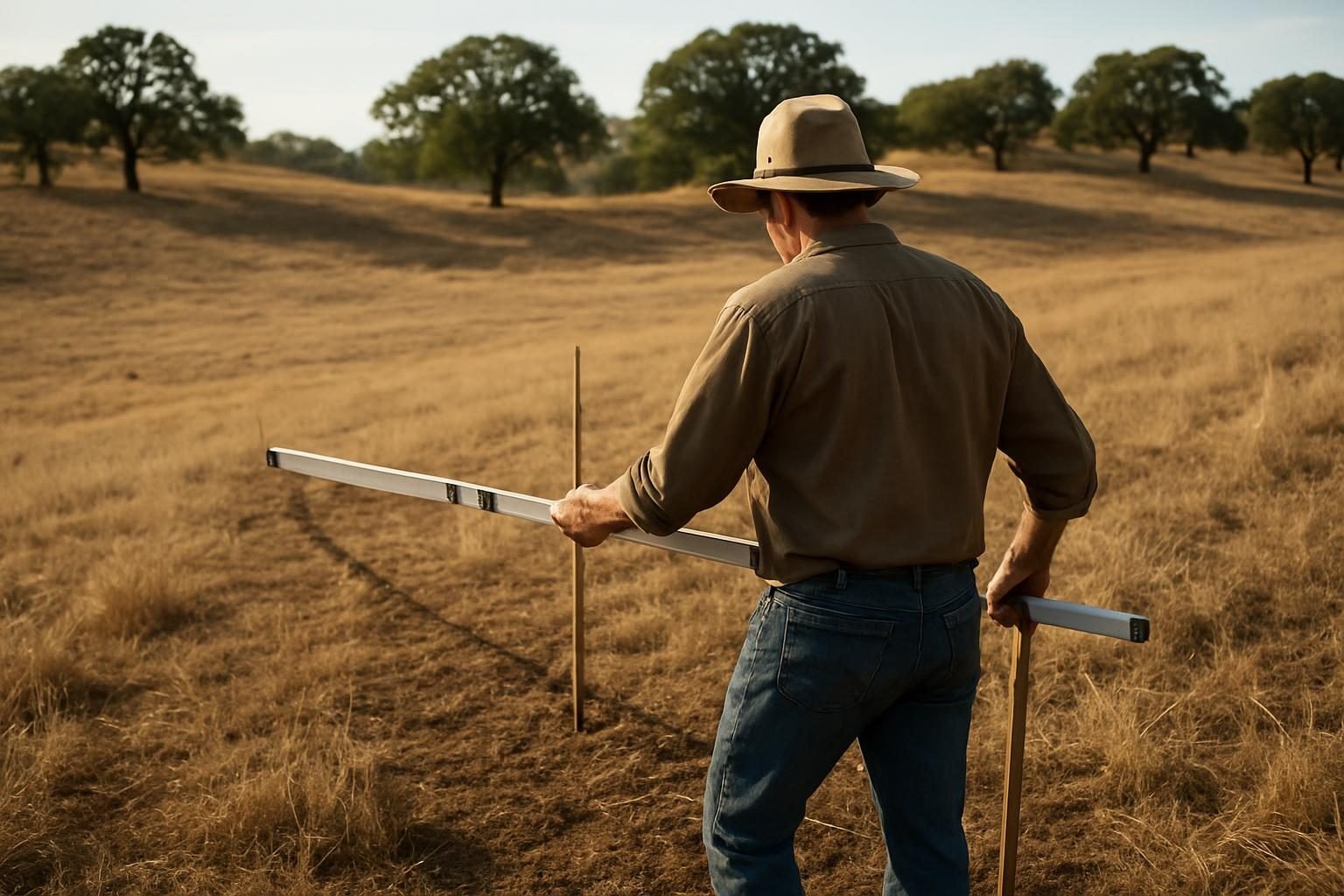
- Find the contour. Use an A-frame, a water level, a laser level, or a transit. Contour means dead level along its length; even a small slope will turn a swale into a slow ditch that carries water to one end.
- Size to the catchment. Estimate the area draining into the swale and the storm size you want to handle. Your NRCS or extension office can help with design storm numbers for your region.
- Dig and build the berm. Pile the excavated soil on the downhill side, compact it lightly, and shape it so it is wider than it is tall. Typical swales are a foot or two deep and a few feet wide, but dimensions vary with slope and soil.
- Add overflow points. Build spillways at planned low spots, armored with stone or dense vegetation, and route them to a stable outlet.
- Stabilize immediately. Seed the berm with a cover mix and mulch heavily. Bare soil is the enemy of any new earthwork.
Planting swales
The berm is the planting zone. The trench is wetter and sometimes too wet; the berm sits just above it and benefits from lateral moisture without sitting in standing water.
| Zone | Conditions | Typical plantings |
|---|---|---|
| Trench bottom | Wettest, may pond briefly | Grasses, sedges, forage, or leave in sod |
| Lower berm face | Moist, well-drained | Shrubs, berries, nitrogen-fixing support species |
| Berm crown | Moisture-buffered, better drained | Fruit and nut trees, hedgerow species |
| Upslope edge | Drier, catches runoff | Deep-rooted perennials, cover crops |
Match species to your region and to the real moisture conditions, not the hoped-for ones. Nut crops such as those in our guide to nut trees for agroforestry do well on well-drained berms but dislike wet feet. If you are planning a layered planting, see how to plant a food forest. Along a swale, a mixed planting of hedgerows for pollinators can also add habitat and beneficial insects.
Expect to water young trees during the first one or two dry seasons regardless of the swale. It extends moisture but does not replace establishment care.
Alternatives to swales
Keyline design
Keyline works with the land’s natural shape, using subsoil ripping patterns and slightly off-contour passes to move water gently from wet valleys toward drier ridges. It suits larger pastures and fields and avoids large trenches. Read more in our guide to keyline design.
Berms and contour banks
A berm without a trench, or a low contour bank, slows sheet flow with less excavation. These can work where a full swale would be too wet or too steep, though they need the same attention to overflow. For additional water management strategies, consider exploring agroforestry and silvopasture approaches.
Ponds
Where soil holds water well and a reliable catchment exists, storing water in a pond often beats trying to hide it in the soil. Ponds also deliver habitat and livestock or irrigation water. See our guide to building a farm pond.
Cover, structure, and grazing management
Often the cheapest way to hold water is to improve how the soil takes it in. Armored, compacted ground sheds water; covered, aggregated, biologically active ground absorbs it. Start with fixing compacted soil without heavy tillage and with adaptive management such as rotational grazing. Along streams, riparian buffers slow and filter water before it reaches the channel.
Choosing the right tool: a quick comparison
| Situation | Often a good fit | Watch out for |
|---|---|---|
| Gentle slope, loamy soil, flash runoff | Swale with planted berm | Unlevel trench, weak spillway |
| Large pasture, long slopes | Keyline patterns, grazing and cover | Cost of equipment and design help |
| Heavy clay, slow infiltration | Pond, surface drainage, soil building | Ponding in a trench |
| Steep or unstable ground | Vegetative cover, trees, professional advice | Saturating a slope |
| Alley plantings or windbreak sites | Light berm or shallow swale if soil allows | Over-wetting young trees |
Swales can also complement tree systems such as alley cropping and windbreaks, where a berm gives tree rows a moisture and establishment advantage. For the broader set of water and tree practices, browse our agroforestry and water section.
Key takeaways
- A swale only works if the soil can absorb stored water within a day or two.
- Aim for gentle slopes and dead-level contour; always build a stable overflow.
- Avoid swales on heavy clay, steep or slumping ground, and shallow soils in wet climates.
- Plant the berm, not the trench, and stabilize bare soil right away.
- Keyline, berms, ponds, and better soil cover are often the better answer.
- Check local water, stormwater, and wetland rules before you dig.
Frequently asked questions
How far apart should swales be?
There is no single spacing. It depends on slope, soil, rainfall, and the area each swale must catch. On gentle slopes, spacing may be tens of feet; on steeper ground, closer. A local NRCS or extension office can help you size and space them for your storms and soils.
Do swales work in the humid East and Southeast?
Sometimes, but less often. Where soils are already wet or clay-heavy and rain is frequent, storing more water can cause saturation and slumping. On well-drained sandy or loamy sites, small planted berms can help trees establish.
Can I build a swale on clay soil?
Usually it is a poor choice, because water drains too slowly and the trench may stay wet for days. Test infiltration first. If it fails, consider a pond, surface drainage, or soil-building practices instead.
What is the difference between a swale and a keyline system?
A swale is a level trench and berm that holds water in place. Keyline design uses the landform to guide water gently across a slope, typically with ripping or cultivation patterns, and does not rely on deep ditches.
Do I need a permit to build a swale?
Possibly. Rules vary by state and county and may involve water rights, stormwater, wetlands, or floodplains. Contact your local conservation district, NRCS office, or state water agency before you start.