A good hedgerow is a living fence line that feeds bees, shelters predatory insects and quietly does pest control for you. If you want hedgerows for pollinators that actually work, the details matter: what you plant, how wide you plant it, and how you keep weeds off it for the first three years. This guide walks through the why, the species choices by region, layout, establishment and the NRCS standards that can help cover the cost.
Quick answer: Plant a hedgerow of mostly native shrubs, small trees and perennial flowers along a field edge, fence or ditch, aiming for something like 10 to 20 feet wide with a mix that blooms from early spring through fall. Prepare the site a season ahead, mulch and irrigate through establishment, and expect real habitat value in about 3 to 5 years. Confirm current NRCS practice standards (Hedgerow Planting, Conservation Cover) and payment details with your local USDA service center.
Why plant a hedgerow for pollinators and beneficial insects
Native bees, hover flies, parasitic wasps and lady beetles need three things: food across the whole season, a place to nest or overwinter, and some protection from spray drift and wind. Cropped fields rarely provide all three. A permanent strip of diverse woody and herbaceous plants does.
Pollination benefits
Many native bees are ground nesters, and a hedgerow gives them undisturbed soil, hollow stems and woody debris to use. Research from university extension and USDA programs has repeatedly shown that crops near semi-natural habitat often see higher visits from wild pollinators, though results vary by crop, region and landscape. Treat hedgerows as one part of a pollination strategy, not a guarantee of yield gains.
Pest control benefits
Predators and parasitoids need nectar and pollen as adults, even if their larvae eat pests. Flowering shrubs and perennials give them that. Studies on farms have documented more natural enemies near hedgerows, but the effect on pest damage is mixed and depends on crop, pest and distance from the planting. Think of it as pest pressure reduction over time, not an off switch.
Other benefits and trade-offs
- Wind reduction and soil protection, especially if the hedgerow doubles as a low windbreak.
- Erosion control and filtering of runoff along field edges and waterways.
- Wildlife cover and travel corridors.
- Trade-offs: land taken out of production, weed seed or rodent harborage if poorly managed, and some risk of hosting pests like certain stink bugs. Honest planning beats wishful thinking.
Choosing species: native plants by region
Use plants native to your ecoregion whenever you can, and favor a mix of shrubs, small trees and perennial flowers. Aim for a bloom calendar with at least a few species flowering in every month your region allows. The lists below are starting points, not prescriptions. Your county extension office, local Xerces Society resources, native plant societies and NRCS plant materials centers can give you locally adapted choices. For broader context on integrating woody plants with your farm system, see agroforestry practices.
| Region | Example shrubs and trees | Example flowers and grasses |
|---|---|---|
| Northeast and Mid-Atlantic | Willow (pussy willow types), serviceberry, elderberry, buttonbush, spicebush, redbud | Goldenrod, asters, milkweed, bee balm, Joe Pye weed |
| Southeast and South | Wax myrtle, American beautyberry, buttonbush, sumac, hawthorn, redbud | Coneflower, black-eyed Susan, rattlesnake master, mountain mint, ironweed |
| Midwest and Corn Belt | Prairie willow, wild plum, elderberry, dogwood species, chokecherry, hazelnut | Anise hyssop, prairie clover, wild bergamot, leadplant, little bluestem |
| Great Plains | Chokecherry, wild plum, buffaloberry, sumac, golden currant | Blanket flower, penstemon, purple coneflower, blazing star, sideoats grama |
| Arid Southwest and Intermountain West | Desert willow, rabbitbrush, wolfberry, fourwing saltbush, three-leaf sumac | Penstemon, globemallow, desert marigold, native buckwheats, sage species |
| Pacific Northwest and California | Oceanspray, Oregon grape, red-flowering currant, ceanothus, coyote brush, toyon, elderberry | California poppy, native lupines, gumplant, yarrow, phacelia |
Several of these shrubs also give you something to harvest. Elderberry, serviceberry, hazelnut and plum can contribute to farm income, which overlaps nicely with nut tree plantings and the layered thinking in a food forest.
Species selection checklist
- At least 8 to 12 species, with several flowering in early spring, midsummer and fall.
- A mix of flower shapes so short-tongued and long-tongued insects both have options.
- Nitrogen-fixing or deep-rooted species where they fit your site.
- Avoid known local invasives and anything cultivar-bred for sterile or doubled flowers, which can offer little nectar or pollen.
- Buy from nurseries that sell untreated stock, since systemic insecticides in nursery plants can harm the very insects you want.
Layout and design
Width, placement and structure drive how well a hedgerow performs.
Where to put it
Good spots include field borders, fence lines, along ditches, between fields and the farmstead, and near crops that depend on pollinators. Put plantings where they connect to existing habitat if you can, such as a woodlot, creek or riparian buffer. On sloping ground, running a hedgerow on contour can slow runoff, a concept that pairs naturally with keyline design and sometimes swales.
Width, spacing and structure
- Width: Typical designs run roughly 10 to 25 feet across. Wider generally means more habitat, but even a narrow single-row strip helps.
- Rows: Two to four staggered rows work well, with taller shrubs or small trees in the middle or on the windward side and shorter plants toward the field.
- Spacing: Shrubs commonly go in at roughly 3 to 6 feet apart, small trees 8 to 15 feet, depending on mature size. Check each species.
- Understory: Add a herbaceous flower and bunchgrass layer along the edge, plus some bare ground patches for ground-nesting bees.
- Gaps: Leave access for equipment, livestock gates and drainage. Plan a mowed lane or buffer on the field side so weeds do not creep in.
Working with livestock
Livestock will browse young shrubs hard. Fence the hedgerow out until plants are well established, or choose species grazers tend to avoid. If you are integrating trees and animals on purpose, read up on silvopasture design, and note that managed grazing systems such as rotational grazing make it easier to protect young plantings with temporary fencing.
Establishing the hedgerow, step by step
Establishment is where most hedgerows succeed or fail. Plan for about three years of active care.
- Plan a year ahead. Map the site, call 811 before digging, check for utilities, drainage and easements, and order plants early. Native nurseries often sell out.
- Control weeds before planting. Perennial grasses and thistle are the biggest threat. Options include repeated tillage or mowing, solarization with clear plastic during hot months, smothering with cardboard and mulch, or a cover crop sequence. Choose the method that fits your scale and organic or conventional goals.
- Plant at the right time. Fall or early spring is typical in most regions, with dormant bare-root stock cheaper than containers. In the arid West, fall planting often gives roots time to establish before summer heat.
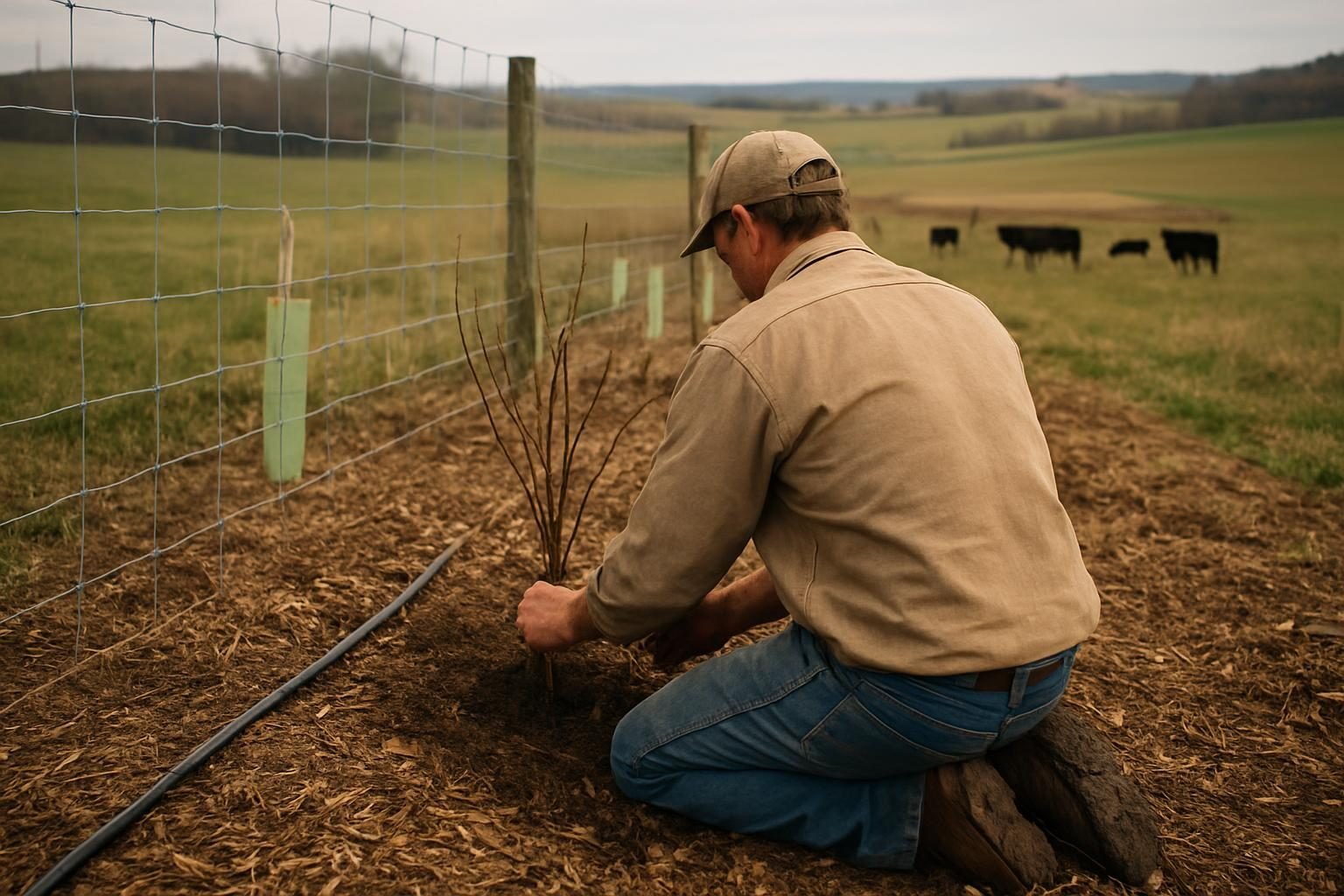
- Mulch. Weed barrier fabric or 3 to 4 inches of wood chip mulch, kept away from stems, cuts weed competition and holds moisture.
- Water. Drip irrigation is ideal for the first one to three growing seasons, especially in dry regions. Water deeply and less often rather than shallow and frequent.
- Protect plants. Use tubes or cages against deer, rabbits and rodents, and fence out livestock.
- Seed or plug the understory. Add native flower plugs or seed between shrubs once woody plants are settled, and keep these patches weeded in year one.
- Monitor and replace. Expect some losses. Replant failures in year two so you do not end up with gaps.
Ongoing management
- Mow or trim paths and edges rather than the whole strip.
- Prune on a rotation and leave some dead stems and brush piles for nesting insects.
- Avoid broadcast insecticides near flowering plants, and watch spray drift from neighboring fields. Where spraying is unavoidable, buffer width and timing matter.
- Keep an eye on invasives and spot-treat early.
NRCS conservation cover and hedgerow standards
The USDA Natural Resources Conservation Service has conservation practice standards that cover this kind of work, including Hedgerow Planting (Practice Code 422), Conservation Cover (327) and related herbaceous and woody practices. Cost-share is typically offered through programs like EQIP, and some practices may fit CSP or CRP depending on your situation. Practice names, codes, eligibility, payment rates and signup windows change, so contact your local USDA service center and ask for the current standard and state-specific job sheets before you design anything. Following the standard from the start can make enrollment smoother, and NRCS staff can help with species lists matched to your county.
If you are weighing a hedgerow as part of a bigger funding plan, see our guide to regenerative farming business, funding and certification for how conservation payments can fit alongside other income. A written farm business plan also helps when applying for cost-share.
Fitting hedgerows into the bigger system
Hedgerows are one piece of a whole-farm approach. They pair well with alley cropping, cover cropping and reduced tillage, and they reflect the habitat and diversity principles in what regenerative agriculture is and how to start. For more planting and water topics, browse our Agroforestry and Water category.
Key takeaways
- A diverse native hedgerow supports pollinators and natural enemies with season-long food and shelter, but results on yield and pest damage vary.
- Choose 8 to 12 or more regionally adapted native species with staggered bloom times.
- Typical widths run 10 to 25 feet; wider and more connected habitat generally performs better.
- Weed control, mulch, irrigation and animal protection in the first three years decide success.
- NRCS may help with cost-share; verify current practice standards and payments locally.
Frequently asked questions
How long does it take for a hedgerow to benefit pollinators?
Herbaceous flowers can start supporting insects in the first or second season, while shrubs usually take about three to five years to bloom heavily. Expect habitat value to build over time rather than appear all at once.
How wide should a pollinator hedgerow be?
A typical target is 10 to 25 feet, with multiple staggered rows. Narrower strips still help, especially when connected to other habitat, but wider plantings give more nesting space and bloom volume. In colder climates, also consider winterizing nearby water infrastructure to protect irrigation systems that may support the hedgerow during establishment.
Can I plant a hedgerow without losing too much cropland?
Yes. Place it on field edges, awkward corners, wet spots or low-yielding strips that cost you little. Many farmers find the lost acreage is small compared to the erosion, wind and habitat benefits, though you should run your own numbers.
Do hedgerows attract pests or rodents?
They can host some pests and small mammals, but diverse plantings also support predators like beneficial insects, birds and raptors. Good species choice, an edge buffer and occasional management reduce problems.
Does NRCS pay for hedgerows?
NRCS offers hedgerow and conservation cover practices through programs like EQIP, subject to eligibility, ranking and funding. Contact your local USDA service center for current practice standards, payment rates and application deadlines.