A food forest is a perennial planting that borrows the structure of a young woodland and fills it with plants you can eat, sell or feed to livestock. Done well, it builds soil, holds water and keeps producing for decades with far less input than an annual garden. Done carelessly, it becomes a thicket of struggling trees, so the planning matters more than the planting.
Quick answer: To plant a food forest, assess your site (sun, water, soil, climate zone), map the seven layers (canopy, understory, shrub, herbaceous, groundcover, root and vertical), choose plants that suit your region, group them into supportive guilds, and plant in fall or early spring with heavy mulch. Expect first harvests from shrubs and berries in 2 to 4 years, from fruit and nut trees in 4 to 10, and a mature system in 10 to 20.
What a food forest is (and is not)
A food forest, sometimes called forest gardening, is a designed agroforestry system that stacks multiple layers of perennial plants on the same ground. The goal is to get several functions from each plant: food, nitrogen, mulch material, pollinator habitat, erosion control. It sits comfortably within the broader principles in our guide to what regenerative agriculture is and how to start: keep soil covered, keep living roots in the ground, and build diversity.
It is not a wild forest you can ignore. Especially in the first five years, a food forest needs watering, weeding around young plants and mulch. It is also not a high-volume commodity system. Yields per acre are generally lower and more varied than an orchard, but the inputs are lower too, and the diversity spreads risk. Evidence on long-term yields from mature food forests is still thin compared with annual crops, so treat any big production claim with caution.
The seven layers of a food forest
Layering lets you use vertical space as well as ground. Not every planting needs every layer, and a small yard may use four or five.
| Layer | Typical height | Examples |
|---|---|---|
| 1. Canopy | 25+ ft | Standard apple, pecan, chestnut, walnut, persimmon |
| 2. Understory (small trees) | 10 to 25 ft | Dwarf apple, pear, pawpaw, plum, serviceberry, mulberry |
| 3. Shrub | 3 to 10 ft | Blueberry, currant, gooseberry, hazelnut, elderberry, aronia |
| 4. Herbaceous | 1 to 3 ft | Comfrey, chives, asparagus, rhubarb, culinary and medicinal herbs, bee-friendly flowers |
| 5. Groundcover | Under 1 ft | Strawberry, clover, creeping thyme, wild ginger |
| 6. Root (belowground) | Underground | Garlic, Jerusalem artichoke, horseradish, potato onion, daylily |
| 7. Vertical (vines) | Climbs | Hardy kiwi, grape, hops, passionfruit in warm zones |
A caution on a few popular choices: Jerusalem artichoke and mint-family herbs can take over, and some nitrogen-fixing shrubs such as autumn olive are invasive in parts of the East and Midwest. Check your state extension service or invasive species list before buying.
Site assessment: do this before you buy a single plant
Most food forest failures trace back to skipping this step. Spend at least a full season observing if you can.
- Sun: Map where sun falls in winter and summer. Most fruiting plants want 6 or more hours of direct sun; the lower layers can tolerate shade once the canopy fills in.
- Water: Watch where water runs, pools and drains after heavy rain. Few fruit trees tolerate standing water for long. If you have slope, consider whether keyline design or swales would help, but note that earthworks suit some sites and soils and not others.
- Soil: Test pH and nutrients through your state extension lab. Check compaction with a spade or probe, and note drainage and texture.
- Climate: Know your USDA hardiness zone, your average first and last frost dates and your chill hours (important for stone fruit and apples). Late-spring frosts kill more blossoms than winter cold.
- Wind: Persistent wind stresses young trees. A planned windbreak on the exposed side can make a real difference on open ground.
- Access and pests: Plan for paths, a water source, and deer, rabbit or vole pressure. Fencing or tree guards are often the difference between success and a total loss.
Design steps: from sketch to planting plan
- Define your goals. Family fruit, a farmers market crop, forage for chickens or pigs, wildlife habitat? Goals drive species choice.
- Draw a base map. Sketch boundaries, buildings, slope, water flow, existing trees, sun and shade, and utilities. Graph paper or a printed aerial photo works fine.
- Place the big pieces first. Locate canopy and large understory trees at their mature spacing, not their nursery-pot size. Standard trees often need 20 to 30 feet; dwarf fruit trees 8 to 15 feet.
- Fill in guilds. Around each anchor tree, add supporting plants (see below).
- Plan paths and access. Leave routes wide enough for a wheelbarrow and, if you need it, a mower or small tractor. Harvesting is easier when you can reach everything.
- Prepare the ground. Smother grass and weeds with cardboard and wood chips rather than tilling. The methods in our no-dig gardening guide translate directly to planting beds and tree circles.
- Plant, mulch and water in. Fall planting suits much of the South and mild areas; early spring suits colder regions.
Guilds: plants that work together
A guild is a small community built around one anchor plant, usually a tree. Each companion is chosen for a job. Typical roles include:
- Nitrogen fixers: clover, lupine, false indigo, goumi, or leguminous trees such as honeylocust in suitable regions. Fixation is real but modest, and the nitrogen reaches neighbors mainly when leaves and roots decompose.
- Dynamic accumulators and mulch makers: comfrey (use a sterile cultivar like Bocking 14 to avoid seeding) is the usual example. The idea of mining deep nutrients is popular, but the main proven benefit is abundant, easy mulch material.
- Pollinator and beneficial insect attractors: yarrow, borage, dill, bee balm, and flowering shrubs. See our upcoming piece on hedgerows for pollinators for more.
- Pest confusers: alliums such as chives and garlic planted at the drip line can help deter some pests, though results vary.
- Groundcover: a living cover suppresses weeds and holds moisture.
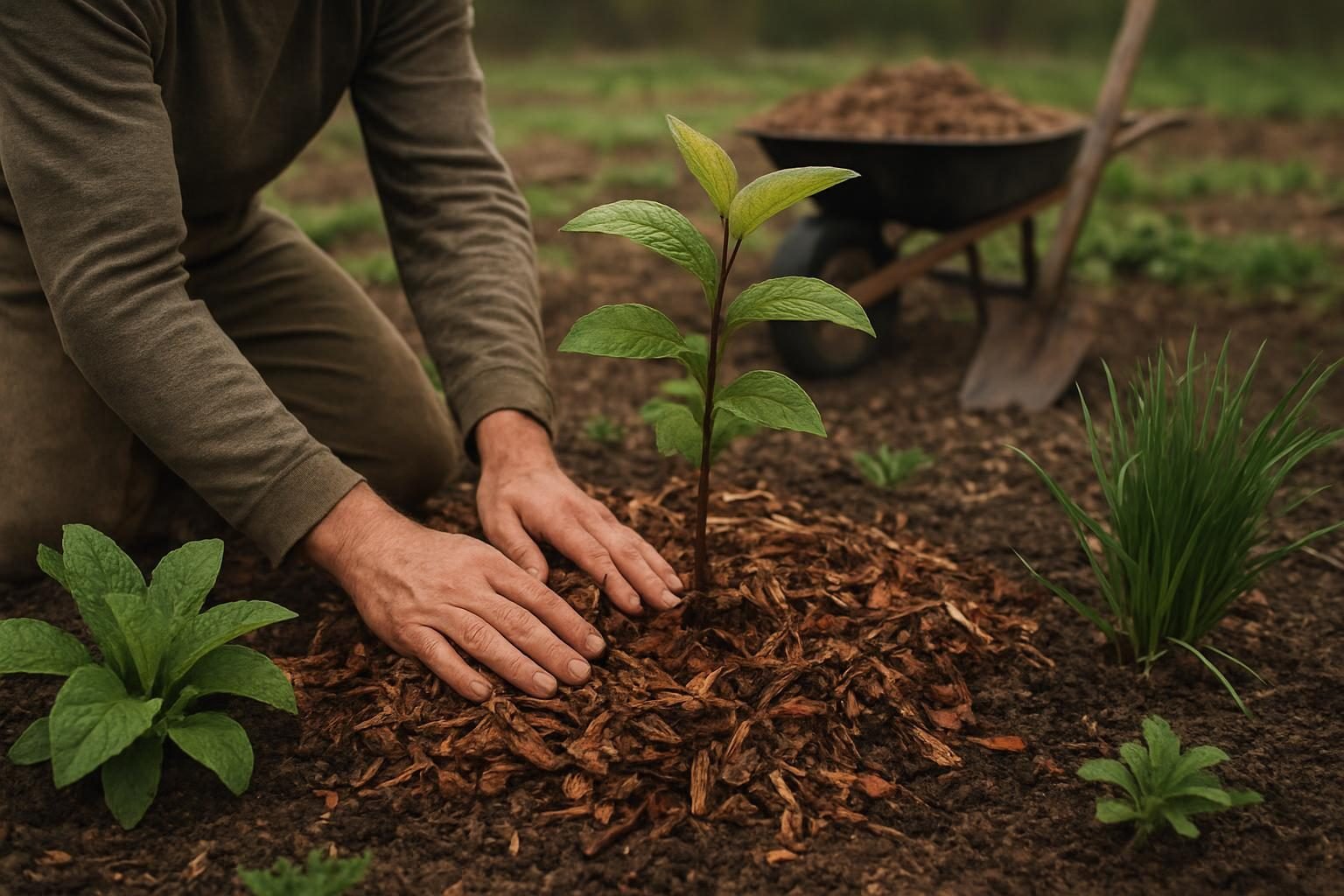
A simple example in the humid East: an apple tree with chives and daffodils around the trunk circle, comfrey on the drip line, clover in the surrounding paths, and a currant or gooseberry bush on the shadier side.
Plant choices by region
Always match species to your hardiness zone, chill hours and local pest pressure, and check with your extension service about varieties that perform locally. These are starting points, not prescriptions.
| Region | Canopy / tall trees | Understory and shrubs | Notes |
|---|---|---|---|
| Northeast and Upper Midwest | Apple, pear, chestnut, hazelnut, black walnut | Currant, aronia, serviceberry, haskap, elderberry, raspberry | Late frosts; choose hardy varieties and watch for deer |
| Mid-Atlantic and Corn Belt | Apple, pecan (southern part), persimmon, chestnut | Pawpaw, blueberry, mulberry, serviceberry | Pawpaw suits fertile, moist, shaded sites |
| Southeast and Gulf South | Pecan, fig, persimmon, citrus (zone dependent) | Muscadine grape, blueberry (rabbiteye), pomegranate, loquat | Disease and humidity drive variety choice |
| Great Plains | Hardy apple, plum, chokecherry, bur oak | Sand cherry, buffaloberry, currant, hazelnut | Wind and drought; windbreak and mulch are critical |
| Arid Southwest and Intermountain West | Pomegranate, fig, mesquite, pistachio (suited sites) | Jujube, desert-adapted herbs, prickly pear | Water source decides everything; plan drip irrigation |
| Pacific Northwest | Apple, pear, hazelnut, Asian pear | Blueberry, huckleberry, currant, gooseberry | Dry summers in many areas still need irrigation |
For larger plantings centered on nuts, our forthcoming guide to nut trees for agroforestry will go deeper on chestnut, hazelnut and pecan.
Establishment timeline and maintenance
Think in phases rather than seasons.
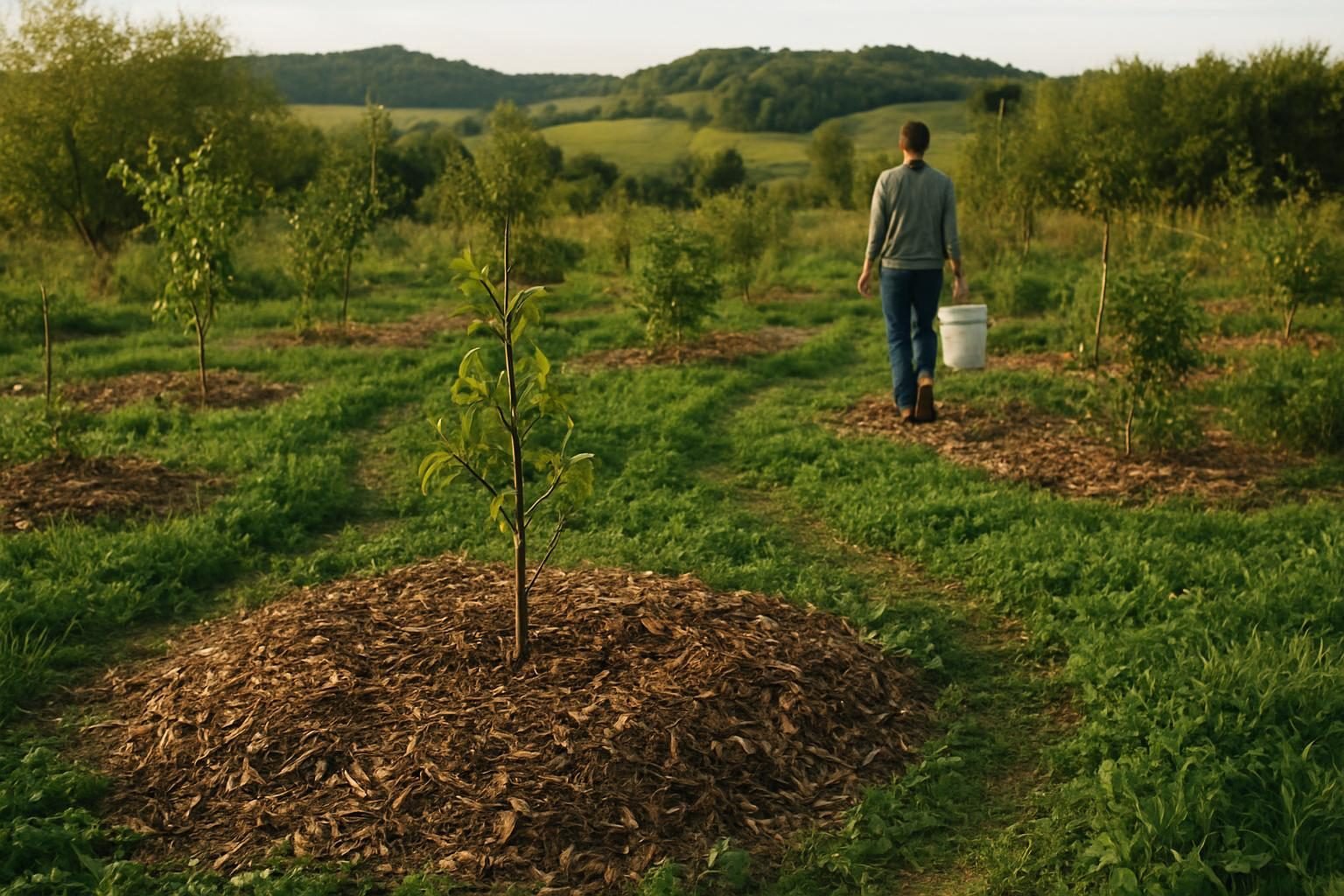
- Years 0 to 1: Prepare the site, plant, mulch 3 to 4 inches deep (pulled back from trunks), and water consistently. Expect to replace a few losses.
- Years 2 to 3: Weed around young plants, renew mulch, begin formative pruning, and add herbaceous and groundcover layers. First berries and herbs may arrive.
- Years 4 to 8: Shrub and early fruit crops ramp up. Trees start bearing, depending on species and rootstock. Prune for light and airflow; chop and drop herbaceous growth as mulch.
- Years 8 to 20: The canopy closes. Thin crowded plants, replace short-lived shrubs, and shift the balance as light changes.
Ongoing tasks are modest compared with an annual garden but not zero: watering during establishment and drought, pruning, mulch top-ups, pest monitoring, and harvest labor, which is often the biggest job.
Realistic yields
Be wary of anyone promising effortless abundance. As a general guide, small fruits and herbs come in first, tree fruit and nuts later, and production varies enormously with species, site and management. A few honest points:
- Nut trees can take 5 to 15 years to bear meaningfully.
- Mixed plantings usually produce less of any single crop per acre than a monoculture orchard, but more kinds of food and fewer total failures.
- Many productive food forests are semi-managed: some crops are harvested heavily, others mainly serve the soil, insects and wildlife.
If you want income, treat the food forest as a long-term investment and pair it with faster crops during the early years. Our guides to starting a market garden and the business of regenerative farming cover cash flow and sales channels.
Small backyard version vs acreage
The backyard food forest (1/10 to 1/4 acre)
Use dwarf rootstocks, espalier or trellised trees, and compact shrubs. Skip the tall canopy if shade would hurt neighbors or your vegetable beds. A realistic starter might be two or three dwarf fruit trees, six to ten berry bushes, a herb and perennial vegetable layer, and a grape or kiwi on a fence. Most of the work is mulching and picking.
The acreage food forest (1 acre and up)
On larger land you can include standard trees, nut crops, and integrate livestock or other systems. Rows with wide alleys let you mow or cultivate, which blurs into alley cropping, and managed animals can fit in once trees are protected, as described in our silvopasture guide. Large sites benefit from water planning, whether through a farm pond or drip lines, and from careful attention to any adjacent stream or riparian buffer. Cost-share may be available for some agroforestry practices; check current options through NRCS and our EQIP overview, and confirm details with your local office, as programs change.
Common mistakes to avoid
- Planting too densely and ignoring mature size.
- Choosing species by how interesting they are rather than how well they suit your zone and soil.
- Skipping protection from deer, voles and rabbits.
- Under-watering in years one and two.
- Mulching against trunks, which invites rot and rodents.
- Adding invasive nitrogen fixers or aggressive spreaders without checking local guidance.
Key takeaways
- Observe your site for a season and test your soil before designing.
- Layer plants by height and function, and plan at mature size.
- Use guilds, but choose companions for proven jobs, and avoid invasives.
- Match species to your region and consult local extension on varieties.
- Expect a slow start: berries in 2 to 4 years, tree crops in 4 to 15, and meaningful maintenance throughout.
- Scale to your space: a backyard version can be productive and manageable on a fraction of an acre.
For the wider context on soil, water and perennial systems, browse the rest of our Agroforestry & Water section, and see the evidence on the benefits of regenerative agriculture for what the research does and does not show.
Frequently asked questions
How long does it take for a food forest to produce food?
Herbs, perennial vegetables and some berries can produce in 1 to 3 years. Shrub fruits like currants and elderberries usually bear in 2 to 4 years, many fruit trees in 3 to 8, and nut trees often take 5 to 15. Rootstock, variety and care all affect timing.
How much land do I need for a food forest?
You can build a functioning mini food forest in a few hundred square feet using dwarf trees, berry bushes and herbs. A fuller system with standard trees works better on a quarter acre or more. The right size depends on your goals and how much work you can handle.
Is a food forest the same as an orchard?
No. An orchard typically grows one or two tree crops in tidy rows with bare or mown ground. A food forest mixes many species and layers, relies more on groundcover and mulch, and aims for ecological function as well as harvest. The trade-off is lower per-acre yield of any one crop and more complex management.
What is the best time of year to plant a food forest?
Dormant-season planting is usually best: fall in mild and southern climates, early spring in colder regions. Container-grown plants can go in during the growing season if you water well. Avoid planting in the hottest or driest part of summer.
Do food forests need irrigation?
Almost all need water for the first two to three years, even in humid regions. Once established, plants in rainy climates may need little or none, while arid and semi-arid areas typically need ongoing drip irrigation or a reliable supplemental source. Mulch and groundcover reduce but do not eliminate the need.