A well-planned windbreak is one of the oldest and most reliable tools in farming, and still one of the most underused. Rows of trees and shrubs slow the wind across your fields and pastures, and the payoff shows up in soil, crops, animals and your heating and feed bills. This guide covers what windbreaks do, how to design them, what to plant in each region, and how to pay for them.
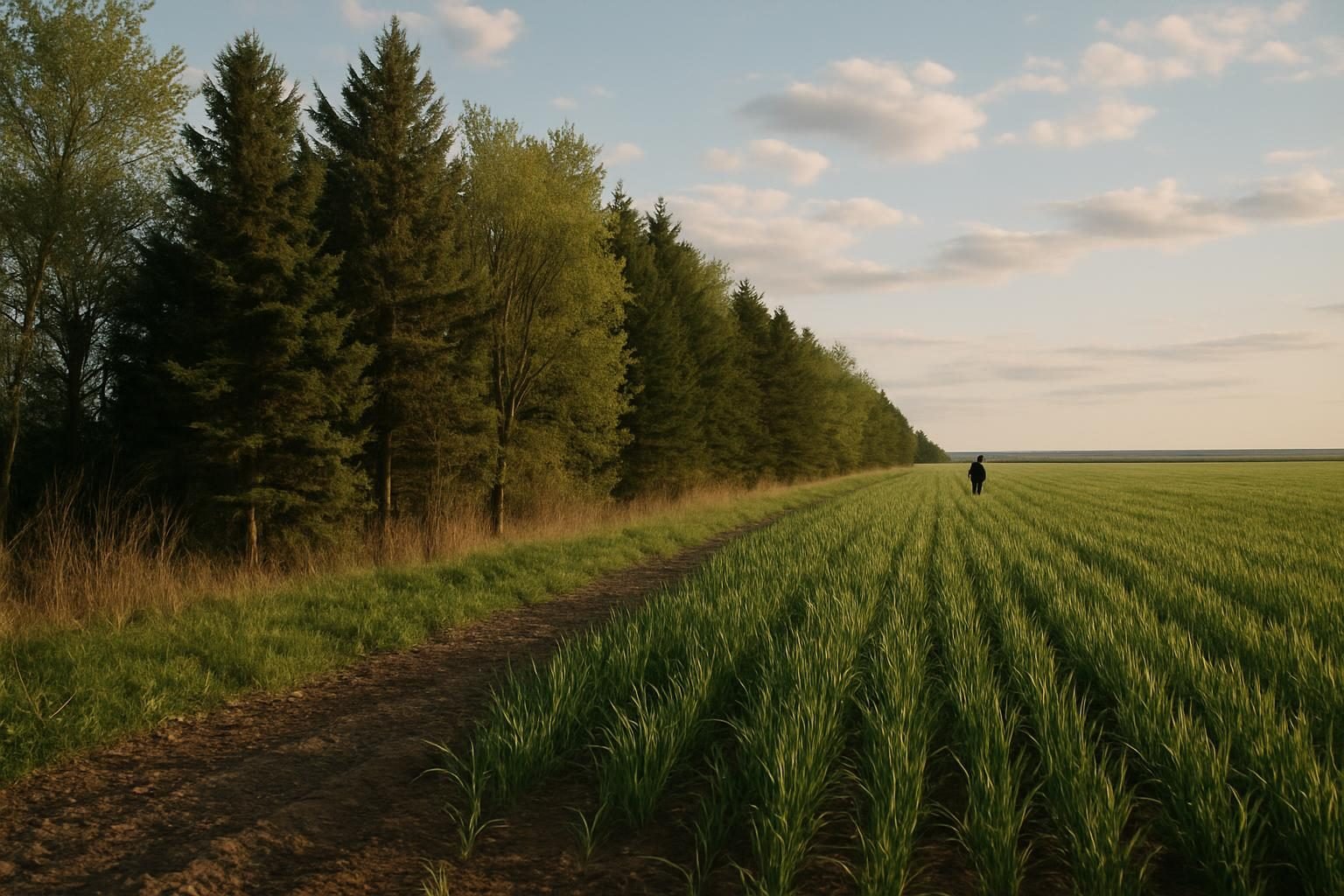
Quick answer: A windbreak (also called a shelterbelt) is one or more rows of trees and shrubs planted across the prevailing wind to reduce wind speed, hold snow, cut erosion and shelter crops and livestock. Protection extends roughly 10 times the windbreak’s height downwind in the most useful zone, and up to 20 to 30 times in a weaker one. Plant perpendicular to the main wind, choose a medium-density mix of locally adapted species, and protect young trees from weeds, deer and drought for the first three to five years.
What windbreaks do for a farm
Wind is a quiet cost. It dries soil, tears leaves, chills animals and moves topsoil off the field. A windbreak changes the microclimate on the sheltered side, and the benefits stack up.
Crops and gardens
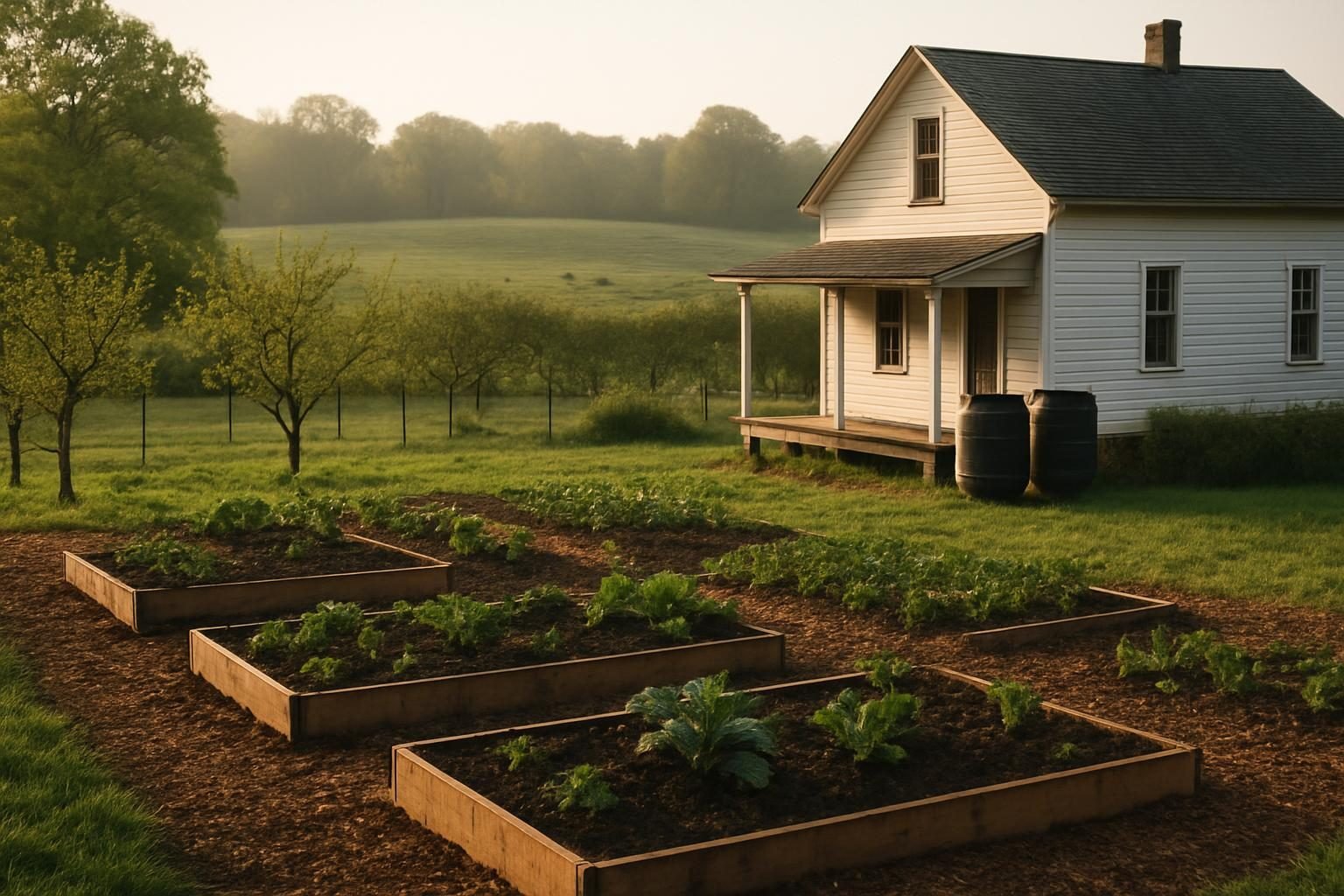
Reduced wind lowers evaporation and plant stress, protects flowers and fruit set, limits lodging and abrasion damage, and can keep soil and air a little warmer in spring. Research from extension services and agroforestry centers has generally found yield gains for many crops in the sheltered zone, though results vary by crop, climate and design, and the land taken up by the trees has to be counted against the gain. Market gardeners often see the clearest benefit with tender crops, row covers and high tunnels. If you are building a garden business, see our guide to how to start a market garden.
Livestock
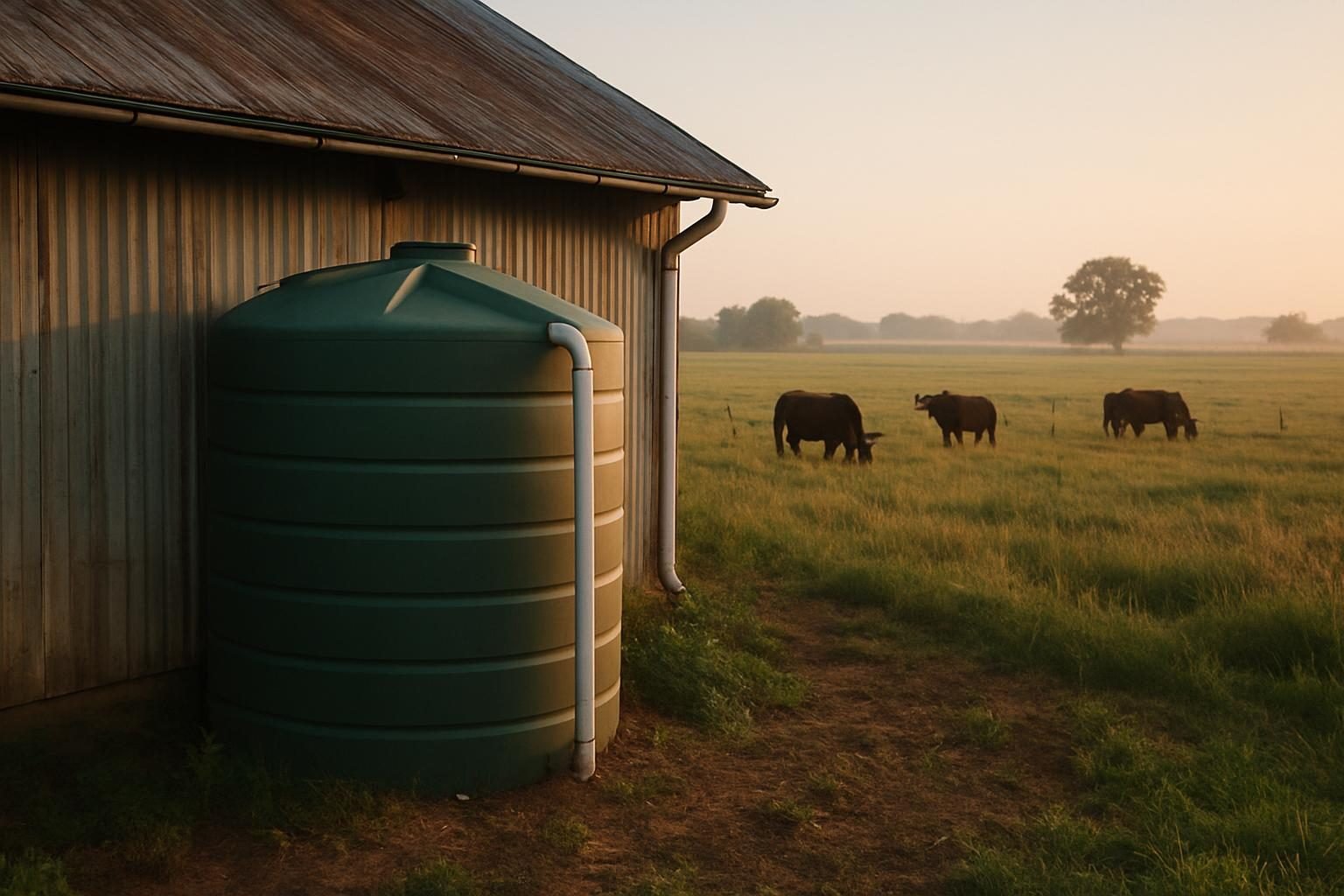
Animals use less energy staying warm when wind chill drops, which matters most for calving and lambing, young stock and outdoor poultry. Shade in summer and shelter in winter can improve comfort and performance. If you graze, think of windbreaks alongside paddock layout in a rotational grazing system, and consider going further with silvopasture, where trees are integrated into the grazing area itself. Pastured birds benefit too, as covered in our pastured poultry guide.
Snow capture and erosion
On open ground, snow blows away. A windbreak slows the wind so snow drops in the lee, which can add moisture to the soil profile in dry regions and keep drifts off roads and farmyards when the belt is placed with that purpose. Against wind erosion, standing trees and residue work together. Pair belts with no-till farming and living roots from cover crop mixes for the strongest protection of bare-soil-prone fields.
Wildlife, carbon and farmstead comfort
Belts provide habitat for birds, pollinators and beneficial insects, and store carbon in wood and soil. Around the house and barns, a farmstead windbreak can reduce winter heating costs. These are real but secondary benefits; be wary of any carbon number that is not tied to your site.
Windbreak design: rows, density, orientation and height
Design matters more than most people expect. A poorly designed belt can create turbulence, funnel wind through gaps or shade out the crop you meant to protect.
Orientation and placement
Place belts at right angles to the prevailing damaging wind, which in much of the Midwest and Plains means north-south rows blocking west and northwest winter winds. Use a second leg on the other side where winds shift. Keep belts continuous; gaps for gates and lanes can act like wind tunnels, so offset the ends or use staggered openings.
Height and spacing between belts
Protection scales with height. As a rule of thumb, you get strong reduction out to about 10 times the mature tree height downwind. A belt of 40-foot trees can meaningfully protect around 400 feet. For field windbreaks, spacing belts at roughly 10 to 15 times tree height is common, adjusted for soils, crops and equipment width.
Density and rows
Density is the share of the belt that blocks wind. Medium density (about 40 to 60 percent porosity) generally gives the best balance of long-distance protection and even snow distribution. Very dense belts stop wind sharply but create turbulence just behind the trees and a shorter protected zone.
| Design goal | Typical rows | Density | Notes |
|---|---|---|---|
| Field crop protection, erosion | 1 to 3 | Medium | Space belts about 10 to 15 times height |
| Livestock shelter | 3 to 5+ | Medium to dense, with evergreens | Place on the windward side of lots and calving areas |
| Snow capture or road protection | 2 to 4, set back from the road | Dense | Leave room on the lee side for drifts |
| Farmstead / home | 3 to 5 | Dense, evergreen-heavy | Set back far enough that drifts miss buildings |
| Garden / market garden | 1 to 2 plus shrubs | Medium | Keep out of competition range of beds |
These are typical ranges; your local NRCS office and conservation district can adapt them to your soils, wind and goals.
A simple layout
A classic multi-row belt uses a tall conifer or dense evergreen row on the windward side, one or two rows of medium and tall hardwoods in the center, and a low shrub row on the lee or windward edge to fill the base and add habitat. Space rows about 12 to 20 feet apart for equipment access and weed control, and trees within rows about 6 to 12 feet apart, depending on species.
Best windbreak species by region
Choose species adapted to your soils, rainfall and hardiness zone, and favor a mix so one pest or disease does not wipe out the belt. Avoid invasive species; some commonly sold windbreak plants are invasive in parts of the country, so check your state list. Your extension service or conservation district can recommend proven local stock.
| Region | Evergreens | Hardwoods | Shrubs |
|---|---|---|---|
| Northern Plains and Upper Midwest | Eastern redcedar, Rocky Mountain juniper, ponderosa pine, Black Hills spruce, Scots pine | Green ash alternatives, hackberry, bur oak, honeylocust, hybrid poplar (short-lived) | Chokecherry, American plum, caragana alternatives, serviceberry, dogwood |
| Corn Belt | Eastern white pine, Norway spruce, eastern redcedar | Bur oak, swamp white oak, hackberry, Kentucky coffeetree, silver maple (short-lived) | Elderberry, hazelnut, dogwoods, ninebark |
| Humid East and Northeast | Eastern white pine, Norway spruce, arborvitae | Red maple, oaks, tulip poplar, sycamore on wet sites | Viburnums, bayberry, serviceberry |
| South and Southeast | Loblolly pine, eastern redcedar, southern magnolia, wax myrtle | Live oak, pecan, bald cypress on wet ground | Yaupon holly, wax myrtle, American beautyberry |
| Arid and semi-arid West | Ponderosa pine, pinyon, Rocky Mountain juniper | Honeylocust, Russian-olive alternatives like buffaloberry, hackberry, desert willow in warm zones | Fourwing saltbush, skunkbush sumac, native sagebrush relatives |
Species lists shift with elevation and local pests, so treat the table as a starting point, not a prescription. Where it fits your goals, add productive species such as hazelnut or other nut trees for agroforestry, or fruiting shrubs that support wildlife and a bit of income. For the layered logic behind mixed plantings, see our guide to planting a food forest.
How to establish a windbreak: step by step
- Assess the site. Map prevailing winds, existing trees, utilities, drainage and soil. Call before you dig to locate buried lines.
- Plan with a pro. Your local NRCS office or conservation district can help with design and cost-share eligibility, and many sell bare-root seedlings in bulk.
- Prepare the ground. Control sod and perennial weeds a season ahead by tilling a strip, smothering with cardboard and mulch, or using herbicide where you choose to. Compaction and sod are the top killers of young trees.
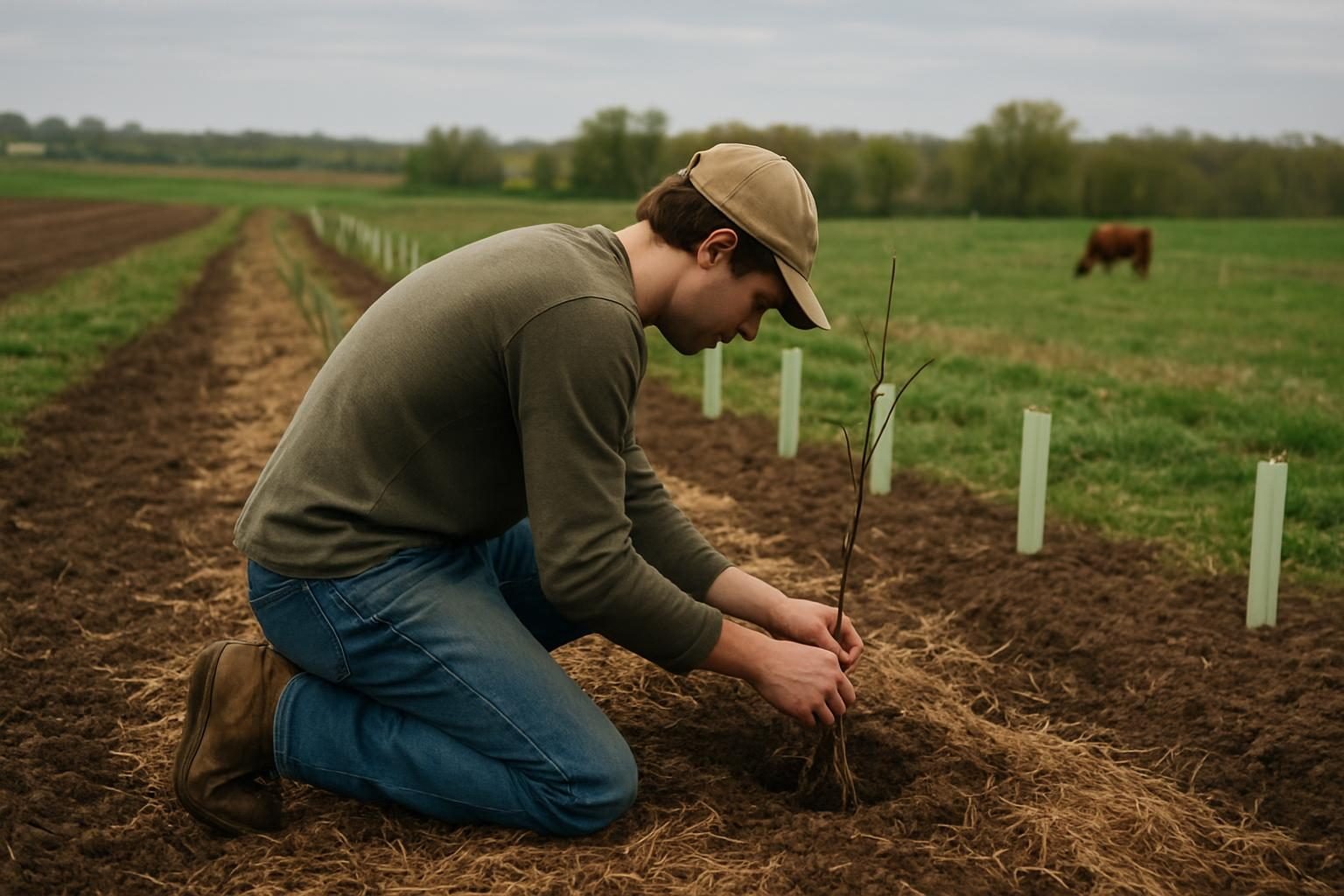
- Plant at the right time. Bare-root stock goes in early spring while dormant. Keep roots moist and plant at the correct depth.
- Use weed barrier and mulch. Fabric or organic mulch can cut early competition dramatically. Keep it up for the first three to five years.
- Protect from browse and rodents. Tree tubes, wire cages or repellents guard against deer, rabbits and voles. Fence out livestock until trees are well above grazing reach.
- Water through establishment. Most losses come from drought in year one or two. Drip lines or periodic deep soaking pay off, especially in the West and Plains.
- Replace losses and maintain. Expect some mortality, so plant extra or budget for replanting. Prune lightly and watch for pests.
Windbreaks also combine well with other water and tree practices. Wide belts can work alongside keyline design and swales to manage water, a farm pond can anchor a sheltered wildlife corner, and along streams a riparian buffer does related work for water quality. If you want crops between tree rows, look at alley cropping.
Costs and cost-share
Costs vary widely by species, row count, stock size, weed control and labor. Bare-root seedlings are inexpensive per tree, but fabric, tubes, irrigation and fencing can multiply the total. Get local quotes rather than relying on national averages.
Cost-share may be available through USDA NRCS programs, including EQIP, for practices such as windbreak and shelterbelt establishment, as well as state forestry and conservation district programs. Eligibility, payment rates and sign-up windows change, so confirm current details with your local NRCS office. Our guide to EQIP for regenerative farmers walks through how to apply, and the broader regenerative farming business hub covers other funding sources. Talk to your tax professional about any deductions or property-tax effects.
Common mistakes to avoid
- Planting a single species row that fails together to disease or pests.
- Making the belt too dense or too short, so protection is weak and turbulent.
- Skipping weed control and watering, then blaming the trees.
- Planting too close to fields, tile lines, septic systems or power lines.
- Ignoring the lee-side snow drift zone near roads and buildings.
Key takeaways
- Windbreaks reduce wind, hold snow, cut erosion and shelter crops and animals, with the strongest protection within about 10 times tree height.
- Aim for medium density, perpendicular to prevailing wind, with continuous rows and a species mix suited to your region.
- Establishment care in years one to five, especially weed control, watering and browse protection, decides success.
- Check NRCS and state programs for cost-share before you buy trees, and confirm current terms directly.
- See the wider context in what regenerative agriculture is and browse more tree-and-water practices in our Agroforestry & Water section.
Frequently asked questions
How far apart should windbreaks be?
A common guideline is to space field windbreaks about 10 to 15 times the mature tree height. A belt of 40-foot trees would protect roughly 400 to 600 feet downwind, so you might place belts every 400 to 600 feet on open, windy ground. Adjust for crop type, equipment width and local advice from NRCS.
How long does a windbreak take to work?
Expect some benefit within three to five years as shrubs and fast growers fill in, but full protection usually takes 10 to 15 years or more for slower evergreens and hardwoods. Faster species like poplar give quick results but tend to be short-lived, so mixes often pair fast and slow growers.
How many rows do I need?
One to three rows is typical for field protection, while livestock and farmstead belts often use three to five or more, with evergreens on the windward side. More rows provide more wind reduction and habitat, but also take more land and cost, so match the design to your goal.
Do windbreaks reduce yields near the trees?
They can. Tree roots and shade compete with crops in the first few rows next to the belt, which is why you keep crops back a short distance and root-prune or trench where needed. Net yield is usually judged across the whole sheltered zone rather than the edge strip, and results depend on crop and climate.
Is there cost-share for planting a windbreak?
Often yes. USDA NRCS conservation programs, state forestry agencies and conservation districts have supported windbreak and shelterbelt plantings, sometimes with free or discounted seedlings. Availability, payment rates and deadlines change, so contact your local NRCS office to confirm what is open to you.