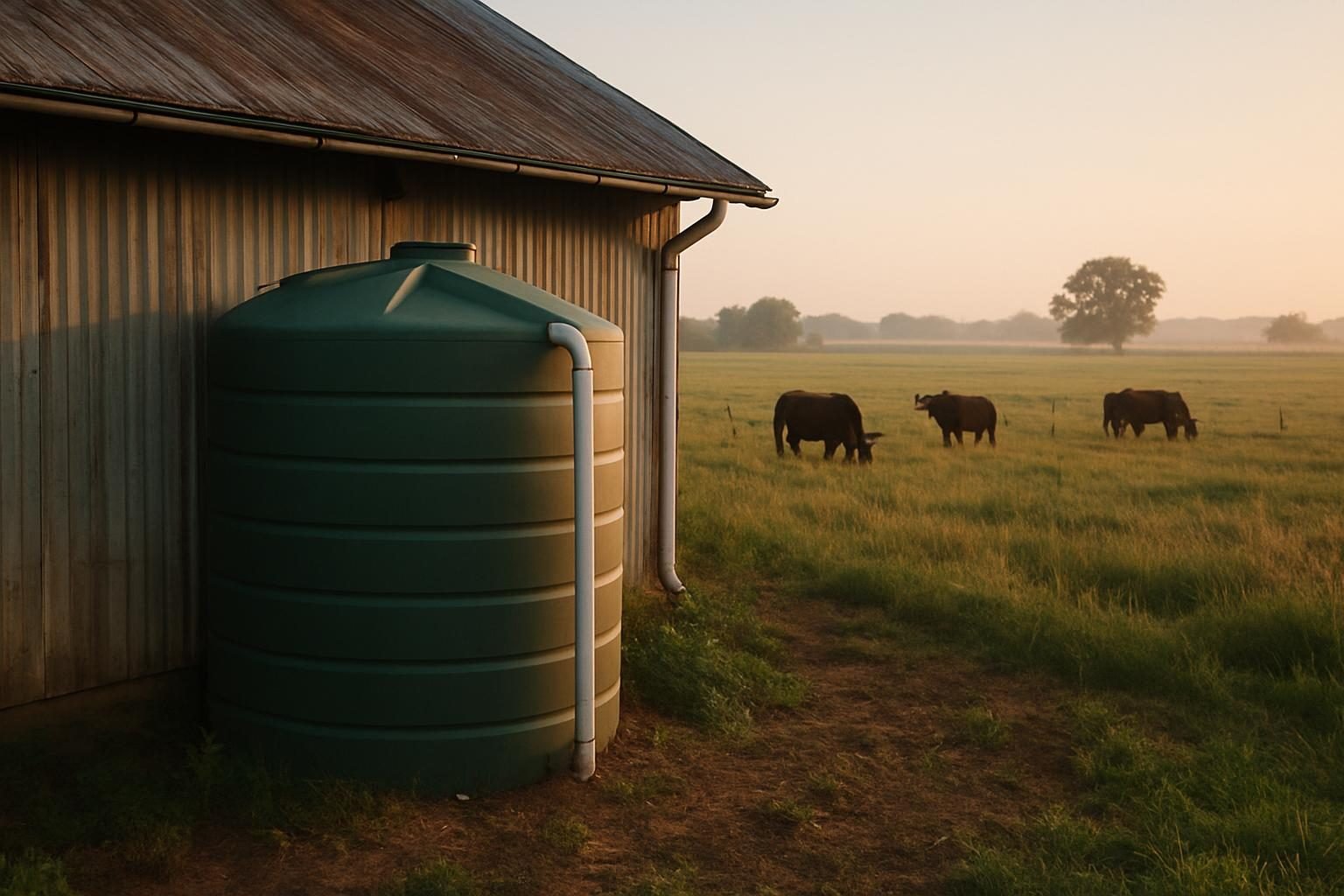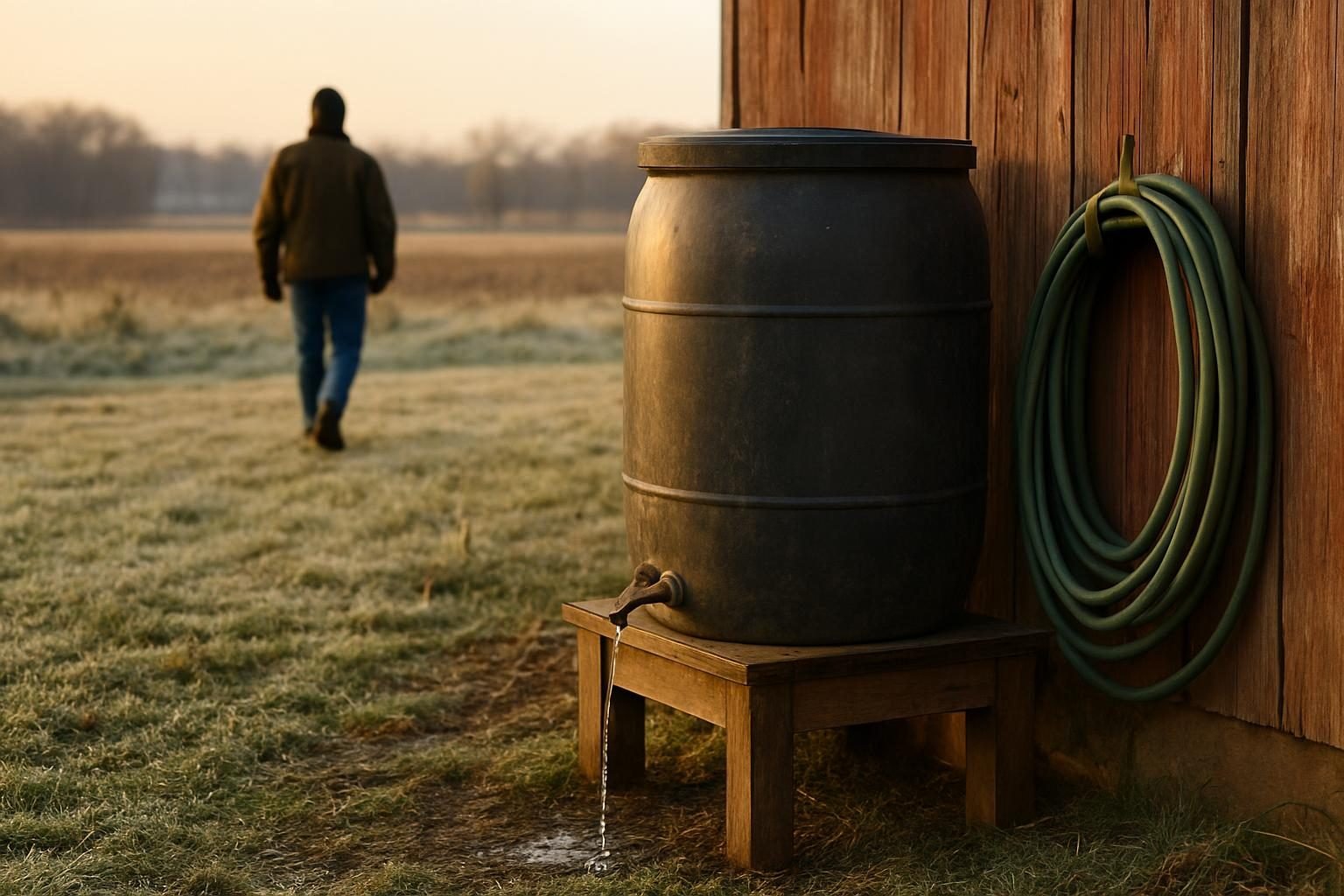
A single hard freeze can split a rain barrel spigot, crack a pump housing and turn a drip line into a string of broken fittings. Winterizing rain barrels and farm water lines is one of the cheapest, least glamorous jobs on the farm, and it pays back every spring when everything still works. This guide walks through what to drain, what to protect, how to keep livestock water open, and when to do each task.
Quick answer: Before your first hard freeze (typically 28°F or colder for several hours), disconnect and drain hoses, empty or partly drain and vent rain barrels, open all drain valves on pumps and lines, blow out or drain drip systems, and insulate or heat anything that must stay in service. For livestock, use larger water volumes, insulated or heated tanks, and keep water moving or shaded from wind. Start two to three weeks before your average first frost date.
Why Freeze Prep Matters More Than You Think
Water expands roughly 9 percent when it turns to ice. That force will split plastic, crack cast fittings and burst pipe walls that look perfectly sturdy. The damage often hides until thaw, when a small crack becomes a gusher or a slow leak you find in a wet barn in March.
Regional differences matter. In the northern Corn Belt and Northeast, you may have months below freezing and need a full shutdown. In the humid South and lower Midwest, freezes come in short snaps, so the real risk is being caught unprepared by a single cold night. In the arid West, big day-to-night swings can freeze lines at elevation even when afternoons feel mild. Know your average first frost date from your local extension office, and plan around the coldest nights, not the average temperature.
Rain Barrels: Drain, Vent or Keep Running
A full plastic barrel that freezes solid can bulge, crack at the spigot port or split a seam. Frozen water also strains fittings and overflow connections. You have three reasonable options, depending on your climate and how much you rely on stored water in winter.
Option 1: Drain and store (cold climates)
- Use up or empty the water, ideally watering trees, shrubs or beds that can use a late soak.
- Open the spigot and leave it open all winter so melt and condensation cannot refill and freeze in the valve.
- Disconnect downspout diverters and linking hoses between barrels, then drain them.
- Tip the barrel on its side or upside down, or cover it, so it cannot collect snow and ice.
- Store inside a shed or garage if you can. UV and freeze-thaw cycles shorten the life of plastic, so shelter helps.
Option 2: Partial drain and vent (mild winters)
If freezes are brief, leave the barrel about one quarter full or lower and keep the lid slightly open. Ice can then expand upward rather than outward. Some growers float a hard plastic ball or a sealed bottle of salted water in the barrel as a crush buffer. This is a low-cost trick, not a guarantee, so use it only where freezes are short.
Option 3: Keep it in service
If you need winter water for a greenhouse or small livestock, place barrels against a south-facing wall, insulate them and consider a tank de-icer rated for the material. This takes more attention and some electricity, so weigh it against simply hauling water for a few months. If you are still building out your setup, our guide to the rain barrel system and how to link barrels covers layouts that are easier to winterize, such as barrels on stands with bottom drains.
Before shutting down for the season, clean out sediment while the barrel is empty. If you use harvested water for anything beyond irrigation, review rainwater filtration for the farm and inspect screens and filters, since leaves and debris pile up in fall. A first flush diverter should also be drained and left open so it does not freeze full.
Hoses, Hydrants and Farm Water Lines
Hoses are the most common casualty. A hose left attached to a hydrant traps water in the spigot and can freeze back into the wall or buried line. Treat this as the first job of fall.
- Disconnect every hose. Drain it by walking it uphill, then coil and store it out of sun.
- Use frost-free hydrants where possible. They drain below the frost line when shut off, but only if the hose is removed so they can drain properly.
- Drain above-ground pipe. Open low-point valves and high-point vents so water can fall out and air can enter.
- Insulate exposed runs. Foam pipe sleeves are cheap and effective for short exposed sections, but they slow freezing rather than prevent it in severe cold.
- Add heat tape carefully. Self-regulating heat cable rated for your pipe type is safer than older fixed-output tape. Follow the manufacturer’s instructions and never overlap cable unless the product allows it.
Buried lines should sit below your local frost depth, which varies widely from a few inches in the Deep South to several feet in the northern states. Your county extension or building office can tell you the local figure. If a line is shallow, plan to drain it each winter rather than hoping it holds.
Tanks, Pumps and Pressure Systems
Pumps and pressure tanks hold water in small chambers and tight passages, which makes them vulnerable. A cracked pump housing is often a replacement, not a repair.
- Shut off power to the pump before draining.
- Open the drain plug or valve on the pump housing and let it empty fully.
- Drain the pressure tank and any inline filters, then remove and empty filter housings.
- Open faucets and low-point valves to release water from lines.
- For pumps that stay in service, insulate the pump house and add a small thermostat-controlled heater or heat lamp rated for the space.
For larger storage, rainwater collection tanks hold enough volume that they rarely freeze solid in mild climates, but the inlet, outlet and overflow plumbing can. Insulate and drain these fittings, and check that the overflow stays open and ice-free. Related capture systems covered in rainwater harvesting for farms and homesteads need the same shutdown attention.
Drip Lines and Irrigation
Drip tape and poly line tolerate some freezing because they flex, but the connectors, filters, pressure regulators and timers do not. Water trapped in these components splits them. Before the first hard freeze, drain the mainline, remove and store the filter, regulator and timer indoors, and open the end caps on drip lines so water can escape. In colder regions, a compressor with a regulated, low-pressure setting can blow out lines, but keep pressure low enough that it does not damage emitters. If you are designing or expanding, drip irrigation for small farms covers layouts that drain easily at the end of the season.
Keeping Livestock Water Open
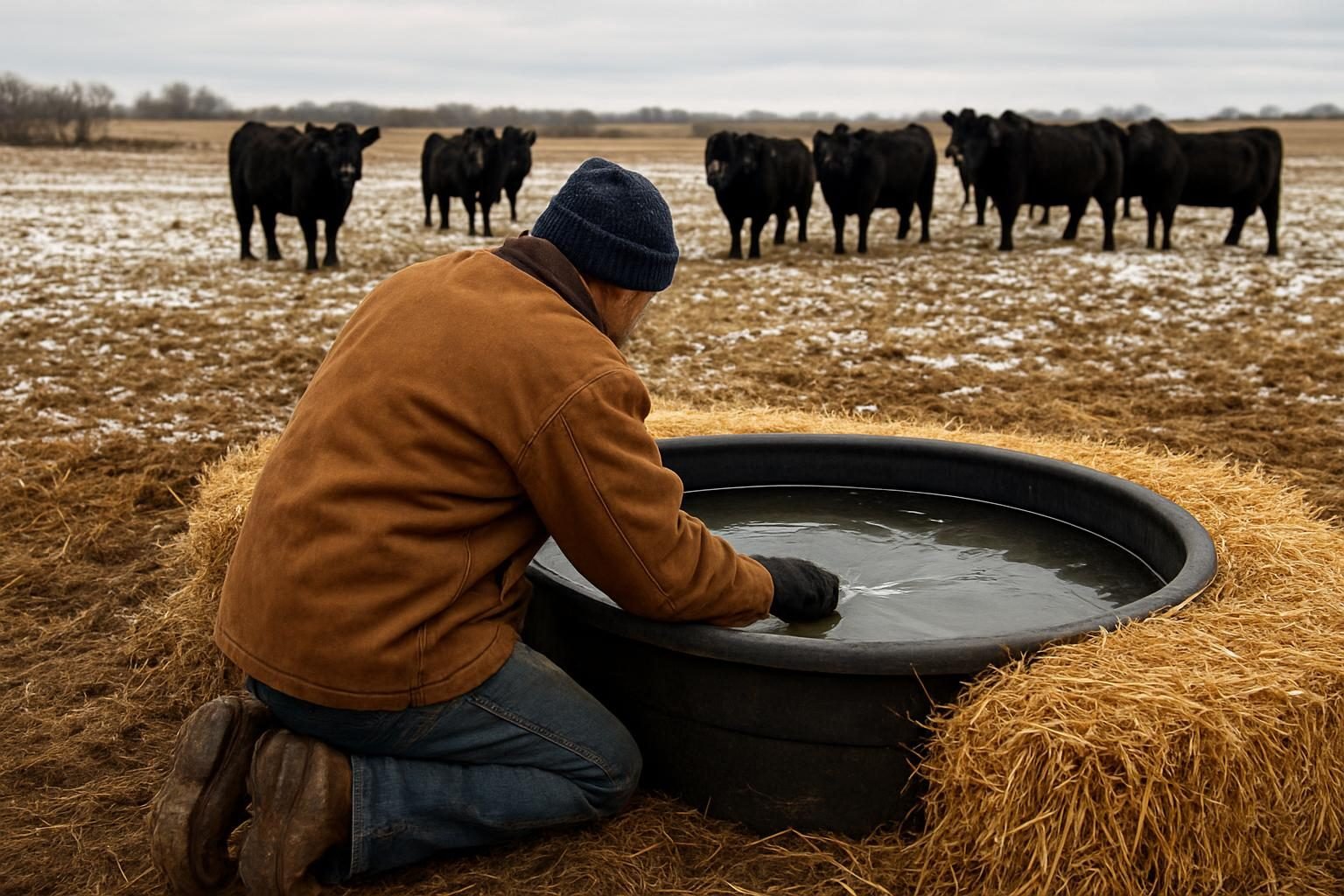
Animals still need water in winter, and cold animals drink less if water is icy or hard to reach, which can affect health and performance. The goal is open water with minimal daily labor.
Low-cost options
- Bigger volume freezes slower. A 100-gallon tank holds heat far longer than a 5-gallon bucket.
- Insulate the tank. Rigid foam board around the sides, or set the tank in a straw bale ring, cuts heat loss. Keep animals from chewing foam.
- Use a floating ball or float. Moving objects slow ice formation and make breaking a thin skim easier.
- Black tanks in sun. Dark rubber or poly absorbs winter sun and can add a few degrees.
- Locate for wind and sun. Place tanks in a sheltered spot, such as behind a windbreak or in a south-facing corner.
Heated options
Electric tank de-icers, heated buckets and heated automatic waterers are common where power is available. Buy products rated for your tank material and for outdoor use, use a properly grounded outlet and keep cords out of reach of animals. Where electricity is not practical, some farmers use insulated frost-free waterers that rely on ground heat, or break ice twice daily and accept the labor. Whatever you choose, check water every day in a hard freeze.
For rotational systems, think about water access before the ground freezes. Our guide to rotational grazing and the beginner version, rotational grazing for beginners, both cover water placement, and winter often calls for shortening paddock runs so animals stay near a protected source. Pastured systems like pastured pigs need particular care because pigs tip and root at waterers.
A Simple Freeze-Prep Timeline
| When | Task |
|---|---|
| 4 to 6 weeks before first frost | Inventory water points, buy insulation, de-icers and fittings, and test heated equipment. |
| 2 to 3 weeks before | Clean barrels and filters, drain and store hoses, service pumps, and insulate exposed pipe. |
| 1 week before | Drain drip lines and remove timers and regulators, open drain valves, and set up livestock tank insulation and heaters. |
| Day of forecast hard freeze | Final check: hoses off, barrels open, pump power off and drained, heated waterers running. |
| During winter | Check animals’ water daily, watch for frozen valves, and clear snow from drains and overflows. |
| Late winter | Inspect for cracks before reconnecting, and flush lines slowly as temperatures rise. |
Trade-Offs and Planning Ahead
No system is freeze-proof, and the cheapest fix is often to design out the problem. Placing water points close to buildings, burying lines below frost depth and keeping barrels on stands with bottom drains all reduce winter labor. If you are planning bigger storage or new ponds, our guides to the farm pond and swales show how landscape-scale water holding complements tank storage. For the broader picture of how trees and water systems work together, see the agroforestry guide, and browse our Agroforestry and Water category for related topics.
Keep notes each fall on what froze, what held and what took too long. Over a few seasons you will build a shutdown routine tuned to your land and climate, which is worth more than any single gadget.
Key Takeaways
- Water expands about 9 percent when it freezes, which splits barrels, fittings, pumps and filter housings.
- Start freeze prep two to three weeks before your average first frost, and act on the forecast for the coldest nights.
- Drain and store hoses, leave barrel spigots open, and remove drip system filters, regulators and timers.
- Drain pumps and pressure tanks, or insulate and heat them if they must stay in service.
- For livestock, bigger insulated tanks, sheltered placement and a rated de-icer keep water open with less labor.
- Check local frost depth and heater instructions with your extension office or manufacturer.
Frequently asked questions
Do I have to empty my rain barrel before winter?
In cold climates with prolonged freezes, yes. A full barrel that freezes solid can crack at the spigot or seams. In mild regions with short freezes, you can leave it a quarter full with the lid slightly open and the spigot open so ice has room to expand. When in doubt, drain it.
At what temperature do water lines freeze?
Water freezes at 32°F, but exposed pipes usually need several hours at about 28°F or colder to freeze solid, depending on wind, insulation and flow. Wind chill does not change the temperature of water in a pipe, but wind speeds heat loss, so exposed lines freeze faster on windy nights.
Is heat tape safe for farm water lines?
It can be, if you buy self-regulating cable rated for your pipe material, follow the manufacturer’s instructions and use a properly grounded circuit. Do not overlap cable unless the product allows it, and replace damaged or old tape. Insulating over heat tape improves efficiency.
How do I keep livestock water from freezing without electricity?
Use large, insulated tanks in a sheltered, sunny spot, add floating objects, and break ice daily. Dark tanks absorb sun, and straw bale surrounds slow heat loss. Frost-free ground-heated waterers also work in many climates, though they need enough animal use to keep water moving.
Can I leave drip irrigation out all winter?
Drip tape and poly line often survive, but filters, regulators, timers and connectors can crack when water freezes inside. Drain the system, open the end caps, and bring the sensitive components indoors. Check local extension guidance for your region.