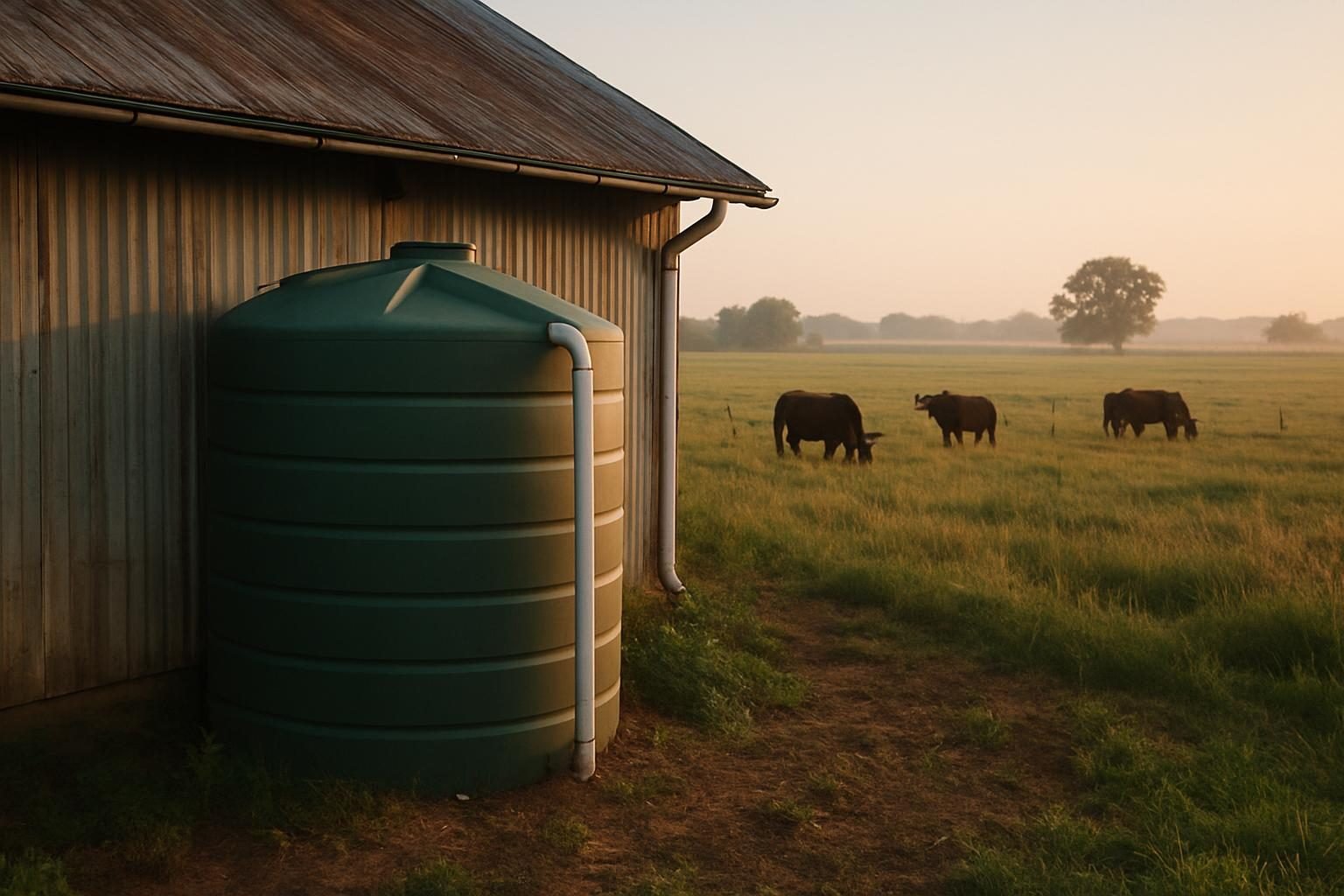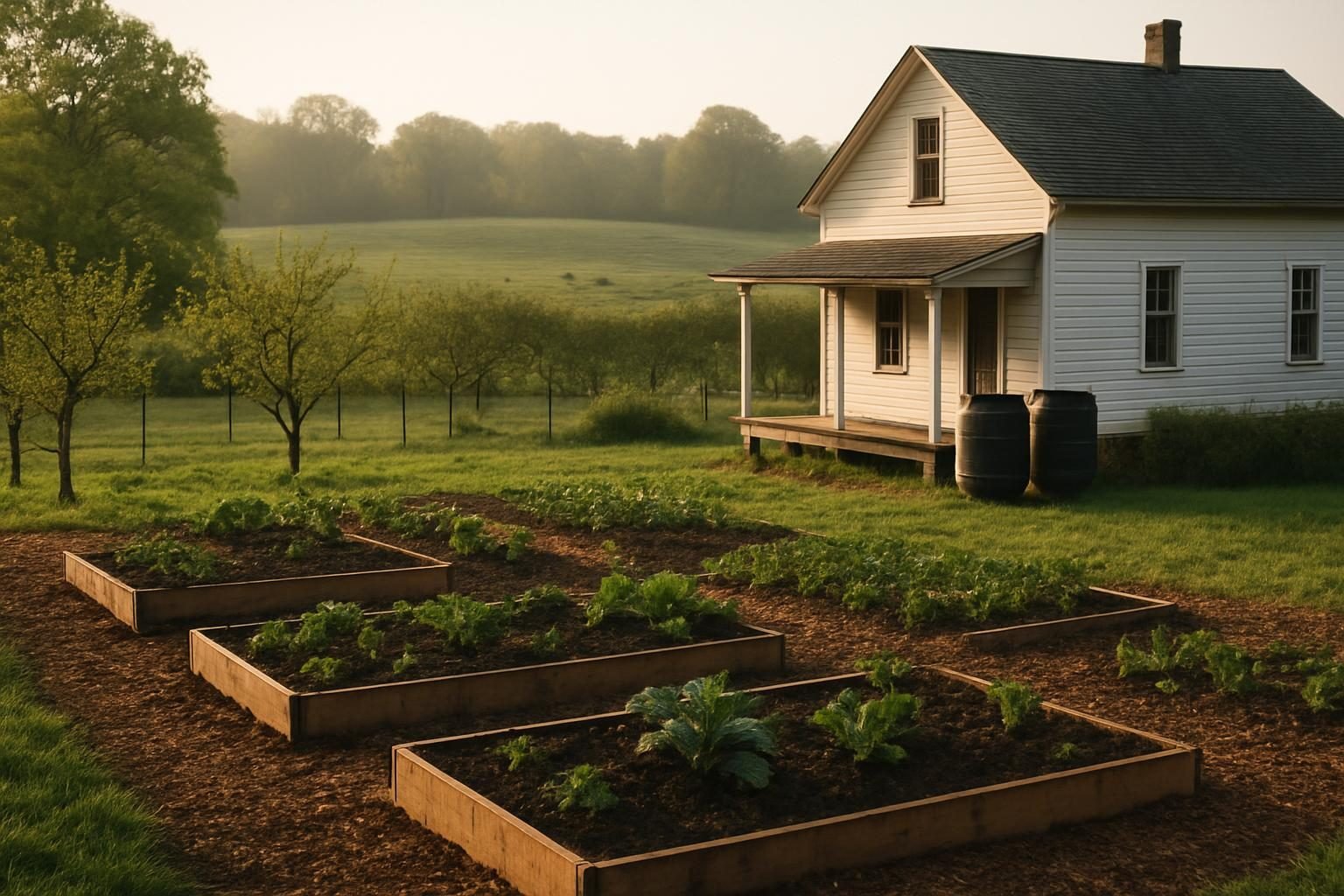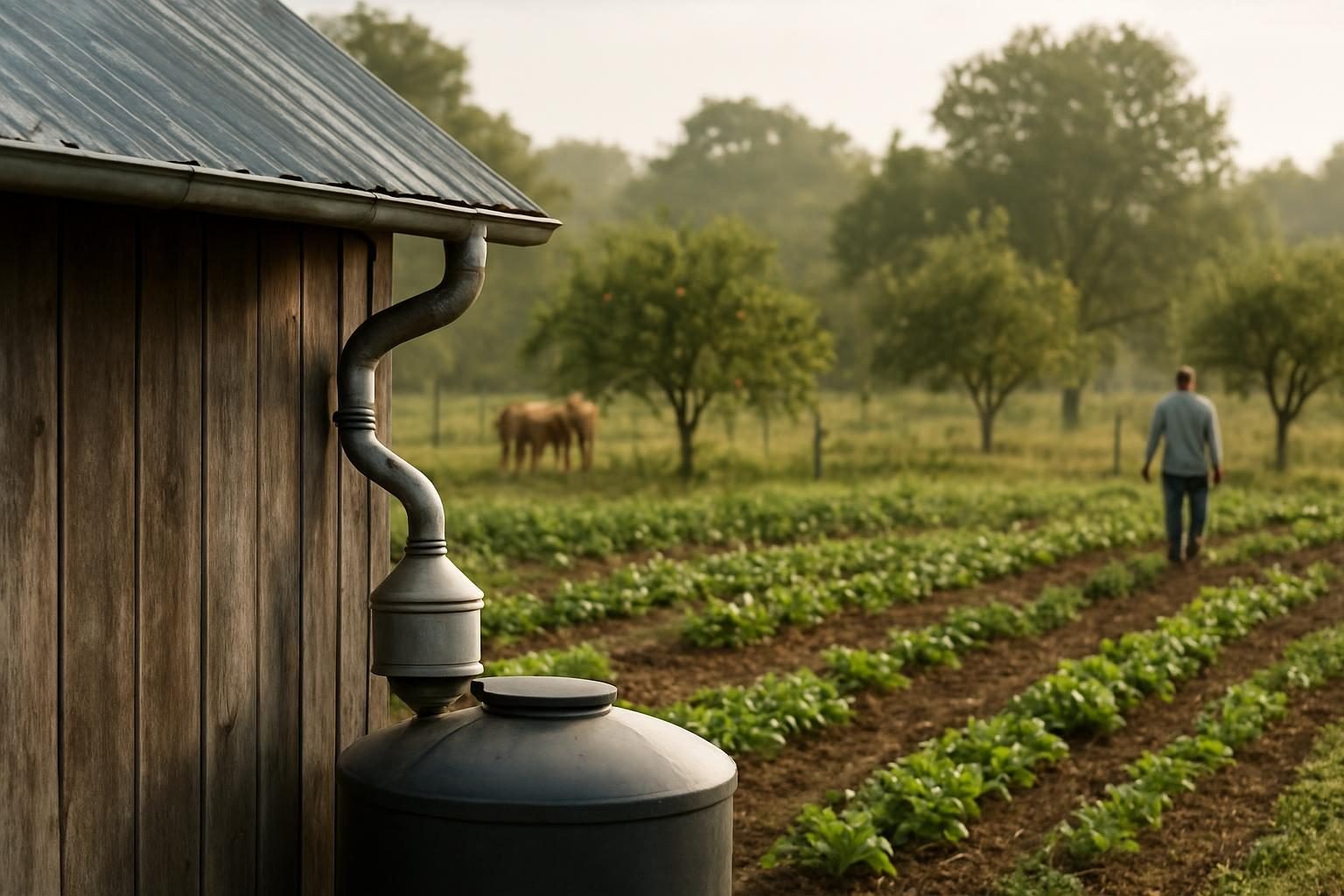
Rainwater filtration is what turns a dirty roof runoff into water you can trust in a drip line, a stock tank or a hose. Roofs collect bird droppings, leaf litter, pollen, dust and shingle grit, and all of it ends up in your tank unless you stop it on the way in. The good news is that most farm and garden uses need only simple, cheap treatment, and you can build it in stages.
Quick answer: Filter rainwater in stages: a leaf screen at the gutter, a first-flush diverter to dump the dirtiest initial runoff, then a sediment filter (typically 5 to 50 microns) and, for some uses, a carbon filter. Irrigation needs the least treatment, livestock needs more, and household or drinking use requires full treatment and disinfection under local rules. Match the treatment to the use, not the other way around.
Why filter harvested rainwater at all
Rain itself is clean. The problem is the surface it lands on and the pipes it travels through. A roof is a catchment surface where birds, rodents, insects and wind-blown debris leave a film of organic material and microbes between storms. When the next rain washes that film into your tank, it feeds algae, makes sludge on the bottom and can clog emitters, pumps and float valves.
Filtration protects your equipment first and your plants and animals second. A drip line with a quarter-inch of silt in the filter bowl is a drip line that fails in July. If you are building a system from scratch, start with the bigger picture in our guide to rainwater harvesting for farms and homesteads, then come back here to design the cleaning steps. You can also explore permaculture design principles to integrate water filtration into your whole-farm plan.
The four stages of rainwater filtration
Think of filtration as a series of gates, each catching finer material than the last. Skipping the early gates overloads the later ones, so build in order.
Stage 1: Gutter screens and leaf guards
The cheapest and most effective step is keeping big debris out of the gutters. Leaf guards or mesh screens over gutters and a coarse basket or strainer at the downspout stop leaves, twigs, seed pods and shingle granules. Look for stainless or aluminum mesh, and plan to clear the screens a few times a year, more often under oaks, pines or heavy-shedding trees. Trim overhanging branches where you can.
Stage 2: First-flush diverters
The first rain after a dry spell carries the most dirt. A first flush diverter captures that opening burst in a separate chamber and then lets cleaner water continue to the tank. The chamber slowly drains through a small vent or valve so it resets itself between storms.
Sizing is a judgment call. A common rule of thumb is to divert roughly the first 0.5 to 2 gallons per hundred square feet of roof, with more diverted where dust, pollen or bird activity is heavy. Treat that as a starting range and adjust by watching what your water looks like after storms. The diverted water is fine for the garden bed beside the downspout.
Stage 3: Sediment filters
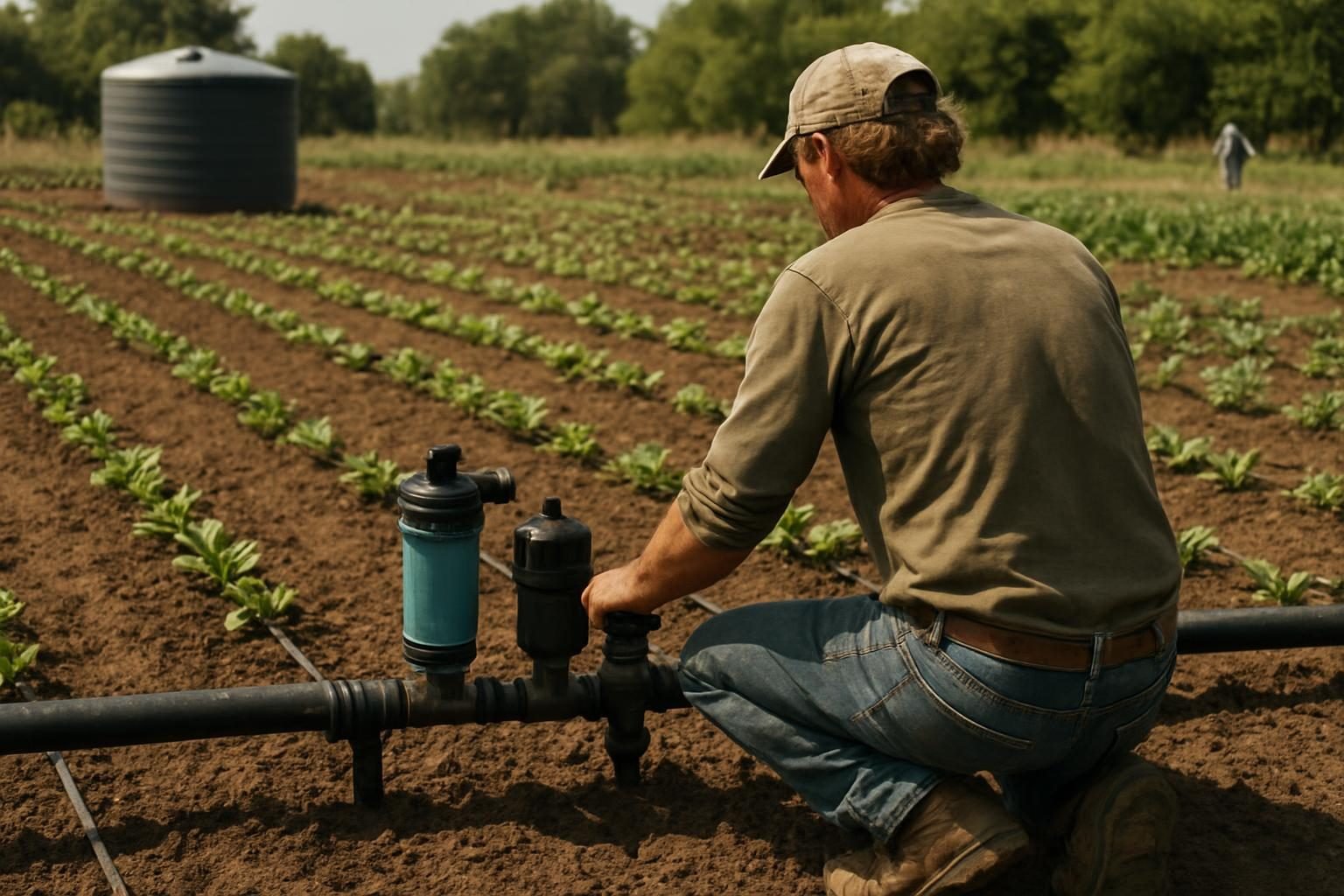
Between the tank and the point of use, a sediment filter removes fine grit and particles. These come as spun polypropylene cartridges, pleated cartridges or washable screen and disc filters. Ratings are in microns: lower numbers catch finer particles and clog faster.
- Disc or screen filters (100 to 200 mesh): washable, good as the final guard on drip irrigation.
- Cartridge filters (typically 20 to 50 microns): a good general pre-filter ahead of pumps and fixtures.
- Finer cartridges (5 microns or less): used upstream of carbon filters or disinfection, and they need frequent changing.
A common trick is to step down in two filters: a coarser one first, a finer one second, so the fine cartridge lasts longer.
Stage 4: Carbon filters
Activated carbon adsorbs many organic compounds, tastes and odors, and some chemicals. It is useful when water sits in a tank and picks up a musty smell or when you want better taste for washing produce or household use. Carbon does not reliably remove pathogens and can itself grow bacteria if it is saturated and not replaced on schedule. Always put it after a sediment filter and follow the manufacturer’s change interval.
Match the treatment to the use
The most common mistake is over-treating water for the garden and under-treating it for the kitchen. Here is a practical way to think about it.
| Use | Typical minimum treatment | Notes |
|---|---|---|
| Garden and tree irrigation | Leaf screen, first flush, disc or screen filter | Protects emitters; keep water off edible leaves close to harvest |
| Drip systems | Add a 100 to 200 mesh filter at the head of the line | Fine grit is the main clogger |
| Livestock watering | Screens, first flush, sediment filter | Check local guidance; keep tanks shaded and clean |
| Washing equipment or produce rinse | Sediment plus carbon, often disinfection | Rules may apply to food-contact water; confirm with your regulator |
| Household or drinking | Full multi-stage treatment including disinfection | Requires proper design, testing and local approval |
Irrigation
For most gardens, a leaf screen, a first-flush diverter and a washable filter are plenty. Matching your filter to your emitters matters more than any fancy cartridge. If you plan to run it through emitters, see our drip irrigation for small farms guide for filter and pressure details. Barrel-fed systems work the same way; our rain barrel system setup covers screens at the inlet.
Rainwater is also gentle on soil: it is low in dissolved salts, which can help in places where well or municipal water is hard or alkaline. That is one reason it pairs well with the practices in our soil health guide.
Livestock
Animals tolerate more than people do, but clean water still drives intake, gains and milk production, and algae-heavy or manure-contaminated water can make animals sick. Screens, first flush and a sediment filter keep tanks and float valves working. Keep collection roofs and tanks away from direct animal contact, and cover storage so mosquitoes and algae are kept down. If you graze, watering points matter to your paddock layout; see rotational grazing for how water placement shapes movement.
Household and drinking use
Treat this as a different project. Potable use needs proper treatment (typically including fine filtration plus disinfection such as UV or chlorination), approved materials, lab testing and often permits. Rules vary widely by state, county and even utility, and some places restrict or regulate it heavily. Before you plumb rainwater into a house or use it for drinking, cooking or food-contact washing, check with your state or county health department and your local building authority. Do not assume a garden-grade setup is safe to drink.
Roof material matters too. Metal and baked-enamel roofs are generally preferred for collection; older asphalt shingles, treated wood shakes and roofs with copper or lead flashing can add contaminants. Confirm with your regulator or extension office before drinking from any roof.
Building a simple farm filtration train
Here is a sequence that works for a typical garden or small-farm irrigation setup. Adjust sizes to your roof and tank.
- Clean and screen the roof catchment. Install gutter guards and trim branches.
- Add a coarse strainer at the downspout. A basket or mesh screen catches what the gutter guards miss.
- Install a first-flush diverter upstream of the tank and set a slow drain rate.
- Use a fine inlet screen on the tank to keep mosquitoes and insects out.
- Draw from above the tank floor. A floating or elevated outlet avoids pulling up sediment.
- Add a disc or cartridge filter ahead of the pump or drip head, with a pressure gauge on each side so you can see when it is clogging.
- Flush and inspect on a schedule. Plan on seasonal checks and after heavy pollen, fire or dust events.
Tank size and material change how much sediment settles and how algae behaves. Our upcoming guide to rainwater collection tanks covers sizing, materials and placement. Opaque, covered tanks stay cleaner than clear or open ones because light drives algae.
Maintenance, cold weather and regional notes
Filters only work when they are maintained. Set reminders: screens and first-flush chambers after storms in leafy seasons, sediment cartridges when pressure drops noticeably, carbon on the manufacturer’s schedule, and tanks inspected and cleaned of sludge periodically (often every few years, sooner if you see buildup).
- Humid East and South: heavy leaf, pollen and algae pressure; prioritize covers, dark tanks and frequent screen cleaning.
- Arid West: long dry spells mean dusty first flushes and fire ash in some years; size first flush generously and expect fine silt.
- Corn Belt and cold regions: freezing is the big risk to filters and housings; see our upcoming guide on winterizing rain barrels and farm water lines before the first hard freeze.
Filtration also sits inside a larger water strategy. Rainwater from roofs pairs well with landscape-scale tools like swales, keyline design and a farm pond, and with tree systems covered in our agroforestry guide. For more on the topic area, browse the Agroforestry & Water category.
Key takeaways
- Filter in stages: screen, first flush, sediment, then carbon only if needed.
- Irrigation needs the least treatment; drinking water needs the most and falls under local rules.
- Protect emitters with a washable 100 to 200 mesh filter at the head of the drip line.
- Carbon improves taste and odor but does not replace disinfection.
- Cover and darken tanks, draw water above the floor and maintain filters on a schedule.
- Before any potable use, confirm requirements with your health department and local authorities.
Frequently asked questions
Do I need to filter rainwater for my garden?
Yes, at least minimally. A leaf screen and first-flush diverter keep debris and sludge out of the tank, and a washable disc or screen filter protects drip emitters. You rarely need cartridge or carbon filters for plain garden irrigation, though keeping water off edible leaves close to harvest is a sensible habit.
How big should a first-flush diverter be?
A common rule of thumb is about 0.5 to 2 gallons of diverted water per 100 square feet of roof, with the higher end for dusty, bird-heavy or tree-covered sites. Treat it as a starting point and adjust based on how clean the tank water looks after storms.
Is filtered rainwater safe to drink?
Not automatically. Drinking water requires fine filtration plus disinfection, approved materials, testing and often permits, and rules vary by state and county. Contact your local health department and building authority before using rainwater for drinking, cooking or food-contact washing.
What micron filter should I use?
For irrigation, a 100 to 200 mesh disc or screen filter is typical. For a general sediment pre-filter, 20 to 50 microns works for many setups, stepping down to 5 microns only ahead of carbon filters or disinfection. Finer filters clog faster, so stage them behind coarser ones.
Can I use rainwater for livestock?
Generally yes, with screens, first flush and a sediment filter keeping troughs and valves clean. Keep storage covered, shaded and free of manure contamination, and check with your extension office or state agency for any local guidance on livestock water.