Rotational grazing for beginners comes down to one idea: give animals a fresh piece of pasture, then give that piece time to recover before they return. You do not need a big herd, expensive gear, or a hundred acres to start. You need a few paddocks, a reliable way to water animals, and the habit of watching your grass.
This guide walks through a start-small plan: fencing, water, paddock math, recovery periods by season, how to read the grass, and the mistakes that trip up most new grazers.
Quick answer: Divide your pasture into 4 to 8 paddocks with temporary electric fence, move animals every 1 to 3 days, and let each paddock rest roughly 30 to 45 days in fast growth and 60 to 90+ days in slow growth or dormancy. Size paddocks by dry matter: animals eat roughly 2.5 to 3% of body weight per day, and you graze only about the top third to half of the plant. Let the grass, not the calendar, decide when to move.
Why rotational grazing works
Grass is a plant, not a lawn. When animals graze it hard and stay, they eat the regrowth the moment it appears, and the plant has to keep drawing on its root reserves. Over time roots shrink, desirable species thin out, and weeds fill the gaps.
Rotation breaks that cycle. A short graze, followed by a real rest, lets plants regrow leaf, rebuild roots, and stay competitive. The usual results are more forage per acre, fewer bare patches, better water infiltration, and less purchased hay. The size of the gain varies a lot by region, rainfall, and starting condition, so treat any number you read as a range, not a promise. For the bigger picture, see our complete guide to rotational grazing, and for how the soil side connects, our soil health guide.
Start small: a first-year plan
Resist the urge to cut your whole farm into 30 paddocks in week one. Pick one pasture, learn it, and build from there.
- Walk the land. Note slopes, wet spots, shade, existing fences, and where water already exists.
- Choose a starter block. A flat-ish, well-drained field of 2 to 10 acres is plenty.
- Divide it into 4 to 6 paddocks. Use temporary fence so you can change your mind.
- Solve water first. Every paddock needs access, or the system will wear you out.
- Move on a schedule you can keep. Daily moves are easier to manage than you expect once the gear is set up.
- Keep notes. Date in, date out, rough forage height, weather. This record is your best teacher.
Very small operations will find useful ideas in our guide to small-scale regenerative farming.
Temporary fencing basics
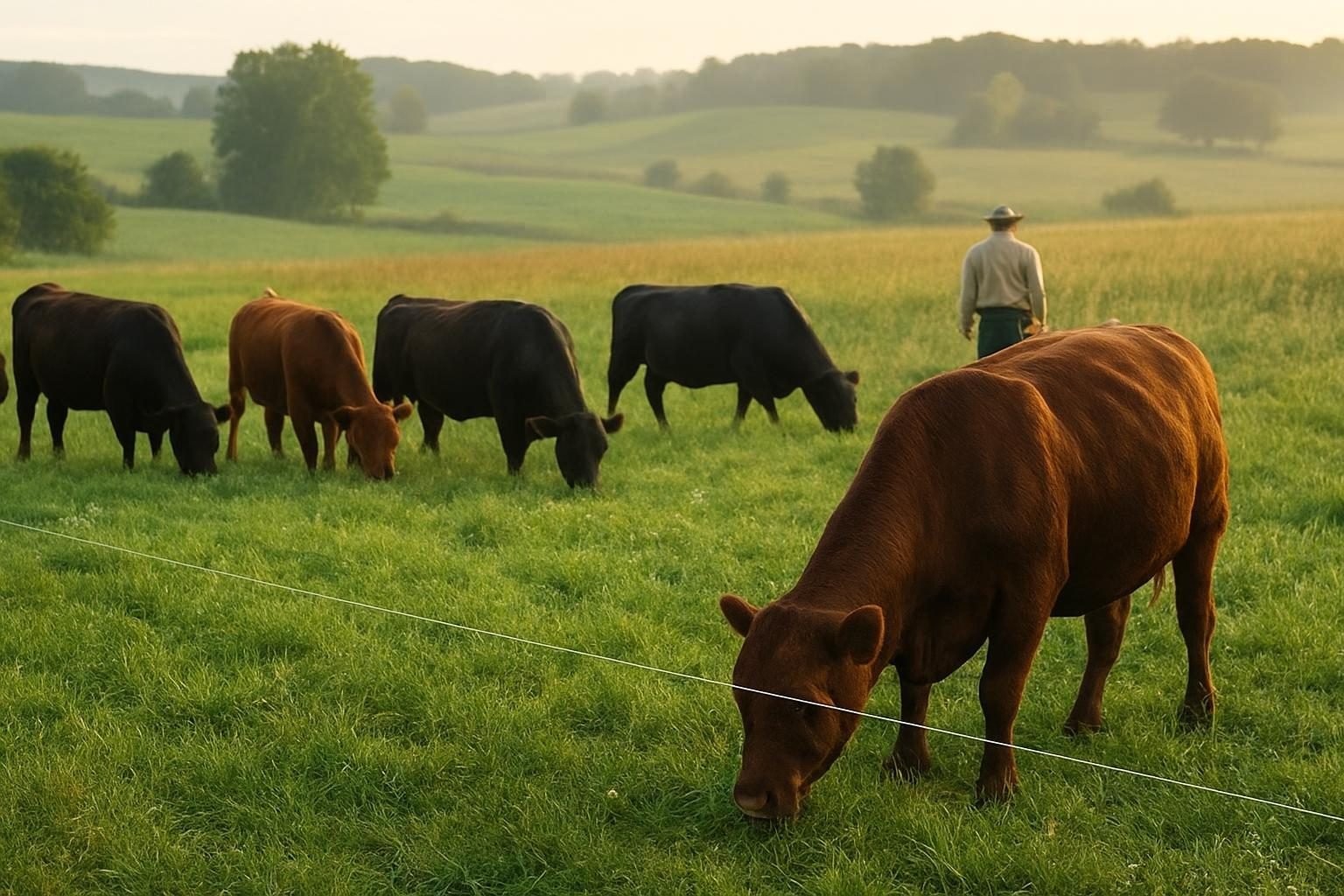
Portable electric fence is what makes rotation affordable. A basic kit has an energizer, a grounding system, polywire or polytape, and step-in posts.
- Energizer (charger): Match it to fence length, weeds touching the wire, and your animals. Solar units suit remote pastures; plug-in units give more punch where power is handy. We cover this in more depth in our upcoming guide to cattle fencers.
- Grounding: Poor grounding is the number one reason fences fail. Dry soil, sand, and winter frost all need extra attention. Follow the manufacturer’s instructions.
- Wire and posts: Polywire with step-in posts works well for cattle and horses. Sheep and goats usually need netting or more wires set low.
- Training: Animals respect a fence they have already felt. Train them in a small pen with a hot wire before turning them out.
A fuller setup walkthrough is coming in our guide to electric fence for cattle. Whatever you build, keep a voltage tester on hand and check the fence often.
Water: the part that makes or breaks it
Animals need clean water every day, typically on the order of 1 to 2 gallons per 100 pounds of body weight, and more in summer heat. Rough planning numbers only; confirm for your species and climate with your extension office.
Three beginner-friendly approaches:
- Hub-and-spoke: Place a water source in a central lane or corner so every paddock opens onto it.
- Quick-connect hose and portable trough: Cheap, flexible, and fine for a small herd. Use a float valve and keep hoses out of full sun when possible.
- Buried or surface pipe with hydrants: A bigger upfront cost, but it saves hours every week.
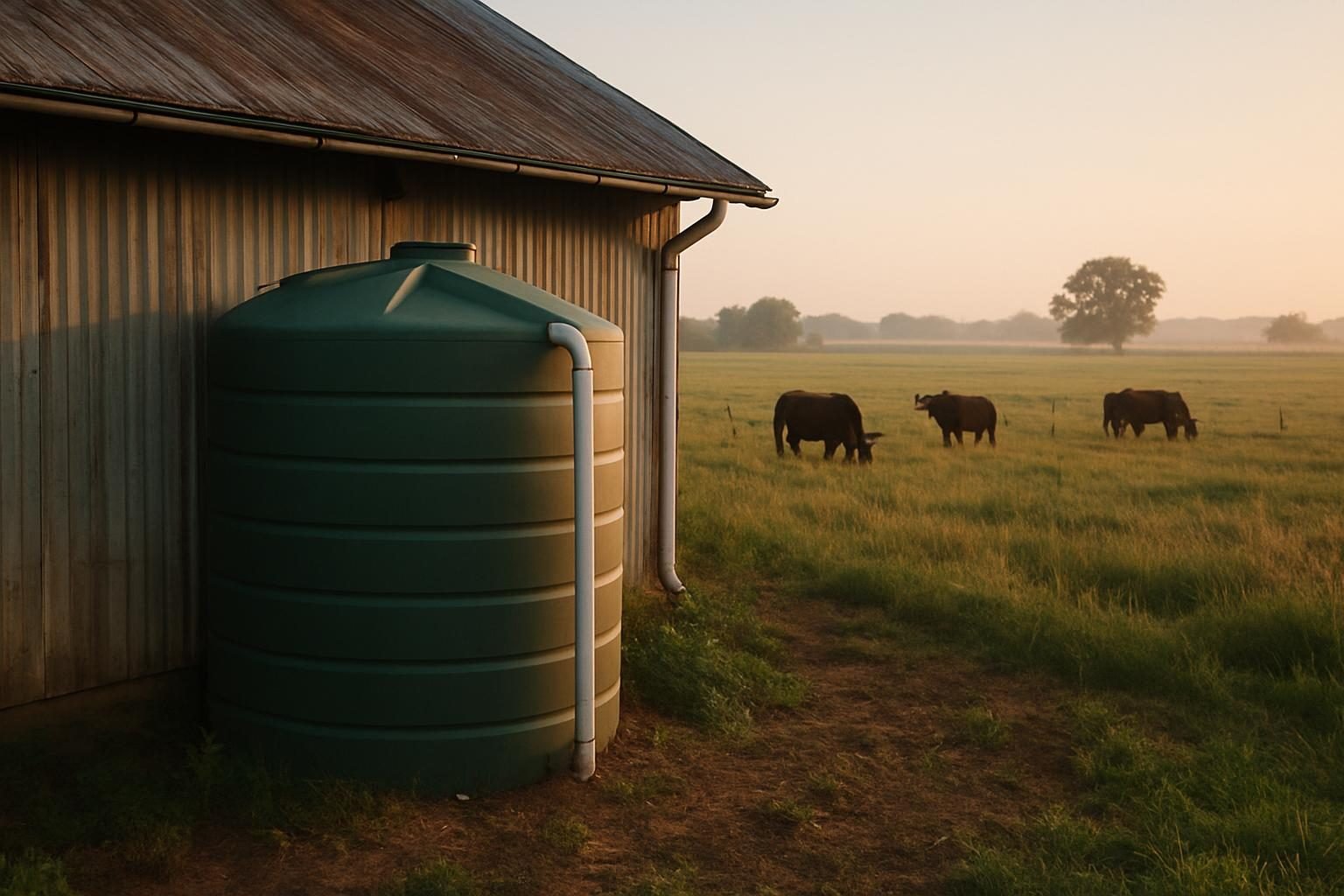
We break down pipe sizing, tanks, and troughs in water systems for rotational grazing. Winter freeze-up is a real issue in the North, so plan for it before the first hard frost.
Paddock sizing math
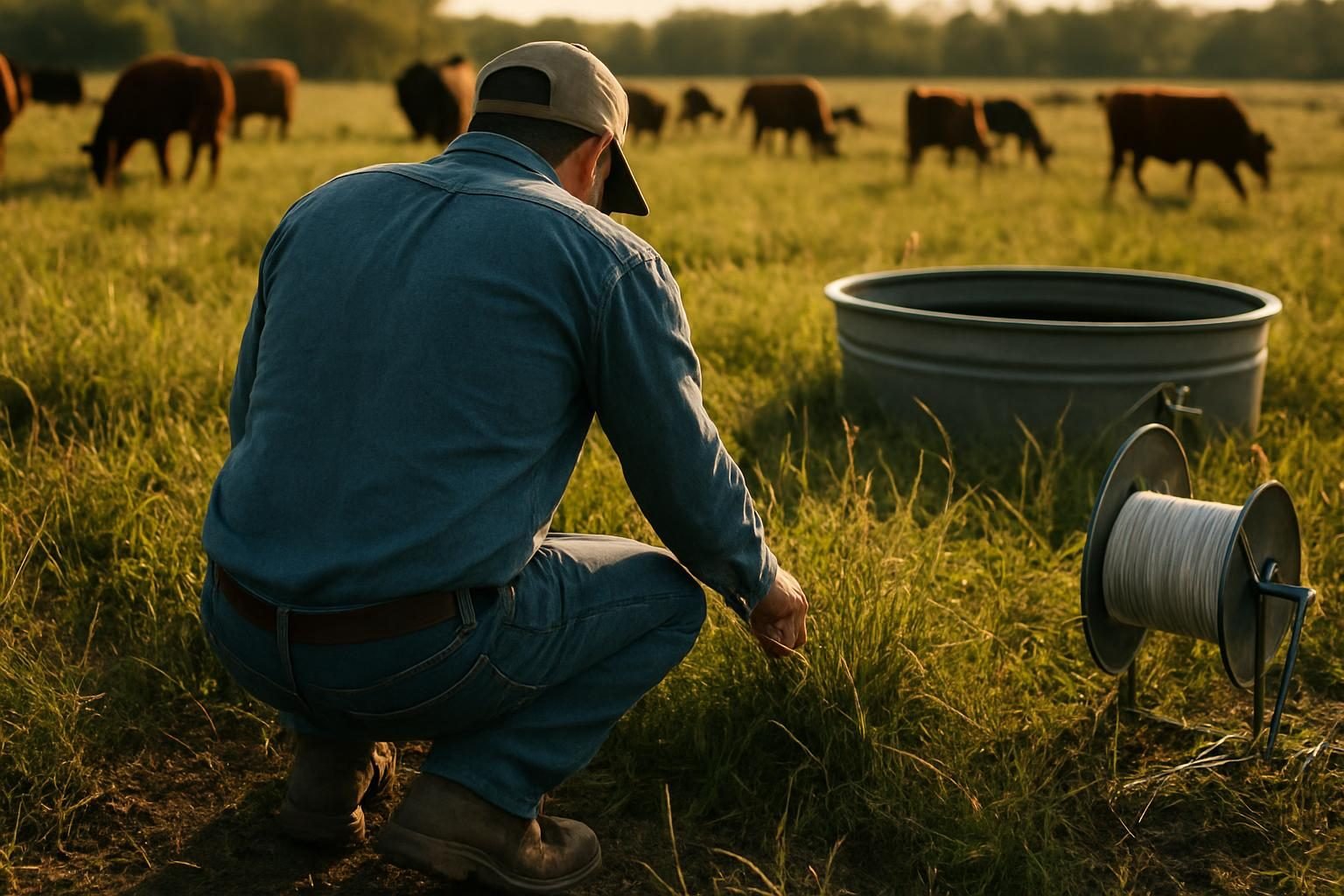
You size a paddock by how much forage animals need for the time they will be in it. Here is the simple version.
- Estimate daily intake. Animals eat roughly 2.5 to 3% of body weight in dry matter per day. A 1,000 lb cow needs about 25 to 30 lb of dry matter.
- Estimate available forage. Measure pasture height and use a local extension rule of thumb or clip-and-weigh a few plots. Many pastures in good growth hold roughly 200 to 400 lb of dry matter per inch per acre, but this varies widely by species and density.
- Account for utilization. Plan to graze only about 30 to 50% of standing forage. The rest is left to protect regrowth and soil, and some is lost to trampling.
- Divide. Total daily need divided by usable forage per acre gives acres per day.
| Step | Example |
|---|---|
| Herd | 10 cows at 1,000 lb |
| Daily need | About 250 to 300 lb dry matter |
| Forage available | Say 2,000 lb DM/acre standing (example only) |
| Usable at 40% utilization | About 800 lb/acre |
| Paddock per day | Roughly 0.35 acre |
That example is illustrative, not a prescription. Your forage numbers could be half or double. Start with a best guess, watch how much is left after the move, and adjust. For whole-farm capacity, read how many acres per cow.
Recovery periods by season
The rest period is the heart of the system, and it is not fixed. It shifts with growth rate.
| Season / condition | Typical rest (rough range) | Notes |
|---|---|---|
| Spring flush | 15 to 30 days | Grass grows fast; paddocks cycle quickly. Watch for being too slow and letting it get stemmy. |
| Early summer | 25 to 40 days | Growth begins to slow as heat arrives. |
| Summer slump / drought | 45 to 90+ days | Cool-season grasses stall in heat; warm-season grasses thrive. Lengthen rest, shorten graze. |
| Fall | 30 to 60 days | Plan ahead for winter feed, and consider setting aside paddocks to stockpile. |
| Dormant season | Varies | Little regrowth, so minimize pressure. Stockpiled forage or hay carries the herd. |
Regional differences matter. In the humid East and South, growth can be long and fast but so can summer weeds and parasites. On the Corn Belt and Great Plains, cool-season and warm-season mixes shift the calendar. In the arid West, rainfall rather than temperature often sets the clock, and rest periods can run long. Your local NRCS office or extension agent can tell you what is typical for your forage species. For winter, see stockpiling forage for winter grazing.
Reading the grass
A calendar is a guide; the plants are the answer. Learn to look at three things.
When to move in
Move animals in when the grass has recovered to a good grazing height for the species, often something like 8 to 12 inches for many cool-season pastures, though targets vary. Look for plants that have reached the leafy stage, before seed heads and stems take over.
When to move out
A common rule is “take half, leave half.” Many managers pull animals when pasture has been grazed down to around 3 to 4 inches for cool-season grasses, though taller residuals suit many species and are safer in dry spells. Leaving more leaf area means faster regrowth.
Signs of trouble
- Bare soil or manure piled on one spot with weeds around it suggests animals stayed too long or paddocks are too big.
- Plants that look grazed again within days of the move signal a rest that was too short.
- Coarse, mature, rejected stems point to rest that ran too long or too little grazing pressure.
Common beginner mistakes
- Going too big, too fast. Start with a few paddocks and expand as you learn.
- Skipping the water plan. If moving water is a chore, you will stop moving animals.
- Returning too soon. A fixed 21-day cycle all year is the classic error. Rest must lengthen when growth slows.
- Overstocking. No rotation can fix a herd larger than the land can feed.
- Weak fence and poor grounding. One escape teaches animals to test the wire.
- Ignoring parasites and animal health. Rotation helps break parasite cycles but does not eliminate them. Talk to a vet or extension agent about your species and region.
- Not keeping records. Without notes you cannot tell what is working.
Where to go from here
Once the basics feel routine, you can tighten up. Shorter moves and higher density lead into mob grazing and adaptive multi-paddock grazing. Adding other species can use forage more fully, which we explore in multi-species grazing. If you are thinking about small ruminants, our upcoming guide to raising sheep for beginners is a good next read. You can also browse all our grazing and livestock guides.
Key takeaways
- Start with one pasture and 4 to 6 paddocks using temporary electric fence.
- Water access in every paddock is non-negotiable.
- Size paddocks from daily dry matter need, then adjust by observation.
- Rest periods change with the season: short in the flush, long in slumps and drought.
- Take roughly half, leave half, and let the grass set the move date.
- Keep notes, and expect to adjust in the first season.
Frequently asked questions
How many paddocks do I need to start rotational grazing?
Four to six is a practical start. That gives enough rest between visits in a growing season without making the system hard to manage. You can subdivide later with temporary fence as you gain confidence.
How often should I move animals?
Every one to three days is a common beginner range. More frequent moves mean less regrazing of new growth and more even manure distribution, but you can start with moves every few days and tighten up as your gear and routine improve.
How long should a paddock rest between grazings?
It depends on growth rate. In a spring flush, 15 to 30 days may be enough. In summer heat, drought, or dormancy, rest may need to be 60 to 90 days or more. Use plant height and leaf stage, not a fixed calendar, to decide.
Can I do rotational grazing on a few acres?
Yes. Even a couple of acres divided with portable fence helps spread impact and rest the grass. Keep your stocking rate honest, because small acreages overstock easily, and consider supplementing with hay when growth slows.
Do I need expensive equipment?
No. A decent energizer, polywire or netting, step-in posts, and a flexible water setup are enough to begin. Spend first on grounding and water, which cause the most problems when skimped on.