Small scale regenerative farming means applying soil-building principles to a few acres or less, where every square foot works hard and your hands, not tractors, do most of the work. The good news is that small plots are where regenerative practices often pay off fastest, because you can manage soil, water and plants with a level of care that large operations simply cannot.
This guide is the hub for our Small & Urban Farms category. It covers no-dig beds, compost systems, intensive planting, cover crops, small livestock, season extension, local sales, urban land access, and honest income and labor expectations. Follow the links to go deeper on any topic.
Quick answer: Small scale regenerative farming applies five habits to under 5 acres: disturb the soil as little as possible, keep it covered, keep living roots in it as long as you can, grow diverse crops, and integrate animals or compost to cycle nutrients. Most market gardens use no-dig beds, compost, intensive spacing, and cover crops, then sell locally through markets, CSAs or restaurants. Expect high labor (often 1,000 to 2,500+ hours per acre per year for intensive vegetables) and widely variable income, so start small and track your numbers.
What regenerative means at a small scale
Regenerative agriculture is an outcomes-focused approach: you are trying to improve soil function, water infiltration, biodiversity and farm resilience over time. If you are new to the concept, our guide to what regenerative agriculture is and how to start lays out the core principles. On a small farm those principles translate into very concrete habits.
- Minimize disturbance. Skip or reduce tillage so soil structure and fungal networks stay intact.
- Keep the soil covered. Mulch, compost and cover crops protect against erosion, crusting and temperature swings.
- Keep living roots in the ground. Roots feed soil biology. Fewer bare-soil weeks means more biological activity.
- Increase diversity. Rotations, polycultures, flowers and hedgerows support beneficial insects and spread risk.
- Integrate animals or animal-derived fertility. Even a small flock or a worm bin closes nutrient loops.
Be honest about trade-offs. A regenerative label does not guarantee profit, and some practices (like no-till in heavy clay or in weedy fields) take a few seasons to work smoothly. Think of it as a direction of travel, not a checklist you complete.
You may also hear about permaculture. The two overlap heavily but are not identical; see how permaculture and regenerative agriculture relate if you want the distinction.
No-dig beds: the foundation of many small farms
No-dig (or no-till) beds are the signature technique for small plots. Instead of turning the soil, you feed it from the top with compost and mulch, letting worms and microbes do the mixing. The benefits are fewer weeds brought to the surface, better structure, less compaction from repeated rototilling, and less physical strain on you.
How to build a no-dig bed
- Mow or cut down existing vegetation as low as possible and leave it in place.
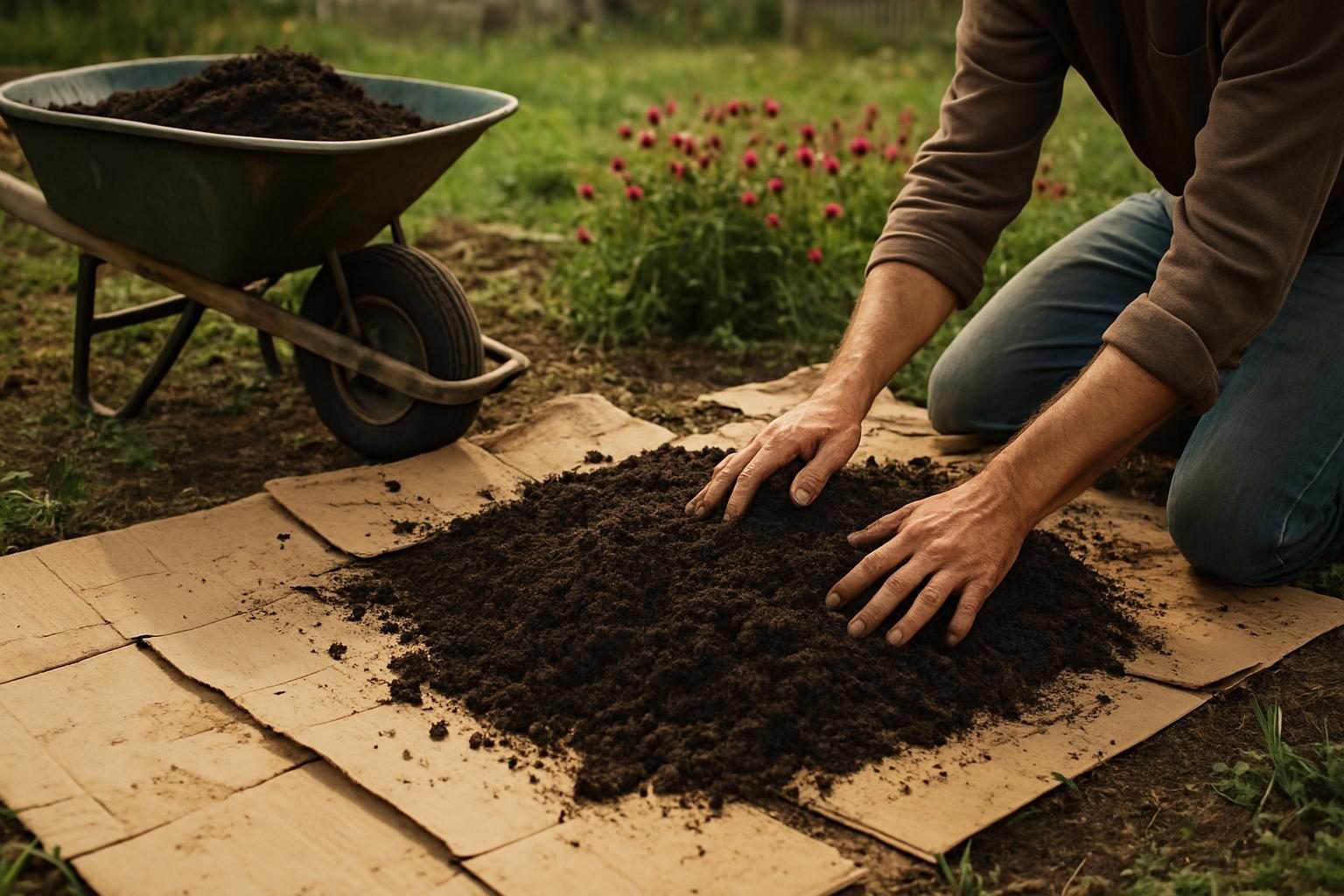
- Smother: lay plain, ungummed cardboard (remove tape and labels) overlapping by 6 inches or more, or use a thick layer of wet newspaper in dry climates.
- Wet it thoroughly so it stays put and starts to break down.
- Add 3 to 6 inches of finished compost on top. Quality matters here; immature compost can harm seedlings.
- Plant or transplant directly into the compost. Seeds can go in once the layer is stable and moist.
- Top up annually with 1 to 2 inches of compost, plus mulch where it suits the crop.
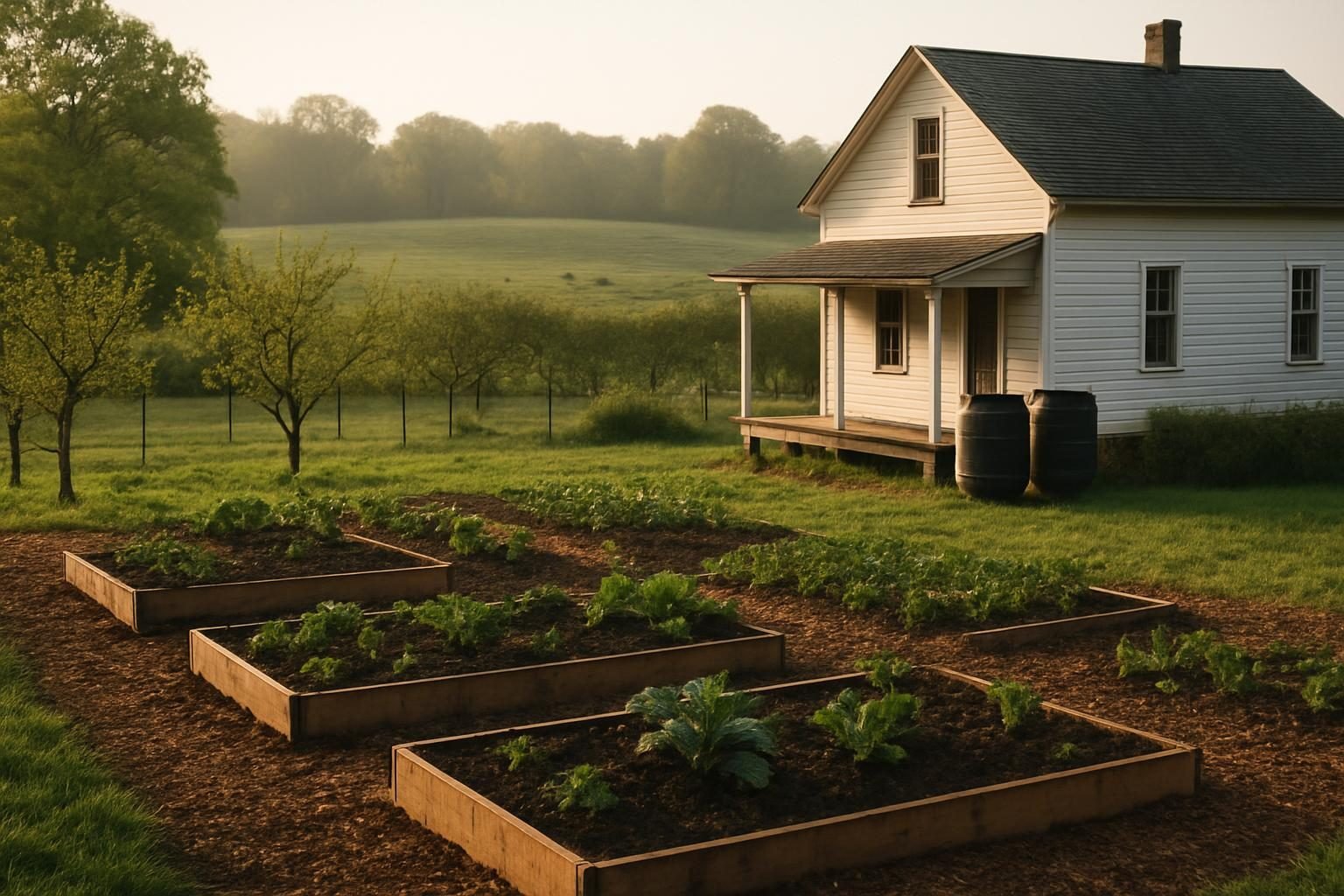
Standard bed widths of about 30 inches (market gardeners often use 30-inch beds with 12 to 18 inch paths) let you reach the middle without stepping on the soil. For the full method and regional adjustments, read our no-dig gardening guide, and watch for our upcoming article on how to start a no till garden.
One caution: no-dig is not magic on compacted subsoil or in very wet, heavy ground. In those cases a one-time broadforking or other loosening, followed by no-dig management, can help. Regional note: in the humid East and South, slugs and fast-decomposing mulches can be an issue, while in the arid West mulch is often essential for moisture retention.
Compost systems that feed the whole farm
Compost is the fuel for small intensive systems because you are growing a lot of crop on a little ground. You have three practical options, and many farms use more than one.
| System | Best for | Typical time to finished | Main trade-off |
|---|---|---|---|
| Hot composting | Large volumes of mixed material | Roughly 2 to 6 months with good management | Needs attention to carbon-nitrogen balance, moisture and turning |
| Vermicomposting | Kitchen scraps, small spaces, urban sites | Roughly 2 to 4 months | Small throughput; worms need temperature control |
| Bought-in compost | Starting new beds quickly | Immediate | Cost, and quality varies widely; ask for test data |
Our guide to hot composting walks through building thermophilic piles, and vermicomposting covers worm systems for gardens and small farms. If you want the basics first, our planned guide on how to make compost will cover the fundamentals.
A rough planning rule: for no-dig beds, you may need on the order of 1 to 2 cubic yards of compost per 1,000 square feet of bed to establish a 3-inch layer, then less each year to maintain it. Because that adds up, many market growers buy compost for the first year and build their own system in parallel. If you buy, ask suppliers about feedstocks, maturity and herbicide residue risk, particularly with manure or hay-based products.
You may encounter claims about compost tea and other biological amendments. The evidence is mixed, and our article on compost tea and whether it works sorts out what the research does and does not support. For the bigger soil picture, see the complete guide to building living soil. If you use raised beds, a good blend matters too; watch for our upcoming guide to raised bed soil mix recipes.
Intensive planting and crop planning
Under 5 acres, your advantage is intensity: closer spacing, succession planting, and thoughtful rotation. Closer spacing shades out weeds, holds moisture, and boosts yield per square foot, but it demands good fertility and good airflow to limit disease.
Core intensive practices
- Succession sowing: replant quick crops (lettuce, radish, salad mixes, bush beans) every 1 to 3 weeks to avoid gluts and gaps.
- Transplanting: starting seedlings indoors or in a greenhouse gets beds into production sooner and cuts weed pressure.
- Interplanting: pair fast and slow crops, such as radishes between slower brassicas, to use space fully.
- Rotation: shift plant families through beds on a multi-year cycle to break pest and disease cycles and balance nutrient demand.
- Record keeping: note sowing dates, yields and problems each season. This is the most underrated tool on small farms.
Choose crops that fit your market, climate and labor. High-value, fast-turn crops like salad greens, herbs, and specialty items tend to make the most of small acreage, while space-hungry crops like sweet corn or winter squash often do not pay their way. Our rundown of the most profitable crops for small farms and market gardens helps with this decision, and growing microgreens for profit shows how indoor, quick-turn crops can supplement field income. Saving your own seed can also cut costs and adapt varieties to your site; see our planned guide to seed saving for beginners.
Cover crops in a bed-scale system
Cover crops are harder to fit into intensive beds than into a farm field, because every bed is tempting to plant to cash crops. But a few well-timed covers repay the effort by suppressing weeds, feeding soil life, and reducing erosion and nutrient loss.
Practical ways to fit covers in
- Fall covers after harvest: in cold climates, oats winterkill and leave a mulch; cereal rye overwinters and gives heavy residue. In warmer regions, crimson clover and hairy vetch are common choices.
- Summer fallow gaps: buckwheat grows fast in warm weather, smothers weeds, and attracts pollinators; mow before it sets seed.
- Rest beds: dedicate a portion of beds each year to a full-season cover or a soil-building rotation.
- Termination without tillage: mow, then cover with a tarp for several weeks (occultation), or crimp or cut at the right growth stage and plant into the residue.
Timing and species depend heavily on region, so check with your local extension service or NRCS office for recommended mixes and seeding dates. On slightly larger plots, a roller crimper can terminate covers without herbicides; see roller crimpers explained. Row-crop farmers can also learn from our piece on interseeding cover crops into standing corn and soybeans, though the scale is different from a market garden.
Small livestock on small acreage
Animals speed up nutrient cycling, but on under 5 acres they bring serious constraints: limited space, neighbors, zoning, and animal welfare responsibilities. Start with species that suit small footprints.
Good starting points
- Laying hens: eggs, pest control, and compost inputs. Moveable coops or a managed run can fertilize beds in rotation. See our guide to regenerative backyard chickens.
- Meat poultry and rabbits: quick turnaround, modest space, but processing rules matter.
- Small ruminants (sheep and goats): practical on a few acres of pasture with good fencing and parasite management.
- Pigs: excellent for land clearing and composting, but they need strong fencing and careful placement; see pastured pigs.
If you graze, the same principles used on larger ranches apply at small scale: short grazing periods, long rest, and moving animals often. Our complete guide to rotational grazing explains the framework, and multi-species grazing shows how combining animals can use forage more fully.
Know the meat rules before you raise anything for sale. Selling meat generally requires processing at an inspected facility, while custom-exempt processing has strict limits on who can buy and how. Read USDA custom exempt processing vs inspected meat and confirm current rules with USDA and your state agriculture department. Egg sales also have state-specific licensing and labeling requirements.
Season extension
Extending the season is one of the best ways to raise income per square foot, because you sell when prices are higher and competition is lower. Options run from simple to substantial.
- Row cover (floating fabric): adds a few degrees of frost protection and blocks some insects; inexpensive and quick to set up.
- Low tunnels: hoops with plastic or fabric over beds for early spring and late fall crops.
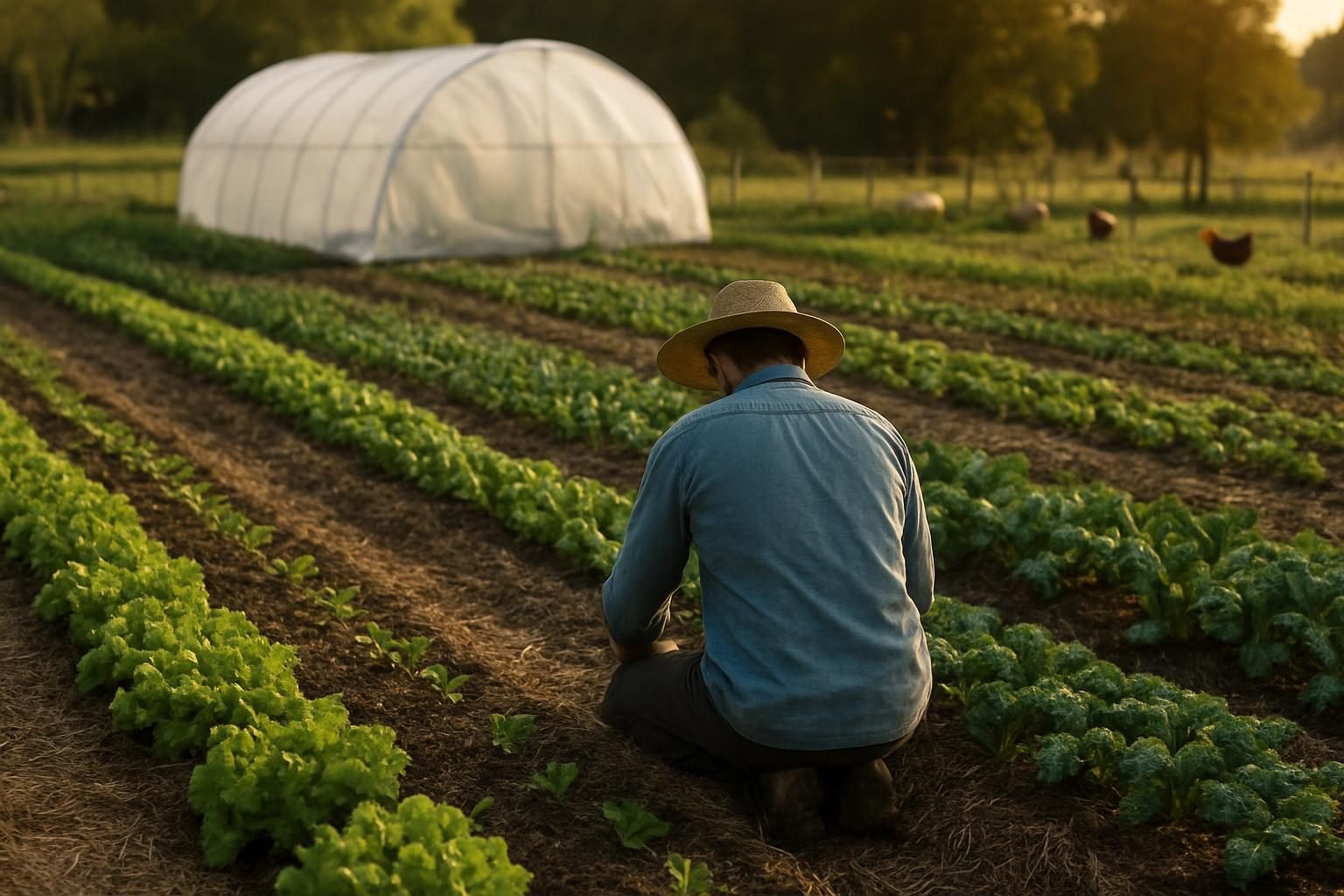
- Hoop houses (high tunnels): unheated structures that substantially extend the season and protect crops from rain, which can reduce disease for tomatoes and other crops. Our guide to hoop houses for small farms covers siting, costs and management.
- Heated greenhouses: expand options further but add energy cost and complexity.
The USDA NRCS has had programs that support high tunnels in some years and regions; ask your local NRCS or Farm Service Agency office whether support is currently available. Regional differences are large: a hoop house in Minnesota and one in Georgia will be used very differently, and in hot climates shade and ventilation matter as much as warmth.
Beyond the beds: hedgerows, trees and water
Even on a small site, perennial plantings add resilience. Hedgerows give habitat for beneficial insects and pollinators, break wind, and add edge production. See hedgerows for pollinators for planting design. Trees integrated with crops or pasture fall under agroforestry, and larger homesteads can explore nut trees for agroforestry. Water management techniques such as swales work in some landscapes and fail in others, so read the caveats before digging. Some homesteaders also experiment with hugelkultur mounds for using up woody debris, though results depend on climate and materials.
Selling locally: markets, CSAs and direct sales
Small farms usually make money by selling direct, capturing retail instead of wholesale prices. The main channels each have different labor, risk and cash flow patterns.
| Channel | Strengths | Challenges |
|---|---|---|
| Farmers markets | Immediate cash, customer feedback, flexible volume | Weekend time commitment, weather, booth fees, competition |
| CSA (subscriptions) | Upfront cash, predictable demand | Packing logistics, member retention, need for crop variety |
| Restaurants and chefs | Larger orders, reliable repeat buyers | Delivery time, price negotiation, quality consistency |
| Farm stand or online preorder | Low overhead, direct relationships | Needs traffic or marketing, local regulations |
Learn the details in selling at farmers markets and how to start a CSA. Pricing is where many small farms struggle: calculate costs including your own labor before setting prices, using our guide on how to price farm products so your farm is profitable. Do not copy a neighbor’s price without knowing your own costs.
Urban land access and zoning basics
Urban farming can work beautifully, but land and rules are often the hardest part. Our detailed guide to urban farming covers the business side; here are the essentials.
Finding land
- Your own yard or a neighbor’s: yard-sharing arrangements can work well with a written agreement.
- Vacant lots: some cities lease or license vacant parcels for agriculture; check with city planning or land bank offices.
- Community land trusts and nonprofits: some hold land specifically for growing.
- Rooftops and containers: possible but heavier on cost, structural and insurance questions.
Questions to answer before you plant
- Soil safety: test for lead and other contaminants on any urban site. Raised beds with imported soil are a common solution when contamination is a concern. Ask your extension service where to get testing.
- Zoning: is commercial growing, selling at the site, keeping animals, or running a stand allowed? Rules vary widely by city and neighborhood.
- Lease terms: short leases discourage soil investment; try to negotiate multi-year terms and clarity about improvements.
- Water access: get a reliable source and understand the cost of metered water.
- Insurance and permits: check liability coverage and any business licenses or food safety rules.
This is general information, not legal advice. Talk to your city planning office and, for lease or entity questions, a qualified attorney.
Realistic income and labor expectations
Honesty matters here, because small-farm marketing often promises more than farms deliver. Income varies enormously with climate, market, skill, crop choice, and how you count your own labor. The ranges below are rough planning estimates only, not guarantees; check your own numbers against extension budgets and local market prices.
| Scale | Typical labor | Typical gross revenue range (very wide) | Notes |
|---|---|---|---|
| Homestead or backyard (under 1/4 acre) | 5 to 20 hours per week in season | Mostly offsets grocery costs; side income of a few hundred to a few thousand dollars if you sell | Best for learning; sales often limited by time and rules |
| Part-time market garden (1/4 to 1 acre) | 20 to 40 hours per week in season | Roughly several thousand to tens of thousands of dollars | Often supplemented by off-farm income |
| Full-time intensive market farm (1 to 3 acres) | 40 to 60+ hours per week in season, plus help | Commonly cited from the tens of thousands to well over $100,000 gross on well-run, direct-market farms | Gross is not profit; labor, inputs, and infrastructure take a large share |
Intensive vegetable production often needs well over 1,000 hours of labor per acre annually, and the farmer’s own time is usually the largest cost. Many new farms take two to five seasons to reach stable income, and plenty never replace a full-time salary. Common ways farms improve their margins include focusing on a few high-value crops, extending the season, adding value (for example, dried herbs or prepared foods subject to local rules), and keeping infrastructure costs low early on.
Before you commit, write a plan. Our farm business plan template helps you work through costs and revenue, and the regenerative farming business guide covers funding, certification and sales. Grants, loans and cost-share programs change frequently, so confirm current details with USDA, your state department of agriculture, and your local extension office. For tax and legal questions, consult a qualified professional.
A beginner roadmap: your first two years
- Season 0 (planning): Visit farms, take an extension or SARE-informed course, test your soil, and map sun, water and access. Decide your market first, then your crops.
- Season 1 (small and tight): Start with a quarter acre or less. Build no-dig beds, plant 8 to 15 crops you can sell, and track every hour and dollar. Set up a compost system early.
- Season 1 (sales): Test one or two channels, such as a market stall or a small CSA. Our step-by-step market garden plan is a useful companion.
- Season 2 (refine): Drop crops that did not pay, add cover crops to rotation, and consider a hoop house if your numbers support it.
- Season 2 (expand carefully): Add small livestock or perennials only when your core vegetable system is running smoothly. If you want the whole-property picture, see our planned guide to how to start a homestead.
For climate-focused readers, our overview of regenerative agriculture and climate change explains what farms can and cannot realistically do, which is worth reading so you avoid overstating benefits to customers.
Key takeaways
- Small scale regenerative farming rests on minimal disturbance, soil cover, living roots, diversity and nutrient cycling.
- No-dig beds plus good compost are the foundation for most market gardens and urban farms.
- Intensive planting and season extension raise income per square foot, but they raise labor and management demands too.
- Check zoning, soil contamination, processing and licensing rules before you plant or sell, since they vary by place.
- Income ranges are wide; start small, track hours and costs, and price to cover your own labor.
- Confirm current details on grants, loans and programs with USDA, your state and your local extension service.
Frequently asked questions
How much land do I need for small scale regenerative farming?
You can start with a backyard or a quarter acre. Many market gardens produce meaningful income on one to three acres of intensively managed beds, but the right size depends on your labor, market and crops. Starting smaller than you think you need is usually wiser, since you can add beds once your systems and sales are working.
Can a small regenerative farm be profitable?
Yes, but it is not automatic. Profitability depends on direct-market sales, accurate pricing, controlled infrastructure costs, and efficient labor. Many farms rely on off-farm income during the first few years. Build a budget, track your numbers each season, and compare them with local extension enterprise budgets.
Is no-dig gardening really better than tilling?
For most small farms it saves labor, reduces weed pressure over time and protects soil structure, though it needs a steady supply of good compost and a short transition period. On very compacted or weedy ground you may need initial loosening or smothering first. Results vary with soil, climate and management.
Do I need livestock to be regenerative?
No. Many productive regenerative market gardens have no animals and rely on compost, cover crops and diverse plantings for fertility. Animals can speed nutrient cycling, but on small acreage they add regulatory, fencing and welfare responsibilities, so add them only when your plant systems are stable.
Can I farm commercially in a city?
Often yes, but rules vary widely. You will need to check zoning, permits for selling, rules on animals, water access and soil safety, including testing for lead and other contaminants. Contact your local planning office and extension service, and see a qualified professional for legal or lease questions.