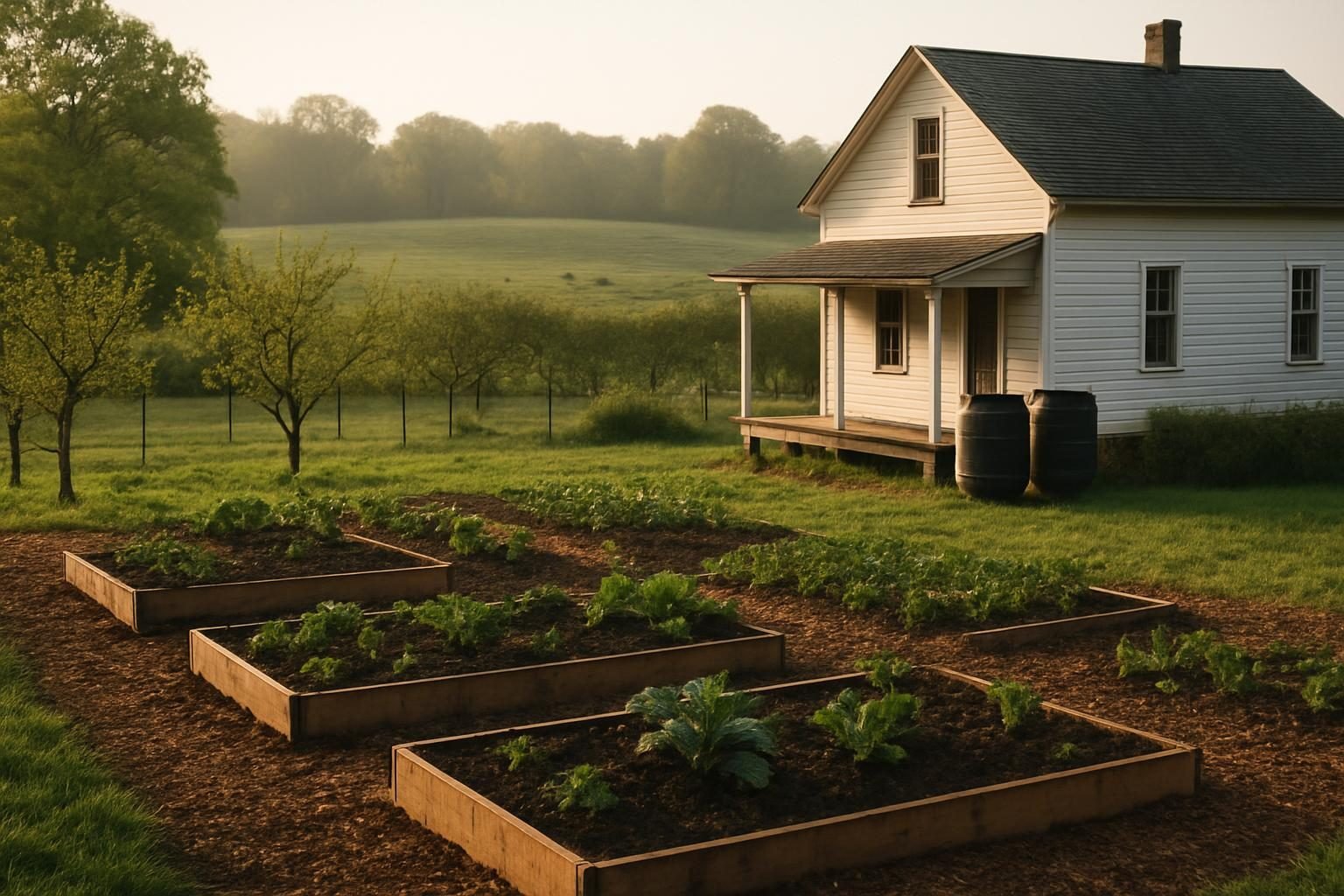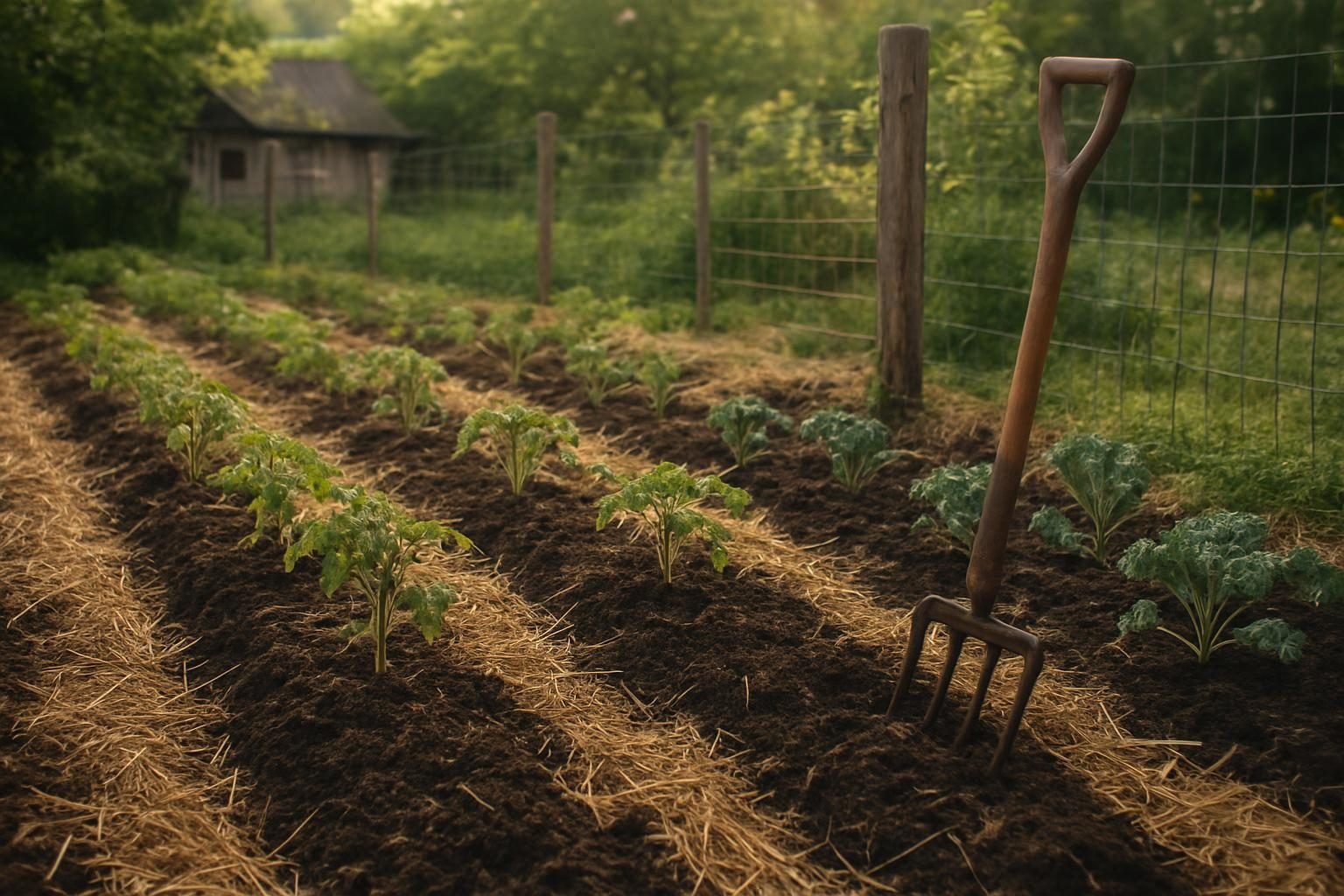
A no till garden is a garden where you stop turning the soil over, and let roots, worms and fungi do the loosening instead. This guide walks through the practical ways to start beds without a tiller or spade, how to manage weeds once you do, and where no-till and no-dig actually differ.
Quick answer: To start a no till garden, smother existing vegetation with cardboard and 4 to 8 inches of mulch or compost (sheet mulching), or cover the area with an opaque tarp for 4 to 12 weeks (occultation). Loosen compacted ground with a broadfork if needed, then plant directly into the bed or into crop residue. Feed the surface with compost each season and keep the soil covered.
What no-till gardening is (and why it works)
Tillage mixes air into the soil, which feels productive in the short term. It also breaks fungal networks, burns through organic matter faster, exposes buried weed seeds to light and leaves the surface prone to crusting and erosion. No-till gardening tries to reverse all of that: disturb the soil as little as possible, keep it covered, keep living roots in it as long as you can, and feed the soil biology from the top.
The principle sits at the heart of regenerative growing. If you want the bigger picture of how minimal disturbance, cover and diversity fit together, start with our guide to what regenerative agriculture is and our deeper pillar on building living soil.
A fair caveat: no-till is not magic, and results vary. Heavy clay, compacted fill soil, very dry climates and perennial weed pressure all change the plan. Expect a transition period of a season or two before beds feel noticeably easier.
No-till vs. no-dig: what is the difference?
The terms get used interchangeably, but there is a useful distinction.
- No-till is the broader idea: no mechanical inversion or mixing of soil. It includes planting into cover crop residue, using a broadfork for occasional loosening, and using tarps or crimping to terminate cover crops. Some no-till growers use shallow cultivation or hand tools on the surface.
- No-dig usually refers to a specific bed-building method: layering thick compost or mulch on top of the soil and never digging at all, often popularized in small-scale vegetable growing. We cover that approach in detail in No-Dig Gardening: How to Build Beds Without Tilling.
Think of no-dig as one well-defined recipe within the larger no-till family. This article covers the full toolkit so you can pick what fits your site.
Method 1: Sheet mulching (lasagna beds)
Sheet mulching suppresses weeds and builds soil at the same time. It works well on lawn, weedy ground and new garden areas, and it is the most accessible starting point for homesteaders and urban growers.
- Mow or cut down existing vegetation as low as you can. Leave the clippings in place.
- Water the area thoroughly if it is dry. Moist soil breaks down faster.
- Lay cardboard (plain brown, tape and labels removed) with generous 6-inch overlaps so no light gets through.
- Wet the cardboard so it stays put and starts to soften.
- Add 3 to 6 inches of compost on top. Finished compost lets you plant sooner; see our guides to making compost and hot composting if you are producing your own.
- Top with 2 to 4 inches of mulch such as straw, wood chips or leaves, unless you plan to plant immediately into the compost.
For transplants, pull back the mulch, make a planting pocket in the compost and set the plant in. For direct-sown seeds like carrots and lettuce, use a fine, weed-free compost surface layer so seeds make good contact. Starting in fall and letting the layers settle over winter is the easiest timing in most regions, but spring-built beds work if you use enough finished compost.
Trade-offs: Imported compost and mulch cost money or effort, and quality varies. Ask about herbicide residue (persistent herbicides in hay, straw or manure can damage crops) and avoid anything you cannot vouch for. Wood chips are fine as a pathway or surface mulch but can tie up nitrogen if mixed into the planting zone.
Method 2: Occultation with tarps
Occultation means excluding light with an opaque cover so weeds and cover crops die and begin to decompose in place. It is popular with market gardeners because it clears ground with almost no labor once the tarp is down.
- Mow or cut the area low.
- Cover with a black or silage tarp, overlapping edges and weighing them down with sandbags, boards or soil staples. No gaps for wind or light.
- Leave it in place. Typical ranges run from about 3 to 4 weeks in hot summer weather to 8 to 12 weeks or more in cool seasons.
- Lift the tarp, check the ground, and plant or broadcast compost and seed. Tough perennials like bindweed, quackgrass and Bermudagrass may need a second round or longer coverage.
Tarps also work well between crops to terminate a spent bed or a cover crop, and they encourage earthworm activity under the cover. Downsides include plastic waste (buy durable tarps and reuse them for years), slug habitat, and the fact that the tarp suppresses but does not nourish. Pair it with compost.
Method 3: Using a broadfork on compacted soil
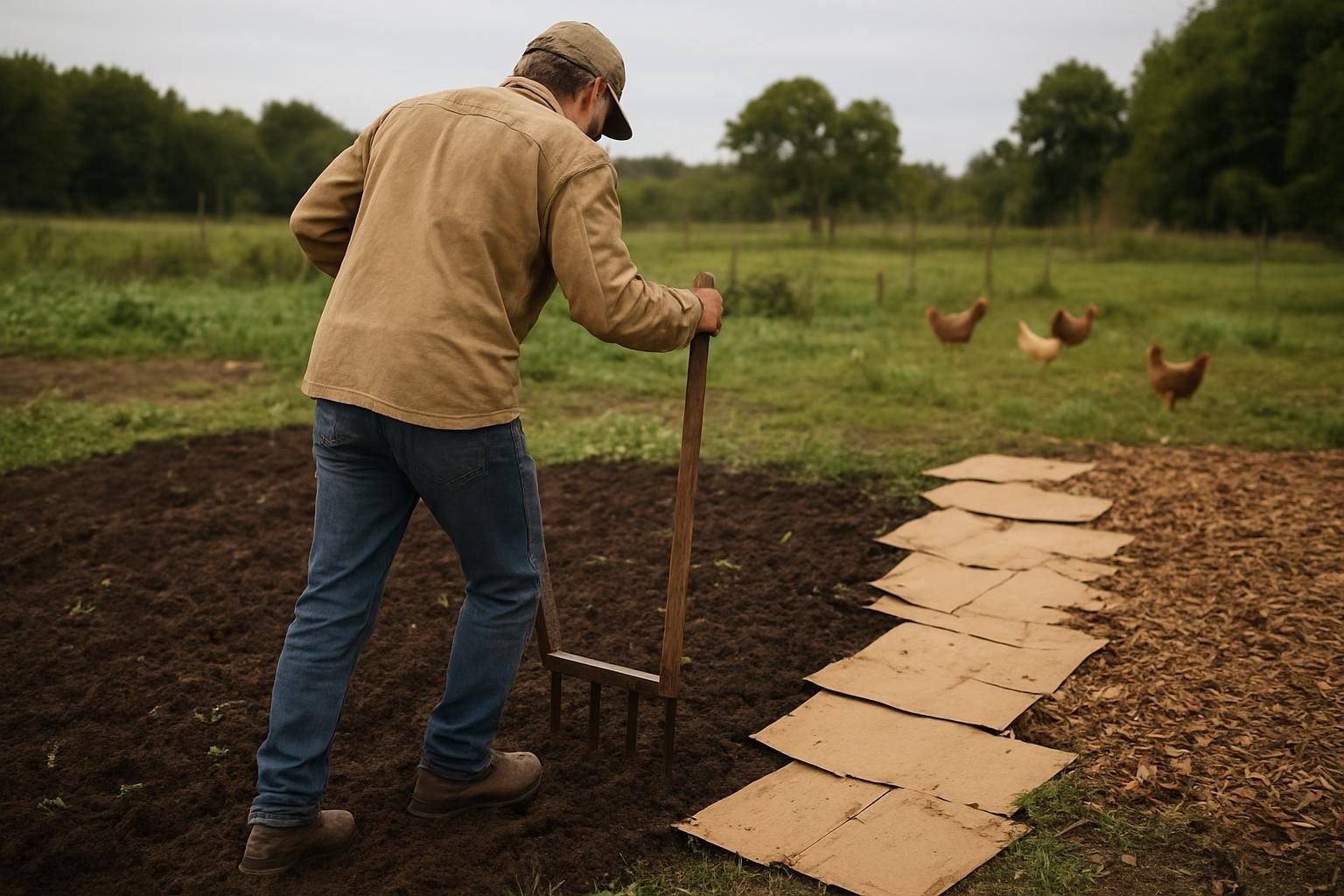
If your ground is compacted, such as a former lawn, a builder-graded yard or heavy clay, a broadfork can open it up without flipping soil layers. You push the tines in with your body weight, rock the handles back to lift and fracture the soil slightly, and step back. Soil stays in place; it simply gets air channels.
- Use it sparingly. Once to open a new bed, then occasionally if compaction returns. Roots and worms should handle most of the loosening after that.
- Work when the soil is moist, not wet. Broadforking saturated clay creates clods and smearing.
- Tines of 10 to 14 inches are typical. Work in rows about a foot apart, backing up as you go.
Strict no-dig purists skip this step, and plenty of beds do fine without it. If you are dealing with heavy clay, adding deep-rooted cover crops is a slower but gentler alternative; see our guide to the best cover crops for clay soil.
Method 4: Planting into residue and cover crops
Instead of tilling in a cover crop, terminate it and plant through what is left. Options include:
- Winter-kill covers like oats or tillage radish in cold climates. They die on their own and leave a mulch.
- Roller-crimping or mowing rye and other cereals at flowering, then transplanting into the mat.
- Tarping a cover crop after cutting to speed decomposition.
- Chop and drop of spent crop residue directly on the bed as mulch.
Transplants such as tomatoes, peppers, brassicas and squash do best in heavy residue. Small-seeded crops are trickier, so clear a narrow seed row or use compost as the seedbed. Learn more about choosing and timing covers in our green manure guide. Regional note: in the humid East and South, residue breaks down fast and keeps soil cool and moist; in the arid West, it may need irrigation to decompose and can shelter pests like slugs less often but voles more.
Managing weeds in a no-till garden
Weeds do not disappear, but their pressure drops over time because you are no longer bringing buried seed to the surface. Keep these habits:
- Keep the soil covered. Bare soil is an invitation. Mulch, living plants or residue should cover it year-round.
- Weed small. A stirrup hoe or hand-pull when weeds are seedlings takes minutes; letting them seed costs seasons.
- Cut perennials repeatedly or tarp them. Do not rototill them, which chops roots into many new plants.
- Watch your inputs. Weedy compost or hay brings new seed. Hot compost kills many seeds if it reaches and holds proper temperatures.
- Close canopy fast. Tighter spacing and quick-growing crops shade out weeds.
Feeding the soil without turning it
In no-till beds, fertility arrives from the top. A common routine is an inch or two of compost each year or each season, plus mulch and cover crops. How much you need depends on your soil test, crops and how heavy a feeder you are growing. For beds in frames, our guide to compost for raised beds covers types, ratios and timing, and if you are building a mix from scratch, a forthcoming guide on raised bed soil mix recipes will help. Biochar can be part of the picture in some soils, but its benefits are modest and variable; see biochar for soil for the honest limits.
Test your soil every few years through your state extension service or a reputable lab, and tailor amendments to what the results show rather than guessing.
Which method should you choose?
| Method | Best for | Time to plant | Main drawback |
|---|---|---|---|
| Sheet mulching | Lawn, weedy areas, small beds | Immediately to a few weeks (with compost layer) | Needs lots of material |
| Occultation tarp | Larger plots, market gardens, resetting beds | Roughly 3 to 12+ weeks | Plastic, slower in cool weather, perennials persist |
| Broadfork | Compacted or clay soil | Same day | Labor; use sparingly |
| Planting into residue | Existing beds with cover crops | After termination | Timing and seed-contact challenges |
Most growers combine methods: tarp to kill sod, broadfork once, then compost and mulch each season. If you are scaling up, see how this fits into small-scale regenerative farming and starting a market garden.
Key takeaways
- No-till means minimal soil disturbance and constant cover; no-dig is one specific bed-building style within it.
- Sheet mulching and tarps are the two easiest ways to convert lawn or weedy ground without digging.
- Use a broadfork once or occasionally for compaction, not every season.
- Plant transplants into residue or compost; give small seeds a fine, clean seedbed.
- Weeds drop over time, but you still need to weed small, mulch and watch compost and hay quality.
- Feed from the top with compost and check a soil test every few years.
Frequently asked questions
Is a no till garden really weed-free?
No. You will still get weeds from wind-blown seed, imported materials and perennial roots. But because you are not turning up buried seed, annual weed pressure usually falls over a few seasons, and the weeds that do appear are easier to pull in mulched, moist soil.
Can I start a no-till garden on heavy clay?
Yes, though expect a slower transition. Sheet mulch or tarp to kill the surface vegetation, broadfork once when the clay is moist but not sticky, and build structure with compost and deep-rooted cover crops. Avoid working it wet, which causes compaction no method will fix quickly.
How long should I leave a tarp on the ground?
Typical ranges are about 3 to 4 weeks in hot summer weather and 8 to 12 weeks or more in cool seasons. Annual weeds and cover crops die faster; perennial grasses and bindweed may need longer or repeat covering. Lift a corner to check that vegetation is dead and decomposing before you plant.
Do I need to add compost every year?
Most no-till gardens benefit from a regular top-up, commonly an inch or two a year in intensively cropped beds, since compost is the main fertility source and mulch layers break down. Let your soil test, plant vigor and crop load guide how much you really need.
Is no-till better than tilling for the soil?
Research and practical experience generally favor reduced disturbance for soil structure, organic matter and biology, but outcomes depend on climate, soil type and management. Yields in the first year or two can lag, then often catch up. Consult your local extension service for results relevant to your region.