A community supported agriculture (CSA) farm sells shares of the season’s harvest to members before the first seed goes in the ground. Done well, it gives you early cash, a built-in customer base and a direct line to the people eating your food. Done carelessly, it becomes a weekly scramble to fill boxes you promised months ago. This guide walks through how to start a CSA, from choosing a model to keeping members for year two.
Quick answer: To start a CSA, pick a share model (full, market-style or flexible), price shares from your real cost of production and expected yield, plan crops backward from a weekly box, set a simple pickup or delivery system, and communicate with members every week. Start small, often 20 to 50 members, and grow only after you can fill boxes reliably.
Is a CSA right for your farm?
A CSA works best when you can grow a diverse mix of vegetables (and sometimes eggs, flowers or other products) across a long season, and when you have a market of people willing to pay upfront. It rewards farmers who like planning and talking to customers. It is harder if you only grow two or three crops, sell mainly wholesale, or have no time for weekly logistics.
If you are still deciding whether to farm commercially at all, start with how to start a market garden. Many farms run a CSA alongside farmers markets so that one channel’s slow week is covered by another.
CSA models: full, market-style and flexible
The model you choose shapes your pricing, your crop plan and your workload. Here is how the three common options compare.
| Model | How it works | Pros | Cons |
|---|---|---|---|
| Full (traditional) share | Members pay upfront for a pre-packed weekly box for the whole season | Simplest to harvest and pack; strongest cash flow; shared-risk culture | Members get what you give them; can overwhelm newcomers with unfamiliar crops |
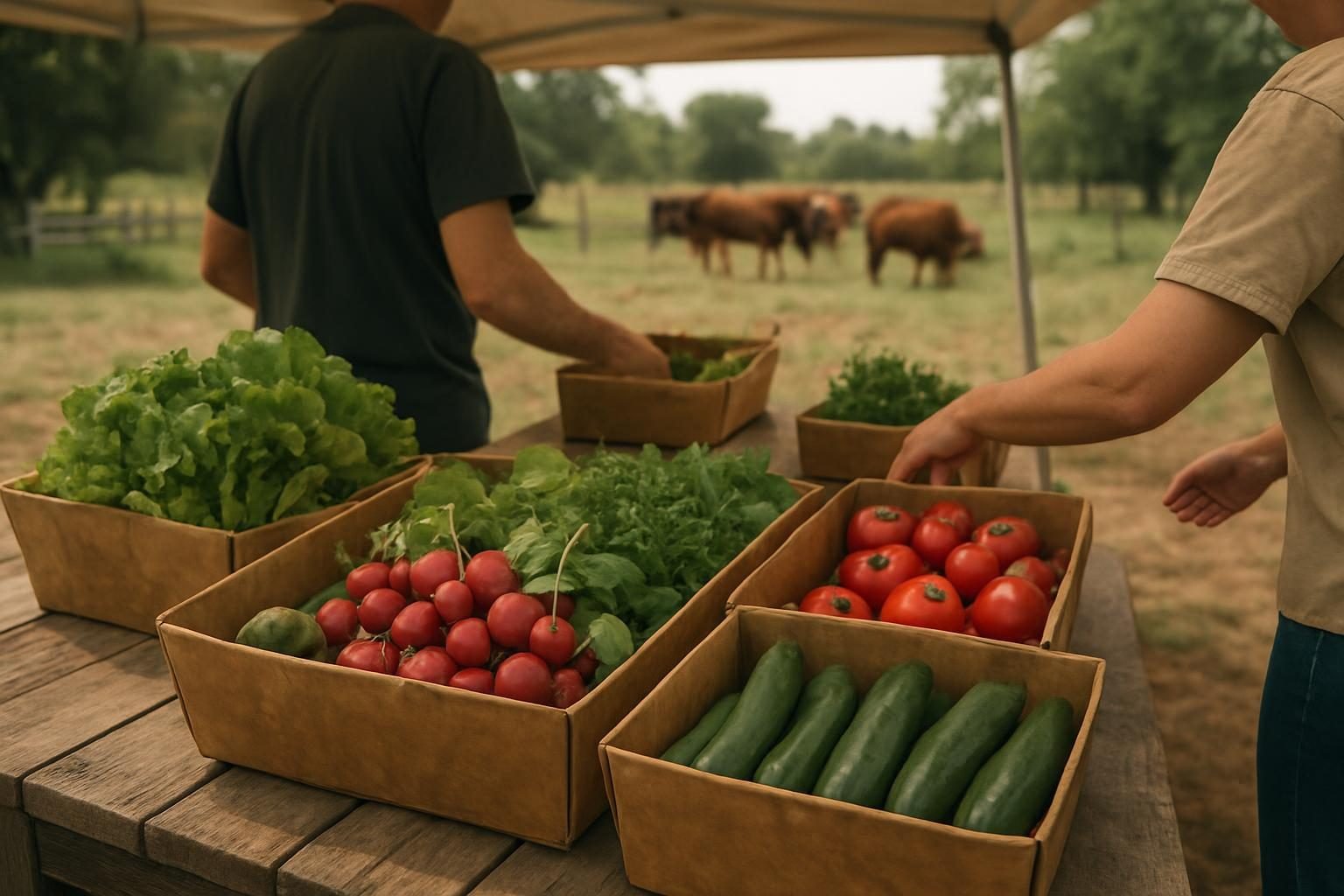
| Market-style (choice) share | Members prepay a dollar amount or credits, then choose items at pickup | Higher satisfaction and retention; less food waste | Needs a pickup setup like a small market stand; harder to forecast demand |
| Flexible share | Members buy a set of boxes or credits to use on dates they choose, often with skip weeks or customization | Appeals to small households and travelers; lowers the barrier to joining | More software and tracking; less predictable weekly volume |
Many new CSAs start with a full share because it is the easiest to pack and plan, then add a choice option once they know their yields. Others go straight to a flexible model because their local customers expect it. There is no single right answer, so match the model to the customers you can realistically reach.
Season length and share size
Common season lengths run from 12 to 24 weeks, with some farms in mild climates offering year-round or winter shares. A “full” share is typically sized for two to four people and a “half” or “small” share for one or two. Define these in terms your members will understand, such as “enough vegetables for a family of three to cook at home most nights.”
How to price CSA shares
Pricing is where many first-year CSAs undercut themselves. Work from your numbers, not from the cheapest box in town.
- Estimate your costs: seed, amendments, packaging, fuel, labor (including your own), insurance, software, and a share of fixed costs like tools and irrigation.
- Estimate usable yield: how many pounds or units of saleable produce you expect per bed-foot, discounting for pest loss, crop failure and culls. Be conservative in year one.
- Divide by shares and weeks: total target revenue divided by the number of shares gives the price per share; divide by weeks to get the weekly box value.
- Sanity-check against the market: compare your weekly box value with what comparable local produce costs at farmers markets and grocery stores, and with what nearby CSAs charge.
- Decide on payment terms: many farms offer a full upfront price, a two- or three-part installment plan, and sliding-scale or work-share options to widen access.
Prices vary widely by region, season length and box contents, so treat any benchmark as a rough guide and rely on your own cost data. Your net returns also depend heavily on which crops fill the box; the crops that earn the most per square foot are covered in most profitable crops for small farms and market gardens.
Plan crops backward from the weekly box
The core skill in running a CSA is succession planning. Instead of asking “what do I want to grow,” ask “what goes in the box in week 4, week 11 and week 19?”
- Build a box template: for each week, list a target of roughly 6 to 10 items across categories: a leafy green, a root, an allium, a fruiting crop in season, an herb, and a “wild card.”
- Stagger plantings: sow lettuce, beans, carrots and similar crops every one to three weeks so supply is steady instead of a glut followed by a gap.
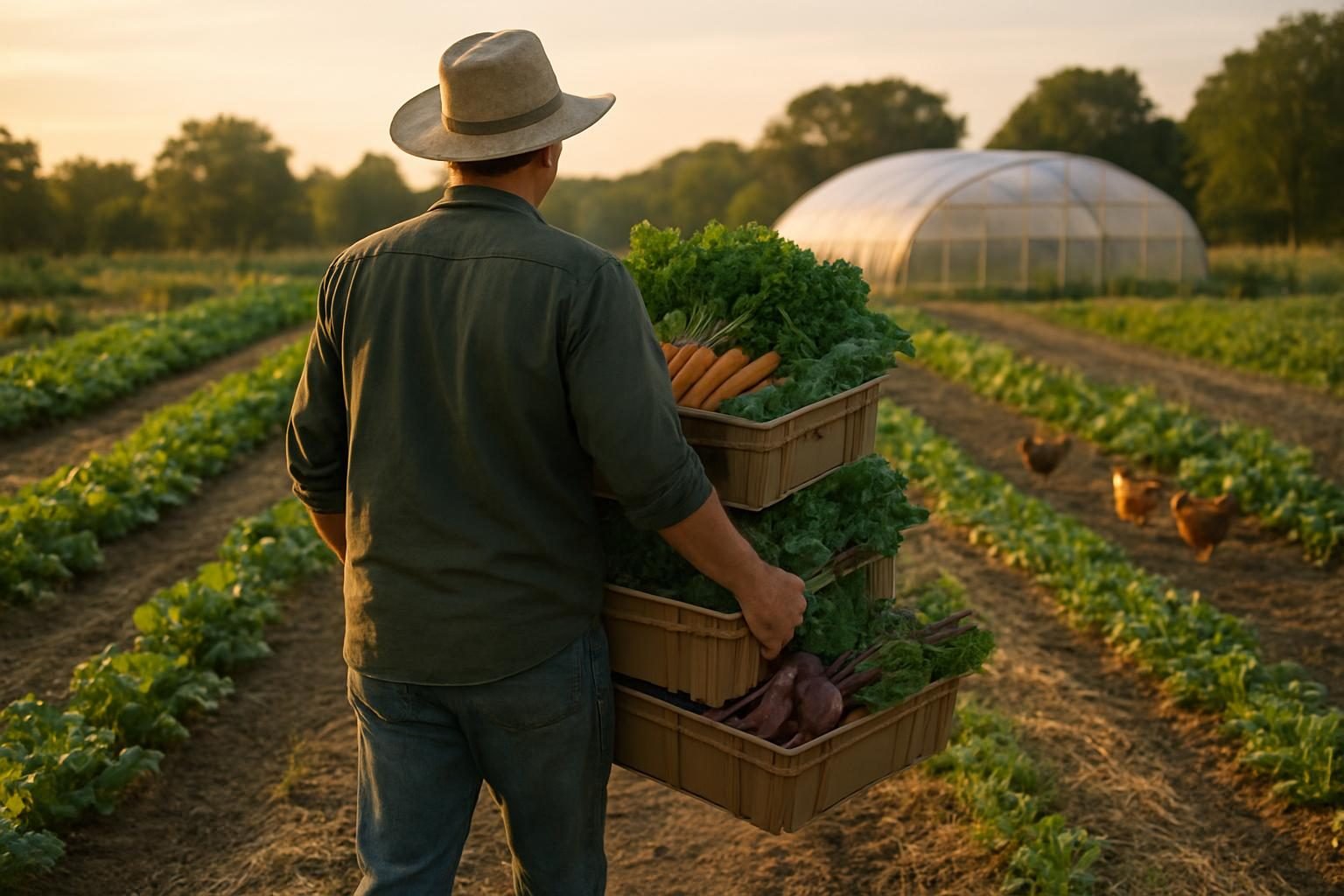
- Cover the hungry gaps: early spring and late fall are the weak points in most regions. Season extension helps, and a hoop house can shift your first and last boxes by several weeks.
- Grow more than you promise: a common planning rule is to plant 10 to 25 percent above what the box requires to buffer against losses.
- Mind regional differences: the humid East fights disease and heat-loving pests, the arid West depends on irrigation planning, the South has a hot summer slump and a strong cool-season window, and short-season northern farms lean on storage crops.
Add-ons can smooth gaps and lift revenue. Eggs from backyard chickens, cut flowers, or specialty items like growing microgreens for profit in off-season weeks all pair well with a CSA. Check local rules on egg sales and any cottage food or licensing requirements before you promise them.
Grow the soil that fills the box
A CSA depends on consistent yields, and consistent yields depend on healthy soil. Regenerative practices lower input costs and make your harvests more dependable. If you are new to the framework, what regenerative agriculture is explains the principles, and the six soil health basics translate directly to vegetable beds.
On a small CSA, that often means no-dig bed systems, cover crops between plantings, and steady compost inputs from hot composting or vermicomposting. Test before you plan fertility; soil testing for regenerative farmers shows what your beds actually need.
Pickup and delivery logistics
How members get their food is as important as what is in it. Convenience drives retention.
Common options
- On-farm pickup: lowest cost and builds connection, but only works if you are within reasonable driving distance of your members.
- Drop sites: a host business, church, workplace or neighbor’s porch becomes a pickup point. You deliver in bulk to a few locations, which saves time.
- Home delivery: popular and often charged as an add-on fee, but time- and fuel-intensive unless routes are dense.
- Farmers market pickup: members collect at your market stand, which doubles as a sales and marketing opportunity.
Whatever you choose, plan cold-chain basics: harvest early, cool produce quickly, keep boxes shaded and out of hot vehicles, and set clear pickup windows. Reusable boxes or returnable crates cut packaging costs, though you will need a system to track and wash them. Urban and peri-urban growers have extra options and constraints, covered in urban farming: how to grow food and a business in the city.
Member communication that keeps people engaged
CSA members are buying a relationship as much as vegetables. A short weekly email does more for retention than almost anything else.
- List what is in this week’s box, with a one-line tip for any unfamiliar item.
- Include a simple recipe or storage note.
- Share one honest farm update, including setbacks like hail, flea beetles or a failed planting. Transparency builds trust.
- Remind members of pickup details and any schedule changes.
Host one or two farm days a season if your site allows it, and consider a mid-season survey so members can tell you what they are not using.
Software and tools
You can start with a spreadsheet and a payment form, but dedicated CSA software becomes valuable as you grow. Look for tools that handle sign-ups, online payments or installments, share customization, skip weeks, member emails and pickup lists. Compare current features and pricing directly with each provider, since offerings change often. For crop planning, many growers use a spreadsheet or a dedicated planning tool to track succession dates and expected harvest weeks.
Retention and the business side
Getting members once is marketing; keeping them is farming well. Retention tends to rise when boxes are varied but not overwhelming, when pickup is easy, and when members feel connected to the farm. Open renewal early, often in late fall or winter, and offer a small incentive for early commitment. Track why members leave so you can fix the real problem rather than guess.
On the business side, set up the right entity, insurance, licensing and food safety practices for your state and county, and confirm requirements with your local extension office or state department of agriculture. For the bigger picture of funding, certification and sales channels, see the hub on the regenerative farming business. Early-stage costs may be offset by farm grants for beginning farmers, though availability and eligibility change, so confirm with the program. You can also browse more guides in our small and urban farms section.
Key takeaways
- Choose a CSA model that fits your customers and your capacity; full shares are simplest, choice and flexible shares often retain better.
- Price from your real costs and conservative yields, not from the lowest competitor.
- Plan crops backward from a weekly box, stagger plantings and overplant by a safety margin.
- Make pickup or delivery easy; convenience is a major driver of renewals.
- Send a short weekly email and be honest about setbacks.
- Start small, perfect your systems, then grow.
Frequently asked questions
How many members do I need to start a CSA?
Many farms begin with roughly 20 to 50 members. That is enough to generate meaningful upfront cash but small enough to learn your yields and logistics without being overwhelmed. Grow membership only after you can fill boxes consistently.
How much land does a CSA require?
It depends on crop mix, intensity and yields, but a diversified CSA serving a few dozen members can often be grown on an acre or two of intensively managed beds. Your own management skill and local climate matter more than any fixed rule.
Do I need to be certified organic to run a CSA?
No. Certification is optional, and many CSAs build trust through transparency and open farm practices instead. If you plan to use organic labeling, check current USDA National Organic Program rules and your certifier’s requirements.
What if a crop fails and I cannot fill the box?
Traditional CSAs share risk with members, but you should still plan for it. Overplant, diversify crops, keep a few backup items, and communicate early and honestly. Some farms buy in produce from neighboring farms to fill gaps; if you do, tell members clearly.
Should I offer a market-style or full share first?
If you are new, a full share is usually easier to harvest and pack. If your members expect choice or you already run a market stand, a market-style or flexible share may fit better. Whichever you pick, you can adjust the model after your first season.