Selling at farmers markets is one of the fastest ways to turn good soil and good animals into cash, and to hear directly from the people eating what you grow. It is also one of the easiest ways to burn out, lose money on stall fees, and drag unsold produce home. This guide walks through choosing markets, setting up a booth that sells, pricing, sampling, payments, and telling your regenerative story without hype. If you’re just starting out, see our guide on how to start a small farm.
Quick answer: To boost sales when selling at farmers markets, pick one or two markets that match your customers and volume, build a booth that is visible from 20 feet away, price clearly and profitably, offer samples, accept SNAP and cards, tell a short specific story about your practices, and collect email addresses at every market so customers come back.
Start With the Right Market, Not Every Market
New vendors often say yes to every market within an hour’s drive. That spreads you thin. A better approach is to treat each market as a test and track the results.
What to evaluate before you sign up
- Foot traffic and customer fit. Walk the market on a busy Saturday. Are people carrying bags and buying, or just browsing with coffee? Do the shoppers match your price point?
- Vendor mix. A market with three other vegetable growers and no meat vendor is a different opportunity than the reverse. Ask the manager what the market is missing.
- Fees and rules. Stall fees, insurance requirements, and “producer-only” rules vary widely. Confirm current fees and requirements with the market manager, and check your state and county rules on food sales and licensing.
- Travel and labor time. Count loading, driving, setup, a 4 to 6 hour market, teardown, and unloading. A market that nets less per hour than your other work may not be worth it.
- Season length. Humid East and South markets may run nearly year-round; Northern and high-elevation markets may be 20 to 26 weeks. Extending your season with a hoop house for small farms can give you early and late product when competition is thin.
Test, track, and then commit
Try a market for a few weeks and record gross sales, expenses (fee, fuel, labor, packaging), and leftover product. Many growers find that one strong market plus a second smaller one outperforms five mediocre ones. Once you know your real numbers, fold them into your farm business plan so you are deciding with data, not gut feeling.
Booth Design That Stops Traffic
Shoppers decide in seconds. Your booth has to say “fresh, abundant, and worth stopping for” from a distance.
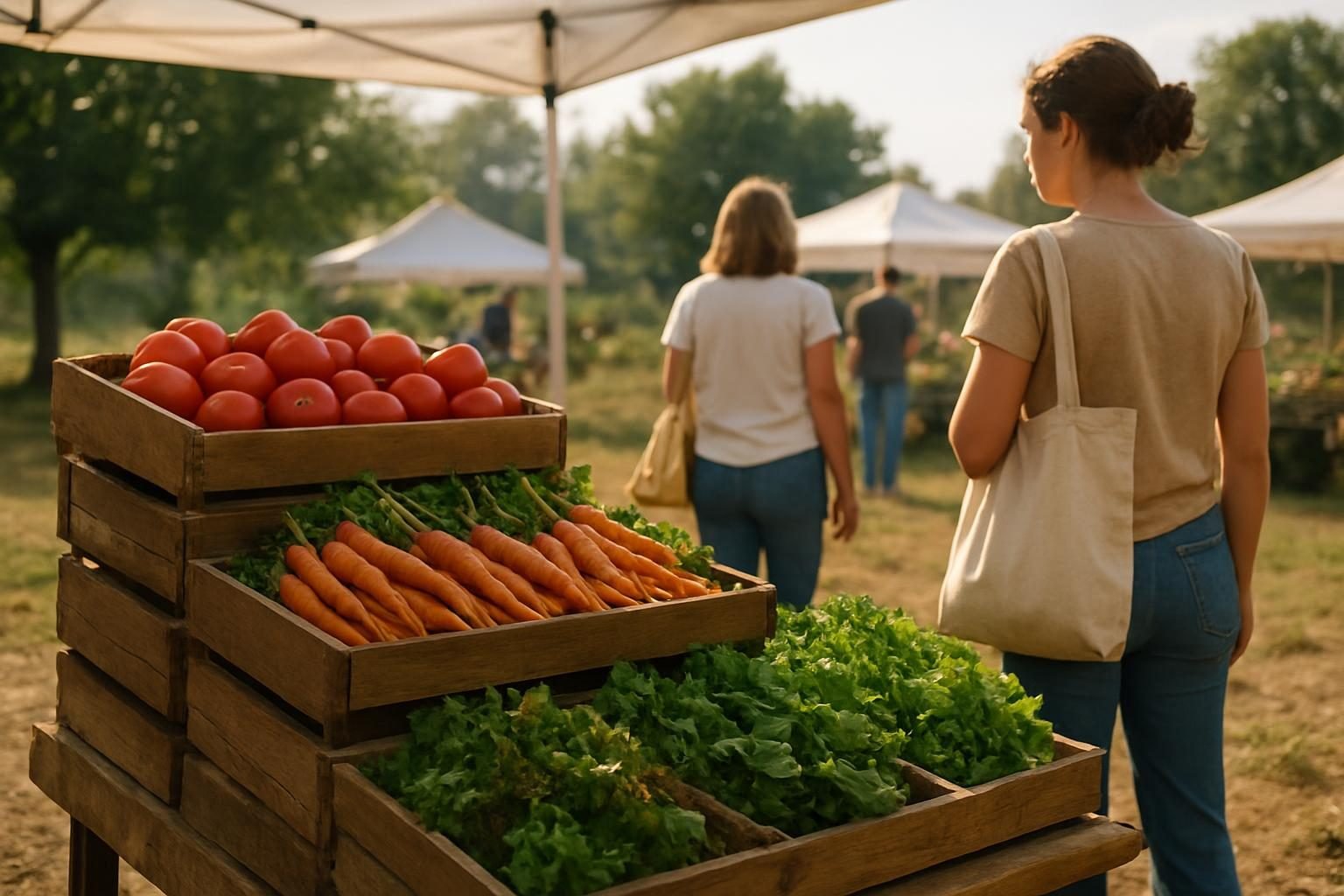
- Go vertical. Use tiered tables, crates, and risers so product sits at eye and hand level. Flat piles on low tables get overlooked.
- Look full. A full-looking table sells more than a sparse one. Restock from coolers or the truck through the day rather than dumping everything at once, so the display stays abundant without waste.
- Use color and contrast. Group by color, and use simple cloth, wood, or baskets. Keep it clean and consistent rather than cluttered.
- Make the canopy work. A canopy with your farm name, in a legible size, helps repeat customers find you across a crowded market. Keep signage readable, not crowded with text.
- Control temperature. Shade for greens, coolers with ice packs for meat, eggs, and dairy, and food-safe practices as required by your local health department.
- Keep the front open. Avoid putting a table between you and the customer if you can; a wide, welcoming entry invites people in.
Pricing Displays That Build Trust and Margin
Unclear prices make customers hesitate or walk away. Every item should have a visible price, and the way you display it matters.
- Price every item. Use small chalkboards or uniform cards with the item, unit, and price. Nobody wants to ask.
- Use round numbers where possible. Pricing per bunch, pint, or dozen at whole or half-dollar amounts speeds up transactions and cash handling.
- Offer bundles thoughtfully. A “soup mix” bag or a “3 for $10” deal can move product and raise average sale, as long as the bundle price still covers your costs.
- Know your floor. Before you discount, know your cost of production and your target margin. Our guide on how to price farm products so your farm is profitable covers cost-plus and market-based approaches in detail.
- Resist racing to the bottom. Customers at farmers markets are often paying for freshness, transparency, and relationship, not just the lowest price. If a neighbor undercuts you on identical produce, compete on quality and story before you compete on price.
| Display choice | Why it works | Watch out for |
|---|---|---|
| Per-unit price cards | Fast decisions, fewer questions | Faded or messy handwriting |
| Bundles and mixed bags | Raises average sale, moves seconds | Bundle priced below cost |
| “Last of the season” signs | Creates honest urgency | Overusing it every week |
| End-of-day markdowns | Reduces waste of perishables | Training customers to wait |
Sampling: Let the Flavor Do the Selling
Taste sells. Sampling works especially well for produce, honey, cheese, baked goods, and cooked meats, but only if you do it safely and legally.
- Check the rules first. Many states and counties regulate food sampling, handwashing, and what you can offer. Ask the market manager and your local health department for current requirements.
- Sample your best, in season. A ripe tomato slice or a crisp carrot coin beats a long explanation.
- Keep it simple and clean. Toothpicks or small cups, a handwashing setup if required, and covered trays reduce risk.
- Pair the sample with one sentence. “These carrots are grown with cover crops and no synthetic fertilizer, so the soil is the star.” Then let them taste.
- Offer a next step. After a sample, point to the price card or suggest a bag size. Samples without a clear invitation to buy are just free snacks.
If you sell meat, the rules are stricter. Retail meat sales depend on how it was processed, so understand USDA-inspected versus custom-exempt processing before you load a cooler. For a full direct-sales playbook on beef, see our guide on how to sell grass-fed beef direct to customers.
Payment Options, Including SNAP
Every payment method you accept removes a reason for someone to walk away. Cash-only booths leave money on the table.
Cards and mobile payments
A smartphone card reader or tablet-based point-of-sale system is cheap to set up. Expect processing fees in the low single-digit percentage range per transaction; check current rates with providers. Build that into your prices rather than absorbing it as a surprise. Have a backup plan for weak cell signal, such as offline mode or a mobile hotspot.
SNAP, EBT, and incentive programs
Accepting SNAP (the Supplemental Nutrition Assistance Program) opens your booth to customers who otherwise couldn’t shop at the market, and many markets offer double-up or matching incentive programs that stretch customers’ benefits at the stall. The process generally works like this:
- Ask your market manager whether the market already runs a central SNAP or token system. Many do, which means you may not need to apply individually.
- If vendors authorize individually, contact USDA Food and Nutrition Service or your state agency to learn the current application and equipment requirements.
- Learn which of your products are SNAP-eligible (generally food for home preparation; hot prepared foods and non-food items are typically not).
- Ask whether your market participates in a produce-matching incentive and how vendors are reimbursed.
Program rules and funding change, so always confirm current details with USDA FNS, your state agency, or your market manager.
Telling Your Regenerative Story Without the Hype
Customers increasingly want to know how food is grown, but they have also heard a lot of vague “sustainable” and “natural” claims. Specific beats grand every time.
- Be concrete. “We rotate our hens across pasture every few days and grow cover crops between vegetable beds” says more than “we farm in harmony with nature.”
- Keep it to one or two sentences at the booth. Put the longer story on a small sign, a card, or your website for people who want it.
- Don’t overclaim. Avoid saying your farm “reverses climate change” or “heals the planet.” Describe what you do and, if you measure it, what you see, like soil tests or infiltration changes. For context on what farms can and cannot claim, see our piece on regenerative agriculture and climate change.
- Be clear about labels. “Regenerative” is not a legally defined term on its own. If you hold a certification or are pursuing one, explain it plainly; our guide to Regenerative Organic Certified and other labels helps you understand the differences. If a customer is new to the idea, point them toward what regenerative agriculture is.
- Use photos and people. A framed photo of your pasture or a short note about your family and your land builds trust faster than a slogan.
Build an Email List From the Booth
The market is a weekly handshake. An email list turns that handshake into a long-term relationship and a way to sell outside market hours.
- Make signup easy. A clipboard, a QR code to a simple signup form, or a tablet at the register. Make sure it is clear what people are signing up for.
- Give a reason to join. Offer first notice on limited items, a seasonal recipe, or a pre-order option for eggs, meat, or flowers.
- Ask at the point of sale. “Want a heads-up when the first strawberries come in?” works better than a sign alone.
- Send useful, short emails. Weekly or biweekly during the season, with what’s coming to market, what’s running low, and one short farm update.
- Follow privacy and email rules. Get clear consent, include an unsubscribe link, and follow applicable laws and your email platform’s requirements.
Your list is also your best bridge to higher-commitment sales. Customers who know and trust you are the natural audience when you launch a subscription, and our guide on how to start a CSA farm walks through shares, pricing, and logistics.
Putting It Together: A Simple Market Routine
- Choose one or two markets and test them for several weeks.
- Track sales, costs, and leftovers every week.
- Refine your booth, pricing, and product mix based on what actually sells.
- Add SNAP and card payments to widen your customer base.
- Collect emails at every market and use them to pre-sell and retain customers.
- Fold what you learn into your broader plan for funding, certification, and sales for a regenerative farming business.
If you are early in your farming career, also look at farm grants for beginning farmers, which can help fund equipment like coolers, tents, and point-of-sale gear. More guides live in our Farm Business & Funding section.
Key takeaways
- Test markets and track real numbers, including labor and travel, before committing to a full schedule.
- A tall, full, colorful booth with clear price cards sells more than a sparse one.
- Know your costs before you set prices or discount; compete on quality and story, not just price.
- Sampling works when it follows local food safety rules and is paired with a simple invitation to buy.
- Accept cards and SNAP to widen your customer base, and confirm current program rules with the agency or market.
- Tell a specific, honest regenerative story; avoid vague or exaggerated claims.
- Collect emails at every market to build repeat sales and pre-orders.
Frequently asked questions
How much money can I make selling at farmers markets?
It varies enormously by region, market size, product, and your skill at selling. Some small growers gross a few hundred dollars per market day, while established vendors at strong markets can do considerably more. The useful number is your net after stall fees, labor, travel, and unsold product, so track those from your first week. As you grow, farm credit financing can help you expand your operation.
Do I need a license or insurance to sell at a farmers market?
Usually some combination of a vendor permit, food handling or cottage food rules, and liability insurance, but requirements differ by state, county, and market. Many markets require a certificate of insurance. Check with your market manager, state department of agriculture, and local health department for current rules. This is general information, not legal advice.
What sells best at farmers markets?
Fresh, high-quality, seasonal items that customers can’t easily find at a grocery store tend to do well: tomatoes, salad greens, berries, eggs, flowers, and specialty items. Variety and reliability matter too. A mix of staples and a few standout products usually beats a single crop.
Is it worth accepting SNAP at my booth?
For many vendors, yes. SNAP and matching incentive programs expand your customer base, and some markets handle the process centrally so vendors do little extra work. Costs and setup differ, so ask your market manager and confirm current requirements with USDA FNS or your state agency before investing in equipment.
How do I handle unsold produce after the market?
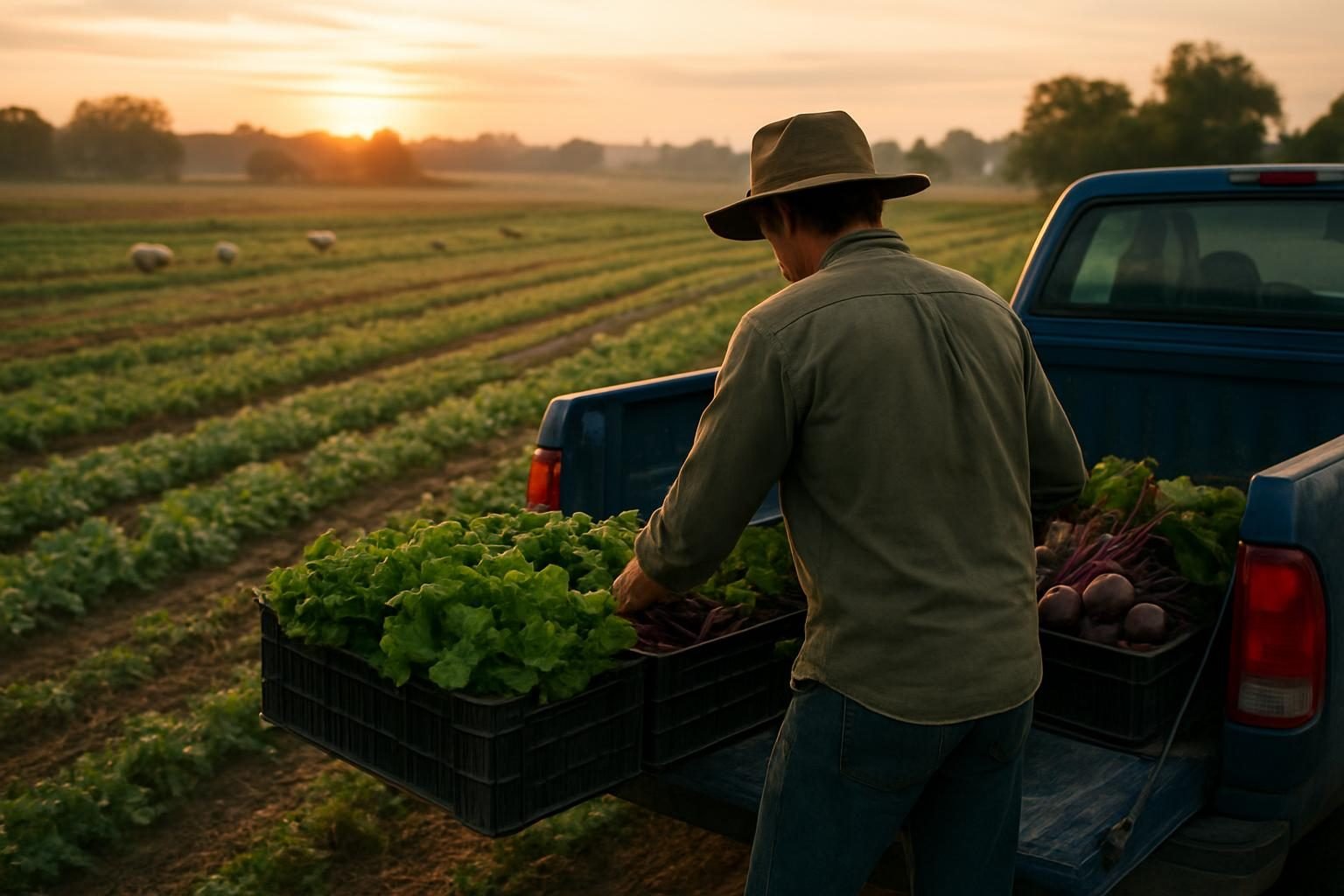
Plan for it before you go. Options include end-of-day markdowns, bundling seconds into value bags, donating to a food pantry, selling to restaurants or a CSA, processing into value-added products where legal, or composting what can’t be sold. Over time, tracking leftovers helps you harvest and bring only what you can sell.