A good chicken pen does two jobs at once: it keeps your birds safe from things that want to eat them, and it gives them enough ground to scratch, dust-bathe and forage without turning the yard into a mud pit. Most pen failures come from skimping on one of those jobs. This guide walks through sizing, fencing, predator-proofing and ground management so you build it right the first time.
Quick answer: Plan for roughly 10 square feet of run per bird as a bare minimum for a permanent run, and more (often 15 to 30+) if you want the ground to hold vegetation. Use hardware cloth, not chicken wire, for anything a predator can reach. Bury or lay a skirt of wire 12 to 24 inches out from the base, cover the top where hawks, owls or climbing predators are a threat, add shade and a secure, latched gate, and rotate or expand the run so the same patch is not scratched bare.
Start with the job the pen has to do
Before you buy a single roll of wire, decide which kind of pen you are building. The answer changes the size, the materials and how much you will spend on predator-proofing.
- Permanent run attached to a coop. A fixed, fully enclosed yard. Easiest to predator-proof, hardest on the soil.
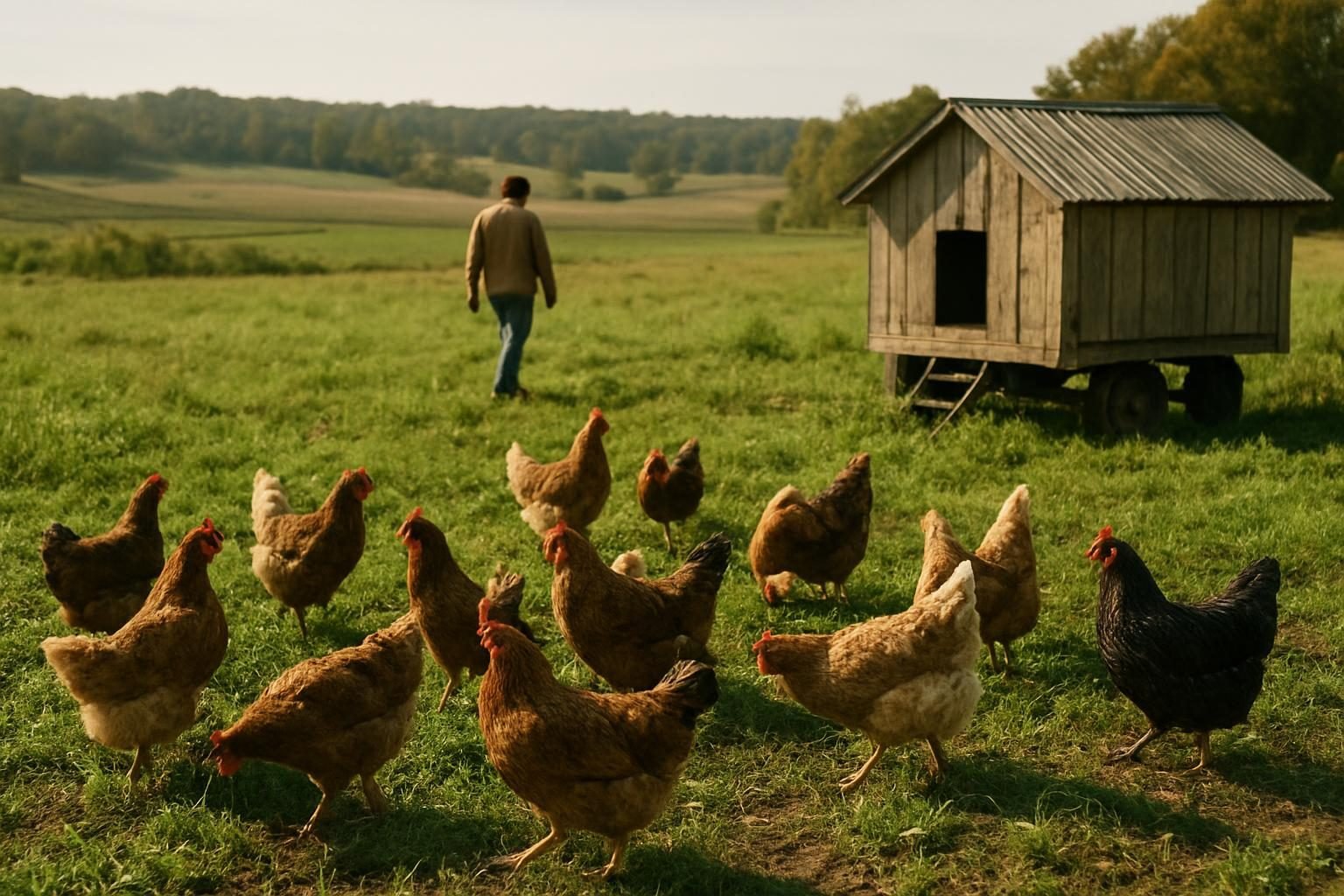
- Rotating or expanding runs. A fenced area divided into sections, or a series of pens birds move through. Better for ground cover and parasite breaks.
- Mobile pens. Floorless frames moved daily or every few days. See our guide to chicken tractors and how they build soil.
If you are still choosing housing, the chicken coop buyer’s guide covers prebuilt, kit and DIY options, and the pen should be designed alongside it, not as an afterthought.
How big should a chicken run be?
Extension services commonly cite about 3 to 4 square feet per bird inside the coop and at least 10 square feet per bird in an outdoor run. Treat those as floors, not goals. Crowded birds pick feathers, fight, and strip the ground to dirt within weeks.
| Setup | Typical space per bird | What to expect |
|---|---|---|
| Permanent run, bare or deep-bedded | 10 to 15 sq ft | Bare dirt or bedding; needs regular cleaning |
| Permanent run, aiming for some vegetation | 15 to 30+ sq ft | Patchy cover; needs rest periods or rotation |
| Mobile pen, moved daily | 2 to 5 sq ft | Fresh ground each move; common for meat birds |
| Free-range with a secure coop | Acres, ideally | Best foraging; highest predator risk |
Breed and temperament matter. Active foragers want more room than heavy, docile birds, and our list of the best chicken breeds for pasture can help match birds to your space. Also give yourself room to work: a run you cannot walk into comfortably is a run that will not get cleaned.
Covered or open top?
This is the decision people most often get wrong, usually in the cheaper direction.
When a covered top is worth it
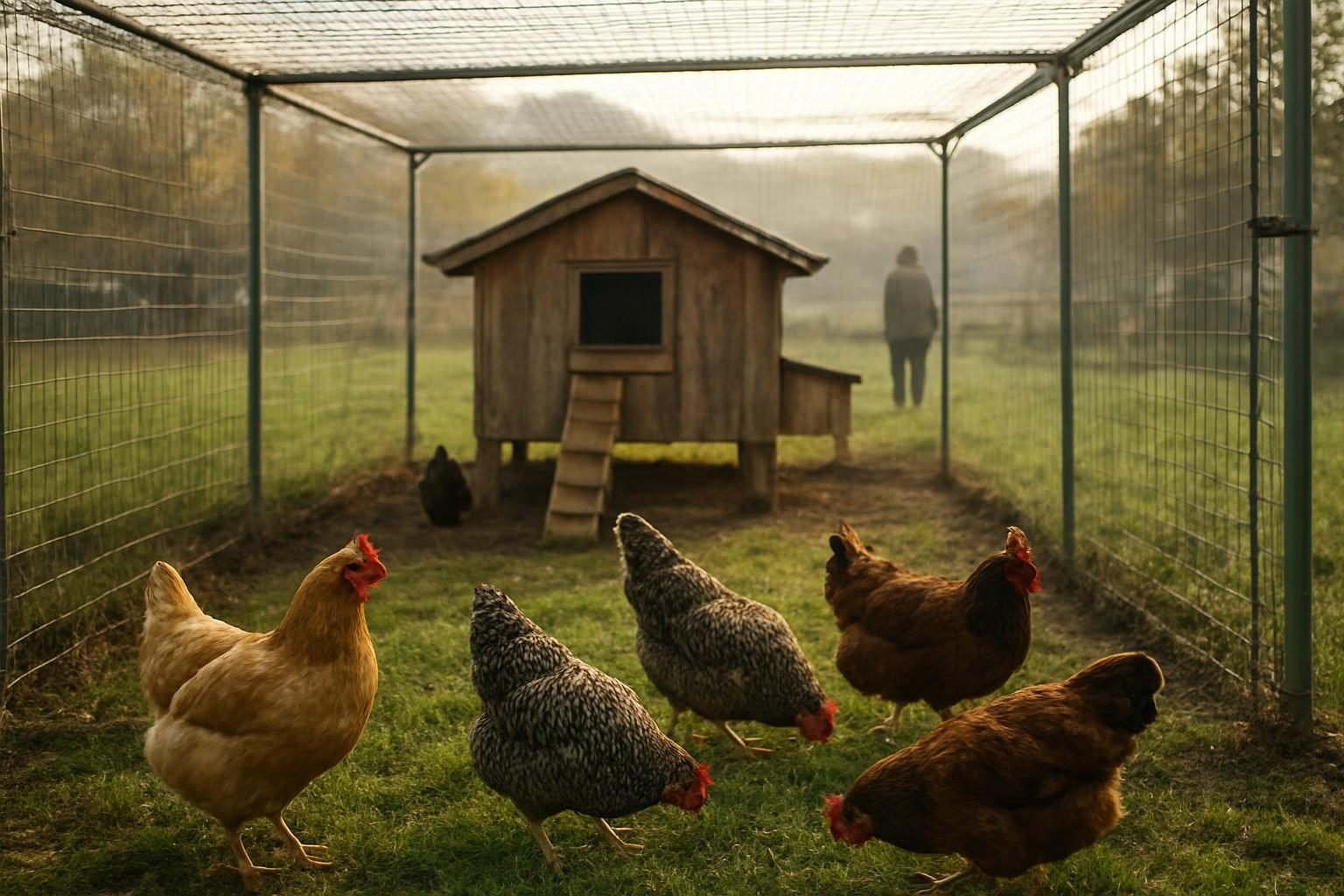
Hawks, owls and eagles take birds from open runs in daylight, and raccoons, bobcats and some dogs climb or jump fences. A roof also keeps rain and snow out, which keeps the ground drier and feed fresher. In most of the country, a fully covered run is the safest choice for small flocks you cannot supervise.
When open can work
Large pastures with tall fencing, livestock guardians, or a small number of birds under close watch can run open-topped. Some keepers use overhead netting or strung wire as a lighter option; it deters raptors but will not stop a determined climber. Be honest about the predator pressure in your area before choosing.
Covered options include:
- Solid roof (metal or polycarbonate). Best for rain and snow load, but needs sturdy framing.
- Welded wire or hardware cloth over a frame. Strong against predators, lets light in, does not shed rain.
- Heavy-duty netting. Cheapest, stops raptors, but weaker against climbers and heavy snow.
In snow country, size rafters for the load. A collapsed roof is a predator door and a dead flock.
Fencing: choose the right wire
Chicken wire keeps chickens in. It does not keep predators out. Raccoons reach through it and tear it, and larger animals rip it open. For the lower walls and anywhere a predator can touch, use half-inch or one-inch hardware cloth or heavy welded wire. Our upcoming comparison of poultry netting, chicken wire and hardware cloth will go deeper on gauge and cost.
- Hardware cloth (1/2 inch). Best protection, higher cost. Use it on lower walls, vents and windows.
- Welded wire. Strong and durable; check the opening size so small predators and snakes cannot squeeze through.
- Electric poultry netting. Good for rotating pens and temporary areas when properly energized. Read about charger sizing in our guide to electric fence energizers; the same principles of grounding and power apply.
Fasten wire with screws and washers or heavy staples at close spacing, and avoid relying on twist ties or thin fasteners at the corners. Predators test every seam.
Stop diggers with a buried skirt
Foxes, dogs, coyotes, skunks and raccoons dig. The fix is a skirt, and it works better than burying a vertical wall.
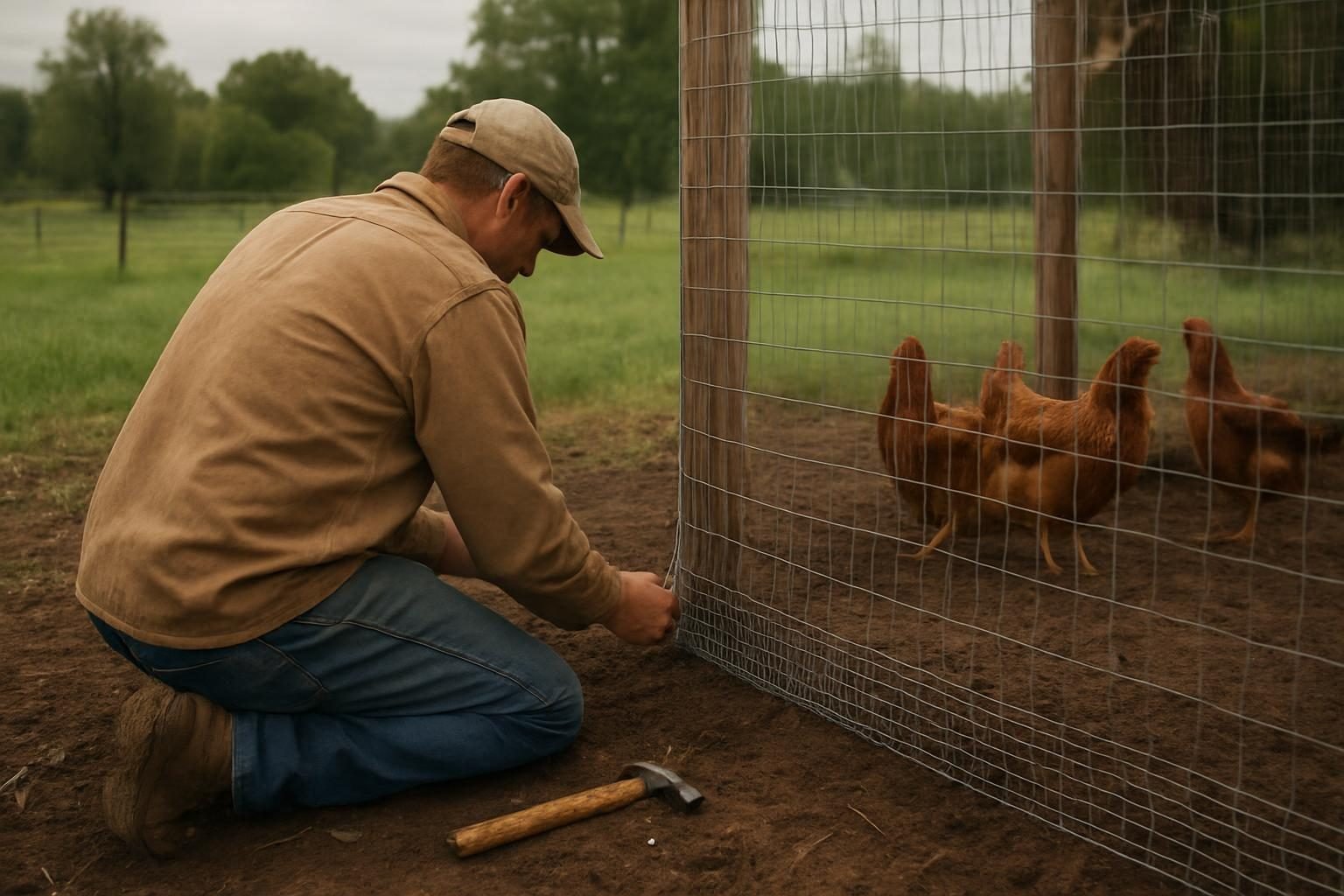
- Attach hardware cloth or welded wire to the base of the run walls.
- Bend it outward in an L shape, extending 12 to 24 inches away from the pen.
- Lay it flat and cover it with soil, sod or gravel, or stake it down firmly.
- Check it after heavy rain and frost heave, and repair gaps right away.
Predators usually dig at the fence line, hit wire a few inches down, and give up. A skirt beats a trench because they never hit the vertical wall. Over time, grass grows through and pins it in place.
Gates, latches and doors
Gates are the weak point of most pens. Build them with the same wire and frame strength as the walls, hang them so there is no gap at the bottom, and add a skirt or threshold under the opening.
Raccoons can open simple slide bolts and hook latches. Use a two-step latch, such as a carabiner clip plus a bolt, or a spring-loaded latch that needs two motions. Close the coop pop door at dusk, either by hand or with an automatic door you check regularly, because most attacks happen at night when birds are on the roost.
Shade, water and weather
Chickens handle cold better than heat. In hot regions, shade is not optional. Provide:
- Roofed or shaded areas covering a meaningful share of the run, especially in the South and arid West.
- Trees, shrubs or shade cloth. Planting trees along a run edge ties into agroforestry design, giving shade and extra foraging over time.
- Clean, cool water placed in shade, with extra containers in hot weather.
- Wind and rain shelter so birds can stay dry.
In cold climates, plan for snow load and ice, and check our upcoming guide on winter chicken care and coop prep for water and ventilation basics.
Keep the ground from going bare and muddy
A fixed run with too many birds will be bare dirt within weeks. Droppings concentrate, parasites build up, and rain turns the surface to mud. Regenerative management means moving the pressure instead of fighting it.
Rotate or expand the run
Divide a larger area into two to four sections with fencing and gates, and rotate birds between them. A rest period lets plants recover; how long depends on your climate and season, so watch the ground rather than the calendar. The logic mirrors rotational grazing for beginners: short intense use, then rest. For the full framework, see our complete guide to rotational grazing.
Other ground fixes
- Deep litter or wood chips in permanent runs to absorb moisture and manure.
- Drainage. Grade the run so water moves away; see how to improve soil drainage without heavy equipment.
- Sacrificial high-traffic zones near doors and waterers, with gravel or chips.
- Reseed rested sections with hardy forage and let them establish before birds return.
Used well, the manure and scratching feed the soil instead of damaging it. Our soil health guide explains why cover and rest matter, and pastured poultry covers the wider system.
Know your predators
| Predator | How it attacks | Main defense |
|---|---|---|
| Raccoon | Reaches through wire, opens simple latches, mostly at night | Hardware cloth, two-step latches |
| Fox, coyote, dog | Digs under, jumps or climbs low fences | Buried skirt, tall fence, covered top |
| Hawk, owl, eagle | Strikes from above, day or night | Covered top, cover and shade for hiding |
| Weasel, mink, rat | Squeezes through small gaps | Half-inch openings or smaller |
| Snake | Enters through gaps, eats eggs and chicks | Tight wire, sealed gaps |
| Bobcat, cougar, bear (regional) | Strength and climbing | Strong fence, electric wire, secure coop |
Local pressure varies widely. Ask neighbors, your county extension office or state wildlife agency what is active near you, and check current local rules before trapping or removing wildlife.
A simple build checklist
- Decide permanent, rotating or mobile, and count your birds.
- Size the run, using the table above as a starting range.
- Choose covered or open based on honest predator risk and snow load.
- Build a sturdy frame with corner posts set deep and braced.
- Attach hardware cloth to lower walls with screws and washers.
- Install a 12 to 24 inch skirt on all sides.
- Hang gates tight, with two-step latches.
- Add shade, water and weather cover.
- Plan sections or a rotation so the ground gets rest.
- Inspect fences and skirts regularly, especially after storms.
Small-acreage growers will find more layout ideas in our small-scale regenerative farming guide. If you are weighing a mobile approach, a chicken wagon may fit better than a fixed run.
Key takeaways
- Give birds at least 10 square feet each in a permanent run, and more if you want vegetation to survive.
- Use hardware cloth or heavy welded wire, not chicken wire, wherever predators can reach.
- Add a buried or staked skirt of 12 to 24 inches to stop diggers.
- Cover the top where raptors or climbers are a risk, and size roofs for snow load.
- Use two-step latches and close the coop at dusk.
- Rotate or expand the run and give the ground rest so it stays green instead of muddy.
Frequently asked questions
How much run space do I need per chicken?
A common minimum is about 10 square feet per bird in a permanent run, with 3 to 4 square feet per bird inside the coop. If you want some vegetation to survive, plan for more, often 15 to 30 square feet or beyond, and rotate sections so the ground can recover.
Do I need to cover the top of my chicken run?
In most areas, yes. Hawks and owls take birds from open runs, and raccoons and other animals can climb fences. A solid roof or sturdy wire cover is the safest choice. Open tops can work with tall fencing, close supervision or guardian animals, but they carry more risk.
Is chicken wire good enough for a predator-proof run?
No. Chicken wire keeps birds in but is easy for raccoons and larger animals to tear or reach through. Use half-inch or one-inch hardware cloth or heavy welded wire on lower walls, vents and windows, and fasten it securely with screws and washers.
How deep should I bury the wire around a chicken pen?
A skirt that extends 12 to 24 inches outward from the base, laid flat and covered with soil, sod or gravel, is more effective than a deep vertical trench. Diggers hit the wire and give up. Inspect it after rain and frost, and fix gaps promptly.
How do I keep my chicken run from turning to mud?
Avoid overcrowding, grade the run so water drains away, add deep litter or wood chips in high-traffic spots, and rotate birds between sections so plants can regrow. Resting and reseeding sections turns manure into fertility instead of mud.