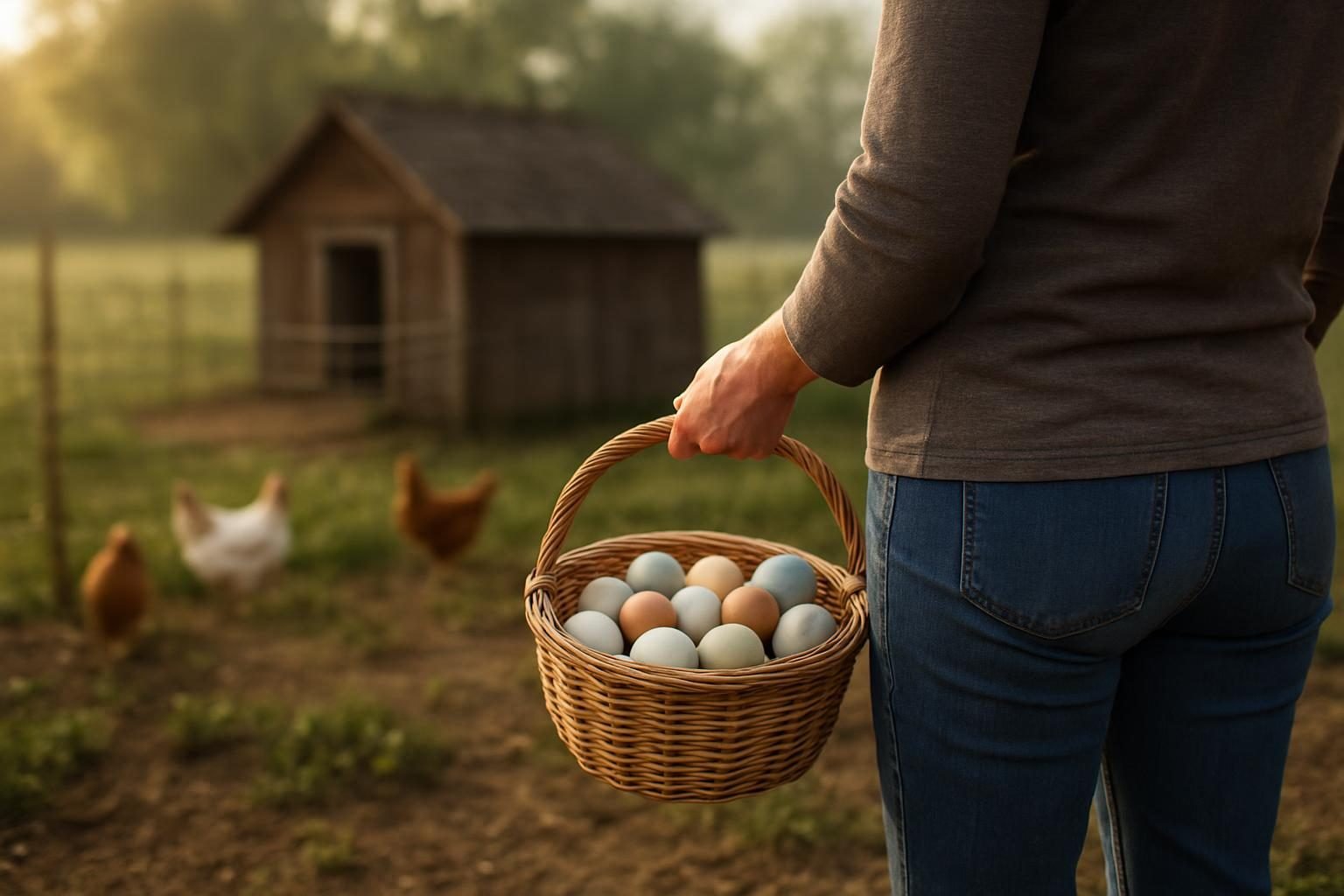
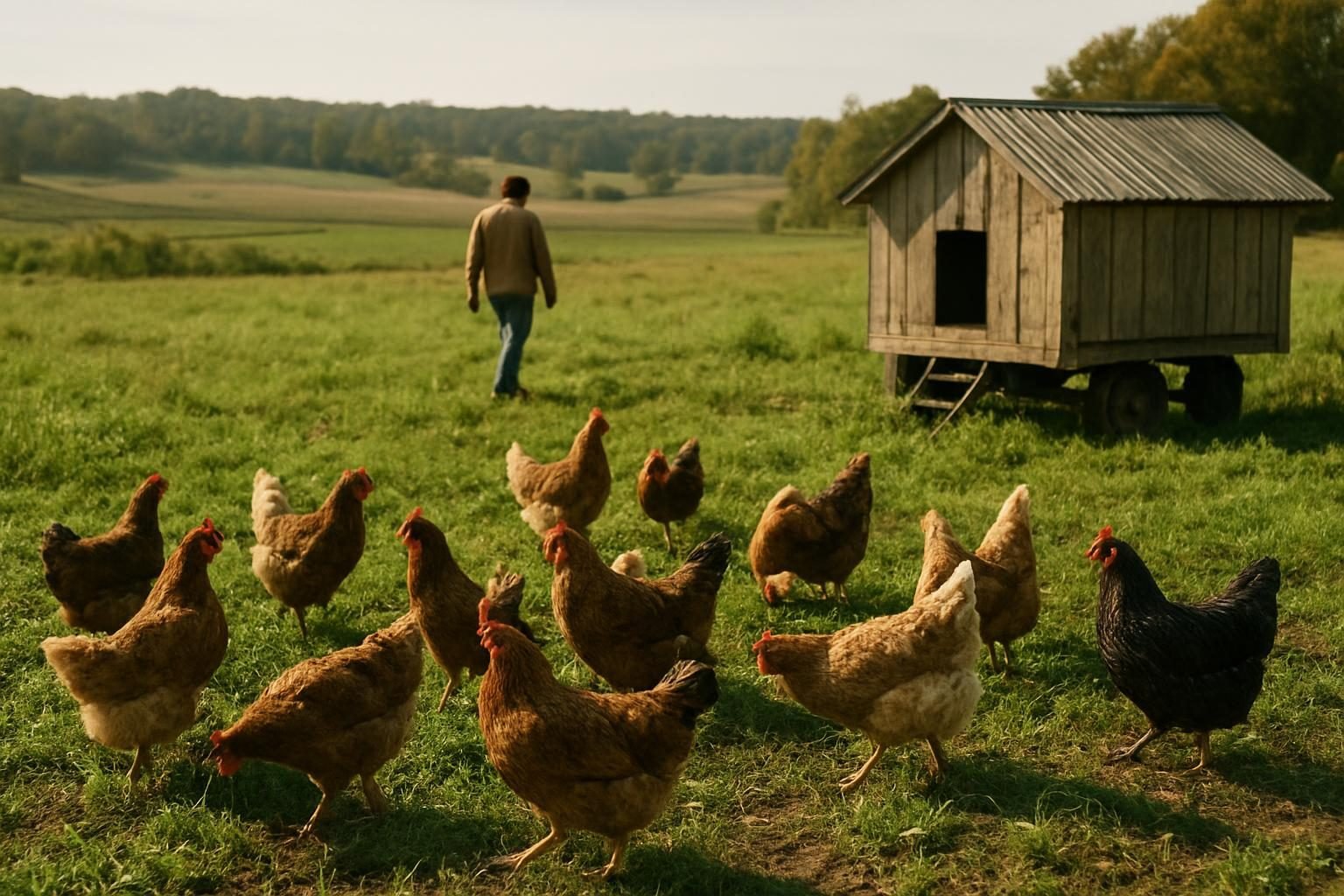
If you want a few hens that lay reliably, forage well and don’t cause drama, Barred Rock hens, Buff Orpingtons and Rhode Island Reds are the three breeds most people end up comparing. All three are classic dual-purpose American-style birds, and all three can do well on pasture. The differences come down to temperament, how hard they lay, and how much they want to sit on eggs.
Quick answer: Choose Barred Rocks for the best all-around pasture hen: steady layers, good foragers, calm and cold hardy. Choose Buff Orpingtons for the gentlest, heaviest, most winter-proof birds (and expect more broodiness). Choose Rhode Island Reds for the toughest, most productive foragers, with the caveat that individual hens can be pushy. Typical production for all three is roughly 200-280 brown eggs per hen per year at peak, depending on strain.
The three breeds at a glance
Before we dig in, a caution: “breed” means different things depending on where the chicks came from. Hatchery strains of all three are often bred for egg production and are lighter and flightier than heritage or show-line birds. Feather color and shape are the same, but behavior and laying can differ a lot. Ask your source which strain you’re getting.
| Trait | Barred Rock | Buff Orpington | Rhode Island Red |
|---|---|---|---|
| Temperament | Calm, curious, friendly | Very docile, cuddly | Active, assertive, variable |
| Eggs per year (typical) | ~200-260 | ~170-220 | ~220-280 (hatchery strains) |
| Egg color | Brown | Light to medium brown | Medium to dark brown |
| Cold hardiness | Very good | Very good (heavy feathering) | Good to very good |
| Heat tolerance | Fair | Fair to poor (heavy, fluffy) | Good |
| Foraging | Very good | Fair to good | Excellent |
| Broodiness | Occasional | Frequent | Low to occasional |
| Adult hen weight (approx.) | 5.5-7 lb | 7-8 lb | 6-7 lb |
Treat those numbers as ranges, not promises. Lighting, feed, age, stress and genetics all move them. For the bigger picture of how these birds fit among egg, meat and forager types, see our guide to breed groups for eggs, meat and foraging.
Temperament: who’s easiest to live with
Barred Rock
Barred Rocks are the “just works” bird. They’re curious without being pesky, tolerate handling, and generally fit into mixed flocks without picking fights. They tend to sit in the middle of the pecking order and keep their heads.
Buff Orpington
Orpingtons are the lap chickens. They’re slow-moving, quiet and gentle, which makes them a good fit for families with kids or anyone who handles birds often. The flip side: their docility can make them targets in a flock with more aggressive breeds, so watch for bullying.
Rhode Island Red
Reds are the most variable. Many hens are perfectly pleasant; some are bossy, and roosters in this breed are known for being tough. If you’re mixing breeds, Reds may boss the Orpingtons. Give everyone enough space and multiple feeders and waterers to cut down on conflict.
Egg laying and productivity
Rhode Island Reds from production-oriented hatchery lines usually lay the most, often competing with the hybrid layers. Barred Rocks are a close second and tend to lay consistently through the year. Buff Orpingtons typically lay fewer eggs, partly because they go broody more often and partly because they were selected for size and looks.
Expect all three to slow down in their second and third years and to pause for the molt. If you’re buying for production and want to skip the first several weeks of brooding, read our comparison of buying pullets vs chicks. For strictly maximum eggs, hybrids like Golden Comets will out-lay all three, but they don’t offer the same dual-purpose frame or calm temperament.
Cold hardiness, heat and winter laying
All three handle northern winters. Barred Rocks and Orpingtons have dense feathering and small-to-medium combs (Orpingtons’ single combs are modest), which helps against frostbite. Rhode Island Reds are hardy but have larger single combs that can frostbite in hard cold without ventilation and dry bedding.
In heat, the picture flips. Reds cope best, Barred Rocks do okay, and fluffy Orpingtons struggle in sustained heat. If you farm in the South or arid West, offer shade, cool water and good airflow. For the northern side of things, our guide to keeping chickens in winter covers water, light and coop prep. If you’re in a truly brutal cold climate, a heavier, calmer breed like a Brahma hen may be worth a look too.
Foraging ability on pasture
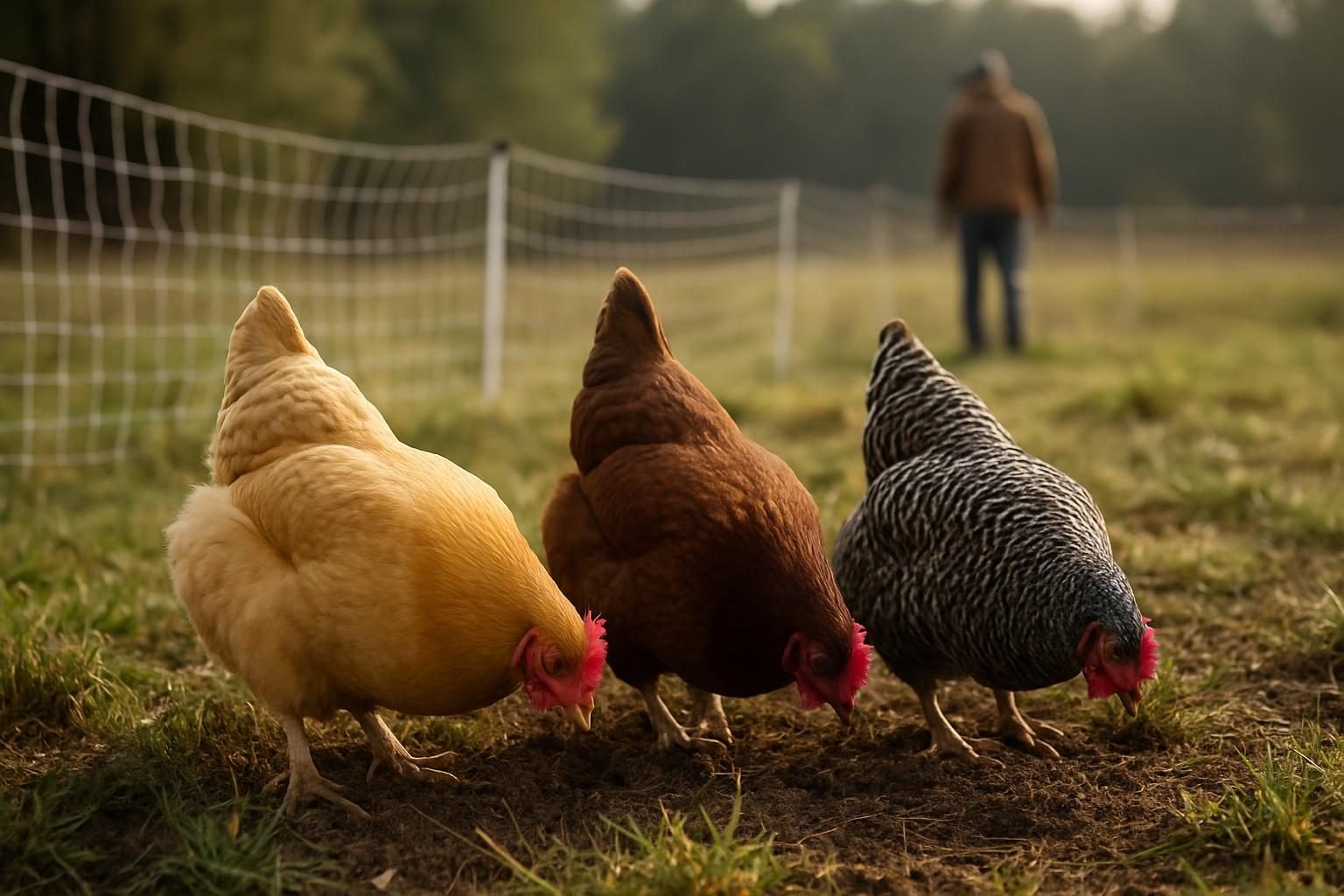
This is where Rhode Island Reds shine. They’re active, wide-ranging and good at working a pasture for insects, seeds and greens, and they tend to handle rotation well. Barred Rocks are right behind them, and many keepers find them the best balance of foraging and calm. Buff Orpingtons will forage, but they’re heavier and slower, so they cover less ground and are more likely to hang around the coop.
Foraging is a supplement, not a replacement, for good feed. Even active foragers need a balanced ration, and the pasture contribution varies by season, stocking density and forage quality. See our chicken feed guide and the practical notes on cutting poultry feed costs with forage and bulk buying.
For a wider view of which birds make the best pasture partners, see best chicken breeds for pasture.
Broodiness: help or headache?
Broodiness is the urge to sit on eggs. It’s a feature if you want hens to raise chicks and a nuisance if you want eggs in the basket. Buff Orpingtons go broody often, and a broody hen stops laying for weeks. Barred Rocks occasionally go broody; Rhode Island Reds from production lines rarely do.
If you want a self-sustaining flock, an Orpington or a Barred Rock is a decent surrogate mother. If you’d rather not deal with it, learn the signs early. A dedicated guide on managing broody hens will cover how to break or use a broody, and having well-designed nesting boxes helps prevent a broody from monopolizing every spot.
How to choose for a small pastured flock
- Decide your priority. Eggs per dollar, gentle birds, or self-replacing flock?
- Match the climate. Cold winters favor Orpingtons and Barred Rocks; hot summers favor Reds.
- Think about your mix. A calm breed with an assertive one can mean bullying. Plan space and feeders.
- Ask about the strain. Hatchery vs heritage affects laying, size and temperament.
- Plan your housing. Pasture needs mobility and predator protection. See chicken wagons and eggmobiles and chicken tractors.
A common, practical combo: mostly Barred Rocks for dependable production, a couple of Orpingtons for gentleness and broodiness, and a few Reds for extra eggs and foraging drive. Just keep flock size appropriate to your space.
Housing and flock setup
These are medium-to-large birds, so give them room. Check our chicken coop buyer’s guide before you commit, and if you’re building your own, a future DIY chicken coop guide will cover sizing and ventilation. Pens and runs matter just as much; see chicken pens and runs for fencing and predator-proofing. Starting from chicks? Review chick days and brooding baby chicks first.
Key takeaways
- Barred Rocks are the best all-rounder: steady layers, good foragers, calm and cold hardy.
- Buff Orpingtons are the gentlest and most winter-proof, but lay less and go broody often.
- Rhode Island Reds are the toughest foragers and heavy layers, but temperament varies.
- Strain matters as much as breed; ask your hatchery what they select for.
- Feed still matters. Pasture supplements a good ration; it doesn’t replace it.
- Mixed flocks work, but give space and multiple feeders to prevent bullying.
Frequently asked questions
Are Barred Rock hens good layers?
Yes. Barred Rocks are steady, reliable brown-egg layers, typically producing in the range of 200-260 eggs per year at peak. They’re not the absolute top producers, but they’re consistent and tend to keep laying through cooler months better than many breeds.
Which of the three is best for cold climates?
Barred Rocks and Buff Orpingtons are both excellent in cold weather thanks to dense feathering. Rhode Island Reds are hardy too but have larger combs that can frostbite without good ventilation and dry bedding. Whatever you choose, keep the coop dry and draft-free.
Can I keep all three breeds together?
Generally yes, but watch dynamics. Reds can be assertive and may bully the gentler Orpingtons. Provide enough space, multiple feeding and watering stations and hiding spots, and remove persistent bullies if needed.
Which breed forages best on pasture?
Rhode Island Reds are typically the most active foragers, with Barred Rocks close behind. Buff Orpingtons forage less actively because of their heavier, slower build. All three benefit from rotation and a balanced supplemental ration.
Do these breeds go broody?
Buff Orpingtons often do, Barred Rocks sometimes do, and production-strain Rhode Island Reds rarely do. Broodiness stops egg laying for weeks, so it’s an advantage only if you want hens to hatch chicks.