If you buy tractor supply poultry feed by the bag every week, you already know how fast it adds up. Feed is the biggest ongoing cost of any laying or meat flock, often well over half of total expenses. The good news is that you can trim it meaningfully without shortchanging your birds, as long as you are honest about what each strategy can and cannot do.
Quick answer: Good pasture typically replaces roughly 10 to 30 percent of a flock’s purchased feed, fermenting feed can stretch a ration by about 10 to 25 percent through less waste and better intake, and buying in bulk from a mill or co-op can lower the per-pound price. Combine all three, store feed dry and sealed, and cut waste at the feeder before you chase any exotic ingredient.
Where the money actually goes
Before changing anything, find your baseline. Weigh what you buy, count your birds, and track for a month. A typical laying hen eats roughly a quarter pound of feed per day (about 90 to 110 pounds a year, depending on breed, season and temperature). Meat birds eat far more in a short window: a Cornish Cross usually consumes somewhere around 12 to 16 pounds of feed over a 6 to 8 week grow-out.
Those numbers vary with breed, weather, and ration quality, so treat them as ranges and measure your own flock. If you are still sorting out which ration fits which age, our chicken feed guide covering starter, grower, layer and pasture rations is a good place to start. Cheaper feed that your birds eat more of, or that drops egg production, is not a savings.
Lever one: pasture and rotation
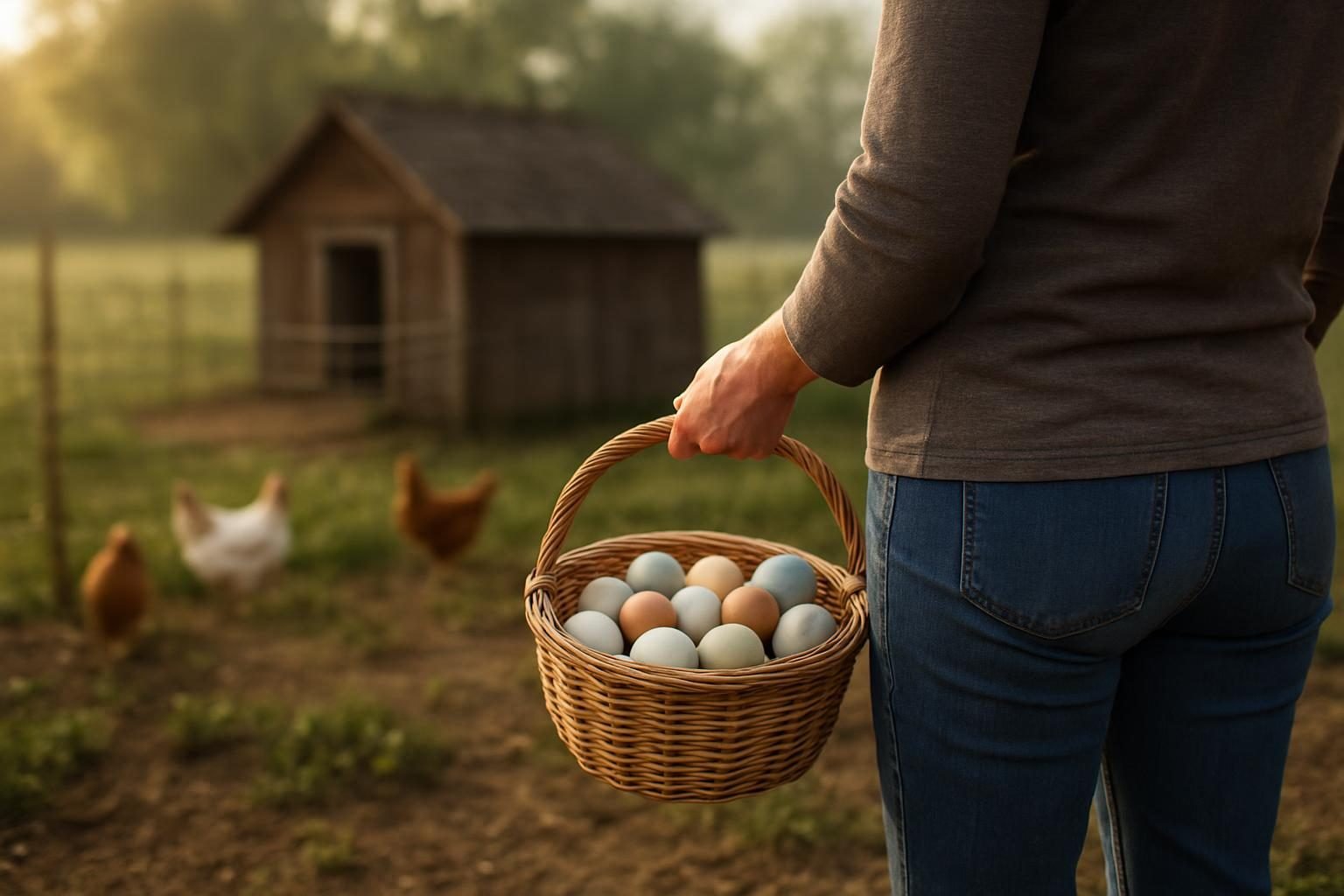
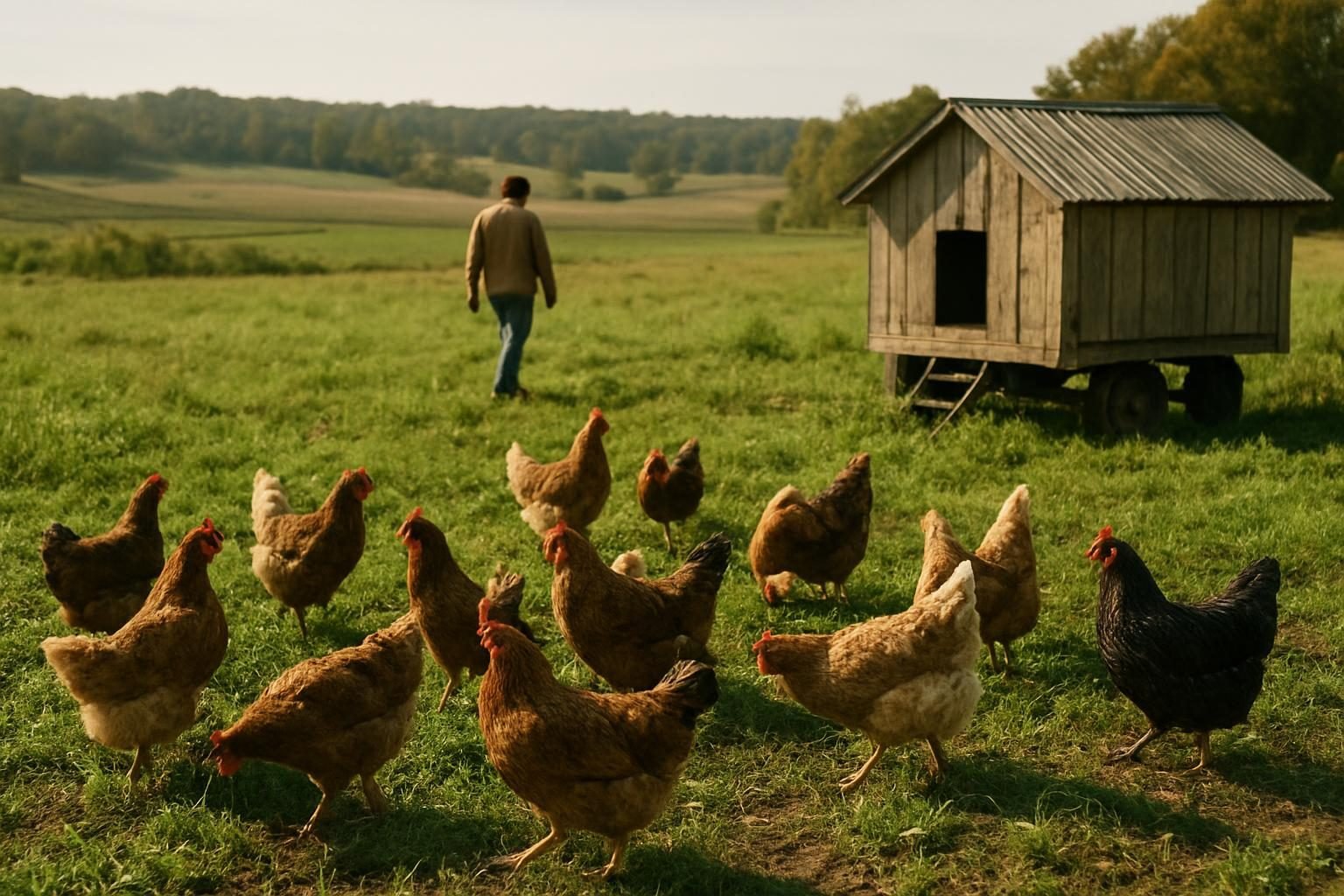
Fresh forage supplies greens, insects, and seeds, and it often improves yolk color and fatty acid profile—a benefit especially notable in breeds like Easter Egger chickens known for colored eggs. It does not replace a balanced ration. Chickens are omnivores with high protein and calcium needs, and grass alone cannot meet them. In most regions and seasons, expect pasture to offset something like 10 to 30 percent of feed, with higher numbers in lush spring growth and near zero under snow or drought.
Be wary of anyone promising a flock that lives on grass. Broilers bred for fast growth forage poorly and still need a full ration. Slower, active birds do better; see our list of the best chicken breeds for pasture if foraging ability matters to your plan.
How to rotate so the forage lasts
- Divide your area into at least four paddocks, more if you can.
- Move birds every few days to a week, before they scalp the sward.
- Rest each paddock for several weeks, often 4 to 8 depending on growth rate and season.
- Keep stocking density modest; overstocked ground turns to bare dirt and mud fast.
- Seed a mix of clovers, grasses, and brassicas where sod is thin.
Mobile housing makes this easy. Our guide to chicken tractors and how they build soil covers designs and move schedules, and a chicken wagon works the same way for larger laying flocks. If you rotate with ruminants too, the principles in rotational grazing for beginners apply to poultry with scaled-down paddocks.
Lever two: fermented feed
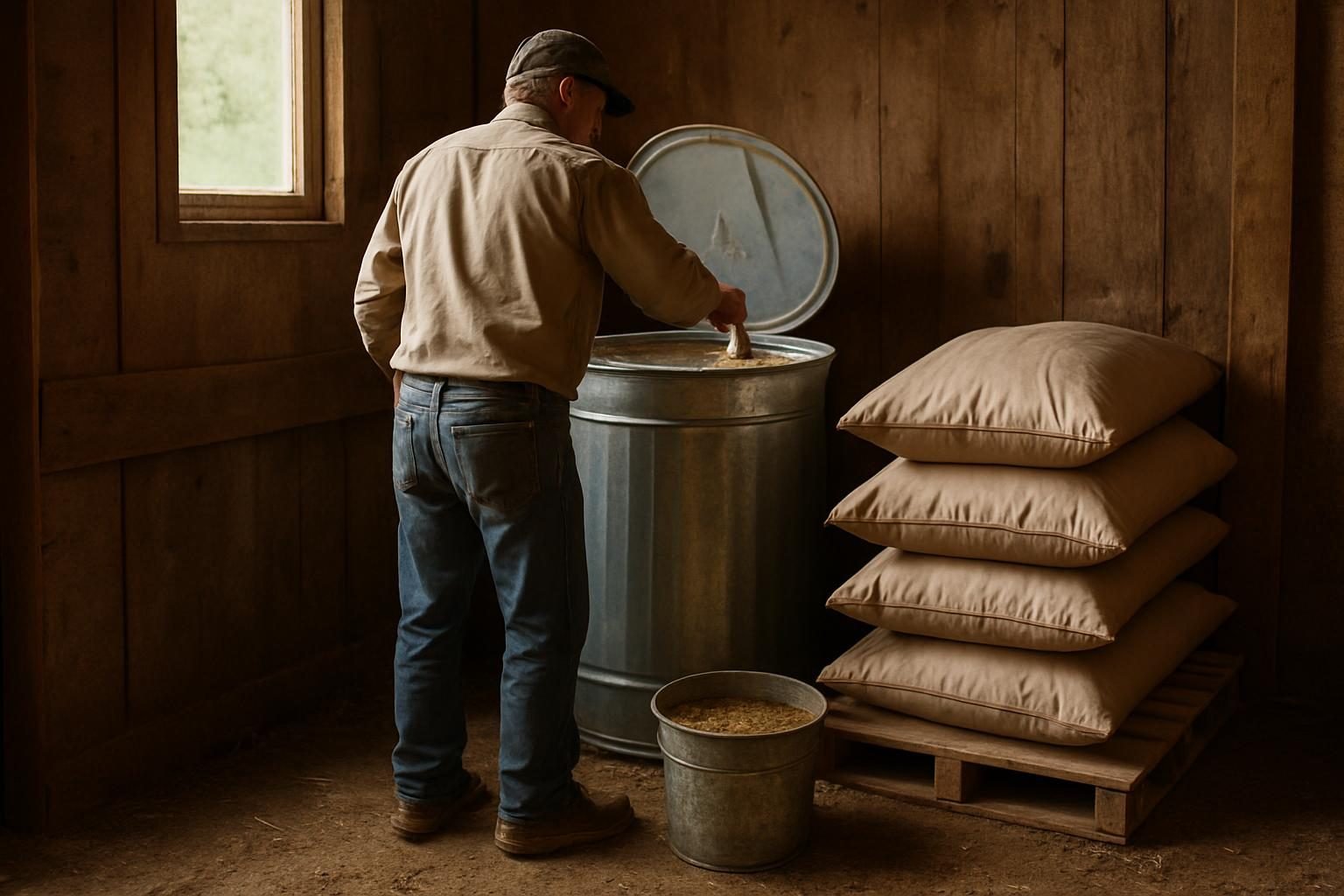
Fermenting feed means soaking whole or crumbled ration in water (often chlorine-free) for two to three days until it develops a mild, sour, yeasty smell. Many keepers report birds eating less by weight with similar or better condition, plus less dusty waste. The mechanisms are plausible: fermentation can improve digestibility and reduce feed that gets scattered. Controlled research is more limited than the enthusiasm online suggests, so treat savings of roughly 10 to 25 percent as an achievable estimate for some flocks rather than a guarantee.
A simple fermenting routine
- Use a food-safe bucket, not metal.
- Cover feed with water by an inch or two; stir daily.
- Ferment 2 to 3 days at room temperature, shorter in heat.
- Feed it wet, as much as birds clean up in 20 to 30 minutes.
- Keep some of the liquid as a starter for the next batch and discard anything that smells rotten or looks pink or moldy.
Fermented feed spoils quickly in summer heat and freezes in winter, so it adds chores. Whether it pays depends on your time and flock size.
Lever three: bulk buying and sourcing
Retail chains are convenient, and tractor supply poultry feed is often the easiest option for small flocks. But bag price per pound usually drops when you buy larger quantities or go closer to the source. Options to compare:
| Source | Typical advantage | Trade-off |
|---|---|---|
| Retail farm store bags | Convenient, frequent sales | Highest per-pound cost |
| Local feed mill or co-op | Lower price on pallets or bulk, fresher feed | Minimums, may need delivery or pickup |
| Group buy with neighbors | Split a pallet, share freight | Coordination effort |
| Whole grains plus supplement | Potentially cheaper per pound | Requires balancing protein, minerals, grit |
| Organic or non-GMO feed | Meets market or personal goals | Often significantly higher cost |
Mixing your own ration can save money but is easy to get wrong. If you try it, work from an extension or university recipe, confirm protein and calcium targets, and ask your local mill for help. Layers need calcium and grit; growing birds need higher protein. Prices vary by region, so call two or three suppliers before assuming retail is your only choice.
Once feed spending is large enough to need financing, a line of credit or operating loan may matter; see our upcoming explainer on ag loans and confirm terms with your lender or local FSA office.
Storage: protect what you buy
Bulk savings vanish if feed spoils or rodents get into it. Mold, rancid fats, and mycotoxins can sicken birds, and old feed loses nutrients, especially vitamins.
- Store in sealed metal or heavy plastic bins with tight lids, off the floor.
- Keep feed cool and dry; heat and humidity speed spoilage.
- Buy no more than you will use in about 4 to 8 weeks for milled feed in warm, humid climates; whole grains keep longer.
- Write the purchase date on the bin and rotate first in, first out.
- Discard anything damp, clumped, musty, or moldy.
Lever four: cut waste at the feeder
Waste is often the cheapest savings to find. Birds that scratch feed onto the ground, rain-soaked feed, and rodent theft can quietly eat 10 to 20 percent of what you buy.
- Hang feeders at back height of the birds to reduce flinging.
- Use a feeder with a lip or trough design that limits scratching out.
- Feed under cover so rain does not spoil it.
- Offer measured amounts and see what is cleaned up each day.
- Close the coop at night and pick up feed so rats do not move in.
- Cull unproductive birds and avoid keeping more roosters than needed; see our upcoming take on whether you need a rooster.
Housing matters too. A sound run keeps feed and birds safe; see our guide to chicken pens and runs, and consider poultry wire choices if predators or escapes are costing you birds and feed.
Other free or cheap supplements
Kitchen scraps, garden culls, and spent brewers grain (if available locally) can offset small amounts of feed. Insects from compost piles help too. Avoid moldy food, raw dry beans, avocado, and anything salty or spoiled. Treat these as supplements, not replacements, and keep layer ration as the main diet. Manure from the flock also has value; see composting chicken manure for turning that byproduct into fertility that cuts fertilizer purchases elsewhere on the farm.
Season and region matter
Savings are not constant. In the humid East and South, pasture grows fast but heat and moisture make feed storage harder. In the arid West, forage is thin and irrigation or shade may be needed. In the northern Corn Belt, winter shuts down foraging and birds eat more to stay warm; our winter chicken care guide covers what changes. Plan to buy more feed in cold months and bank your forage savings in spring through fall.
Key takeaways
- Track your baseline feed use first; you cannot cut what you have not measured.
- Pasture offsets a fraction of feed (often 10 to 30 percent), not the whole ration.
- Fermenting can stretch feed and reduce waste, but benefits vary and it adds work.
- Bulk and co-op buying often beats retail per pound if you can store feed properly.
- Waste and spoilage are common hidden costs; fix feeders and storage before anything else.
- Do not sacrifice protein and calcium for savings; underfed birds cost more in lost production.
For more on livestock and grazing systems, browse our Grazing & Livestock category, and see how poultry fits into whole-farm fertility in our complete guide to soil health.
Frequently asked questions
How much feed can pasture really replace?
For most flocks, a realistic range is about 10 to 30 percent of purchased feed during the growing season, and little or none in winter or drought. Quality and quantity of forage, breed, and stocking density all matter. Pasture improves bird health and egg quality, but it will not cover protein and calcium needs alone.
Is fermented feed worth the effort?
It can be, especially for small flocks where you are already doing daily chores. Many keepers report less waste and somewhat lower feed use, but rigorous data is limited and results vary. Try it with one group of birds, compare consumption and egg output for a month, and decide from your own numbers.
Is buying feed in bulk cheaper than retail bags?
Often yes, particularly from a local mill or co-op or by splitting a pallet with neighbors. Savings depend on your region and supplier, so get quotes. Bulk only pays if you can store it dry, cool, and rodent-proof and use it before it goes stale.
Can I mix my own poultry feed to save money?
You can, but it requires care. Birds need balanced protein, calcium, vitamins, and minerals that plain grain does not supply. Use a tested recipe from an extension service or university, buy a proper supplement, and watch bird condition and egg production closely. Many people save more by buying a good commercial ration in bulk.
How long can I store chicken feed?
Milled feed is best used within about 4 to 8 weeks of purchase, sooner in hot, humid weather because fats go rancid and vitamins degrade. Whole grains keep longer when dry and cool. Always check for mold, odor, and clumping, and throw out anything questionable rather than risking sick birds.