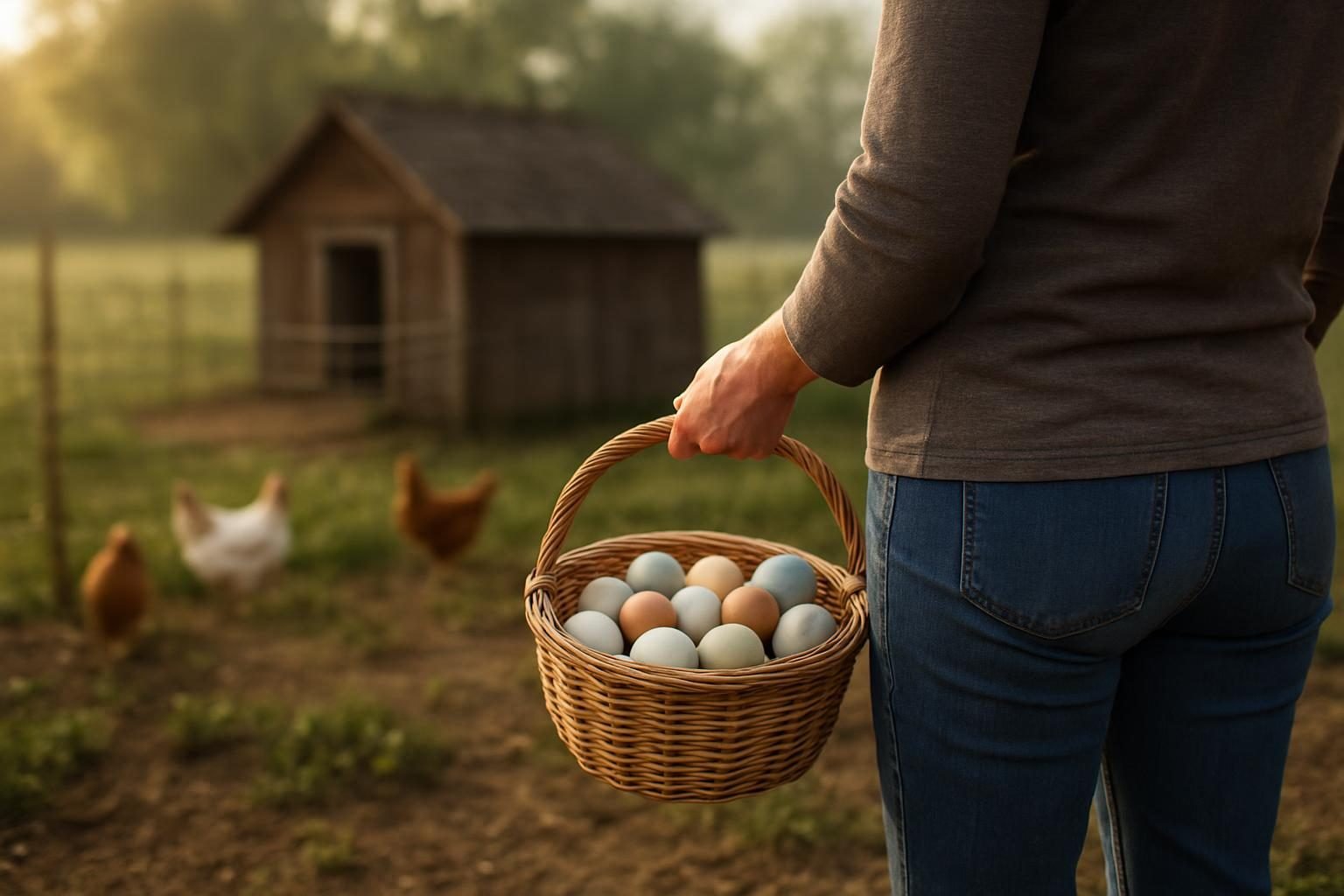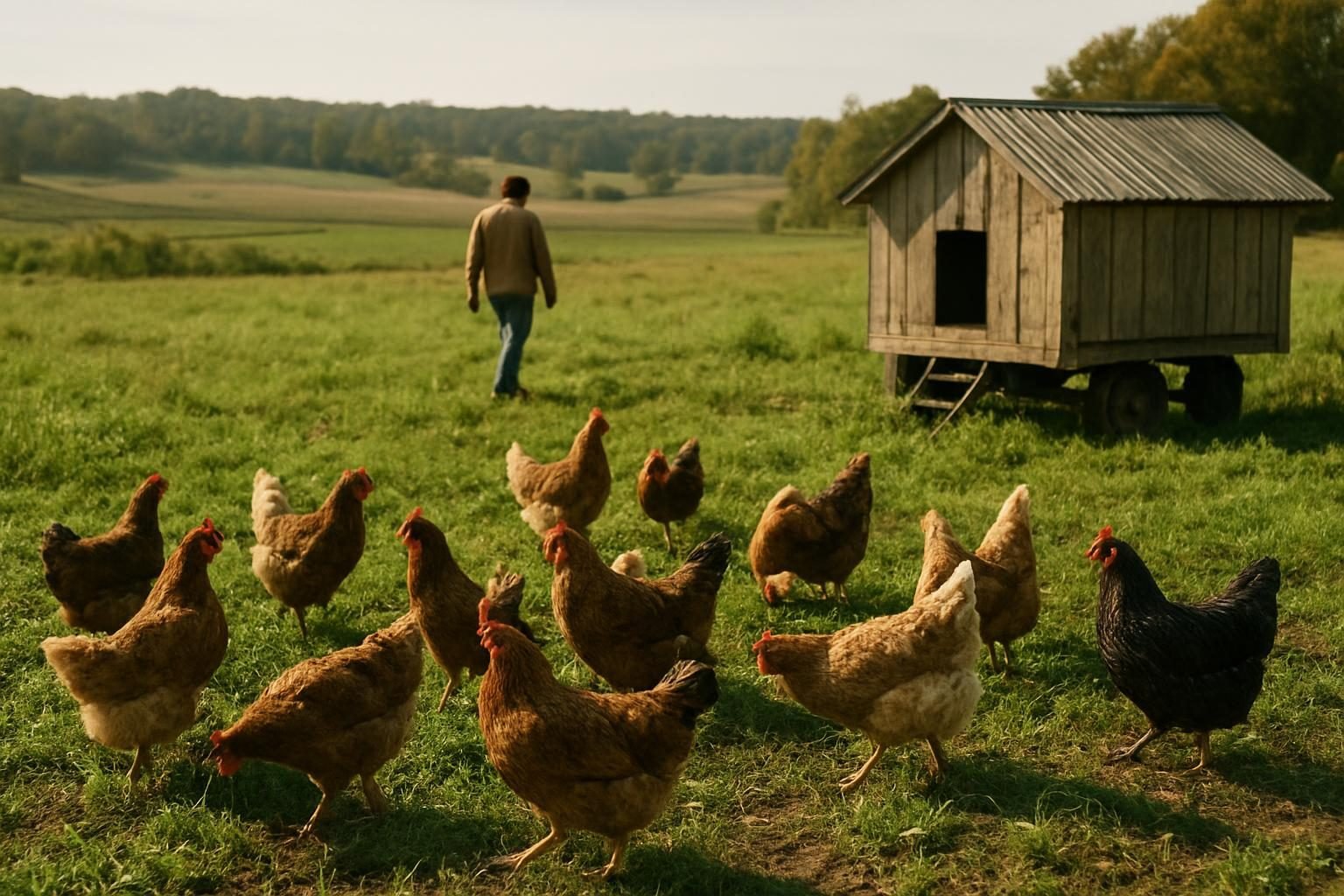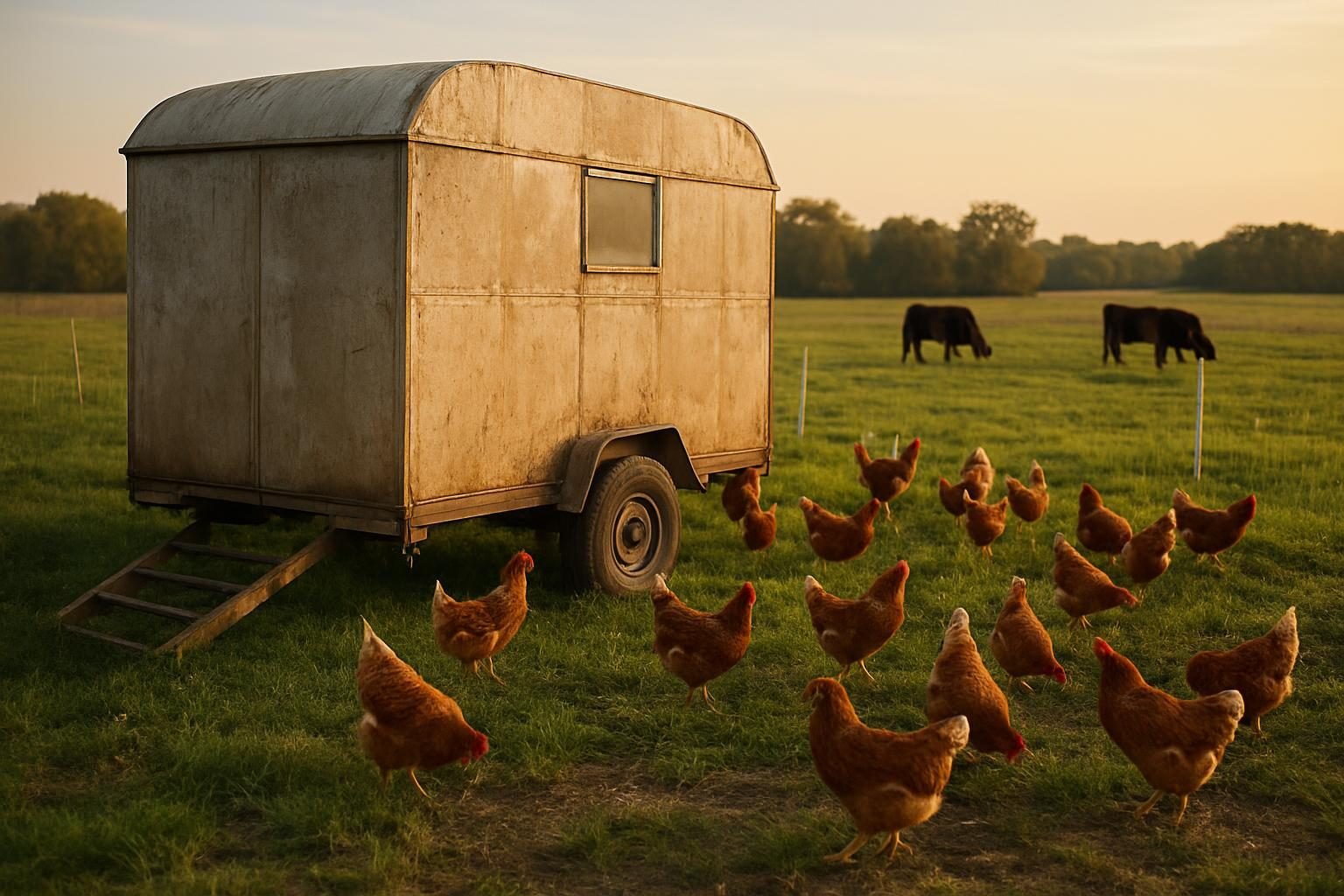
A chicken wagon is a wheeled, roosting-and-laying house that you pull across pasture every few days, letting a flock of laying hens work fresh ground without ever being confined to one spot. Where a small chicken tractor suits a backyard or a market garden, a wagon is built for flocks in the range of a few hundred birds, and it fits naturally behind grazing cattle. Popular breeds for this system include Barred Rocks, Buff Orpingtons, and Rhode Island Reds. Here is how they work, how to lay one out, and where they go wrong.
Quick answer: A chicken wagon (often called an eggmobile) is a trailer-style coop with roosts, nest boxes and a closable door, towed to a new pasture spot every 3 to 7 days. Hens roam out by day, scratch through cattle manure for fly larvae and forage, and return at dusk. Success depends on secure night closure, a solid moving schedule, electric netting for predators, and a flock sized to the pasture.
What a chicken wagon is (and what it is not)
The term “eggmobile” was popularized in grass-based farming circles for a simple idea: the house moves, the hens range freely around it, and the birds follow or trail livestock through the paddocks. A chicken wagon is the same concept with a more permanent build, usually a trailer or skid frame with roosting space, nest boxes, feeders and a ramp.
It differs from a chicken tractor in two ways. A tractor is a small floorless pen, typically moved daily by hand, with birds confined to the grass beneath it. A wagon is a house only. The birds leave it, so the ground is covered by fencing or by the birds’ own habits, not by the structure. If you are weighing both, our guide to chicken tractors: designs, moves and how they build soil covers the small-flock option in detail.
Why put hens behind cattle
Cattle leave pats. Fly larvae and other insects develop in them, and hens will tear pats apart looking for protein. That scratching spreads manure, exposes parasites to sun and predation, and distributes hen manure at the same time. Many graziers move the wagon into a paddock three to five days after the cattle leave, which is roughly when fly larvae are developing and before pats dry hard. Exact timing varies by season, temperature and region, so watch the pats rather than the calendar.
The benefit is real but modest and should not be oversold. Hens do not replace good grazing management or manure-handling practices. If your cattle rotation is not yet dialed in, start with rotational grazing for beginners and add poultry once your paddock rhythm is steady. The chicken wagon is a layer on top of a working system, one reason it appeals to ranchers doing multi-species grazing.
Wagon layout: what goes where
Good layout keeps hens laying in the boxes, roosting off the floor and out of the weather. Typical ranges, assuming a standard-size laying breed:
| Feature | Typical range | Why it matters |
|---|---|---|
| Interior floor space | About 2 to 4 sq ft per hen | Crowding raises stress, feather pecking and disease pressure |
| Roost space | 8 to 12 inches per bird | All birds must be able to roost at the same time |
| Nest boxes | 1 box per 4 to 5 hens | Too few boxes means floor eggs and egg breakage |
| Ventilation | High, open, draft-free openings above roost height | Ammonia and humidity build up fast in a small house |
| Pop door | Predator-tight, closes from the outside | Nighttime closure is your main defense |
| Ground clearance | Tires or skids with skirting where practical | Limits digging and shelter for predators underneath |
Put roosts at the back or over a droppings area that you can clean. Keep feeders and waterers outside the house or on a shaded platform so spills do not wet the floor. Many wagon builders add roll-away or external-access nest boxes, which makes egg collection quick and keeps you from stepping through the flock. If you are still deciding between building and buying a house at all, the chicken coop buyer’s guide walks through prebuilt, kit and DIY trade-offs.
Nest boxes that hens actually use
Nest boxes should be dim, quiet and slightly lower than the roosts. If boxes are higher than roosts, hens may roost in them overnight and foul the bedding. Add a roof slope on top so birds cannot perch there. Use clean, dry bedding such as wood shavings or chopped straw, and top it off regularly. A few fake eggs in new boxes can help pullets figure out where to lay.
Moving schedules that protect pasture
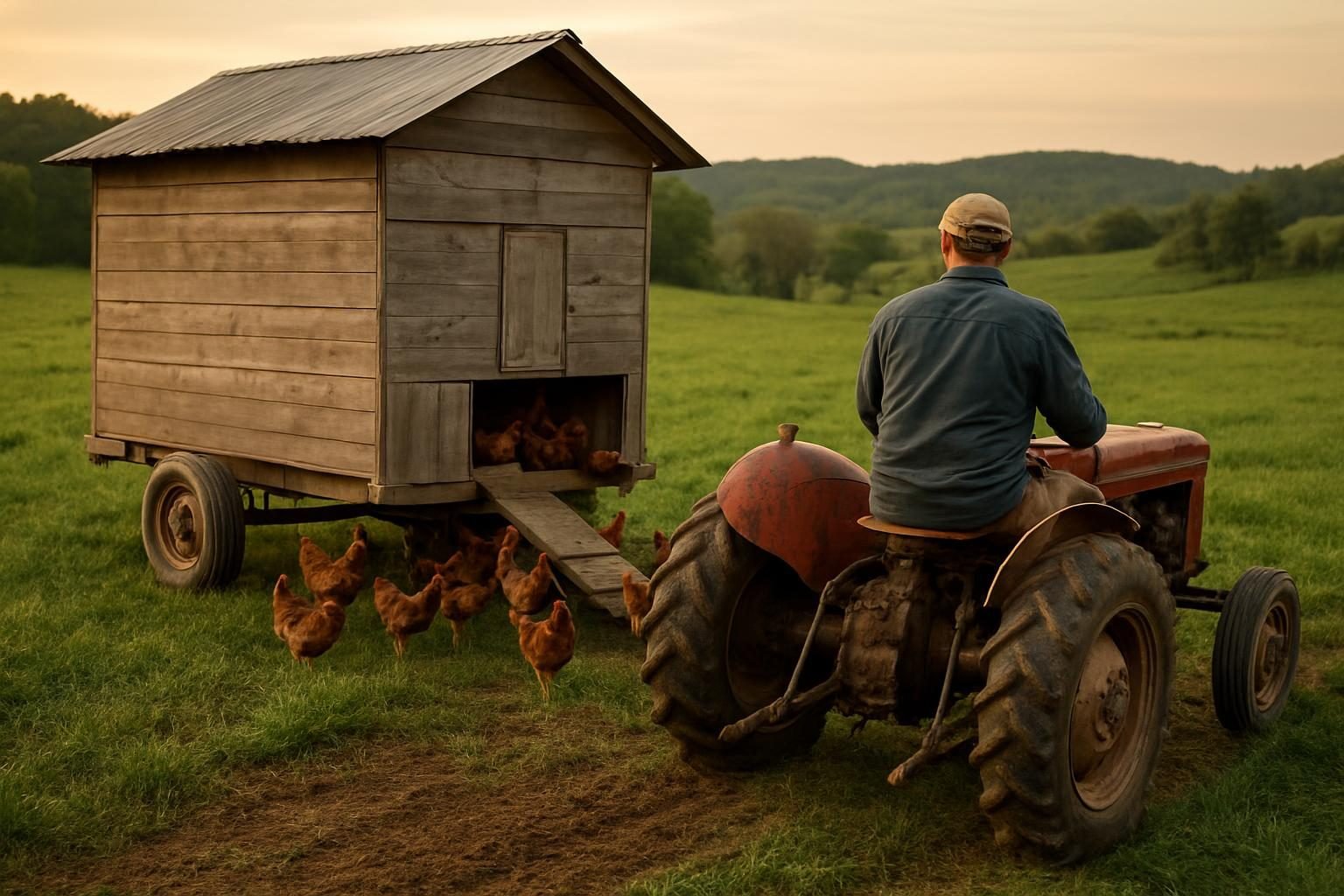
The point of mobility is to move before hens wear the ground down. A common rhythm is to move the wagon every 3 to 7 days in the growing season. Move sooner if bare spots appear around the house or if mud develops in wet weather. In dry or cold periods you may stretch the interval, but watch for manure buildup directly around the door and feeders.
- Wait until dusk. Close the pop door after all hens are inside and roosting.
- Check the route. Walk the path for holes, rocks, fence wires and soft ground.
- Hitch and tow slowly. A small tractor, ATV or truck works depending on wagon weight and ground firmness.
- Park on fresh, well-drained ground. Avoid low spots, wet swales and places where birds will stand in manure.
- Reset the fence and water. Move the electric netting, feeders and waterers to match the new location.
- Open the door at dawn. Let the hens out to find their new range.
Moving at night keeps stress low and confirms every bird is accounted for. Count birds at dusk once a week to catch losses early. A wagon moved too rarely becomes a fixed coop with a ring of bare ground, which defeats the purpose and can become a parasite and disease problem.
Following cattle: sequencing the paddocks
In a basic cattle-and-chicken sequence, cattle graze a paddock for one to a few days, then move on. A few days later, the wagon moves into that paddock. Hens spend several days there, then the wagon moves again before the cattle return. The rest period for pasture is set by the grass, not the hens, so keep poultry out of paddocks that are meant to be resting.
Fencing is where cattle operations have an advantage. If you already run polywire or electric netting, hens can share the system with minimal changes. Make sure your charger can handle added fence length and vegetation load; our guide to electric fence energizers for cattle helps with sizing, and the electric fence setup guide covers the basics of building the system.
Predator protection
Predators are the number-one reason wagons fail. Losses come from daytime hawks and foxes, and from nighttime raccoons, coyotes, owls, opossums and weasels, depending on your region. Layer your defenses:
- Close the house every night. A latched, tight door beats any fence. Consider an automatic door if your schedule is unpredictable, with a manual backup.
- Use electric poultry netting. Netting that is properly energized and kept clear of grass and weeds deters most ground predators. Check voltage regularly.
- Use the right wire. On vents and windows, use welded or hardware cloth rather than flimsy mesh; see the upcoming guide on poultry netting vs chicken wire vs hardware cloth.
- Add cover. Hens range farther and feel safer near shrubs, shade or a few perches. Open pasture with no cover invites hawk trouble.
- Consider a guardian. A livestock guardian dog introduced carefully, or a donkey in some situations, can reduce losses. Training and compatibility matter.
For fence layout, spacing and pen design principles that apply to wagons as well, see chicken pens and runs: sizing, fencing and predator-proofing.
Flock size, breeds and feed
Start smaller than you think you need. A flock of 50 to 100 hens is manageable for a first wagon. Hundreds of birds multiply the work, manure load and predator risk. Breed choice affects how far hens range and how well they handle heat, cold and hawks; our list of the best chicken breeds for pasture compares foragers and layers.
Pasture supplements feed but rarely replaces it. Hens still need a complete layer ration, free-choice calcium and clean water. For help matching rations to age and season, read the chicken feed guide, and for ideas on cutting costs through forage and bulk purchasing, see poultry feed savings with forage and bulk.
If you are starting a flock, you will choose between raising chicks and buying started birds. The article on buying pullets vs chicks covers the trade-offs, and if you brood your own, brooding baby chicks walks through the first six weeks. A rooster is optional for eggs; see the upcoming piece on whether you need a rooster.
Seasonal and regional notes
In the humid East and South, wet ground and parasite pressure call for more frequent moves and good drainage under the wagon. In the arid West, shade and water access matter more, and sparse forage limits how much birds can supplement their feed. In the Corn Belt and northern regions, winter requires a decision: move the wagon to a sheltered site or bring birds into a fixed coop. Our guide to keeping chickens in winter explains water, light and ventilation.
Check local rules too. Some states and counties regulate egg sales, labeling, flock size and cleanliness of washing and storage. Confirm requirements with your state department of agriculture or extension office before you sell. If you plan to buy equipment or a trailer, you may also want to read about ag loans and how they work.
Manure and soil benefits
Moving the wagon spreads manure rather than concentrating it. Fresh hen manure is high in nitrogen and can burn plants or contribute to runoff if piled up, so avoid parking the wagon in the same place repeatedly or near waterways. Where you do collect manure, such as from nest or roost areas, compost it first; see composting chicken manure for safe use. For the broader picture of how grazing and poultry fit into living soil, see our complete soil health guide.
Key takeaways
- A chicken wagon is a mobile house, not a pen. Hens range around it and return at night.
- Plan about 2 to 4 sq ft of interior space, 8 to 12 inches of roost, and one nest box per 4 to 5 hens.
- Move every 3 to 7 days, at dusk, and adjust for weather, mud and pasture condition.
- Follow cattle by a few days to take advantage of fly larvae and manure, without disturbing paddock rest.
- Close the house every night and use electric netting for layered predator protection.
- Start with a manageable flock, keep feeding a complete layer ration, and confirm local egg-sales rules.
Frequently asked questions
What is the difference between a chicken wagon and an eggmobile?
The terms are used almost interchangeably. “Eggmobile” is the older, more common name for a mobile laying house that follows livestock; “chicken wagon” is a general term for the same kind of trailer-style coop. Both describe a house that moves while hens free-range around it.
How many hens can one chicken wagon hold?
It depends on the size of the house. Plan roughly 2 to 4 square feet of floor space and 8 to 12 inches of roost per bird. A small wagon may hold a few dozen hens, while larger trailer-based designs can hold a few hundred. Beginners usually do better starting with 50 to 100 birds, and choosing the right chicken breed for your operation is also important to consider.
How often should I move a chicken wagon?
Every 3 to 7 days is typical during the growing season. Move sooner if bare ground or mud is developing, and consider longer intervals only when ground is dry and forage is healthy. The goal is to move before hens damage the pasture.
Can chickens and cattle share the same pasture?
Yes. Many farms run hens a few days behind cattle in the same paddock system. Hens scratch pats and eat insects, while cattle rest and regrow forage. Keep poultry out of resting paddocks, and share fencing only if your electric system can handle poultry netting safely.
How do I protect a chicken wagon from predators?
Close the pop door every night, use electric poultry netting, cover vents with sturdy wire, and provide some cover for daytime hawks. A livestock guardian dog may help in some operations. No single method is foolproof, so combine several and check them regularly.