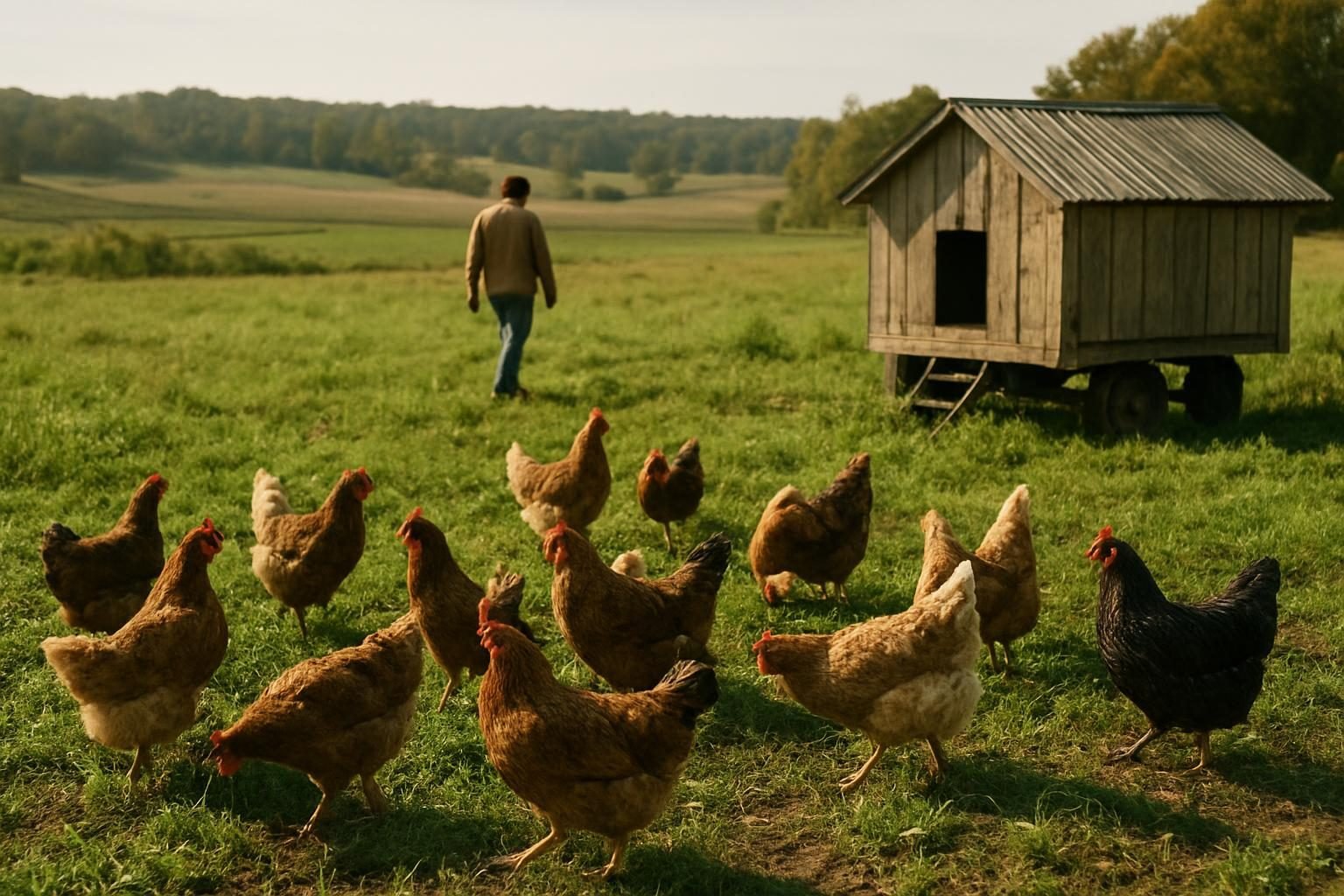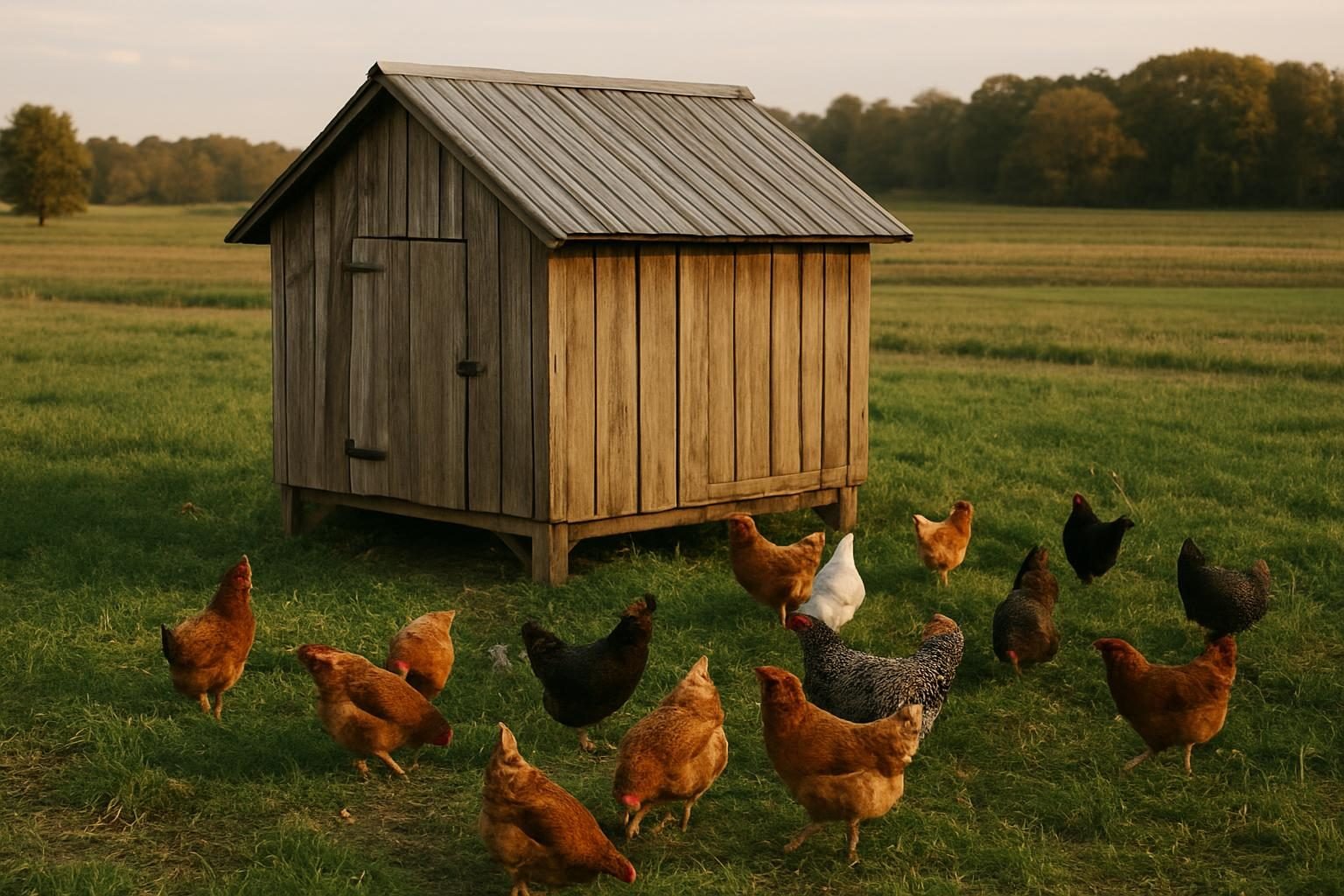
A good chicken coop does three jobs: it keeps birds safe at night, dry and ventilated through every season, and easy for you to clean and collect from. The harder question is how to get one, because prebuilt, kit and DIY routes each trade money, time and durability differently. This guide walks through the choices and shows where a fixed coop fits on a farm that also moves birds across pasture.
Quick answer: Buy prebuilt if you want birds housed this week and can pay for sturdy construction; choose a kit if you want a lower upfront cost and can handle a weekend of assembly, but plan to upgrade the hardware; build your own if you have tools, time and a design that suits your flock and climate. Whatever route you take, plan on roughly 3-4 square feet of coop floor per standard-size bird, 1 foot of roost per bird, one nest box per 4-5 hens, and hardware cloth (not chicken wire) on every opening.
Start with the flock, not the coop
Most disappointing coops fail because they were sized for the number of birds the buyer had on day one, not the number they will have by spring. Chickens are easy to add and hard to house once the coop is full. Decide on your target flock size first, then shop for a coop that handles that number with room to spare.
Think about how the birds will live, too. A coop used only for sleeping and laying, with birds out on pasture all day, can be smaller than one where hens spend long winter days indoors. If you are still choosing breeds, our guide to the best chicken breeds for pasture covers how breed size and temperament affect housing needs.
The four things every coop has to get right
Space per bird
Typical guidance from extension services is about 3-4 square feet of indoor floor space per standard-size hen, and 8-10 square feet per bird in an attached outdoor run if birds are confined. Bantams need less; heavy breeds need more. Cold-climate flocks that spend weeks indoors do better at the generous end of the range, because crowding drives feather picking, ammonia buildup and disease pressure.
Many commercial coops are advertised by the number of chickens they hold, and those numbers are often optimistic. Measure the floor, do the math yourself and divide by 4.
Ventilation
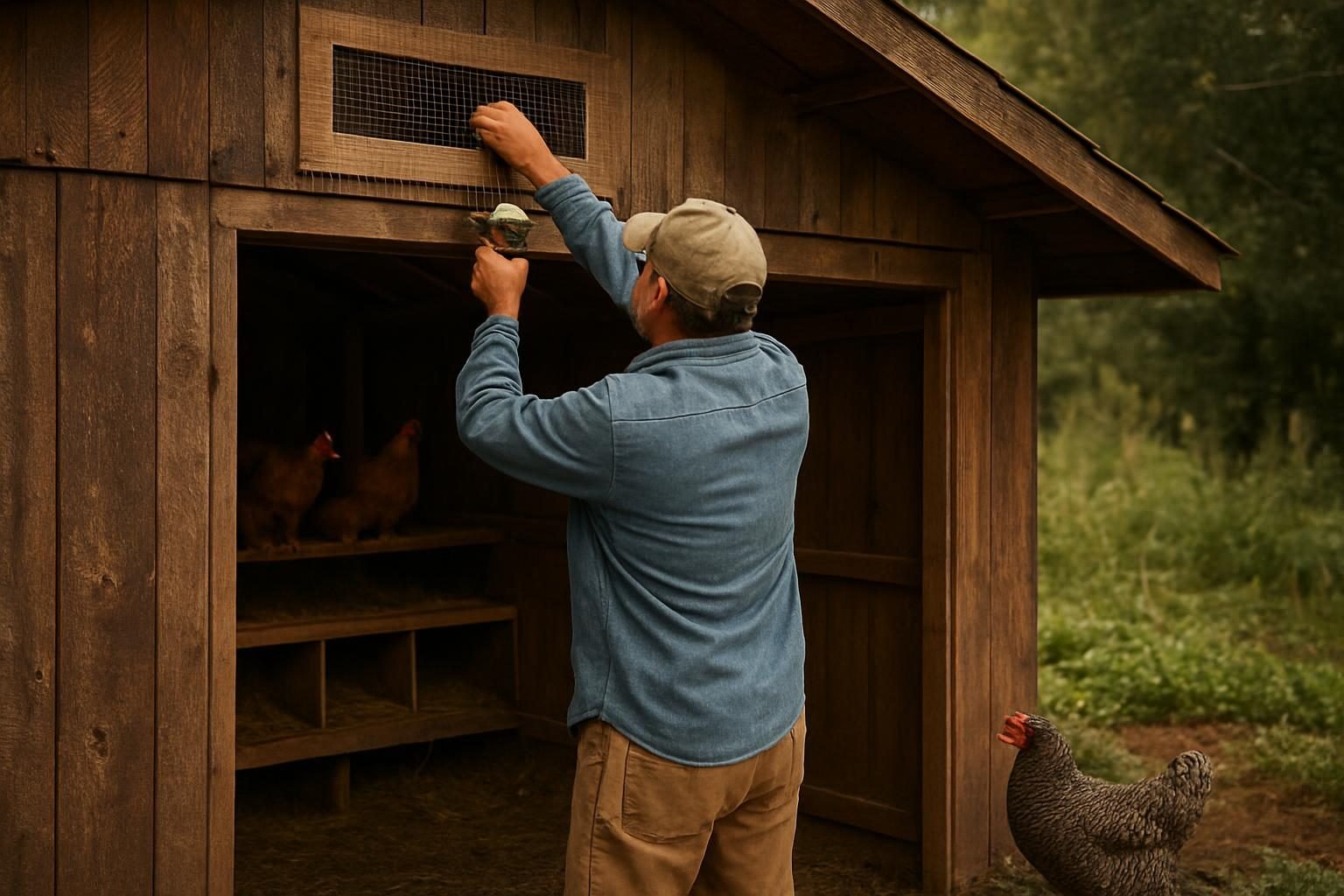
Ventilation is the most commonly botched feature. Chickens give off a lot of moisture and ammonia, and damp, stale air causes respiratory trouble and frostbite in winter, which is why you want openings high on the walls, above bird height, so air moves out without blowing across the roost. Aim for ventilation openings equal to a meaningful share of the floor area (many extension sources suggest roughly 1 square foot per bird as a starting point), and cover every opening with hardware cloth.
Draft and ventilation are different things. You want air exchange up high and no direct wind at roost level. Humid East and South climates need more open area; the arid West and northern states need openings you can close down in deep cold without sealing the coop airtight. See our primer on winter coop prep for seasonal adjustments.
Nest boxes
Plan one nest box for every 4-5 hens, roughly 12 by 12 inches each, set lower than the roost so hens do not sleep in them. Hens prefer dim, quiet, enclosed spots. Boxes that open from outside the coop save time and let you collect eggs without stepping in. Fill them with straw or shavings, and skip designs with wire floors that bruise eggs and feet.
Roosts
Chickens sleep on a perch, not on the floor. Provide about 8-12 inches of roost length per bird, using a 2 by 4 laid flat (wide side up, edges rounded) so birds can cover their toes in cold weather. Place roosts higher than nest boxes, with a dropping board or deep litter beneath so cleanup is simple.
Predator-proofing
Raccoons can open simple latches, rats and snakes fit through small gaps, and weasels squeeze through openings little larger than a quarter. Use hardware cloth (typically 1/2 inch) on windows and vents, secure it with screws and washers rather than staples, and use two-step latches on every door. Bury or skirt hardware cloth around the perimeter of any run, and close the coop at dusk every night. Our comparison of poultry netting, chicken wire and hardware cloth explains why chicken wire only keeps chickens in, never predators out.
Prebuilt vs kit vs DIY: how they compare
| Factor | Prebuilt | Kit | DIY |
|---|---|---|---|
| Upfront cost | Highest of the three for comparable size | Lowest to moderate | Varies; often moderate, lower with salvaged lumber |
| Time to first use | Days | A weekend or two | Weeks, depending on skill and weather |
| Typical durability | Good if solid lumber; weak if thin panels | Often thinner lumber and light hardware; upgradeable | As good as your materials and joinery |
| Customization | Little | Some | Complete |
| Skill needed | None | Basic tools and patience | Carpentry and planning |
| Predator-proofing out of the box | Varies widely; check hardware | Usually needs upgrades | You decide |
Prices vary by region, lumber markets and size, so treat any figure you see online as a rough guide and compare current quotes locally.
Prebuilt: fast, but inspect closely
A prebuilt coop is the right call when you need to house birds quickly, lack tools or time, or want something delivered ready to set on the ground. The catch is quality. Look for solid framing rather than stapled-together thin panels, real hardware cloth rather than chicken wire, rot-resistant or sealed lumber, and a floor that can handle weight and moisture. Ask about door latches, ventilation placement and how the roof sheds water.
Kit: the middle road
Kits cost less because you supply the labor. They suit people who enjoy a project and have basic tools. The common weak spots are thin lumber, small hinges and the included wire, so budget for swapping in hardware cloth, heavier latches and a sealed or painted exterior. Read reviews for complaints about warping and missing parts, and confirm the stated bird capacity against your own square-foot math.
DIY: best fit, most work
Building your own lets you size the coop to your flock, add the ventilation your climate demands and use durable materials where they matter most. It also lets you use reclaimed lumber, pallets and scrap roofing to cut cost. Draw a simple plan first, list a cutting schedule, and build the predator-proofing in from the start rather than adding it after the first loss. If you are comfortable with farm carpentry, this is usually the best long-term value.
Durability and cost tradeoffs that matter
The cheapest coop is rarely the lowest-cost coop over ten years. Floors rot first, then roof seams, then hinges. Spend on the floor, the roof and the latches; economize on paint and trim. A raised floor that keeps wood off damp ground, or a concrete or compacted base with deep litter on top, can double the life of the structure. Metal roofing outlasts shingles and sheds water and snow in nearly every region.
Consider the full picture of owning birds, too. Feed is the largest ongoing cost, and you can read our upcoming chicken feed guide for what birds need at each stage. If you are starting with chicks, remember you will also need a separate brooder for the first weeks before they move to the coop.
Where a fixed coop fits with pasture access
A permanent coop does not mean confined birds. On a regenerative farm, a fixed coop often serves as the home base: safe roosting, nesting and winter shelter, with daily access to fresh ground. The goal is to let hens do what they are good at, scratching, foraging and spreading manure, without letting them wear a single patch down to bare dirt.
The simplest approach is to attach the coop to a fenced paddock and rotate birds through sections of it, resting each section before returning. This applies the same logic as rotational grazing for beginners, scaled down to poultry. Portable electric netting works well for this, and our guide to chicken pens and runs covers sizing and fencing in detail.
If you would rather move the housing itself, chicken tractors are lightweight, movable shelters that put birds on fresh ground every day or two. They are well suited to meat birds and small flocks, but they are less comfortable for large layer flocks and harder to move in snow or mud. For bigger laying flocks on pasture, a chicken wagon is a larger mobile coop that bridges the gap. For the full picture of how birds fit into a grass-based system, see pastured poultry.
A reasonable setup for a small farm is a solid fixed coop for winter and nighttime, plus portable fencing or a tractor for the growing season. If you are working with limited acreage, the small-scale regenerative farming guide shows how poultry can share space with gardens and other enterprises. Poultry also pair well with grazing livestock, a concept covered in multi-species grazing.
A simple buying checklist
- Decide on your target flock size, then add 20-30 percent for growth.
- Do your own square-foot math: about 3-4 square feet indoors per standard hen.
- Check ventilation: high openings, closable in deep cold, covered with hardware cloth.
- Count nest boxes (one per 4-5 hens) and roost length (8-12 inches per bird).
- Inspect latches, hinges and the floor, since these fail first.
- Plan where it will sit: well-drained ground, some shade, easy access in bad weather.
- Plan how birds will reach pasture, and how you will rest it between visits.
Key takeaways
- Size the coop for the flock you will have, not the flock you start with.
- Ventilation high on the walls, with no drafts at roost level, protects bird health year-round.
- Hardware cloth and strong latches matter more than looks; chicken wire does not stop predators.
- Prebuilt saves time, kits save money and DIY gives you the most control, but each needs a check on lumber, floors and hardware.
- A fixed coop works well with rotated pasture access, and it can be paired with movable pens or tractors in the growing season.
For more on managing animals on grass, browse our Grazing & Livestock section or the broader complete guide to adaptive grazing.
Frequently asked questions
How big should a chicken coop be?
Plan about 3-4 square feet of indoor floor space per standard-size hen, plus roughly 8-10 square feet per bird in an attached run if the birds are confined. Bantams need less and large heavy breeds need more. If birds will be on pasture most of the day, the indoor space mainly serves for sleeping, laying and bad weather, but it should still meet these numbers for winter.
Is a chicken coop kit worth it?
Often yes, if you want to save money and are comfortable with basic assembly. Check the lumber thickness and the included hardware, and expect to upgrade the wire to hardware cloth and replace light latches. Verify the advertised bird capacity against your own square-foot calculation, since kit ratings tend to be generous.
How many nest boxes do I need?
One box for every 4-5 hens is a common guideline. Hens often share a favorite box, so more boxes will not prevent crowding in one spot, but too few will lead to broken eggs and eggs laid on the floor. Keep boxes lower than the roost, in a quiet, dim area, and filled with clean bedding.
Do I need a coop if my chickens are on pasture?
Yes. Birds need protected shelter at night from predators and weather, and a place to lay eggs. A fixed coop, a chicken tractor or a mobile wagon can all serve, depending on flock size, season and how often you want to move birds. Shut the birds in at dusk every day regardless of the type of housing.
What is the best material for a coop floor?
Floors take the most abuse, so choose a material that resists moisture and rot. Many keepers use a raised wooden floor with sealed or pressure-treated framing and a vinyl or sealed surface, while others prefer a compacted dirt or concrete base with deep litter. Whatever you choose, keep the floor dry, and clean or refresh bedding regularly to control ammonia.