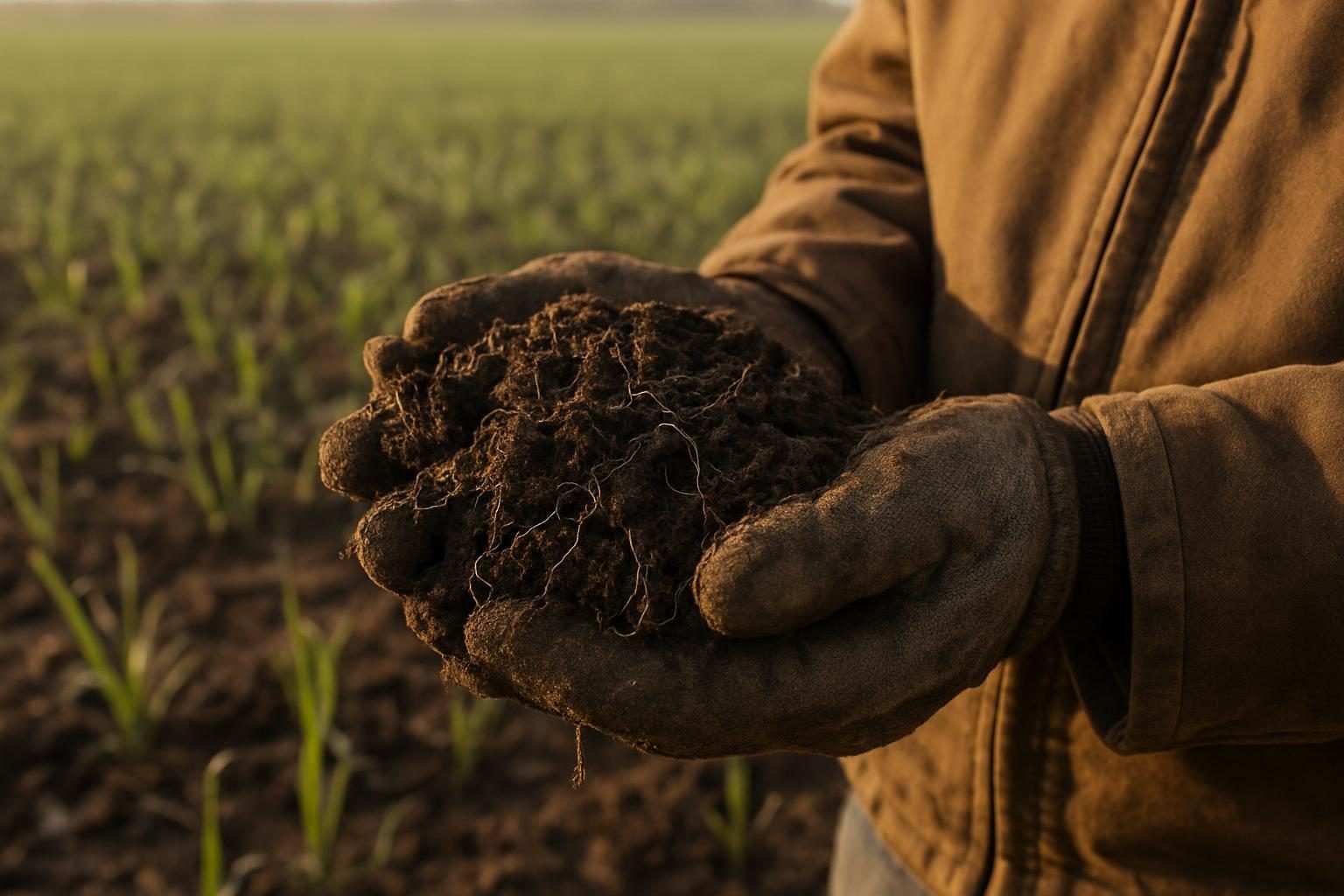
The soil microbiome is the living community of bacteria, fungi, protozoa, nematodes and other organisms that cycles nutrients, builds structure and protects roots. A teaspoon of healthy soil can hold billions of organisms, and most of what your crops eat passes through their hands first. This guide explains how that system works and what you can do, on any scale, to keep it working for you.
Quick answer: The soil microbiome is the community of microbes in your soil that turns organic matter and mineral nutrients into forms plants can use. Plants feed it with sugars from their roots; microbes feed plants with nitrogen, phosphorus and other nutrients, and they glue soil into stable aggregates. You build it by keeping living roots in the ground, disturbing the soil less, adding diverse organic matter, and avoiding unnecessary chemical and physical shocks.
The soil food web in plain terms
Think of the soil food web as a series of trades. Plants capture sunlight and make sugars. Microbes eat those sugars and the dead plant material left behind. Other organisms eat the microbes. At each step, nutrients are released in forms roots can absorb.
The main players, roughly from the bottom up:
- Bacteria: The most numerous organisms. They decompose simple compounds, fix nitrogen (some living freely, others inside legume nodules), and produce sticky substances that bind soil particles.
- Fungi: Include decomposers that break down tough material like stems and wood, and mycorrhizal fungi that partner directly with roots. Their threadlike hyphae move water and nutrients across distances roots cannot reach.
- Protozoa and nematodes: Grazers that eat bacteria and fungi. When they digest their prey, they excrete the excess nitrogen as plant-available ammonium, right next to the root.
- Microarthropods and earthworms: Shred residue, mix soil, and create channels. Worm casts are rich in available nutrients.
This is why “feeding the soil” is more than a slogan. Most of the nitrogen and a good share of the phosphorus your crop uses is mineralized by this web rather than coming from a bag. For the bigger picture of how biology fits with chemistry and physical structure, see our complete guide to building living soil.
Root exudates: how plants recruit their microbes
Plants are not passive. Through their roots they release sugars, amino acids, organic acids and other compounds, collectively called root exudates. Estimates of how much fixed carbon plants send below ground vary widely by species, growth stage and conditions, but it is a substantial fraction, often cited in the range of 10 to 40 percent of photosynthate.
This is a deliberate investment. The zone right around the root, the rhizosphere, is packed with microbes drawn in by those exudates. In return, microbes mineralize nutrients, produce growth-regulating compounds, and can crowd out some root pathogens.
The practical takeaway: living roots are the engine. A field or bed with green, photosynthesizing plants year-round feeds its microbiome continuously. A bare field starves it. That is the logic behind cover crops, interseeding and diverse rotations. If you are starting out, our cover crops for beginners guide walks through choosing and planting them.
Mycorrhizal fungi: the root extension network
Arbuscular mycorrhizal fungi (AMF) colonize the roots of most crops, including corn, soybeans, tomatoes, and most vegetables and pasture grasses. The plant trades sugars for phosphorus, zinc, water and other nutrients the fungus gathers from a much larger soil volume. Brassicas (like cabbage and canola) and beets are notable exceptions that generally do not form these partnerships.
Heavy phosphorus fertility, frequent tillage and long bare fallows all tend to reduce AMF colonization. Fields with diverse living cover and minimal disturbance tend to support more. We cover this relationship in depth in our guide to mycorrhizal fungi and the underground network your crops need.
Fungal to bacterial ratio: what it means and what it doesn’t
You will see “fungal to bacterial (F:B) ratio” in biological soil tests and in a lot of marketing. The basic idea has some support: different crops and ecosystems tend to favor different microbial balances.
| System | Typical tendency | Why |
|---|---|---|
| Annual vegetables, disturbed ground | Bacteria-dominated | Frequent disturbance and fresh, easily decomposed residue favor fast-growing bacteria |
| Perennial pasture, grasslands | More balanced | Continuous roots and moderate disturbance support both groups |
| Orchards, shrubs, woodland, silvopasture | Fungi-leaning | Woody residue and low disturbance favor fungal decomposers |
Here is the honest caveat. There is no single ideal F:B ratio, and the numbers you get from a lab depend heavily on the method used (direct microscopy, phospholipid fatty acid analysis, DNA sequencing) and on when and how you sampled. The popular claim that every crop has a precise target ratio is stronger than the evidence supports. Use the ratio as one clue about disturbance and residue quality, track it in the same way over time on the same field, and do not chase a number. For how biological tests compare with standard and Haney tests, see soil testing for regenerative farmers.
What disturbs the soil microbiome
Microbes are resilient, but several common practices knock them back, and the damage compounds.
- Tillage: Breaks up fungal networks, burns through organic matter by flooding soil with oxygen, and exposes aggregates to erosion. Moldboard and repeated rototilling are the worst offenders; light shallow cultivation is milder. See our no-till farming guide for pros, cons and how to transition.
- Bare soil: No living roots means no exudates, plus heat, drying and crusting at the surface.
- Compaction: Squeezes out the pore space microbes need for oxygen and water. Most beneficial soil life is aerobic. If you suspect this, read how to fix compacted soil without heavy tillage.
- Waterlogging: Oxygen-starved soil shifts toward anaerobic organisms that produce compounds toxic to roots. See how to improve soil drainage without heavy equipment.
- Excess soluble fertilizer: Heavy, repeated applications of soluble nitrogen and phosphorus can reduce the plant’s incentive to feed microbes and may suppress some beneficial associations.
- Pesticides: Effects on soil life vary a great deal by product, rate and soil type. Some fungicides and fumigants clearly suppress fungi and other non-target organisms; for others the evidence is mixed. Check product labels and your extension service rather than assuming either “harmless” or “sterilizing.”
- Monoculture: A single crop supports a narrow slice of microbial diversity.
How to feed the microbiome: a practical sequence
You do not need to do everything at once. This order gives the most return for most farms.
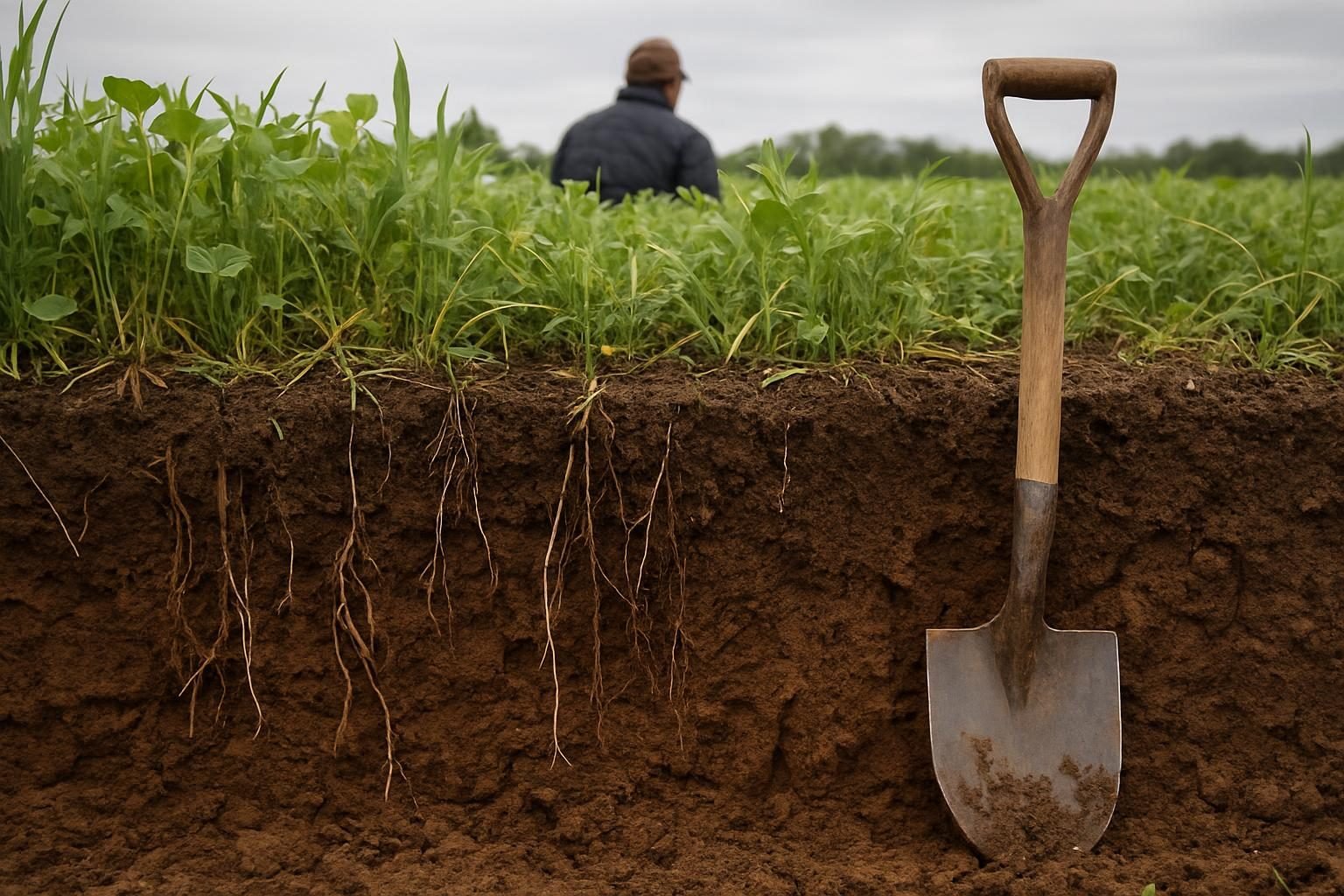
- Keep the soil covered. Mulch, residue or a growing crop at all times. Even a fall-seeded cereal rye after a late harvest beats winter bare ground.
- Keep living roots in the ground as long as possible. Extend the green season with cover crops, relay planting or interseeding into standing corn and soybeans.
- Increase diversity. Rotate crop families and use multi-species covers. Grasses, legumes and brassicas feed different microbial groups. Our guide to cover crop mixes helps match species to your goals.
- Reduce disturbance. Move toward no-till or minimum-till. Where you terminate covers without herbicide, a roller crimper leaves residue on the surface as a mulch.
- Add organic matter thoughtfully. Compost, manure and plant residue supply both food and organisms. A finished, well-made compost is usually the most reliable amendment; see how to build a compost bin if you are making your own.
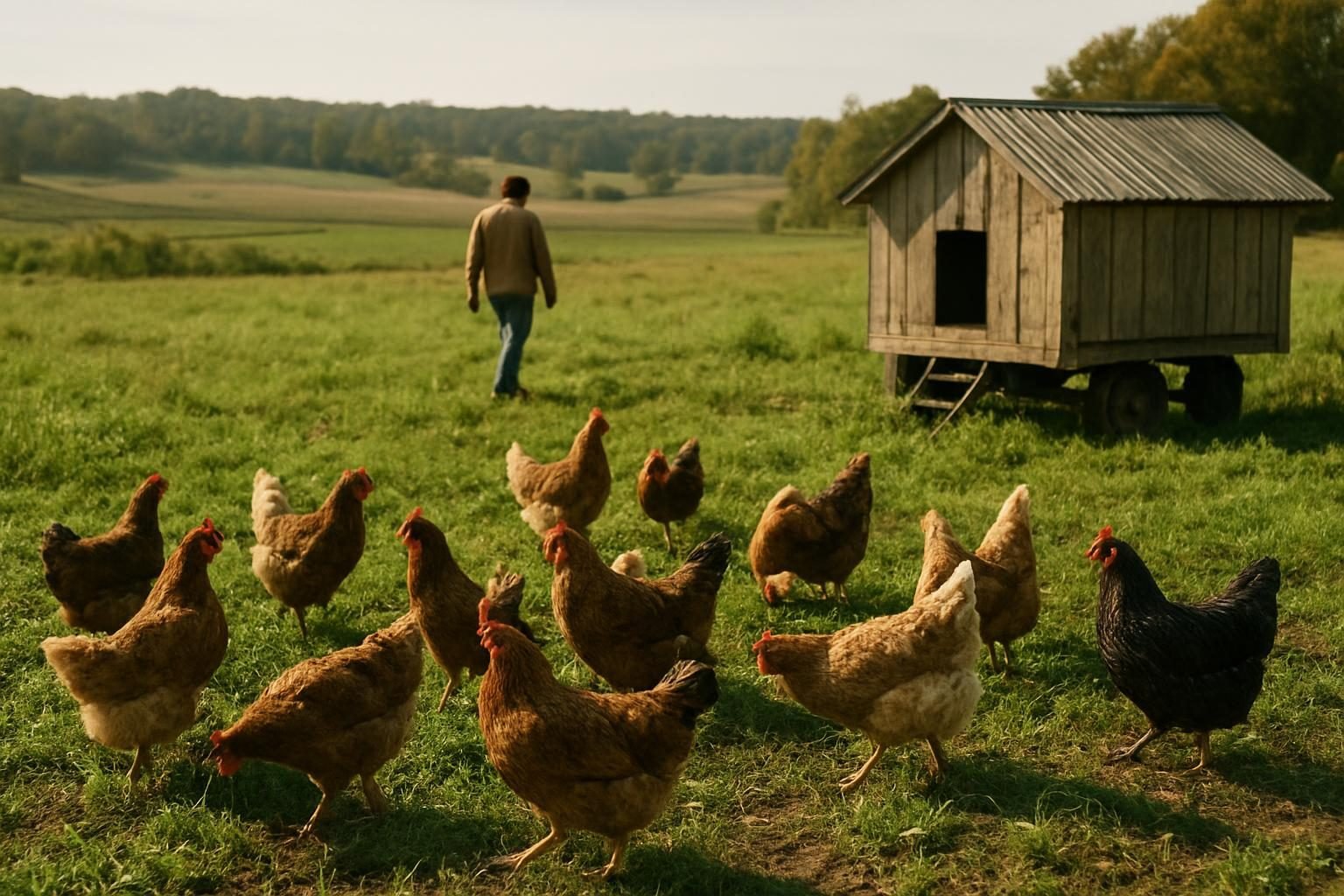
- Integrate livestock where you can. Well-managed grazing returns dung and urine, stimulates root growth and adds soil biology. Pair it with rest periods; see our rotational grazing guide.
- Match fertilizer to need. Soil test, apply what is actually limiting, and avoid heavy blanket applications.
Cover crops for specific conditions
Heavy clay benefits from deep, fibrous rooted species that open the soil while feeding microbes; see our guide to the best cover crops for clay soil. If you grow a legume or grass as a soil-building season, green manure is a related approach with its own timing rules.
Amendments: what helps and what’s oversold
Many products promise to “inoculate” or “restart” soil biology. The evidence is uneven, and results depend on whether the soil lacked the organism, the habitat or simply the food.
- Compost: The best-supported biological amendment, adding organic matter and a diverse community. Quality varies, so source carefully.
- Compost tea and biological inoculants: Results are mixed and inconsistent. Read our honest look at compost tea and biological amendments before spending money.
- Biochar: Provides durable habitat and can improve water and nutrient retention, especially in sandy or degraded soils, but it is not a magic fix and works best when charged with nutrients or compost first. See our biochar guide, and if you plan to purchase, watch for our upcoming piece on buying biochar and checking its quality.
- Mycorrhizal inoculants: Most useful where soils have been very disturbed, long fallowed or sterilized, such as new urban lots or disturbed construction fill. In established, biologically active fields, native fungi are usually already present.
Measuring whether it’s working
Biology moves slowly, so look at several signals together:
- Field observations: Earthworm counts, crumbly aggregate structure, a sweet earthy smell, how fast residue breaks down, water infiltration.
- Lab tests: Soil organic matter, respiration (such as the Haney or CO2 burst test), and optional microbial community analyses.
- Trends over years: Compare the same fields, same season, same method. Raising organic matter is a long game; see how to increase soil organic matter and how long it takes. For a broader framework, start with what soil health is and how to measure it.
Key takeaways
- The soil microbiome converts organic matter and minerals into plant-available nutrients and builds soil structure.
- Plants fund the system through root exudates, so living roots year-round are the single most important input.
- Mycorrhizal fungi extend root reach, but are suppressed by tillage, bare fallow and excess phosphorus.
- Fungal to bacterial ratios are a useful clue, not a target to chase; there is no universal ideal number.
- Cover, diversity and reduced disturbance come before any bottled product.
- Compost is the best-supported biological amendment; inoculants and teas vary in results.
- Expect gradual change over years, and track the same fields consistently.
Frequently asked questions
What is the soil microbiome?
It is the community of microorganisms living in soil, mainly bacteria, fungi, protozoa and nematodes, along with the larger animals that feed on them. Together they decompose residue, cycle nutrients, build aggregates and interact with plant roots.
How long does it take to rebuild the soil microbiome?
Microbial activity can respond within weeks to a season once you add living roots and cover, but community structure and organic matter take years. Heavily degraded or compacted soils may need three to five years or more of consistent practice before changes are clear. Building organic matter through practices like fall leaves as mulch and compost can accelerate this process.
Do I need to buy microbial inoculants?
Usually not. In most working soils the needed organisms are already present, and the limiting factors are food, habitat and disturbance. Inoculants are most plausible on sterilized, severely disturbed or brand new ground, such as raised beds with new soil. Test on a small area with an untreated comparison strip before scaling up.
Does tilling kill soil microbes?
Tillage does not sterilize soil, but it breaks up fungal networks, destroys aggregates and speeds up the oxidation of organic matter, which lowers the food supply for microbes over time. Reduced-disturbance systems generally support more fungal biomass and more stable structure.
Is a higher fungal to bacterial ratio always better?
No. Annual vegetables do well in bacteria-leaning soils, while orchards and woodland systems lean toward fungi. Lab methods also differ, so ratios are hard to compare across labs. Treat the ratio as one indicator among several and watch trends on your own ground.