Mycorrhizal fungi are some of the most important organisms in your soil, and most farmers never see them. They live in and around plant roots, extend the root system far beyond what the plant could build alone, and quietly shape how well your crops handle drought, low fertility and stress.
This guide covers what these fungi actually do, which crops rely on them (and which ignore them), what damages them, and how to build populations without necessarily spending a dime on products.
Quick answer: Arbuscular mycorrhizal (AM) fungi colonize the roots of most crops, trading phosphorus, water and some micronutrients for plant sugars. Corn, soybeans, small grains, tomatoes, onions and most pasture plants benefit; brassicas and beets do not host them. Tillage, bare fallow and high soil phosphorus suppress them. Keeping living roots in the ground year-round, reducing disturbance and not over-applying phosphorus is usually more effective than buying inoculants, which pay off only in specific situations.
What mycorrhizal fungi actually do
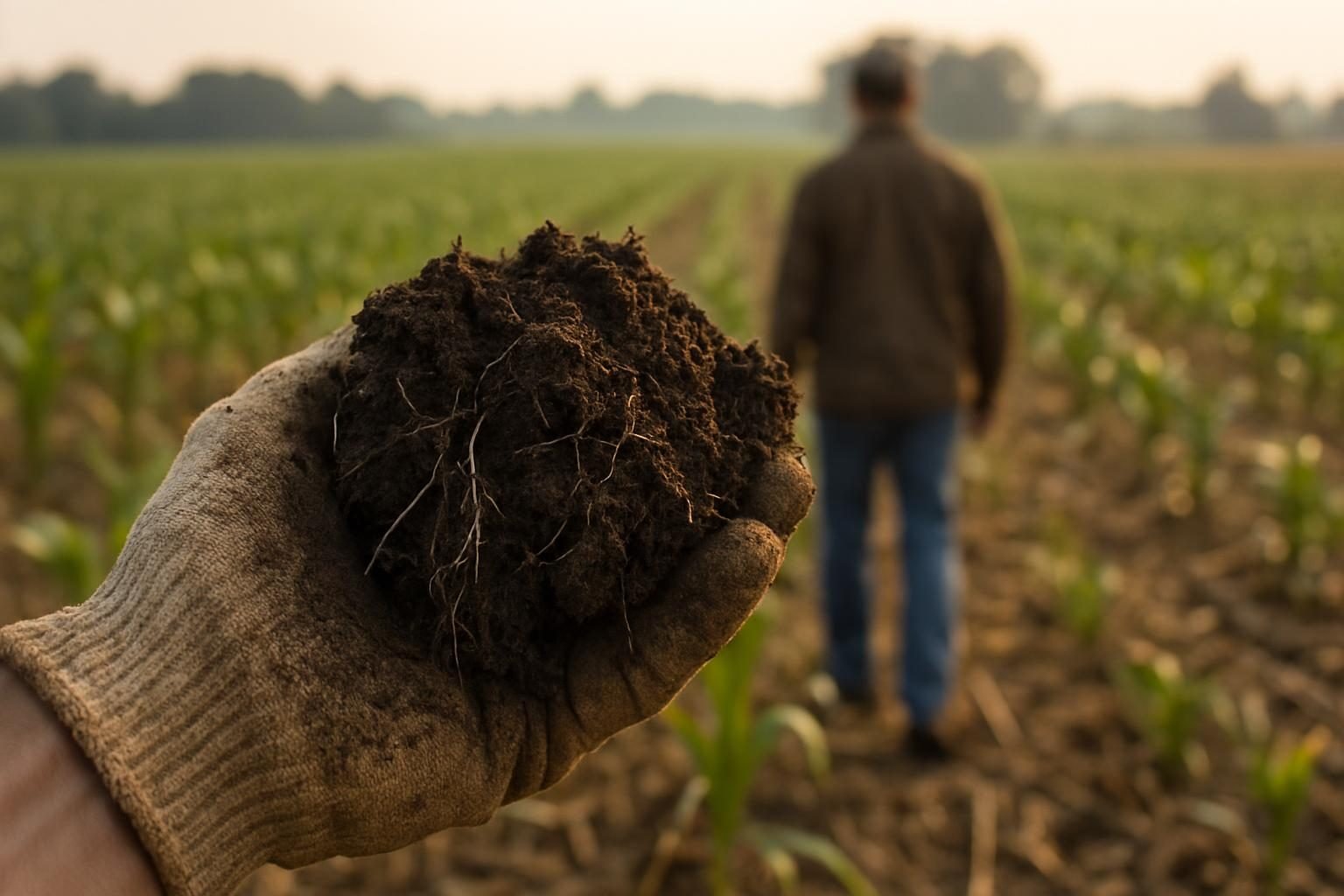
Mycorrhiza means “fungus root.” The relationship is a trade. The plant photosynthesizes and sends a share of its sugars (carbon) to the fungus. In return, the fungus sends out microscopic threads called hyphae that explore soil pores far too small for roots to enter, and delivers nutrients and water back to the plant.
The main benefits, supported by decades of research:
- Phosphorus uptake. Phosphorus barely moves in soil, so a root only reaches what is right beside it. Hyphae extend that reach considerably, which is the best-documented benefit of AM fungi.
- Water access. The hyphal network can help plants reach moisture and tolerate dry spells, though the size of the effect varies by crop and soil.
- Micronutrients. Zinc and copper uptake often improve in colonized plants.
- Soil structure. Hyphae produce a sticky protein called glomalin and physically bind particles into stable aggregates, which helps with infiltration and resistance to erosion. Scientists still debate exactly how much of what is measured as “glomalin” is truly fungal, so treat the aggregate benefit as real but not magical.
- Stress tolerance. Colonized plants often cope better with salinity and some root pathogens.
Two caveats worth saying plainly. The benefit is largest in low-fertility or low-phosphorus soils and smaller where fertility is high. And the relationship is not always a net win for the plant: under very high fertility, the carbon cost can outweigh the return. That is why “more fungi” is not automatically the goal; a functioning, diverse community is.
Which crops depend on mycorrhizal fungi (and which do not)
Roughly 80 percent of land plant species form mycorrhizal associations, and the type that matters for most farm crops is arbuscular mycorrhiza. Some plant families opt out entirely. This matters for rotation planning, because a non-host crop can let fungal populations decline.
| Crop group | Mycorrhizal status | Notes |
|---|---|---|
| Corn, sorghum, small grains, grasses, most pasture species | Hosts | Benefit most visible in low-phosphorus soils |
| Soybeans, peas, clovers, vetches, other legumes | Hosts | Fungi also support nodulation by supplying phosphorus |
| Tomatoes, peppers, squash, onions, leeks, carrots, lettuce | Hosts | Onions and leeks have coarse roots and are especially dependent |
| Sunflower, flax, many fruit trees and berries | Hosts | Orchard and agroforestry plantings usually carry established networks |
| Brassicas (cabbage, broccoli, kale, canola, radish, mustard, turnip) | Non-hosts | Do not form AM associations; may release compounds that suppress fungi |
| Beets, chard, spinach (Chenopodiaceae/Amaranthaceae) | Non-hosts | Same issue as brassicas |
| Buckwheat | Mixed | Hosts AM fungi in many conditions despite not being a legume or grass |
Non-host crops are not “bad.” Brassica cover crops and cash crops have real benefits for weed suppression, compaction and market value. The point is to avoid long runs of non-hosts, and to follow them with a host crop or a host cover crop so fungal populations can rebuild. If you grow a lot of brassicas, a host-heavy cover crop mix in the off-season helps. Our guide to cover crop mixes for soil health, grazing and weeds shows how to build one.
What hurts mycorrhizal fungi
Tillage
AM fungi are obligate partners: they need a living host root to complete their life cycle. Tillage chops up the hyphal network, buries the carbon-rich surface layer and breaks the connections that took a season to build. The network can recover, but each pass sets it back. This is one of several biological reasons farmers move toward no-till farming, though the research shows the fungal response varies with soil type, climate and how intensive the tillage was.
Bare fallow
No living roots means no sugar supply, and the fungi starve. Long bare fallow, common in dryland wheat systems, is consistently associated with lower AM colonization and inoculum potential in the following crop, sometimes producing a recognizable “long-fallow disorder” (stunted, phosphorus- and zinc-deficient crops). Shortening fallow or replacing it with a cover crop addresses the problem.
High soil phosphorus
When phosphorus is plentiful, plants spend less on the fungal partnership and colonization drops. Soils with high test phosphorus from years of fertilizer or manure often show reduced AM activity. Test before you apply; our soil testing guide explains standard, Haney and biological tests and how to read phosphorus results.
Other stressors
- Broad-spectrum fungicides (especially seed treatments and soil-applied products) can reduce colonization, though effects depend on product and rate.
- Compaction and waterlogging limit oxygen, which the fungi need.
- Long monocultures of non-hosts, as noted above.
How to encourage mycorrhizal fungi
The principle is simple: feed the fungi through living roots, and stop disturbing and over-fertilizing the system. In practice:
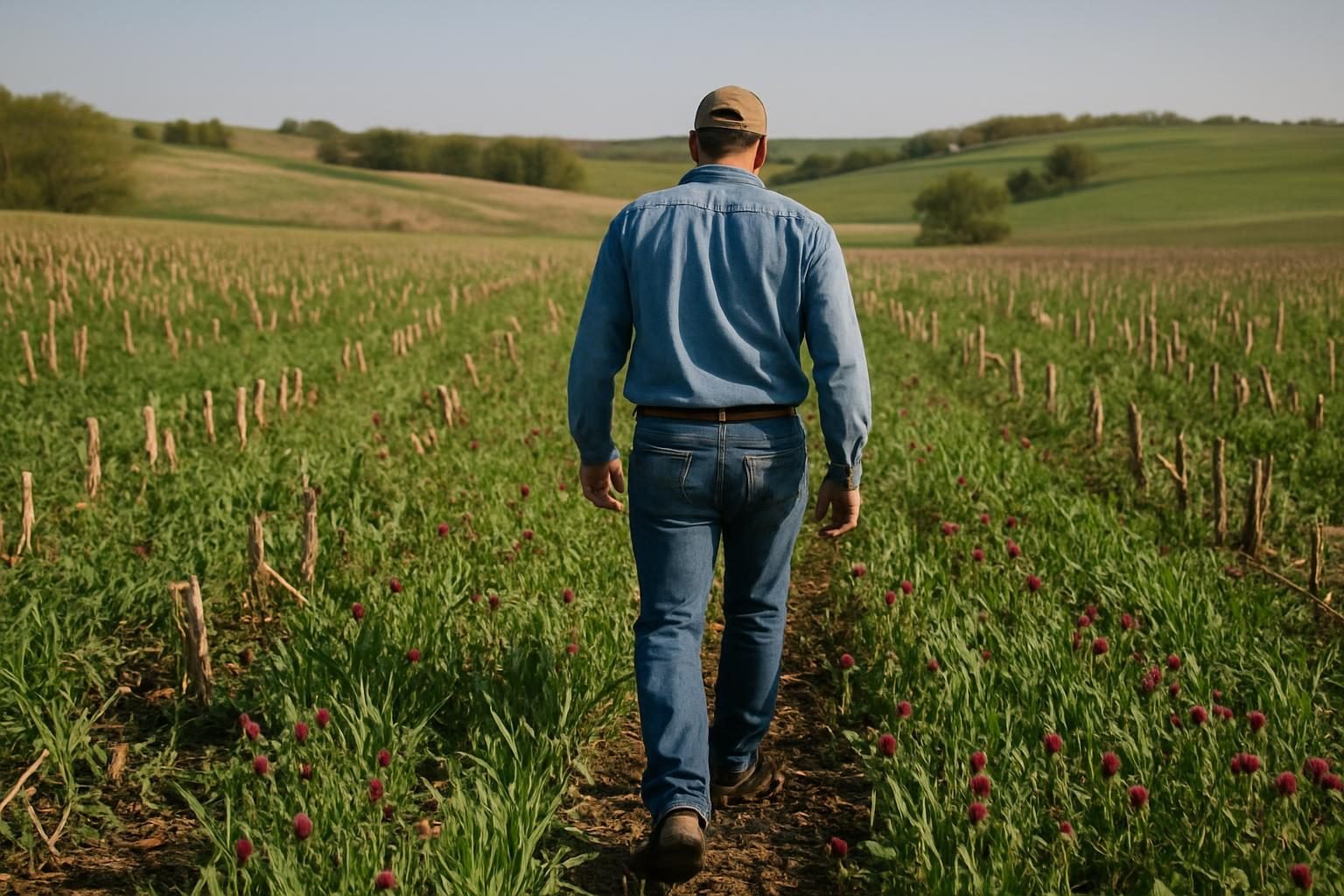
- Keep living roots in the ground as long as possible. Cover crops after harvest, winter cover where the climate allows, and interseeding cover crops into standing cash crops all extend the carbon supply. The basics of choosing and managing them are in our cover crops for beginners guide.
- Use host species in your mixes. Include grasses, cereals and legumes. If you run brassica covers, pair them with hosts rather than planting them alone year after year.
- Reduce tillage. Even a partial reduction (strip-till, fewer passes, shallower depth) helps. A roller crimper lets you terminate cover crops without disturbing the soil.
- Match phosphorus to need. Apply based on soil tests and crop removal, not habit. Where test levels are already high, skipping a year of phosphorus is often agronomically safe and may improve fungal activity. Confirm recommendations with your local extension service.
- Build organic matter. Soil organic matter and fungal networks reinforce each other. See how to increase soil organic matter for realistic timelines.
- Diversify rotations and plantings. Different host plants support different fungal species. Perennial systems such as alley cropping and well-managed pasture under rotational grazing maintain continuous root cover and are often rich in mycorrhizal activity.
- Go easy on fungicides where disease pressure allows.
Vegetable growers and gardeners can apply the same logic at small scale: mulch, avoid deep tilling beds, keep roots in the ground and use compost made well. Our hot composting guide covers the process. Note that finished compost supports soil biology generally but is not a reliable source of AM fungi; hot composting and the biology of compost tea are separate questions from mycorrhizal colonization.
Are mycorrhizal inoculants worth buying?
Commercial inoculants (spores or root fragments of AM fungi, sold as powders, granules or seed coatings) are a legitimate technology, but the evidence on field-scale returns is mixed. Reviews of trials generally find positive responses in some situations and no response in many others.
Inoculants are most likely to help when:
- The soil has been heavily disturbed or has little native inoculum, such as after construction, topsoil removal, mine reclamation or very long fallow.
- You are growing in sterile or soilless media, as in transplant production or some greenhouse and container systems.
- Soil phosphorus is low, so the fungi’s contribution matters.
- You are establishing perennials, orchards, restoration plantings or high-value transplants where a small cost per plant is acceptable.
They are unlikely to help when:
- Your soil already has a healthy native community (most established farm and pasture soils do).
- Phosphorus is high.
- You are planting non-host crops.
- The underlying problem is tillage, compaction or fallow that will keep suppressing the fungi anyway. In that case you are paying to inoculate soil you will damage again.
Practical cautions: product quality varies, spores can lose viability in storage, and the strain you buy may not outcompete or even differ from the fungi already present. Ask suppliers for independent trial data in your region and crop, and consider a small side-by-side strip trial on your own farm before committing acres. Most extension services can help you design one. In most working fields, spend on management first, and treat inoculants as a targeted tool, not a foundation. For wider context on biological claims, see our look at regenerative agriculture criticism and the evidence.
If you are compaction-limited, address that directly; hyphae cannot do much in a tight, airless soil. See our upcoming guide on how to fix compacted soil without heavy tillage.
Key takeaways
- AM fungi trade phosphorus, water and micronutrients for plant sugars, and also improve soil structure.
- Most crops are hosts; brassicas, beets and spinach are not. Avoid long runs of non-hosts.
- Tillage, bare fallow and high phosphorus are the main threats.
- Living roots year-round, diverse host plants, less disturbance and test-based phosphorus are the most reliable ways to build populations.
- Inoculants help mainly in disturbed, sterile or low-phosphorus situations. Trial before scaling up.
For more on the biology behind these practices, browse our soil health section, or start with what regenerative agriculture is and how to start.
Frequently asked questions
Do all plants have mycorrhizal fungi?
No. Around 80 percent of land plants form mycorrhizal associations, but brassicas, beets, spinach and a few other families generally do not host AM fungi. Some trees and shrubs (oaks, pines, birches) host a different type called ectomycorrhizal fungi rather than AM.
Does no-till increase mycorrhizal fungi?
Often, yes. Reducing tillage preserves the hyphal network and tends to raise colonization compared with repeated intensive tillage. The size of the effect depends on soil, climate and crop, and no-till alone does not offset long fallow or high phosphorus.
Can I add too much phosphorus for mycorrhizae?
Yes. When soil phosphorus is high, plants invest less in the fungal partnership and colonization declines. Apply phosphorus based on soil tests and crop needs, and check recommendations with your local extension office.
How long does it take to rebuild mycorrhizal populations?
It varies, but a single season of host cover crops or crops with living roots and no tillage can begin restoring inoculum. Fuller recovery after years of tillage, fallow or heavy fertilization typically takes multiple seasons.
Are mycorrhizal inoculants worth the money?
Sometimes. They are most useful in disturbed or sterile soils, soilless transplant media, restoration and perennial plantings, and low-phosphorus fields. In healthy established soils the native fungi are usually sufficient, so improving management first is the better investment.