Regenerative agriculture criticism is not something to wave away. Some of it is sharp, some of it is overdone, and a good deal of it comes from people who want the practices to work and are tired of oversold claims. Here is a fair walk through the main critiques, sorted by how well the evidence holds up.
Quick answer: The strongest criticisms of regenerative agriculture are that it has no single legal definition, that soil carbon gains are modest, uneven and reversible, and that big brands can use the word as marketing. Yield effects vary by crop and system. Benefits to soil structure, water infiltration and farm resilience are better supported than headline climate claims. The practices are worth doing, but the claims need to be calibrated.
If you are new to the idea, start with what regenerative agriculture is and how to start, then come back here to pressure-test it.
Criticism 1: “Regenerative” has no agreed definition
This one is true. There is no single legal or scientific definition of regenerative agriculture in the United States. Unlike “organic,” which is a federally regulated label, “regenerative” can mean a principles-based approach (keep soil covered, minimize disturbance, grow diverse plants, keep living roots, integrate livestock) or an outcomes-based one (measurably improving soil health, biodiversity or water quality), or it can mean whatever a company wants it to mean.
Why it matters: a farmer using cover crops and no-till on corn and soy is doing something quite different from a rancher running adaptive grazing, and both differ from a market gardener adding compost. Lumping them under one word makes comparisons and research difficult.
What to do about it: ask what practices, over what acreage and for how long. Look at real regenerative agriculture examples to see how much the word stretches. The vagueness is a real weakness, but it is a communication problem, not proof that the underlying practices fail. Our piece on soil health principles is a better anchor than any slogan.
Criticism 2: Soil carbon is overstated, hard to measure and not permanent
This is the heaviest debate, and it has several parts.
Sequestration rates are modest and variable
Research on practices like cover cropping, reduced tillage and improved grazing generally finds soil carbon gains that are real but small per acre per year, and highly dependent on climate, soil type, starting carbon and management. Humid regions with clay-rich soils tend to accumulate more than hot, dry or sandy ones. Treat any single national number with caution.
Soils saturate
Soil does not store carbon indefinitely. Gains tend to be fastest in the first years after a change in management and then slow as the soil approaches a new equilibrium, often over decades. That makes soil a useful but limited sink.
Permanence is a real concern
Carbon built up by good management can be released if the practices stop: a return to heavy tillage, a drought, a change of land ownership or a plowed-up pasture. This reversibility is why many scientists argue soil carbon should not be treated as a permanent offset for fossil fuel emissions.
Measurement is hard
Soil carbon varies a lot across a single field. Detecting a change of a few tenths of a percent requires careful, repeated sampling at consistent depths, with enough samples to beat the natural noise. Sampling only the top few inches can also mislead, because tillage and no-till redistribute carbon through the profile. See our guide to soil testing for regenerative farmers for practical sampling advice, and how to increase soil organic matter and how long it takes for realistic timelines.
For the bigger picture, see regenerative agriculture and climate change. The short version: soil carbon helps, but it does not replace cutting emissions elsewhere.
Criticism 3: Regenerative farming lowers yields
The honest answer is “it depends,” and the details matter.
- Transition years: many farmers see a dip or a bumpy stretch while they learn new weed, fertility and residue management. This is common in no-till and organic-leaning systems.
- Row crops: results vary widely. Some farmers report yields close to conventional with lower input costs; others see persistent gaps, especially in cold, wet springs where heavy residue slows soil warming.
- Grazing systems: the question is often per-acre output versus per-dollar profit. Lower stocking pressure or fewer purchased inputs can mean less product per acre but better margins.
- Profit versus yield: yield is not the same as profit. Reduced fertilizer, fuel and feed costs can offset lower output, but this is farm-specific.
The scaling critique is also fair: if every acre yielded a bit less, more land might be needed for the same food. That argument is strongest for staple crops and weakest where regenerative practices reduce losses from erosion, drought or input volatility. Evidence on both sides is mixed, and honest advisors say so. Our review of the benefits of regenerative agriculture covers where the data are stronger.
Criticism 4: Greenwashing by big brands
This criticism is well founded in principle. Large food companies and retailers have announced regenerative sourcing programs, and some are serious and farmer-supported while others are loosely defined pledges with unclear verification. Warning signs:
- No stated practices, standards or measured outcomes.
- Targets framed in “acres enrolled” with no detail on what happens on those acres.
- No third-party verification or published data.
- Farmers carrying the risk and cost while the brand keeps the marketing value.
- Climate claims based on soil carbon alone, ignoring emissions elsewhere in the supply chain.
Some third-party regenerative certifications exist, with differing standards, costs and rigor. Confirm current requirements directly with each certifier. If you sell products, see our guide to the regenerative farming business, including funding, certification and sales. Compare it with regenerative versus organic farming, since organic has a legal standard and regenerative does not.
Criticism 5: Holistic grazing claims are overblown
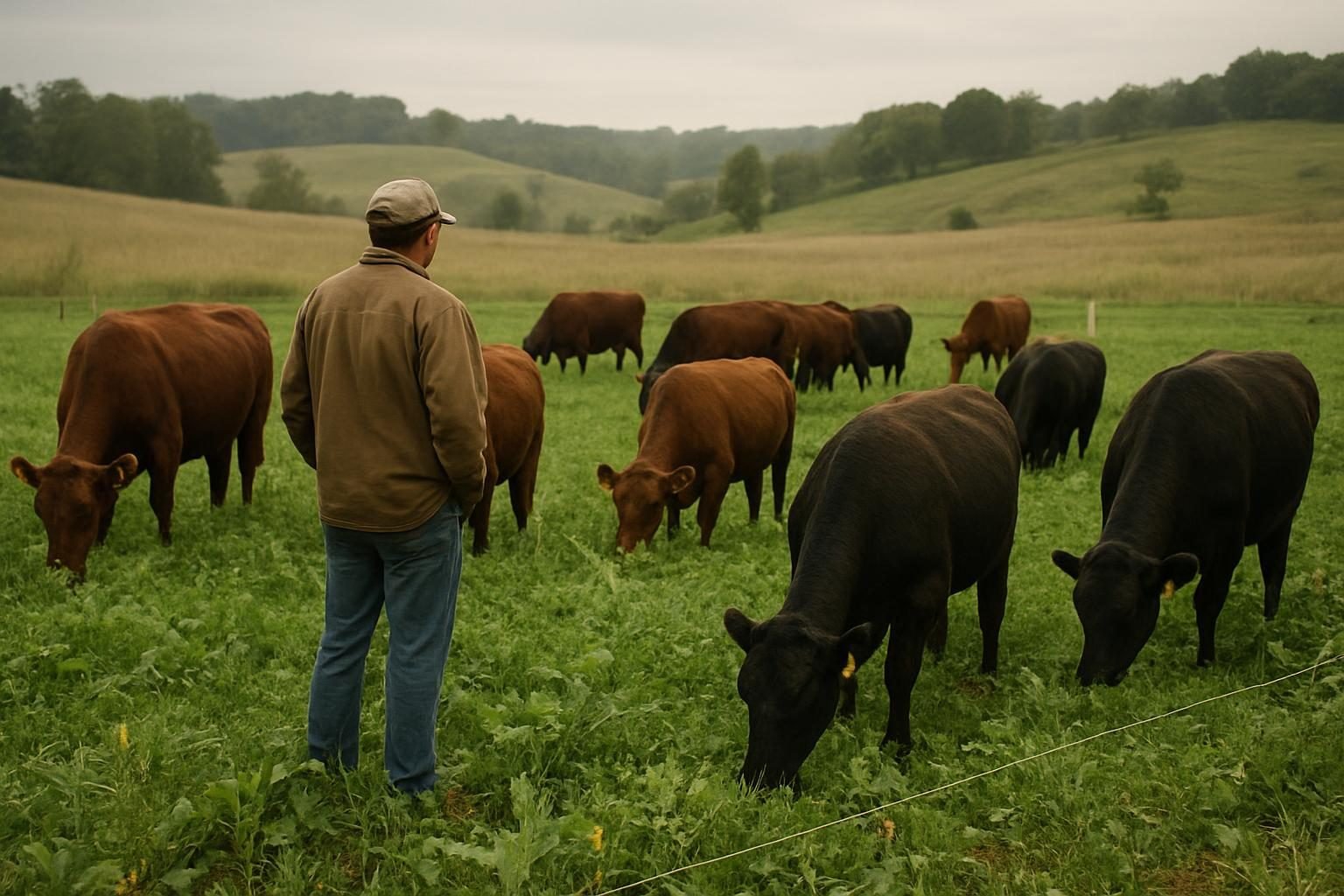
This critique has a clear scientific history. Early claims that high-density, short-duration grazing could reverse desertification and sequester huge amounts of carbon have not held up well in controlled trials, many of which have found grazing system differences to be small compared with total stocking rate and rainfall.
What is better supported: well-managed grazing that matches stocking to forage, provides rest periods and avoids overgrazing can improve forage production, ground cover, manure distribution and animal performance, particularly in humid and mesic regions. What is less certain: that any specific grazing system builds large amounts of soil carbon, or that it works the same way in arid rangeland.
Many ranchers value adaptive grazing because it gives them management control, not because of a carbon headline. Start with the basics in our complete guide to rotational and adaptive grazing, then see mob grazing explained for the high-density end of the spectrum, and bale grazing for a winter-feeding variation.
What is well supported vs. uncertain
| Claim | Evidence status | Notes |
|---|---|---|
| Cover crops and reduced tillage cut erosion and improve soil structure | Well supported | Effects depend on soil, climate and residue management |
| Better water infiltration and drought buffering | Generally supported | Strongest where soils were degraded or compacted |
| Lower input costs can improve margins | Supported on many farms | Farm-specific; transition costs are real |
| Soil carbon increases | Real but modest and variable | Saturates; reversible; hard to measure |
| Yields match conventional | Mixed | Depends on crop, region and years in the system |
| Grazing systems reverse desertification | Not well supported | Stocking rate and rainfall dominate results |
| Regenerative alone solves climate change | Not supported | Useful contribution, not a substitute for emissions cuts |
How to respond as a working farmer
- Measure your own ground. Baseline soil tests, infiltration checks and records beat borrowed claims.
- Change one thing at a time on a trial acreage so you can see what is working. Our 3-year transition plan lays out a sensible sequence.
- Sell on what you can prove: practices, records and flavor, not carbon promises.
- Check support programs. NRCS programs such as the Conservation Stewardship Program can help offset the costs of trying new practices. Confirm current details with your local NRCS office.
- Stay curious about definitions. Some farmers prefer other frames; see permaculture vs regenerative agriculture for how related approaches compare.
Key takeaways
- The definition problem is real; always ask which practices are being claimed.
- Soil carbon gains are modest, uneven, reversible and hard to measure.
- Yield and profit effects vary by crop, region and years in the system.
- Greenwashing is a legitimate concern; look for verification and transparency.
- Grazing benefits are real but often smaller than the boldest claims suggest.
- The practices are still worth pursuing for soil function, resilience and cost control.
Frequently asked questions
Is regenerative agriculture just a marketing term?
It can be, when used without specifics. But the underlying practices, such as cover crops, reduced tillage, diverse rotations and managed grazing, are well established in extension and research. Judge claims by the practices and records behind them, not the label.
Can regenerative farming really sequester carbon?
Yes, in many situations, but gains are typically modest, vary by region and soil, level off over time and can be lost if practices stop. It is a helpful benefit, not a complete climate solution.
Does regenerative agriculture reduce yields?
Sometimes, especially during the transition or in challenging climates, and sometimes not. Results depend on crop, management skill and local conditions. Compare profit, not just yield, and track your own fields.
Is holistic planned grazing scientifically proven?
Its boldest claims, such as reversing desertification or sequestering large amounts of carbon, are not well supported by controlled trials. Well-managed grazing that avoids overgrazing and allows rest does have documented benefits for forage and ground cover.
How do I spot greenwashing in regenerative products?
Look for specific practices, third-party verification, published outcomes and fair treatment of the farmers involved. Be wary of vague pledges, acreage-only metrics and climate claims that rest on soil carbon alone.