People use “regenerative” and “organic” as if they mean the same thing, and at the farmers market they often get blurred together. They are not the same, and they are not opposites either. Here is a plain comparison of regenerative vs organic farming so you can decide what each label means for your farm or your grocery cart.
Quick answer: Organic is a legally defined, federally regulated certification that restricts which inputs and practices you can use. Regenerative is a outcome-focused approach, aimed at rebuilding soil health, biodiversity and water function, with no single legal definition. A farm can be organic, regenerative, both, or neither. Regenerative Organic Certified is one label that combines the two.
Regenerative vs organic farming: the core difference
Organic in the United States means the USDA National Organic Program (NOP) standards. Certified operations follow a defined rulebook: no synthetic fertilizers, no most synthetic pesticides, no GMOs, no sewage sludge, and land that has been free of prohibited substances for three years. A USDA-accredited certifier inspects the farm every year, and the farm keeps detailed records. If you sell as “organic” above the small-farm exemption, you must be certified.
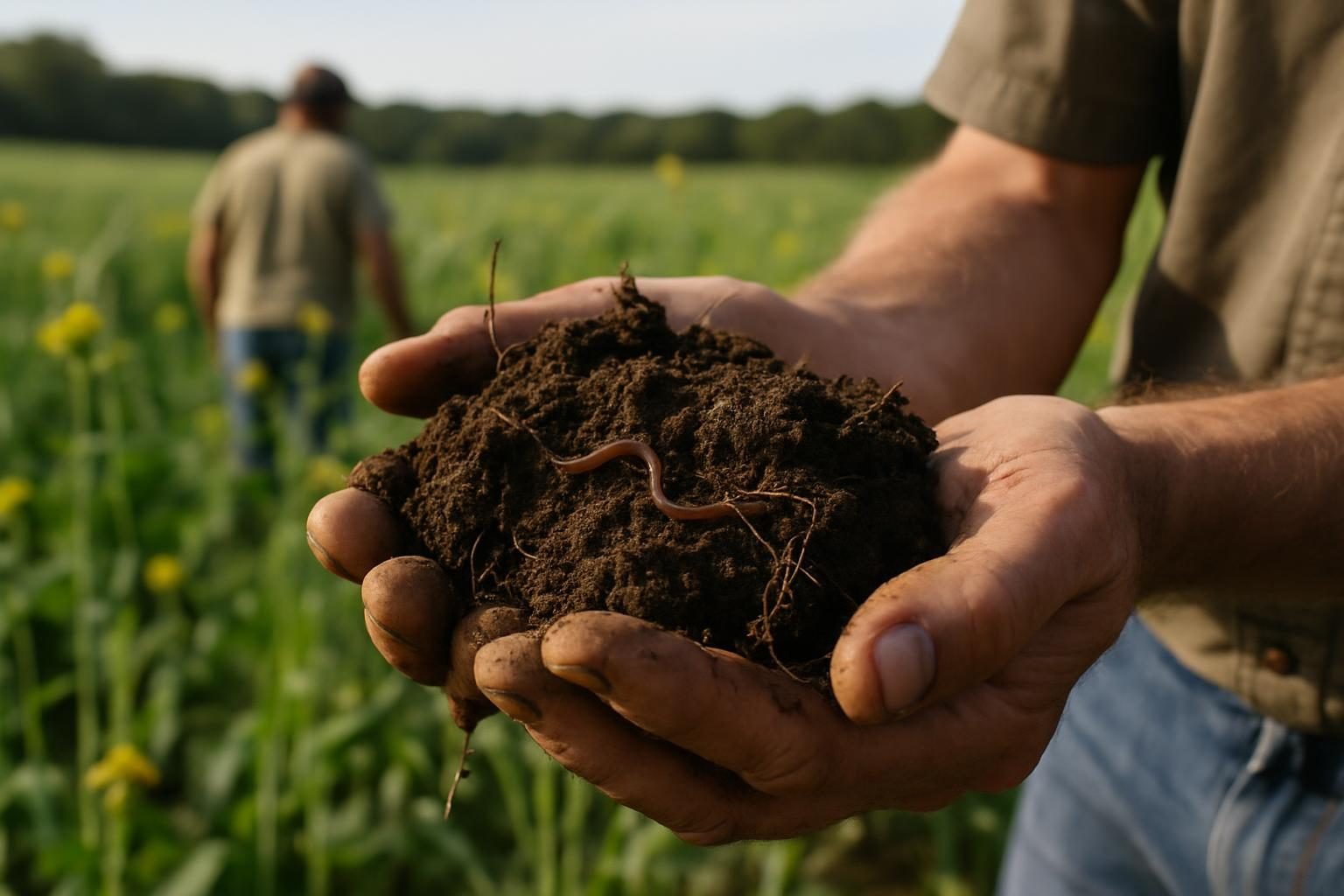
Regenerative describes a set of principles and a direction of travel. Most definitions center on keeping the soil covered, disturbing it less, growing diverse plants, keeping living roots in the ground, and integrating livestock where it fits. For the full framework, see our guide to what regenerative agriculture is and how to start.
Rules vs outcomes
This is the heart of the difference. Organic is mostly rules-based: it tells you what you may not use and what records you must keep. It does not require you to measure whether your soil is improving. Regenerative is mostly outcome-based: the goal is better soil organic matter, infiltration, biological activity and biodiversity, and the methods are flexible and depend on your climate and soils.
Each approach has a blind spot. An organic field can be tilled heavily, leave bare soil for months and still be fully compliant. A farm calling itself regenerative can use synthetic fertilizer or herbicide, for example in a no-till system, and there is no authority that decides whether the claim is fair unless a third-party program is involved.
Side-by-side comparison
| Factor | Organic (USDA NOP) | Regenerative |
|---|---|---|
| Definition | Legal standard with a federal rulebook | Set of principles; no single legal definition |
| Focus | Allowed and prohibited inputs and practices | Soil health, biodiversity, water and ecosystem outcomes |
| Tillage | Allowed; no limits or reduction requirement | Minimize disturbance; often no-till or reduced tillage |
| Synthetic fertilizer and pesticides | Prohibited, with limited exceptions on the National List | Not defined by the principles; many farmers cut back, some programs prohibit |
| Cover crops and rotation | Rotation required; cover crops common but not specifically mandated | Core practice: armor, living roots and diversity |
| Livestock | Organic feed, no routine antibiotics or added hormones, pasture access rules for ruminants | Often adaptive grazing and integration with crops; no universal rule |
| Certification | USDA-accredited certifiers; annual inspection | Voluntary third-party programs, or none at all |
| Cost | Certification fees, record keeping, transition years | Varies widely; changes in equipment, seed, fencing and management |
| Consumer clarity | High: one recognized seal | Lower: claims vary, so ask what is behind them |
How they differ in practice
Tillage and soil
Because synthetic herbicides are off the table, many organic vegetable and grain growers rely on tillage and cultivation for weed control and seedbed preparation. That works, but repeated tillage can break down soil aggregates, speed up organic matter loss and leave soil exposed to erosion, especially on sloping ground in the humid East or on windy plains.
Regenerative systems try to reduce that disturbance. Common tools include no-till drills, roller-crimpers, strip-till, cover crops terminated by grazing or rolling, and mulches on small farms. Organic no-till is hard, and results depend on region, weed pressure and equipment, so many farms settle on reduced tillage rather than none. The soil health principles are a good lens for deciding which disturbance is worth it on your ground.
Inputs
Organic limits you to approved inputs: compost, manure (with application-interval rules), approved mineral amendments and certain botanical or biological pest controls. “Natural” does not mean harmless. Some permitted inputs, like copper or sulfur sprays, can accumulate or hurt soil life if overused.
Regenerative thinking asks a different question: can biology and management replace this input over time? Cover crop mixes, diverse rotations and well-managed grazing can reduce fertilizer and pesticide needs, but the timeline is usually years, not one season. Some farmers still use targeted synthetic nitrogen or a burndown herbicide as they transition. Others, especially under stricter third-party programs, do not.
Livestock
Organic livestock rules cover feed, health care and living conditions. Ruminants must have pasture access during the grazing season, with a minimum share of their diet from pasture. These rules say little about how grazing is managed, so an organic herd can still overgraze a pasture, unlike adaptive multi-paddock grazing systems that actively manage rotations.
Regenerative livestock management focuses on the land: moving animals often, allowing long recovery periods, matching stocking rates to forage, and putting manure and trampled residue back into the soil. Our complete guide to rotational and adaptive grazing covers fencing, water, paddock design and recovery periods. Note that an animal can be raised under organic rules without ever touching well-managed pasture, and a well-grazed regenerative ranch may not be certified organic.
Where regenerative and organic overlap
Many organic practices support regenerative goals: crop rotation, compost, no synthetic nitrogen, diversified production and attention to biology instead of quick chemical fixes. A farm that is organic and also uses cover crops, low-disturbance tillage and managed grazing is doing both.
That overlap is the idea behind Regenerative Organic Certified (ROC), a third-party certification from the Regenerative Organic Alliance. It requires USDA Organic certification as a foundation, then adds requirements for soil health, animal welfare and social fairness for workers. If you want a seal that covers both rules and outcomes, this is the best-known example. Other third-party regenerative programs exist, with different standards, so read each program’s requirements and confirm current details with the program itself.
For a look at what combined systems look like on the ground, watch for our upcoming roundup of regenerative agriculture examples.
Certification and cost
Organic: Expect certifier application and annual fees, inspection costs, an organic system plan and detailed record keeping. Fees vary by certifier and farm size, commonly from a few hundred dollars to a few thousand dollars a year. Those are rough estimates, so get quotes from several accredited certifiers. Cost-share help for certification has been available through USDA, but programs and rates change, so confirm with your local FSA office or the USDA. The bigger expense is often the three-year transition and the extra labor or cultivation equipment for weed control. Organic products usually earn a price premium, but premiums fluctuate by crop and market.
Regenerative: With no mandatory certification, you can start without paying anyone. The real costs are changes in management: a no-till drill or roller, cover crop seed, fencing and water for adaptive grazing, soil testing and learning time. Third-party regenerative labels add audit fees and, in some cases, a price premium, though the market for them is still developing. Programs such as NRCS conservation practice payments may help offset costs for practices like cover crops or prescribed grazing; check current availability with your local NRCS office. For funding, sales channels and certification options, see our guide to the business of regenerative farming.
Pros and cons
Organic
- Pros: clear legal definition, consumer recognition, established markets and buyers, strong restrictions on synthetic inputs, annual third-party verification.
- Cons: no soil health or tillage requirements, paperwork burden, transition period, weed control can be labor- or tillage-intensive, yields can be lower in some crops and regions.
Regenerative
- Pros: flexible to your climate and soils, focuses on soil function and resilience, can cut input costs over time, fits grazing and mixed systems well. The benefits of regenerative agriculture include better water infiltration and potential for more stable yields, though results vary.
- Cons: no single standard, so claims can be vague or misleading; outcomes take years to measure; a learning curve and management intensity; fewer established premium markets. Read our overview of regenerative agriculture criticism for the main debates and what the evidence says.
Which fits your farm?
You do not have to pick a side. Here is a practical way to decide:
- Know your market. If your buyers ask for the USDA Organic seal, that decides much of the question. If they care about practices and story, direct sales may let you explain regenerative methods without certification.
- Look at your biggest soil problem. Erosion and compaction point toward cover crops, reduced tillage and grazing. Chemical dependence points toward organic transition or input reduction.
- Start with practices, not labels. Add cover crops, extend rotations, and test soil to establish a baseline before you decide on any certification.
- Price the paperwork. Request quotes from certifiers and ask what records they require before committing.
- Plan the transition. Change one field or enterprise at a time. Our upcoming guide on how to transition to regenerative agriculture lays out a multi-year path.
If you are a consumer, look past the word on the package. Organic tells you about inputs. A regenerative claim is worth asking about: who verifies it, and which practices does it require? You can browse more explainers in our Regenerative Agriculture 101 category.
Key takeaways
- Organic is a legal, rules-based certification; regenerative is an outcome-focused approach without a single legal definition.
- Organic restricts inputs but does not require reduced tillage or soil improvement; regenerative targets soil health but may allow some conventional inputs.
- The two can overlap, and Regenerative Organic Certified is built on USDA Organic plus added soil, animal welfare and social requirements.
- Organic costs are mostly fees, records and transition; regenerative costs are mostly equipment, seed, fencing and learning.
- Check the standard behind any label, and confirm current program details with the certifier or agency.
Frequently asked questions
Is regenerative farming better than organic?
Neither is better in every case. Organic gives you a verified, consistent standard on inputs. Regenerative targets soil and ecosystem function but varies by farm. The best results for soil and the environment often come from combining organic-style input discipline with regenerative practices like cover crops, low disturbance and managed grazing.
Can a farm be both organic and regenerative?
Yes. Many farms are. A certified organic operation that uses diverse rotations, cover crops, reduced tillage and adaptive grazing meets both ideas. Regenerative Organic Certified is a formal label for farms that meet USDA Organic plus additional soil health, animal welfare and social fairness requirements.
Is regenerative agriculture always pesticide-free?
No. The core principles do not prohibit synthetic pesticides or fertilizers, and some regenerative farmers use them selectively, such as in a no-till system. Some third-party regenerative programs set stricter limits, so check the specific standard if pesticide use matters to you.
Is there an official certification for regenerative agriculture?
There is no federal USDA regenerative certification at this time. Several private third-party programs exist, including Regenerative Organic Certified, each with its own standards and fees. Requirements change, so confirm current details directly with the program.
Does regenerative farming cost more than organic?
It depends. Regenerative practices can cost less in purchased inputs over time but may require upfront spending on equipment, seed and fencing. Organic adds certification fees and record keeping. Your crop, region and scale matter more than the label, so run the numbers for your own operation.