If you are new to cover crops, the options can feel endless: dozens of species, a pile of seed catalogs and plenty of strong opinions. This guide covers cover crops for beginners in plain terms, so you can pick a species, get it planted at the right time and end it without a mess.
Quick answer: A cover crop is a plant grown to protect and feed the soil between cash crops. Start with one clear goal (erosion control, nitrogen, weed suppression, forage or compaction relief), pick a species from the grass, legume, brassica or broadleaf family that fits your planting window, seed it at the rate your extension office recommends, and plan how you will terminate it before you plant. Begin on a small field and learn from it.
Why use cover crops?
Bare soil is exposed soil. Rain beats it, wind moves it, and the sun heats it. Living roots feed soil organisms, hold aggregates together and keep nutrients from leaching out between crops. This is one of the core practices of regenerative agriculture, which aims to keep living roots in the ground as much of the year as possible.
Common benefits, depending on species and management:
- Erosion control: Residue and roots protect the surface from rain and wind.
- Weed suppression: Thick stands and mulch residue shade out many weeds.
- Nitrogen supply: Legumes fix atmospheric nitrogen, and part of it becomes available to the next crop.
- Nutrient scavenging: Grasses and brassicas capture leftover nitrogen before it leaches.
- Soil structure: Roots open channels and add organic matter over time.
- Forage: Many covers can be grazed, which fits well with rotational grazing.
There are trade-offs. Seed, labor and equipment time cost money. A cover can use soil moisture, which matters in the arid West and in dry springs anywhere. A poorly terminated cover can hurt the next crop’s stand. Benefits like organic matter gains build slowly, so treat cover cropping as a multi-year investment, not a one-season fix.
Choosing cover crops for beginners: the four main families
Nearly every cover crop falls into one of four groups. Each does a different job, and many farmers eventually blend them (see our upcoming guide to cover crop mixes).
| Family | Examples | Best at | Watch out for |
|---|---|---|---|
| Grasses | Cereal rye, oats, winter wheat, annual ryegrass | Erosion control, scavenging nitrogen, biomass, weed suppression | Can tie up nitrogen briefly; rye can be tough to terminate late |
| Legumes | Crimson clover, hairy vetch, Austrian winter pea, cowpea, red clover | Nitrogen fixation, forage quality | Slower, pricier to establish; nitrogen credit varies a lot |
| Brassicas | Daikon radish, turnip, rapeseed | Fast fall growth, scavenging, grazing, breaking up shallow compaction | Little residue; decomposes quickly; shares pests and disease with other brassica crops |
| Broadleaves (non-legume) | Buckwheat, phacelia, sunflower | Quick summer cover, pollinator habitat, smothering weeds | Buckwheat can reseed if allowed to set seed |
Grasses: the easy starting point
Cereal rye is the beginner favorite because it is cheap, cold-hardy and forgiving about planting date. Oats are a good choice if you want something that winter-kills in cold climates and needs no termination.
Legumes: nitrogen and forage
Legumes work best when seeded early enough to establish before winter, and they are often mixed with a grass. Check whether your seed needs an inoculant (a rhizobia bacteria coating) matched to the species. Without it, nodulation can be poor.
Brassicas and broadleaves: specialists
Radishes and turnips grow fast in fall and can make excellent grazing. Buckwheat fills a short summer gap in market gardens in about 30 to 40 days. If compaction is your main problem, read our upcoming guide on how to fix compacted soil, since cover crops help but are rarely the whole answer.
When to plant cover crops
Timing matters more than species. A cover needs enough growing days, warmth and moisture to establish. Typical windows:
- Fall (most common): Seed after harvest or before it, from late summer to early fall. Cereal rye can go in later than most other species, sometimes well into the fall in the Corn Belt, though growth will be modest.
- Spring: Oats, peas and clovers can be seeded early for quick biomass or nitrogen before a summer crop.
- Summer: Buckwheat, cowpea, sorghum-sudangrass and sunn hemp suit hot-season gaps, especially in the South and in market gardens.
- Interseeded: Seeded into a standing crop. This takes more management; see our upcoming article on interseeding cover crops into corn and soybeans.
Regional notes: in the humid East, fall rains help establishment but wet fields can delay harvest and seeding. In the Corn Belt, a short window after corn or soybeans makes rye and oats the practical choices. In the South, long seasons allow winter legumes and summer covers. In the arid West, irrigation or moisture availability decides what is realistic, and a cover may need to be terminated early to save water.
Count backward from your first expected hard frost, and ask your local extension office or NRCS field office for species and seeding dates for your county.
Seeding methods and typical rates
You have three main options:
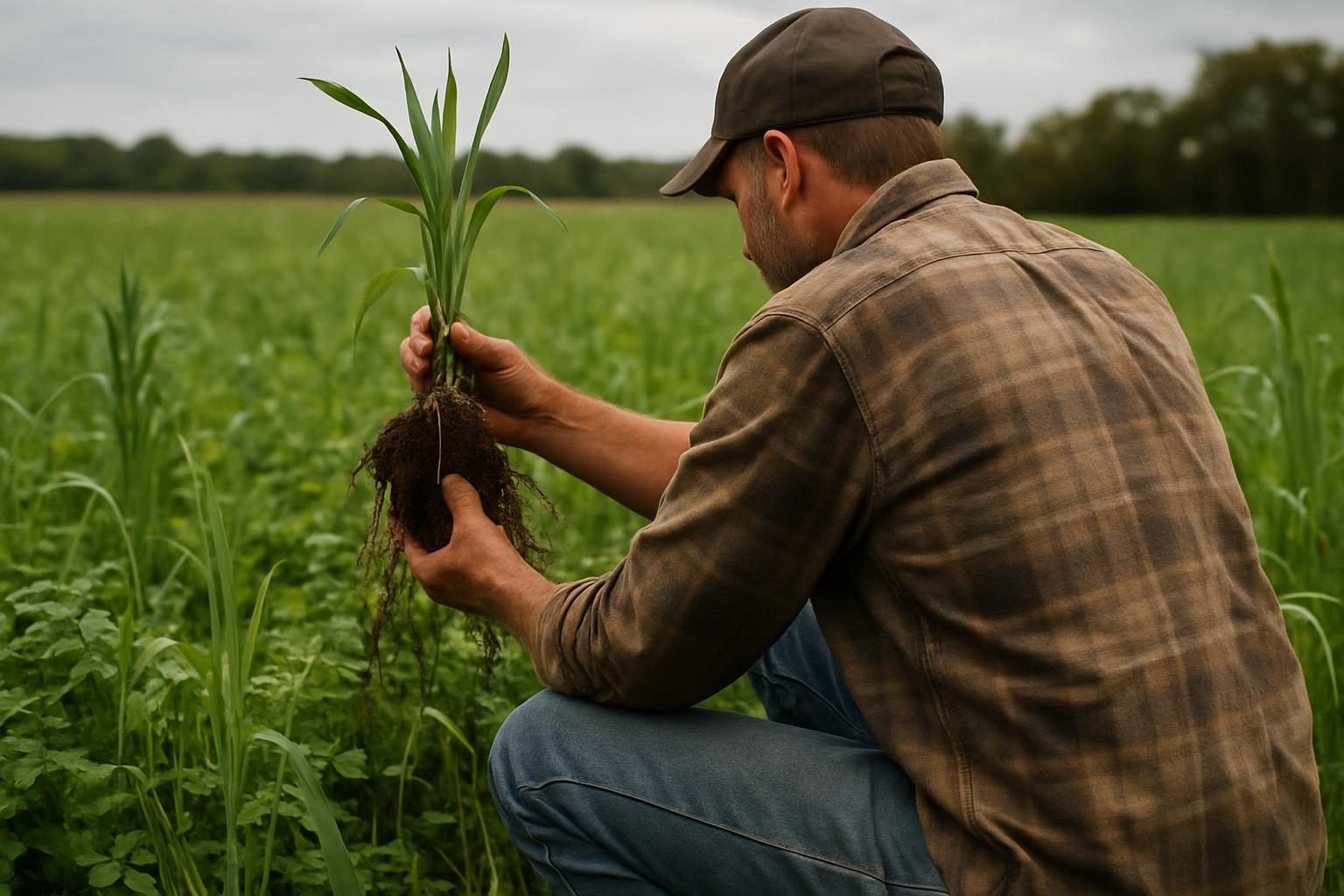
- Drilling: Best seed-to-soil contact and the most consistent stands. A no-till drill is ideal, and many conservation districts rent them out.
- Broadcasting: Spread by hand, spinner or airplane. Raise rates by roughly 25 to 50 percent over drilled rates, and follow with light incorporation or a rain if you can.
- Aerial or high-clearance seeding: Used to get seed in before harvest. Results depend heavily on rainfall after seeding.
Typical drilled rates are below. Treat them as ranges and confirm for your region and goal, as mixes need lower rates for each component.
| Species | Typical drilled rate (lb/acre, pure stand) | Seeding depth |
|---|---|---|
| Cereal rye | 60 to 120 | 0.75 to 1.5 in. |
| Oats | 40 to 80 | 0.75 to 1.5 in. |
| Crimson clover | 12 to 18 | 0.25 to 0.5 in. |
| Hairy vetch | 15 to 30 | 0.5 to 1 in. |
| Austrian winter pea | 30 to 60 | 1 to 2 in. |
| Daikon radish | 4 to 10 | 0.25 to 0.5 in. |
| Buckwheat | 40 to 60 | 0.5 to 1 in. |
Before you buy, run a soil test if you have not recently. It will not tell you which cover crop to plant, but it will flag pH or fertility problems that could hold back establishment.
How to terminate cover crops
Termination is where beginners get into trouble, so decide your method before you seed. The right choice depends on species, equipment, your cash crop and your values.
Winter kill
Oats, radishes, turnips and some other species die when temperatures fall low enough, often somewhere in the teens to low 20s °F depending on the species. Winter kill needs no extra work, but it only works in colder climates and leaves less residue for spring weed control.
Roller crimping
A roller crimper flattens and crimps the stems, forming a mulch mat. It works best on cereal rye at flowering (pollen shed) and on hairy vetch at late bloom. Crimping too early often fails to kill the crop. It fits well with no-till farming systems, though results vary and many farmers combine it with other tools.
Grazing
Livestock can terminate or reduce a cover while turning it into income. Graze in a controlled way through adaptive multi-paddock grazing, leave enough residue to protect the soil, and keep animals off wet ground. Brassicas and oat-pea mixes are popular for this.
Herbicide
Many conventional and no-till farmers terminate with a burndown herbicide. It is reliable and fast, but it adds cost and may not suit organic or herbicide-free systems. Follow the label and local regulations, and confirm with your extension office or certifier if you hold a certification (see our comparison of regenerative vs organic farming).
Tillage
Incorporating a cover with a disc, tiller or plow works on any species and is common in vegetable production. It also releases nutrients quickly, but it disturbs soil life and structure and can leave soil bare, so many growers use shallow, minimal passes.
Whatever you choose, allow time between termination and planting, often two to four weeks for a heavy grass or legume cover, so decomposition does not compete with seedlings.
Common beginner mistakes
- Planting too late. A thin stand does little. Move your seeding date earlier, or switch to a hardier species like rye.
- Starting too big. Try one field or a few beds first and learn your own timing, seed and equipment needs.
- No clear goal. “Soil health” is too vague. Name the job: nitrogen, weeds, forage or erosion.
- Letting rye get too tall. Rye can head out and become hard to manage quickly in spring. Plan to terminate on time.
- Skipping inoculant on legumes. Poor nodulation means little nitrogen.
- Poor seed-to-soil contact. Broadcast seed sitting in thick residue may never germinate.
- Ignoring the next crop. A cover that delays planting or harbors pests can cost more than it gives.
- Expecting instant results. Gains in soil organic matter take years, not months.
NRCS cost-share and funding
Seed and equipment costs are the biggest barrier for many beginners. The USDA Natural Resources Conservation Service (NRCS) offers technical help and financial assistance for conservation practices, including cover crops, through programs like EQIP and CSP. Payment rates, eligibility rules, practice standards and application deadlines change and vary by state, so contact your local NRCS field office or conservation district and confirm current details before you plan your budget. State programs, crop insurance incentives and some buyers may also offer support. For more options, see our guide to the business of regenerative farming or browse the soil health section.
Key takeaways
- Choose one clear goal first, then pick a species or family to match it.
- Grasses are the easiest start; legumes add nitrogen; brassicas and broadleaves fill special roles.
- Timing beats fancy mixes. Count back from your first frost and seed early.
- Drilling gives better stands than broadcasting, which needs higher rates.
- Decide how you will terminate the cover before you seed it.
- Start small, keep notes and check with extension and NRCS for local advice and funding.
Frequently asked questions
What is the easiest cover crop for a beginner?
Cereal rye is often the easiest. It is inexpensive, germinates in cool weather, tolerates late planting and suppresses weeds well. Oats are another easy option in cold regions because they winter-kill and need no termination.
How much do cover crops cost?
Costs vary widely with species, seed prices, your equipment and labor. Grasses are generally the least expensive, and legumes and specialty seed cost more. Ask local seed dealers for current quotes and check whether NRCS or state programs can offset the cost.
Can I plant cover crops in a small garden or urban lot?
Yes. Broadcast buckwheat in summer gaps, or sow oats, crimson clover or rye in fall, then chop and drop or shallowly turn them in before planting. Hand seeding at slightly higher rates and raking in lightly works well in beds.
Do cover crops use too much water?
They can, especially in dry regions or springs. Covers also improve infiltration and reduce evaporation under residue, so the net effect depends on climate and management. In drier areas, terminate earlier and consult your local extension service.
How long until I see results?
Erosion and weed benefits show up the first season. Changes in soil structure and organic matter usually take several years of consistent cover cropping, and results depend on your soil, climate and management.