Hauling in yards of bagged soil is expensive, and the pile of dirt already sitting in your yard looks tempting. The honest answer is that dirt for raised beds can absolutely come from your own backyard, but only if it passes a few simple checks and gets the right amendments.
This guide walks through when native soil works, when it does not, how to test it for drainage, compaction and contamination, and how to turn mediocre yard dirt into a living, productive bed mix.
Quick answer: You can use yard dirt in raised beds if it drains reasonably well, is free of contaminants, and has been tested for pH, nutrients and lead. Most native soil works best blended, typically 30 to 50 percent native soil with 30 to 50 percent finished compost plus coarse material such as sand, leaf mold or biochar for drainage. Skip it if the site is a former industrial lot, old orchard, or near a painted pre-1978 building without testing first.
Why Native Soil in a Raised Bed Behaves Differently
A raised bed is a contained, elevated block of soil. That changes how water and air move through it. In the ground, water drains down into a deep profile and roots can wander into the subsoil. In a bed that is 8 to 12 inches deep, the soil above the bottom edge can hold water if it is heavy, or dry out fast if it is sandy.
Clay-heavy yard dirt packed into a bed can behave like a bathtub: dense, slow to drain and prone to compaction once wet. Very sandy dirt can behave like a sieve, losing water and nutrients quickly. Neither is hopeless, but both need adjustment.
Beds with open bottoms set directly on the ground usually drain better than beds sitting on pavement, landscape fabric or compacted fill, because water and roots can move into the soil beneath. If your site has a high water table or hardpan, see our guide on how to improve soil drainage without heavy equipment before you build.
When Yard Dirt Works Well in Raised Beds
Native soil is a good candidate when most of these are true:
- Loam or loamy texture. It crumbles when moist and holds together loosely when squeezed.
- Known history. Lawn, pasture or garden with no history of heavy chemical use, fill dirt, or industrial activity.
- Reasonable drainage. Water does not sit for hours after a rain.
- Visible life. Earthworms, fine roots and a dark topsoil layer.
- Clean test results. Lead and other metals below recommended thresholds.
Healthy native topsoil carries a living community of bacteria, fungi and other organisms. Starting with it, rather than a sterile commercial mix, gives you a head start on biology. If you want the background on why that matters, read our explainer on the soil microbiome and how mycorrhizal fungi support crops.
When Yard Dirt Is a Bad Idea
Some situations call for skipping native soil or at least testing hard before using it:
- Subsoil from excavation. Dirt dug from a foundation, pool or basement is typically low in organic matter and biology.
- Near old painted buildings. Homes built before 1978 may have lead paint residue in the soil around the foundation.
- Along busy roads. Legacy leaded gasoline and vehicle residues can accumulate in roadside soil.
- Former orchards, rail yards or industrial sites. These can carry arsenic, heavy metals or petroleum residues.
- Heavy weed seed or persistent perennial weeds. Bindweed, Bermuda grass and quackgrass can regrow from fragments.
- Soils treated with persistent herbicides. Some herbicides can persist in compost, manure and soil and damage tomatoes, beans and other sensitive crops.
If any of these apply, either import clean material or have the soil professionally tested before planting food crops.
How to Test Yard Dirt Before You Fill
Testing takes a few minutes for the simple checks and a few weeks for lab work. Do both if you plan to grow food.
Quick field tests
| Test | How to do it | What it tells you |
|---|---|---|
| Squeeze test | Squeeze a handful of moist soil, then poke it. | Crumbles easily: good loam. Holds a slick ribbon: heavy clay. Falls apart immediately and feels gritty: sandy. |
| Jar settling test | Fill a jar one-third with soil, add water and a pinch of dish soap, shake, and let it settle for 24 to 48 hours. | Layers of sand, silt and clay show the rough proportions. |
| Percolation test | Dig a hole about 12 inches deep, fill with water, let it drain, refill and time the second fill. | Water dropping around 1 to 3 inches per hour is a common target; much slower suggests drainage trouble. |
| Compaction check | Push a screwdriver or rod into moist soil. | Hard resistance within a few inches signals compaction. |
Lab testing
A basic soil test from your state land-grant university extension or a reputable commercial lab typically reports pH, organic matter, major nutrients and cation exchange capacity. For food gardens, add a heavy-metals screen, especially lead, if the site has any of the risk factors above. Labs and extension offices publish their own guidance on safe levels, so confirm current thresholds with them rather than relying on a single number.
For a deeper look at what different tests measure, including biological tests, see soil testing for regenerative farmers. If you are new to the vocabulary, our guide to what soil health is and how to measure it is a good starting point.
How to Amend Yard Dirt for Raised Beds
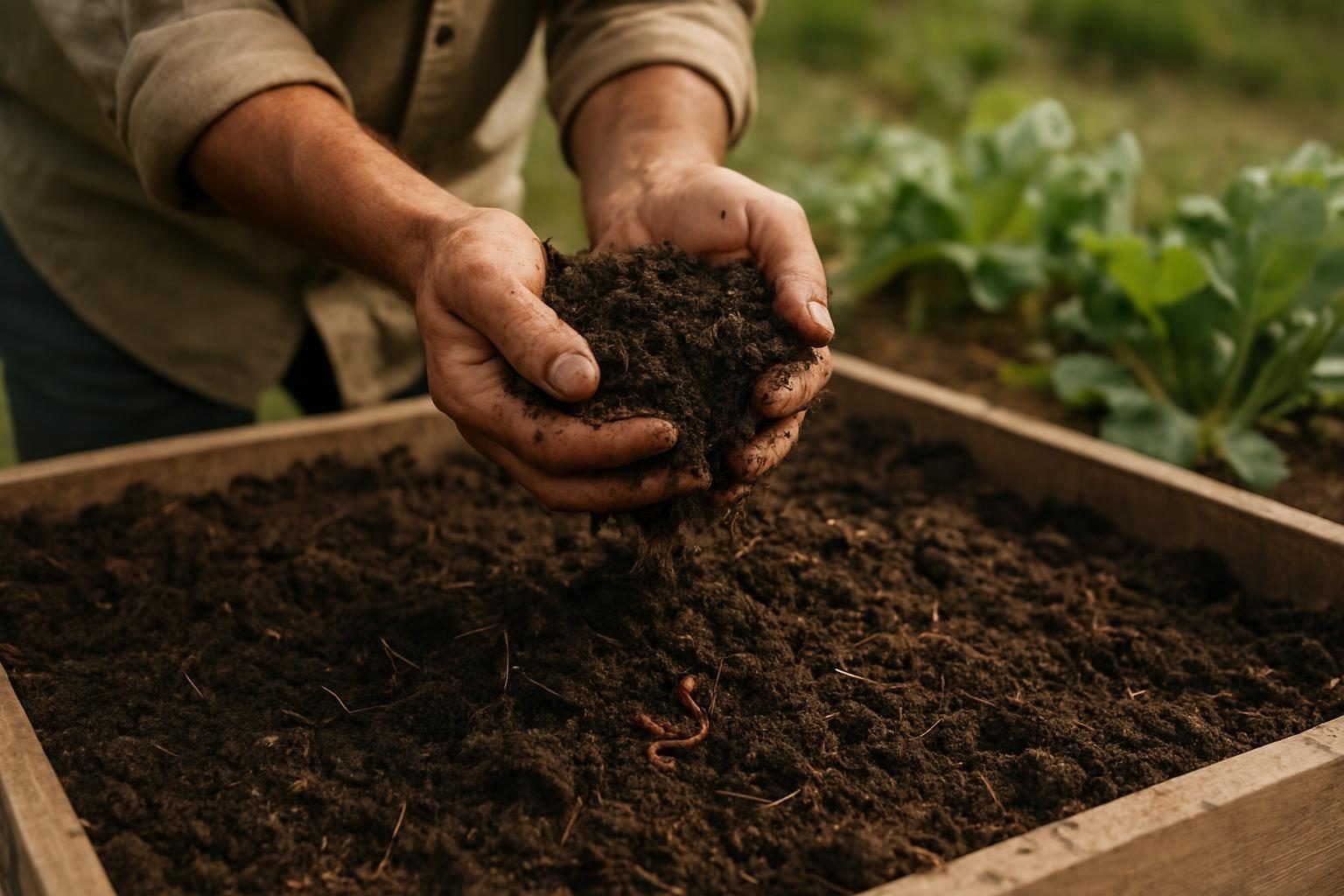
Once your soil passes the safety checks, the goal is a loose, crumbly, biologically active mix. Here is a practical process.
- Clear the source area. Strip sod and remove rocks, roots and persistent perennial weeds. Shake or screen out clods.
- Choose your ratio. A common starting point is about one-third native soil, one-third finished compost and one-third drainage or structure material, adjusting for your soil type (see table below).
- Mix on a tarp or in the bed. Blend thoroughly in layers rather than leaving pockets of pure compost or pure clay.
- Do not walk on the bed. Foot traffic undoes your work. Use stepping stones or keep beds narrow enough, usually about 4 feet wide, to reach from the edges.
- Water and settle. Beds typically drop several inches in the first season. Top off with compost.
- Mulch the surface. A couple of inches of leaves, straw or wood chips protects structure and feeds soil life.
Amendment guide by soil type
| Native soil | Main problem | Best amendments |
|---|---|---|
| Heavy clay | Poor drainage, compaction, slow warming | Plenty of compost, leaf mold, coarse bark fines, biochar. Avoid adding fine sand alone, which can create a concrete-like mix. |
| Sandy | Fast drainage, low nutrients | Compost, leaf mold, a little aged manure, biochar to help hold water and nutrients. |
| Silty loam | Crusting and compaction when wet | Compost and mulch, coarse organic matter for structure. |
| Loam | Usually fine | Maintenance compost each season. |
What to add and why
- Finished compost. Supplies slow-release nutrients, organic matter and biology. Use mature, dark, earthy-smelling material. If you make your own, our upcoming guide on composter types compared can help you pick a system.
- Leaf mold and shredded leaves. Excellent for water holding and soil structure. See fall leaves for mulch, leaf mold and compost carbon.
- Biochar. Can improve water and nutrient retention in sandy soils, but it should be pre-charged with compost or nutrients and used in modest amounts. Read biochar for soil: benefits, limits and how to use it, and look for guidance on biochar for sale quality before you buy.
- Aged manure. Useful nutrients, but it must be properly composted. See our upcoming piece on composting chicken manure for safe handling.
Be cautious with bagged “topsoil” and bulk compost of unknown origin. Ask suppliers what the material is made from, and if you grow sensitive crops, consider a small bioassay: plant a few bean or pea seeds in a pot of the mix and watch for twisted, stunted growth.
Fixing Compaction and Drainage Problems
If your native soil is compacted or the bed sits on hard ground, loosen the base before filling. Use a broadfork or garden fork to open the soil 8 to 12 inches below the bed footprint without flipping it. Our guide on how to fix compacted soil without heavy tillage covers tools and timing.
For clay sites, living roots do some of the best long-term work. Between crops, sow cover crops for clay soil or a green manure, then chop and drop or turn it in. Over several seasons, steady organic matter additions matter more than any single amendment; see how to increase soil organic matter for realistic timelines.
Native Soil, Potting Mix or a Blend?
There is no single right answer. Pure potting mix is light and clean but can dry out quickly, costs more per cubic foot and may lack the mineral fraction of real soil. Pure native soil is cheap but variable. Many growers land on a blend: native topsoil that has tested clean, plus compost, plus a coarse component. We compare the options in detail in potting mix vs garden soil in raised beds.
Planning quantities? Our upcoming guide on raised bed soil volume will help you calculate how much you need, and the soil for garden beds article will weigh amending native ground against bringing in new material. If you are filling tall beds on a budget, see how to fill a raised bed cheaply with layers of logs and leaves.
Regional Notes
- Humid East and Southeast: Heavy red clays and high rainfall make drainage and organic matter the priorities. Raise beds higher and mulch heavily.
- Corn Belt and Midwest: Many yards sit on productive loams, but fill dirt around newer construction can be compacted subsoil. Test before trusting it.
- Arid West and Southwest: Alkaline, low-organic-matter soils benefit from compost and mulch to hold water. Watch salinity and pair beds with efficient watering, such as drip irrigation.
- Cold northern regions: Raised beds warm earlier in spring, which is a real advantage, but dry out faster. Mulch and compost help buffer swings.
For more on growing food in small spaces, see our hub on small-scale regenerative farming, and explore the full soil health guide for the bigger picture.
Key Takeaways
- Yard dirt can work in raised beds if it drains reasonably, is free of contamination and is amended.
- Always test, especially for lead and other metals, if the site is near old buildings, roads or former industrial use.
- Blend native soil with finished compost and coarse material instead of filling beds with a single ingredient.
- Loosen compacted ground beneath the bed and avoid walking on the soil.
- Keep adding organic matter and mulch every season; soil improves over time, not in one fill.
Frequently asked questions
Can I just fill a raised bed with dirt from my yard?
You can, but it is rarely the best result on its own. Straight native soil often compacts in a bed, and it may carry weeds or contaminants. Test it, then blend it with finished compost and a coarse material so it drains and holds air.
What is the best ratio of native soil to compost?
There is no single ideal, but a common range is roughly 30 to 50 percent native soil and 30 to 50 percent compost, with the remainder as drainage or structure material like leaf mold, bark fines or biochar. Use less compost in rich loam and more in heavy clay or sand, and avoid going above about half compost, which can cause shrinkage and nutrient imbalances.
How do I know if my yard soil is contaminated?
Look at the site history: old paint, treated lumber, roadside location, former orchard or industrial use all raise flags. The only reliable way to know is a lab test for heavy metals such as lead. Your state extension service can point you to labs and explain how to interpret results.
Is it safe to grow vegetables in soil that tests high for lead?
Not without precautions. If lead is elevated, consider importing clean soil, using barriers, favoring fruiting crops over leafy and root crops, and washing produce carefully. Follow your extension or health department guidance, since safe thresholds and recommendations can vary.
Should I use landscape fabric under a raised bed?
Generally no. Fabric blocks roots, worms and water movement and can eventually clog. If you need weed control, lay down plain cardboard, which breaks down and feeds soil life, and loosen the ground underneath first.