Fill a raised bed with straight potting mix and it will drain beautifully, then sink a foot in two seasons and cost you a small fortune. Fill it with straight garden soil and it may pack down like concrete. The answer for most beds is neither one alone, and this guide shows you why.
Quick answer: Use potting mix for containers, seed starting and very shallow beds. Use native garden soil only as a minor component of a blend, and only if it is not heavy clay or contaminated. For most raised beds, the best choice is a blend of roughly 50-60% screened topsoil or loam, 30-40% finished compost, and 5-15% aeration material such as pumice, coarse sand or composted bark. That blend drains well, holds nutrients, costs far less than filling a bed with potting mix, and settles predictably.
What Is the Difference Between Potting Mix, Garden Soil and Raised Bed Mix?
The terms get used loosely at garden centers, so start with what each product usually is.
Potting mix
Potting mix (often called potting soil) is usually soilless. The base is peat moss or coconut coir, plus perlite or vermiculite for aeration, sometimes with compost or a starter fertilizer. It is light, sterile or nearly so, and engineered for containers where roots have limited space and water must drain quickly. It contains little or no mineral soil, so it has low buffering capacity and a small reserve of nutrients.
Garden soil
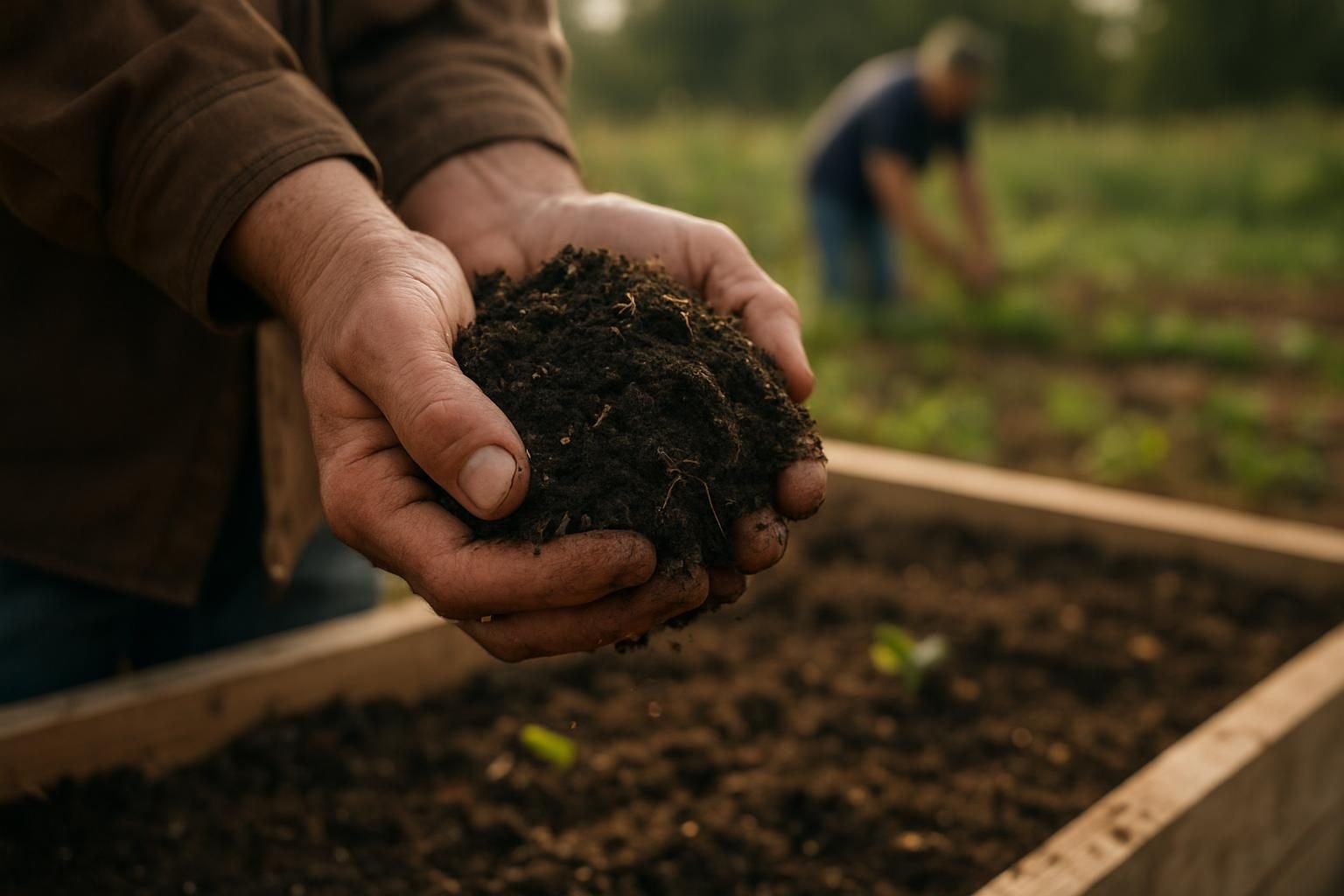
Bagged “garden soil” is typically topsoil blended with compost or other organic matter, meant to be mixed into the ground in the garden. Native soil dug from your yard is different again: it is whatever your site gave you, which might be sandy, silty, rocky or heavy clay. Both are denser than potting mix and hold far more mineral matter, which is what gives soil its nutrient-holding capacity and its structure over time.
Blended raised bed mixes
Bagged or bulk “raised bed mix” sits between the two. It usually combines compost, topsoil or composted forest products, and an aeration component. Quality varies widely, so read the ingredient list and ask suppliers what is in it. For a product-by-product look at what is out there, see our comparison of Miracle-Gro Organic Raised Bed Soil and other bagged mixes.
Potting Mix vs Garden Soil: Side-by-Side Comparison
The figures below are typical ranges and general tendencies. Products and local soils vary, so treat them as a starting point.
| Factor | Potting mix | Native garden soil | Blended raised bed mix |
|---|---|---|---|
| Drainage | Very fast; can dry out quickly in beds | Varies: clay drains slowly, sand drains fast | Moderate to good when well balanced |
| Nutrient holding (CEC) | Low to moderate; nutrients leach readily | Moderate to high, especially with clay and organic matter | Moderate to high |
| Water holding | Peat and coir hold water, but hydrophobic when dry | Good in loam and clay, poor in sand | Good, with air space |
| Settling | Can compress substantially as organic matter breaks down | Minimal once established | Moderate in year one, then stabilizes |
| Cost to fill a bed | Highest per cubic yard | Free to low, but may need amending | Middle; lowest when blended in bulk |
| Weed and pathogen risk | Low | Can carry weed seeds, disease, contaminants | Low to moderate, depends on source |
| Biology | Often sparse | Established soil life | Good if compost is high quality |
Drainage, Nutrients and Settling: Why They Matter
Drainage
Raised beds drain better than in-ground soil because water can move out the bottom and sides, so you rarely need to make the mix drain faster. Overly coarse, potting-style mixes in a large bed can dry out between waterings, especially in the arid West and in hot Southern summers. On the other hand, a mix of heavy clay and compost can stay soggy in the humid East and Pacific Northwest. If your site stays wet, see how to improve soil drainage without heavy equipment.
Nutrient holding
Mineral soil, especially the clay and silt fraction plus organic matter, holds nutrients on particle surfaces and releases them to plant roots. Peat- and coir-based mixes have less of this reserve, so they depend heavily on fertilizer and compost. That is fine for a tomato in a pot that you feed weekly, and a poor deal in a 12-inch-deep bed you hope to manage with minimal inputs.
Settling
Organic matter decomposes, and beds filled mostly with compost or peat shrink as it does. Expect some settling in any new bed. A mix with a healthy share of mineral material settles less and stays productive longer. Plan to top off the bed with an inch or two of compost each season either way.
When Each Option Makes Sense
Potting mix works well for
- Containers, window boxes and grow bags
- Seed starting and transplants (a fine, sterile mix is best)
- Very shallow beds or tabletop planters, where a lightweight mix helps
- Microgreens trays; see our small-farm guide to growing microgreens for profit
Native garden soil works well for
- Beds set directly on the ground where your soil is a decent loam
- Bulking out a blend, as a minor share, if it has been tested and looks clean
- Long-term in-ground gardens built with no-till methods
Avoid using soil from unknown sources or from lots with a history of industrial use, lead paint, or heavy treated-lumber contact. In urban areas, test for lead and other contaminants through your state extension service or a certified lab before growing food. Our guide to urban farming covers site assessment in more detail.
Blended raised bed mix works well for
- Most vegetable beds 10-12 inches deep or more
- Anyone who wants a mix that holds nutrients and water without waterlogging
- Market gardeners filling many beds, where bulk blending cuts cost
How to Build a Raised Bed Mix That Lasts
Here is a practical approach. For full recipes tuned to different climates and budgets, see our guide to raised bed soil mix recipes that stay healthy for years.
- Calculate your volume. Length x width x depth (in feet) divided by 27 gives cubic yards. A 4 x 8 bed filled 12 inches deep needs about 1.2 cubic yards. Add 10-15% for settling.
- Choose your mineral base (about 50-60%). Screened topsoil or loam from a reputable supplier is ideal. Ask what is in it and whether it has been tested.
- Add finished compost (about 30-40%). Use mature, dark, earthy-smelling compost. Mixing several sources improves biological and nutrient diversity. See compost for raised beds: types, ratios and when to add it.
- Add aeration material (about 5-15%). Pumice, coarse sand, perlite or composted bark fines work. Use more in heavy, wet climates and less in dry ones.
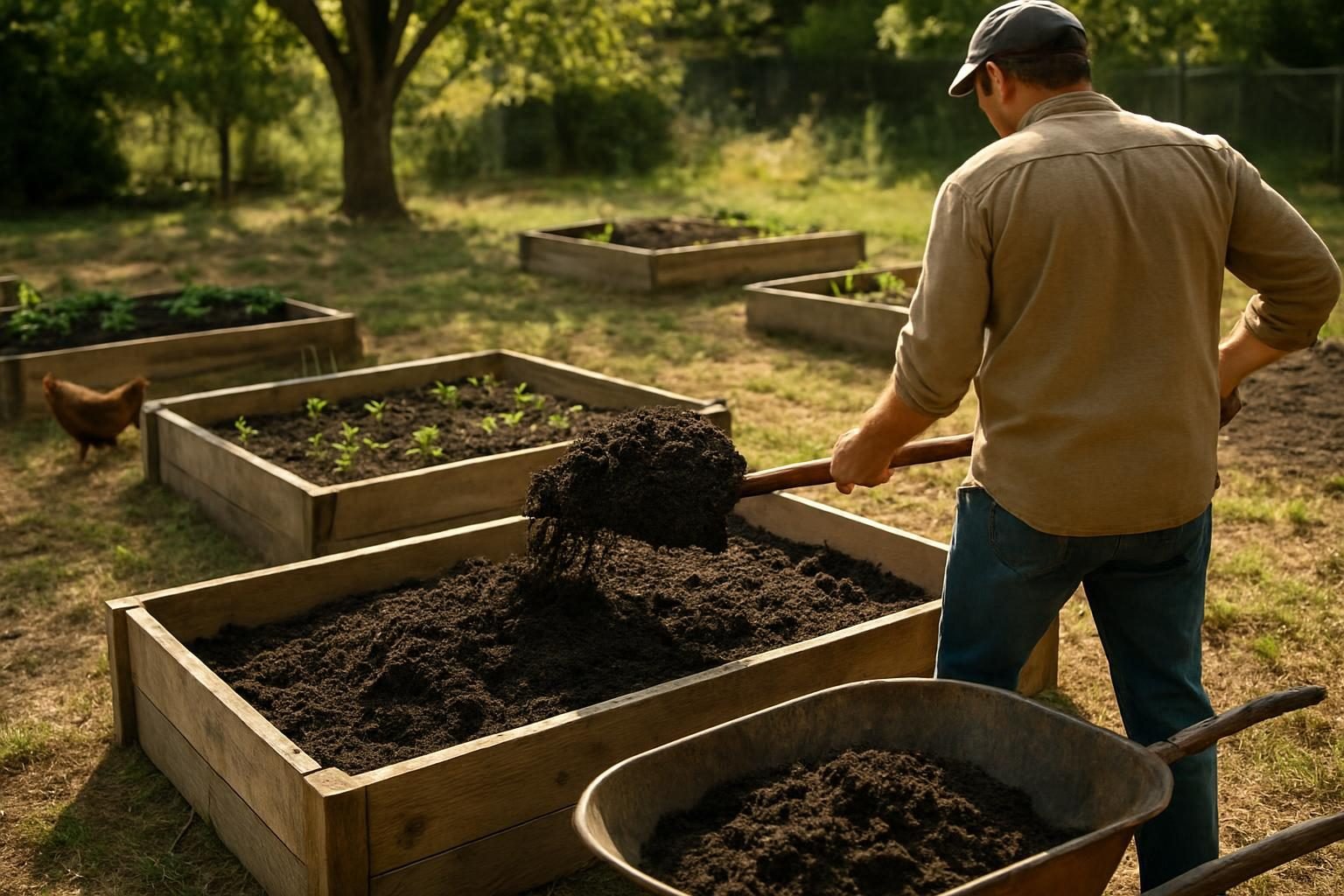
- Mix thoroughly. Blend on a tarp or in a wheelbarrow, or layer in the bed and fork lightly. Avoid distinct layers, which can interrupt water movement.
- Fill, water and let it settle. Top off, then plant. Retest soil every few years.
If you make your own compost, it is the cheapest and most valuable ingredient you can supply. See how to make compost and how to build a compost bin to get started.
Cost-saving tips
- Buy in bulk by the cubic yard rather than by the bag; bulk is usually far cheaper per volume, though delivery fees apply.
- Fill the bottom of deep beds with logs, branches and coarse organic material using hugelkultur principles, then top with 8-12 inches of blended mix. This cuts the volume of mix you need, though the wood will cause some settling and temporary nitrogen tie-up near the bottom.
- Lasagna-style layering of cardboard and compost also reduces cost; see no-dig gardening.
Keeping the Mix Healthy Over Time
A good mix is a starting point, not a finished product. Top-dress with 1-2 inches of compost each year, keep the surface mulched, and rotate crops. Living roots, cover crops between plantings, and minimal disturbance all build soil biology, which is the heart of soil health. Water efficiently with drip irrigation to avoid flushing nutrients out of lighter mixes.
If you are scaling up from a few beds to a larger operation, our guide to small-scale regenerative farming covers the bigger picture, and the Small & Urban Farms section collects related how-tos.
Key Takeaways
- Potting mix is built for containers. It drains fast, holds few nutrients and gets expensive when used to fill a bed.
- Garden soil brings mineral structure and nutrient-holding capacity but varies a lot and may carry contaminants or compaction problems.
- A blend of roughly 50-60% topsoil, 30-40% compost and 5-15% aeration material suits most raised beds.
- Expect settling in year one and top off with compost annually.
- Buy in bulk, test questionable soil, and use filler layers to cut costs in deep beds.
Frequently asked questions
Can I fill a raised bed with just potting mix?
You can, and it will grow plants, but it is rarely the best choice. Potting mix is expensive per cubic yard, drains quickly, holds fewer nutrients than mineral-based blends, and tends to settle and break down faster. It makes more sense in shallow beds, containers or as a top layer for seeding than as the entire fill for a deep bed.
Can I use garden soil in a raised bed?
Yes, if it is a workable loam and free of contaminants. Heavy clay or very sandy soil is better used as a smaller portion of a blend with compost and aeration material. Test for lead and other contaminants first if the soil comes from an urban lot or a site with unknown history.
What is the cheapest good soil for raised beds?
Usually a bulk blend of screened topsoil and compost from a local supplier, mixed with a modest amount of aeration material, costs far less per volume than bagged potting mix. Making your own compost lowers the cost further. Prices vary by region, so get quotes from several suppliers.
How much will my raised bed soil settle?
Settling depends on how much organic matter is in the mix. Mixes high in compost or peat can drop a few inches in the first season. Plan on topping off with compost each year. Mixes with a larger mineral share settle less.
How deep should a raised bed be?
Most vegetables do well in 10-12 inches of good mix, and roots will also reach into the soil below if the bed sits on the ground. Shallower beds of 6-8 inches work for lettuce, herbs and radishes but dry out faster. If you are saving seed from your crops, healthy deep-rooted plants help; see our primer on seed saving. For step-by-step instructions on constructing and filling your bed, see our guide to building a raised bed for gardening.