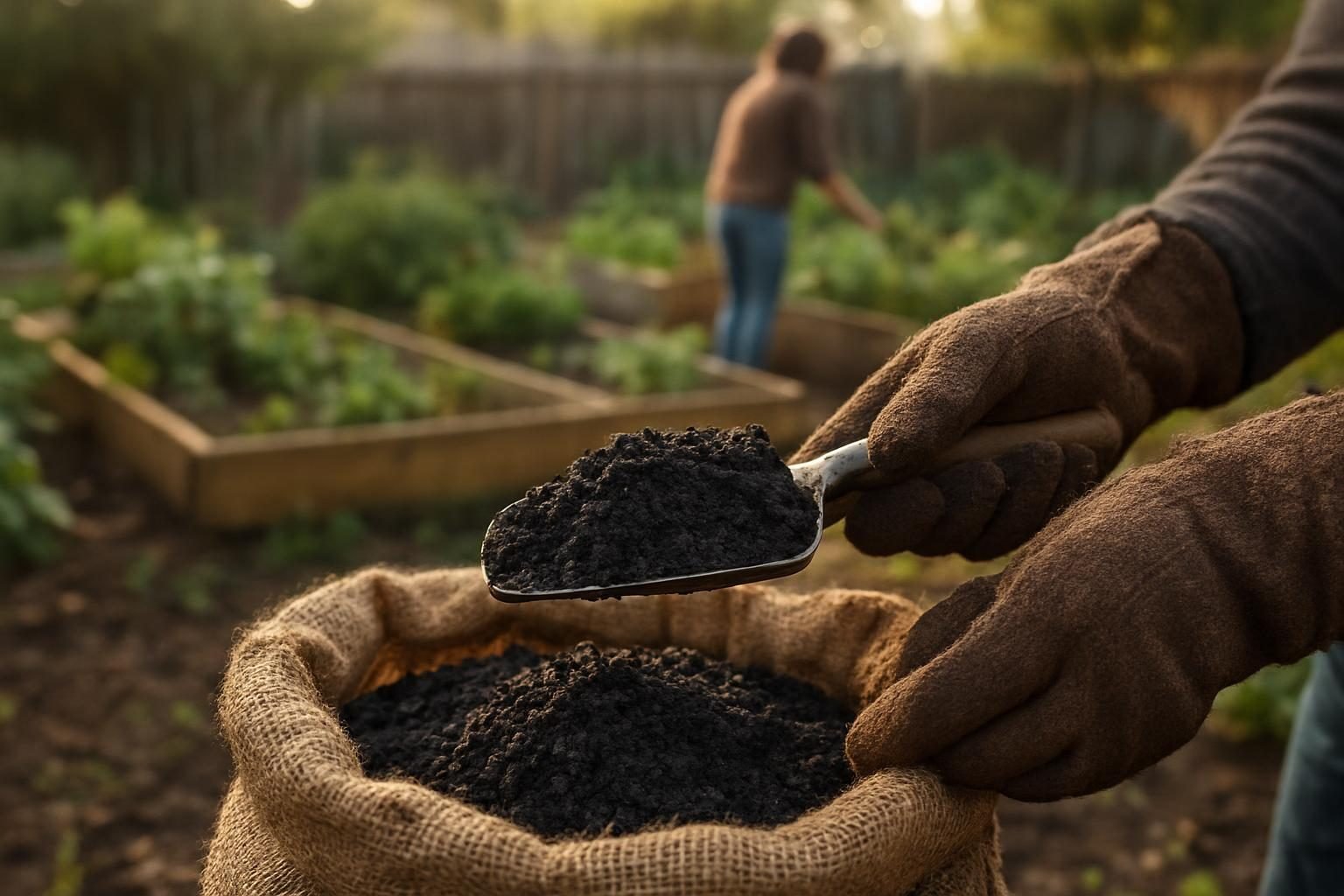
Searching for biochar for sale turns up everything from certified, lab-tested products to bags of crushed charcoal with a nice label. The difference matters, because raw, uncharged biochar of unknown origin can do very little for your soil, and occasionally make things worse. This guide walks through what to check before you buy, how to charge it, and how much to put down.
Quick answer: Buy biochar made from clean, untreated woody feedstock, pyrolyzed at roughly 450-700 °C, with a stated particle size and a recent lab report (pH, ash, carbon content, contaminants). Always charge it with compost, manure, or a nutrient solution before applying. Typical rates are about 5-10% by volume in garden beds, and roughly 1-5 tons per acre in field trials, starting small and testing on your own soil.
What biochar actually is (and isn’t)
Biochar is carbon-rich material made by heating biomass with little or no oxygen, a process called pyrolysis. It is not the same as the ash from a campfire or the lump charcoal you grill with, though those can be used in a pinch. Its value in soil comes from its porous structure, which holds water and nutrients and gives microbes habitat.
It is also not a fertilizer. Fresh biochar contains little available nitrogen and can temporarily tie up nutrients until it is charged. For the full picture of what it can and cannot do, see our guide to biochar for soil: benefits, limits and how to use it.
Quality checks before you buy biochar
Biochar is not a standardized commodity. Two products can look identical and behave very differently. Ask the seller for these five things.
1. Feedstock
What was it made from? Clean, untreated wood (oak, hickory, pine, orchard prunings) is the safest and most common. Nut shells, corn stover, and other crop residues are fine too. Avoid anything made from treated lumber, painted or construction waste, or feedstocks of unknown origin, since contaminants can concentrate in the char. Manure- and biosolid-based chars behave differently, often with higher nutrient and salt content, and need extra scrutiny.
2. Pyrolysis temperature
Higher temperatures generally produce more stable carbon, higher surface area, and higher pH. Lower temperatures leave more volatile compounds and a lower pH. Most garden-grade biochar falls in the range of roughly 450-700 °C. If a seller cannot tell you the temperature or process, treat that as a yellow flag.
3. Particle size
Chunky pieces (around 1/4 to 3/4 inch) work well for potting mixes and compost. Finer material mixes into soil more evenly but can be dusty and may blow or wash away if surface-applied. Pellets and granules exist for easy spreading. Choose size for how you will apply it, not for what looks impressive in the bag.
4. Testing data
A reputable producer can show a lab analysis. Look for pH, ash content, fixed carbon or organic carbon, electrical conductivity (salts), and heavy metals. Programs such as the International Biochar Initiative offer testing guidelines and, for some producers, certification; confirm current standards with them directly. A quick red-flag list:
- No test data at all, or data older than a few years from a different batch
- Very high pH (above about 10) with no guidance on correcting for it
- High salt (electrical conductivity), especially if you grow in containers or arid soils
- A strong tar, petroleum, or smoky chemical smell
5. Moisture and price basis
Biochar is very light, so price per bag or per cubic yard can mislead. Ask whether you are paying by weight or volume and what the moisture content is. Bulk pricing by the cubic yard or by the ton is usually far cheaper per unit than small retail bags. Prices vary widely by region and producer, so get a few quotes.
Buying vs. making biochar
If you have a steady supply of woody waste, making your own can make sense. If you need consistent quality or only a small amount, buying is usually easier. Here is how they compare.
| Factor | Buying | Making your own |
|---|---|---|
| Upfront cost | Pay per bag, yard, or ton | Low for a cone kiln or trench; more for a retort |
| Quality control | Depends on the producer; ask for lab data | Variable; you control feedstock but not always temperature |
| Time and labor | Minimal | Significant, plus crushing and sieving |
| Consistency | Good from reputable suppliers | Varies batch to batch |
| Best for | Small gardens, trials, consistent needs | Farms with ample woody residue and time |
Home-made char is often cooler-burned and less uniform, which is not necessarily bad for soil, but it is harder to predict. Check local air-quality and burn regulations before you build a kiln, and confirm with your county or state about open-burning rules.

Why you must charge biochar before using it
Uncharged biochar is like a dry sponge. Its pores will pull moisture and nutrients out of the surrounding soil, which can stunt plants for a season. Charging fills those pores with nutrients and microbial life first, so the char gives rather than takes.
How to charge biochar
- Crush and moisten. Break up oversized chunks and wet the char thoroughly so it is damp, not dripping.
- Mix with a nutrient source. Blend roughly one part biochar with two to four parts finished compost, or mix with aged manure, worm castings, or a dilute fish or seaweed solution.
- Let it sit. Rest the mix for two to four weeks, kept moist, ideally covered, so the char absorbs nutrients and microbes colonize it.
- Apply and incorporate. Work it into the top few inches of soil or blend into potting and bed mixes.
The easiest route is adding biochar to your compost pile as it builds. If you are choosing a setup, our upcoming guide on composter types compared will help. If manure is your nutrient source, read about composting chicken manure first so you do not burn plants with raw inputs. For fine-tuning biology, our piece on compost tea and biological amendments covers what works and what is hype.
How much biochar to apply
More is not better. Research results are mixed and depend heavily on soil type, climate, and the char itself. Treat these as typical starting ranges, not prescriptions.
| Use | Typical starting rate | Notes |
|---|---|---|
| Garden and raised beds | About 5-10% by volume of the top 4-6 inches | Charge first; mix thoroughly |
| Potting mixes and containers | About 5-10% by volume | Watch salts; use low-EC char |
| Field or pasture trials | Roughly 1-5 tons per acre | Start on a test strip; costs add up fast |
| Compost piles | About 5-10% by volume | Easy, effective way to charge |
Sandy, low-organic-matter soils and acidic soils tend to show the clearest response, while heavy clay or already-rich soils may show little. Humid East and South soils that are acidic may benefit from high-pH char; arid West soils that are already alkaline may not, and salts can be a concern.
Before you commit at scale, run a side-by-side test on a small strip and compare it with an untreated control. Our guide to soil testing for regenerative farmers shows how to measure the difference rather than guess.
Where biochar fits in a regenerative system
Biochar is a supporting player. It works best alongside the basics: keeping soil covered, growing roots year-round, minimizing disturbance, and feeding biology. If you have not built those habits, spend your money there first. A cover crop mix or a good compost program will usually return more per dollar than char. See cover crops for beginners and how to increase soil organic matter for the foundations, and the complete guide to building living soil for the big picture. You can also browse everything in our soil health category.
For gardeners filling new beds, char can be a modest ingredient in a blended mix; see potting mix vs. garden soil in raised beds and the planned guide on filling a raised bed cheaply.
Key takeaways
- Ask every seller for feedstock, pyrolysis temperature, particle size, and a recent lab report.
- Avoid char from treated, painted, or unknown feedstocks.
- Never apply biochar uncharged; mix it with compost or nutrients and let it rest two to four weeks.
- Start with roughly 5-10% by volume in beds, and test small strips before scaling to fields.
- Buy by the cubic yard or ton when you can; compare price per unit, not per bag.
- Build soil biology and cover first; biochar is a helper, not a cure-all.
Frequently asked questions
Is biochar the same as charcoal?
Not quite. Both are made by heating wood with limited oxygen, but biochar is produced specifically for soil use, from clean feedstock, at controlled temperatures. Grilling charcoal may contain additives, and campfire leftovers are mostly ash and partly burned wood. Clean, additive-free lump charcoal can be crushed and charged in a pinch, but it is less predictable.
How long does it take to see results from biochar?
Often a season or more, and sometimes none. Responses are strongest in sandy, acidic, or low-organic-matter soils, and weakest in rich, well-structured soils. Watch moisture retention, plant vigor, and soil test numbers against an untreated control strip rather than expecting dramatic results.
Can I use too much biochar?
Yes. Excess char, especially high-pH or high-salt material, can raise soil pH, tie up nutrients, and stress plants. Stay within typical ranges, charge it first, and test your soil before adding more.
Is biochar worth the cost for a farm?
It depends on your soil, the price, and the payback you can measure. At field rates, costs can be substantial and returns inconsistent, so most farmers trial it on small strips first. Funding or carbon-credit programs may exist, but details change; confirm current terms with the program or your local extension office before relying on them.
Can I add biochar directly to my compost pile?
Yes, and it is one of the easiest ways to charge it. Mix about 5-10% by volume as you build the pile. The char absorbs nutrients and moisture as the compost cooks, and may help reduce odors. If you run into problems, our upcoming composting troubleshooting guide will help.