Most chickens handle cold far better than their keepers do. What actually hurts flocks in winter is damp air, drafts at roost level, frozen water and wet feet, not low temperatures by themselves. This guide walks through winter chicken care and coop prep so your birds stay healthy, laying where possible, and productive for your soil. Whether you’re raising chickens for the first time or adding to an existing flock during chick days, these principles apply year-round.
Quick answer: Keep the coop dry and well ventilated (high vents, no drafts at roost height), use deep litter for insulation and compost, keep water unfrozen with heated or swapped-out containers, protect combs and feet from frostbite, feed a bit more energy, and add supplemental light only if you want winter eggs and accept the trade-offs.
Start with the coop: ventilation versus drafts
New keepers often seal the coop tight to “keep the heat in.” That is the most common winter mistake. Chickens give off a lot of moisture through breathing and droppings, and trapped moisture is what causes frostbite and respiratory trouble, far more than cold air does.
What good ventilation looks like
- Vents high on the walls, above roost height, so stale humid air escapes without blowing across sleeping birds.
- Open area of roughly 1 square foot per bird is a common rule of thumb for total ventilation across seasons, though many keepers close part of it in the worst weather. Check your regional extension guidance.
- Roosts lower than the vents and away from the main air path.
- Solid walls and tight seams everywhere else, so air moves where you want it to.
How to tell drafts from ventilation
Hold a lit incense stick or a strip of light ribbon at roost height on a windy night. If it flutters sideways, you have a draft. If the smoke drifts upward and out the high vents, you have ventilation. Fix gaps near the floor and roost with weatherstripping, plywood or hardware cloth backed with solid board. If you are still deciding on a structure, our chicken coop buyer’s guide covers which designs handle ventilation well.
Space matters too. Crowded coops are damper. Typical guidance is about 3 to 4 square feet of coop floor per standard-size bird, with more run space where winters keep birds inside for long stretches.
Deep litter: insulation that becomes compost
The deep litter method turns winter bedding into a working system. You start with 4 to 6 inches of dry carbon (pine shavings, chopped straw, dried leaves) and add more as droppings build up, rather than cleaning out completely. Microbes break the pile down slowly, giving mild insulation and a drier floor when managed well.
Making it work
- Start with 4 to 6 inches of dry, absorbent bedding in fall.
- Top up with fresh bedding weekly, or whenever the surface looks matted or smells of ammonia.
- Turn or fluff the litter with a fork every week or two so it stays aerobic and the chickens can scratch.
- Spot-clean wet patches under waterers right away. Wet litter is the failure point.
- Keep the water out of the bedding area entirely if you can.
If the litter smells sharply of ammonia, it is too wet or too nitrogen-heavy. Add more dry carbon and improve ventilation. Many keepers find deep litter performs best in cold, dry climates and needs more attention in the humid East and South, where damp can overwhelm it.
Water that does not freeze
A hen needs water daily, and cold weather drops intake if water is frozen or icy. Frozen water is a bigger threat to laying than the cold itself.
| Option | Pros | Cons |
|---|---|---|
| Heated waterer base or heated bucket | Hands-off in moderate cold | Needs safe electricity; cord and fire risk if poorly installed |
| Swap two rubber pans twice daily | No power needed; ice pops out of flexible rubber | Labor every day |
| Insulated or sunny-side placement | Delays freezing | Rarely enough alone in hard freezes |
| Nipple drinkers in a heated area | Keeps water and litter clean | Nipples can freeze; needs a warm reservoir |
Whatever you use, put it on a raised block so birds do not kick bedding into it, and check it twice a day in a freeze. If you already plan water for pasture animals, the same freeze-protection thinking in our guide to water systems for rotational grazing carries over to poultry.
Electrical safety: use outdoor-rated, grounded cords, keep them out of reach of pecking, and follow the product’s instructions. When in doubt, consult an electrician.
Frostbite: protect combs, wattles and feet
Frostbite shows up on combs, wattles and toes, especially in big-combed breeds like Leghorns and Minorcas. The usual cause is humidity combined with cold, not cold alone.
- Keep the coop dry. Good ventilation is the main prevention.
- Roosts should be 2 to 4 inch wide boards, flat side up, so birds can cover their toes with their breast feathers.
- Keep water from dripping on faces; nipple or small-opening drinkers help.
- Some keepers apply petroleum jelly to combs on the coldest nights. Opinions differ on how much it helps, so treat it as optional.
If you spot pale, waxy or blackened tissue, keep the bird in a warm, dry spot and do not rub the area. Frostbitten tissue is fragile. For severe cases, talk to a veterinarian.
Feed adjustments for cold weather
Chickens burn more energy in the cold. Most birds simply eat more of their regular ration, so make sure feeders never run empty. A few adjustments help:
- Keep a complete layer feed available all day. See our upcoming chicken feed guide for ration basics.
- Give a small scratch grain portion in late afternoon so birds have fuel for the night. Keep it to a modest share, since too much dilutes protein and calcium.
- Provide grit, and oyster shell on the side for layers.
- Avoid relying on treats and kitchen scraps. They crowd out balanced feed.
Winter is also a good moment to look at feed costs. Our upcoming piece on cutting poultry feed costs covers bulk buying, fermenting and forage strategies.
Should you add supplemental light?
Hens lay best with about 14 to 16 hours of light. As days shorten in fall, laying slows or stops, and that is a natural rest period. Adding light brings eggs back, but there are trade-offs.
When light makes sense
- You sell eggs and need a steadier supply.
- You can supply light on a timer, using a low-wattage bulb set to extend the morning rather than the evening.
When to skip it
- You are fine with a winter break for your hens. Many keepers argue a natural rest supports longer-term health, though research on this is mixed.
- You do not have safe power in the coop. Heat lamps are a well-documented fire hazard. Many extension services discourage them, and chickens rarely need supplemental heat if they are dry and draft-free.
If you do add light, increase the day length gradually, and stay consistent. Sudden changes can stress birds. Young pullets that are not yet laying are better left on natural light so they mature properly. If you are planning your next flock, our guides on brooding baby chicks and buying pullets versus chicks can help with timing.
Keep birds foraging safely in winter
Chickens benefit from time outdoors, even in cold weather, provided they have shelter from wind and a dry spot to stand. Snow itself is not the problem. Many birds avoid it on their own, which is why a covered area helps.
- Build a covered or wind-sheltered run section with straw or wood chips on the ground, so birds have dry footing and something to scratch.
- Shovel or tarp a patch on the sunny side of the coop to give birds a bare place to move.
- Hang cabbage heads or brassica leaves as boredom busters, and toss whole stalks or bales of leaves into the run for scratching.
- Keep predator-proofing tight. Hungry predators press harder in winter. Our guide to chicken pens and runs covers fencing and predator-proofing.
Rotating pasture birds is usually paused in deep winter in northern regions. If you run mobile housing, see chicken tractors and pastured poultry for how to bring birds off pasture and when to return them in spring. Cold-hardy, forage-capable birds also make winter easier; see our look at the best chicken breeds for pasture.
Turn winter litter into compost
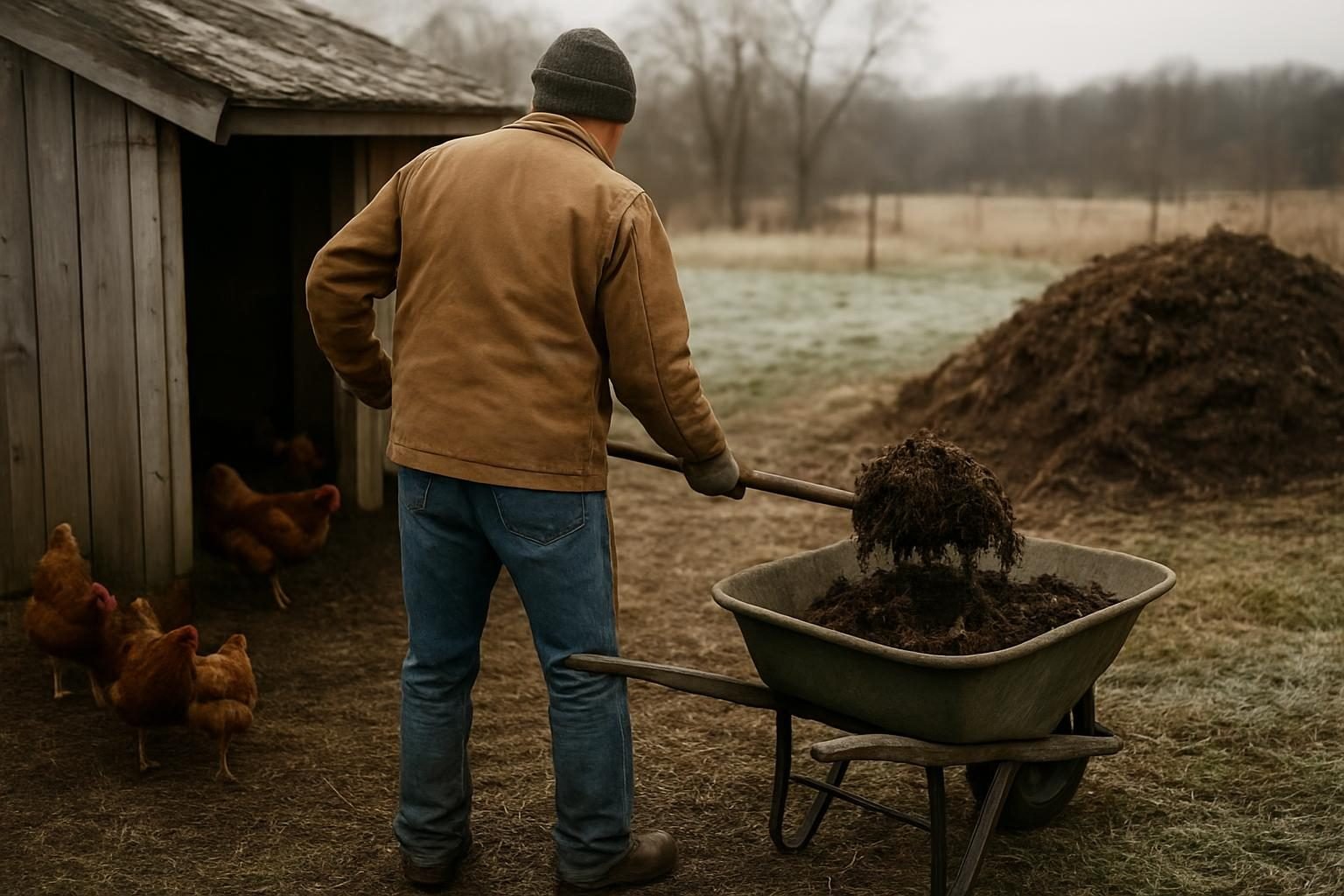
Used deep litter is one of the best soil amendments on a small farm, but fresh chicken manure is high in nitrogen and can burn plants and carry pathogens. The fix is time and heat.
- In spring, shovel out the litter and pile it, ideally mixed with extra carbon such as leaves or straw.
- Keep the pile moist like a wrung-out sponge and turn it occasionally.
- Let it finish for several months before using it on vegetable beds. Food-safety guidance for raw manure and crops, such as waiting periods before harvest, varies, so check with your extension office or USDA guidance.
- Apply finished compost to garden beds, orchards or pasture.
For bin ideas, see how to build a compost bin, and for the bigger picture on why this matters, read our soil health guide. Small-acreage growers who want to close nutrient loops will find more in small-scale regenerative farming.
Winter coop prep checklist
- Seal floor-level and roost-level drafts; keep high vents open.
- Lay 4 to 6 inches of dry deep litter.
- Set up unfrozen water with a safe heating or swapping system.
- Use wide, flat roosts and keep the coop dry to guard against frostbite.
- Keep complete feed available and offer a little scratch late in the day.
- Decide on supplemental light, and avoid heat lamps.
- Provide a wind-protected outdoor area with dry footing.
- Check predator-proofing before the cold sets in.
Key takeaways
- Dry air matters more than warm air. Ventilate high, block drafts low.
- Deep litter insulates and builds compost, but only if it stays dry.
- Frozen water hurts laying faster than cold weather does.
- Frostbite comes from damp plus cold; wide roosts and dry air prevent most cases.
- Supplemental light is optional; skip heat lamps.
- Compost used litter for several months before putting it on food crops.
Frequently asked questions
How cold is too cold for chickens?
Many cold-hardy breeds do well well below freezing if they are dry and out of the wind. Temperature alone is rarely the issue. Dampness, drafts, frozen water and big combs are the common problems. Check your breed’s traits and your local conditions.
Do I need a heater in the chicken coop?
Usually not. Healthy adult chickens generate their own warmth and fluff their feathers to stay warm. Heaters and heat lamps add fire risk and can leave birds unprepared for a power outage. Focus on a dry, draft-free coop first.
Why did my hens stop laying in winter?
Shorter days are the main cause, with molting and stress also playing roles. Many hens pause for a few weeks to months. Supplemental light can extend laying, but a rest period is normal.
How often should I change deep litter bedding?
Rather than clearing it out, add fresh dry bedding as needed through winter and clean out in spring. If it turns wet, smelly or compacted, remove the bad patches and add dry material sooner.
Is it safe to let chickens out in the snow?
Yes, if they have dry ground and wind protection nearby. Many birds will stay near the coop on their own. A covered run section with straw or wood chips gives them a place to scratch without cold, wet feet.