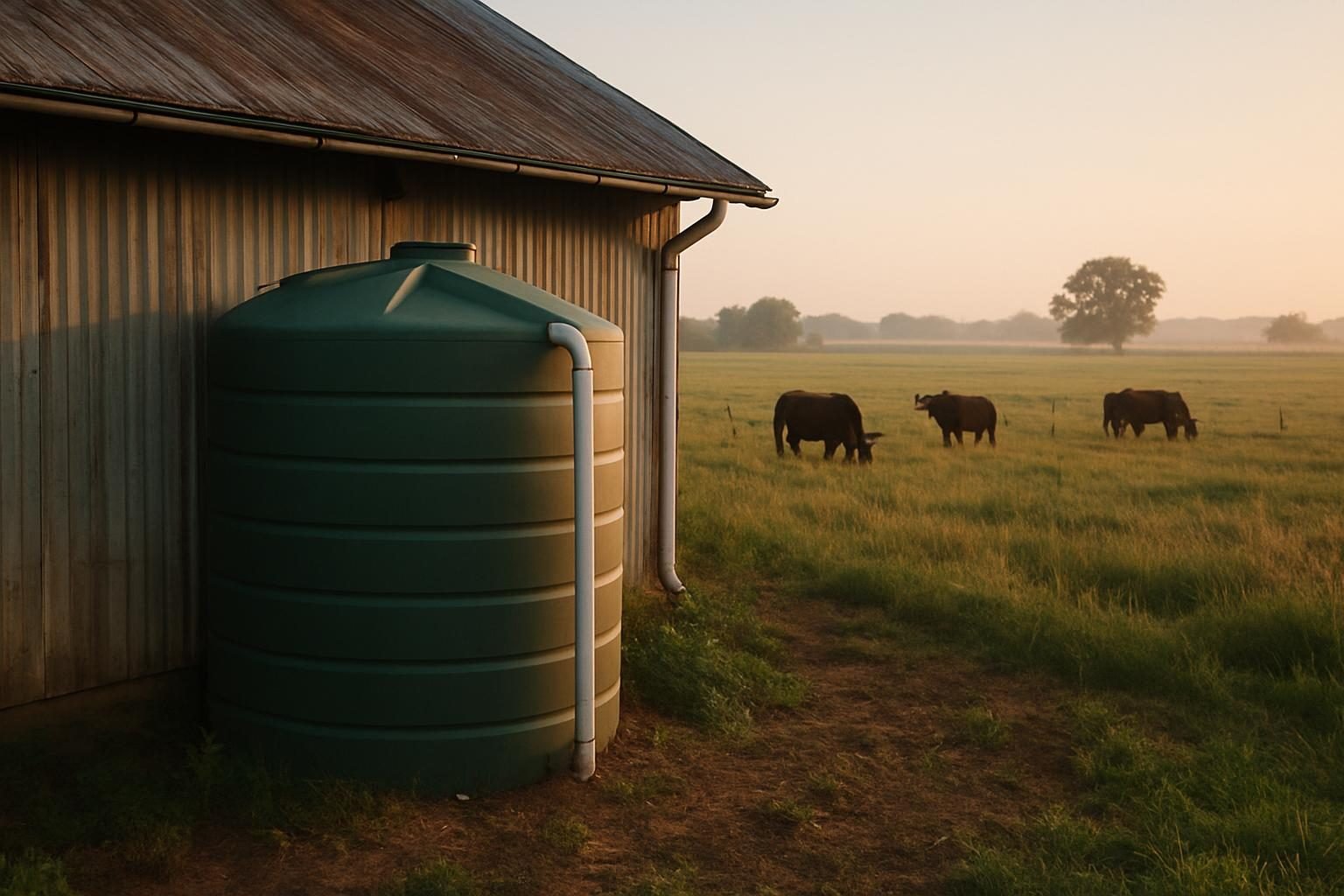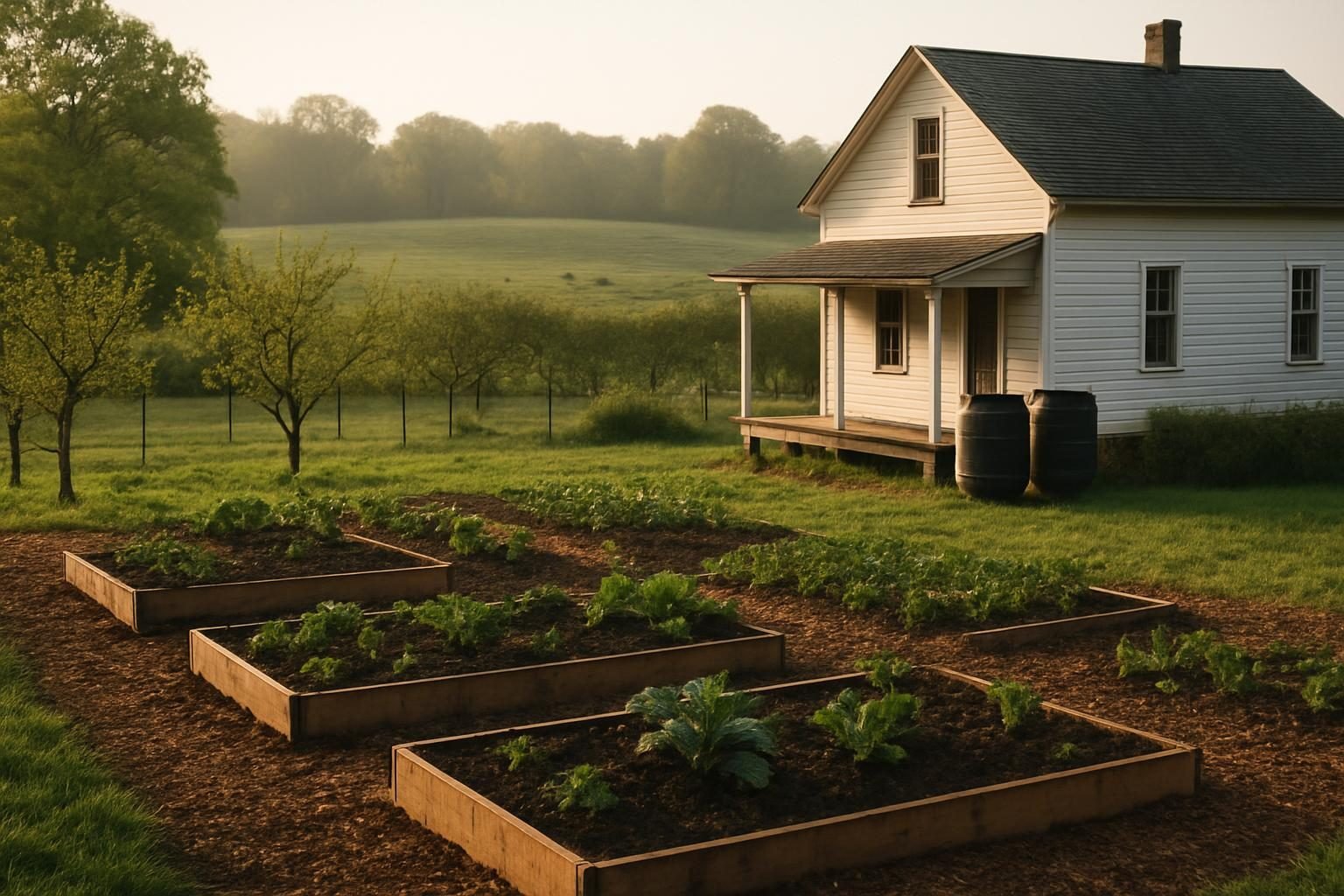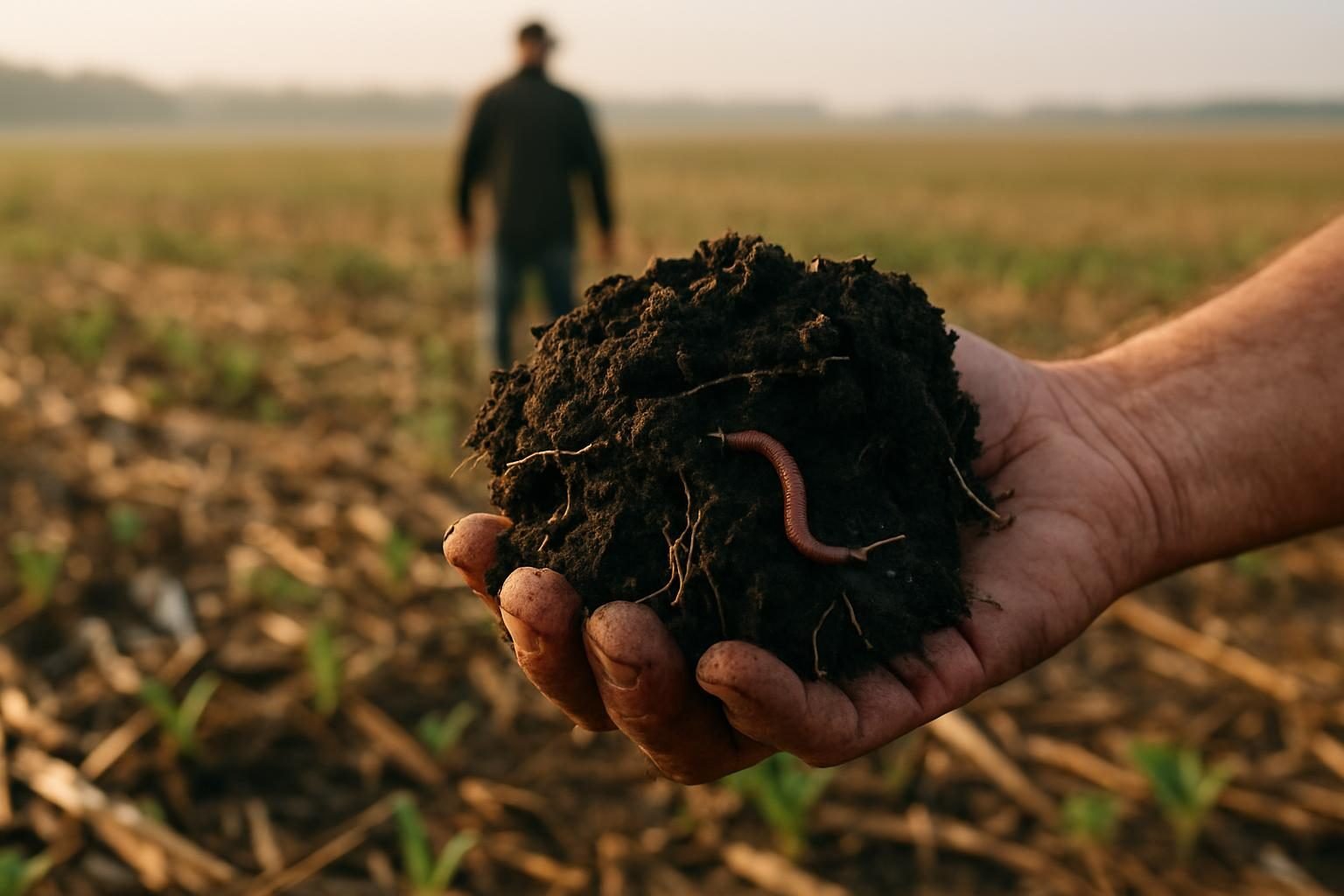
Healthy soil is not a product you buy; it is a living system you manage. The soil health principles below give you a simple framework for making decisions on any operation, whether you farm 2,000 acres of corn and soybeans, run cattle on western rangeland, or grow salad mix on a quarter acre.
This guide walks through each of the six principles, explains why it works, and shows what it looks like on a grain farm, a ranch and a market garden. If you are new to the bigger picture, start with our hub on what regenerative agriculture is and how to start.
Quick answer: The six soil health principles are: know your context, minimize disturbance, keep the soil armored, increase plant diversity, keep living roots in the ground as long as possible, and integrate livestock. They work together, and you do not need to adopt all six at once. Pick the one that fits your biggest problem and build from there.
Why soil health principles beat recipes
Practices that work in Iowa can fail in eastern Oregon. A cover crop mix that thrives in Georgia may never establish in Nebraska. Principles travel; recipes do not. When you understand why a practice builds soil function, you can adapt it to your rainfall, your equipment, your labor and your market.
Most of these principles come from long-standing soil science and have been popularized by USDA NRCS and many extension programs. The goal behind all of them is the same: feed the soil biology, protect the soil surface, and keep the system cycling water and nutrients efficiently.
The six principles at a glance
| Principle | What it does | Grain farm | Ranch | Market garden |
|---|---|---|---|---|
| 1. Know your context | Fits practices to climate, soil and goals | Soil maps, yield history | Ecological site descriptions | Bed-by-bed notes |
| 2. Minimize disturbance | Protects structure and fungi | No-till or strip-till | Avoid tillage and overgrazing | Broadfork, tarp, no-dig beds |
| 3. Armor the soil | Cuts erosion and heat | Residue and cover | Litter and standing forage | Mulch and quick covers |
| 4. Increase diversity | Feeds varied microbes | Extended rotation, mixes | Multi-species pasture | Crop families and flowers |
| 5. Keep living roots | Feeds soil life year-round | Cover after harvest | Rest and recovery periods | Overwintered covers |
| 6. Integrate livestock | Cycles nutrients, stimulates plants | Graze cover crops | Adaptive grazing | Poultry or sheep in rotation |
Principle 1: Know your context
Every farm has its own soil type, rainfall pattern, slope, markets and constraints. Before changing anything, find out what you are working with. A sandy soil in the humid Southeast loses organic matter quickly and needs a different strategy than a heavy clay in the northern Plains.
How to do it
- Pull your soil survey from USDA Web Soil Survey and mark soil types on your fields.
- Run baseline tests. Our guide to soil testing for regenerative farmers covers standard, Haney and biological tests.
- Dig a few holes. Look at structure, roots, color, earthworms and compaction layers.
- Write down your goals: profit, drought resilience, lower inputs, forage, or something else.
Grain farm: Compare yield maps to soil types to find the fields or zones that consistently underperform. Start trials there, where you have the most to gain and the least to lose.
Ranch: Use your ecological site description and note which pastures are overrested, overgrazed or invaded by weeds.
Market garden: Keep a simple notebook per bed: what was grown, what was added, how it drained, how it performed.
Principle 2: Minimize disturbance
Tillage breaks soil aggregates, oxidizes organic matter and disrupts fungal networks. Overgrazing and excess chemical use are also forms of disturbance. The aim is to disturb the soil only when the benefit clearly outweighs the cost.
Reducing disturbance has trade-offs. No-till can be slower to warm in cool, wet springs, and weed control may shift toward herbicides or roller-crimpers during the transition. Expect a learning curve, and plan on a few seasons to see structural improvements.
Grain farm: Move from conventional tillage toward strip-till or full no-till on your best-suited fields first. Invest in a planter that handles residue.
Ranch: Avoid plowing native rangeland. Manage grazing intensity so plants are not repeatedly bitten off before they recover.
Market garden: Try no-dig beds topped with compost, tarping to terminate cover crops, and a broadfork for compaction instead of a rototiller. A healthy fungal network is worth protecting, and our piece on mycorrhizal fungi explains why.
Principle 3: Keep the soil armored
Bare soil is exposed to raindrop impact, wind, and surface temperatures that can far exceed air temperature on a hot day. Residue, mulch, litter and living cover act as armor. Armor reduces erosion, moderates temperature, and slows evaporation.
Grain farm: Leave crop residue on the surface and avoid burning or baling every stalk. Where wind erosion is a problem, windbreaks and shelterbelts add a second layer of protection.
Ranch: Maintain enough standing forage and litter that rain soaks in rather than runs off. Leaving more residual plant material after grazing is one of the simplest ways to armor rangeland and pasture.
Market garden: Use straw, leaf mulch, wood chips on paths, or landscape fabric on permanent beds. Sow a quick buckwheat or oat cover in any bed that will sit empty for more than a couple of weeks.
Principle 4: Increase plant diversity
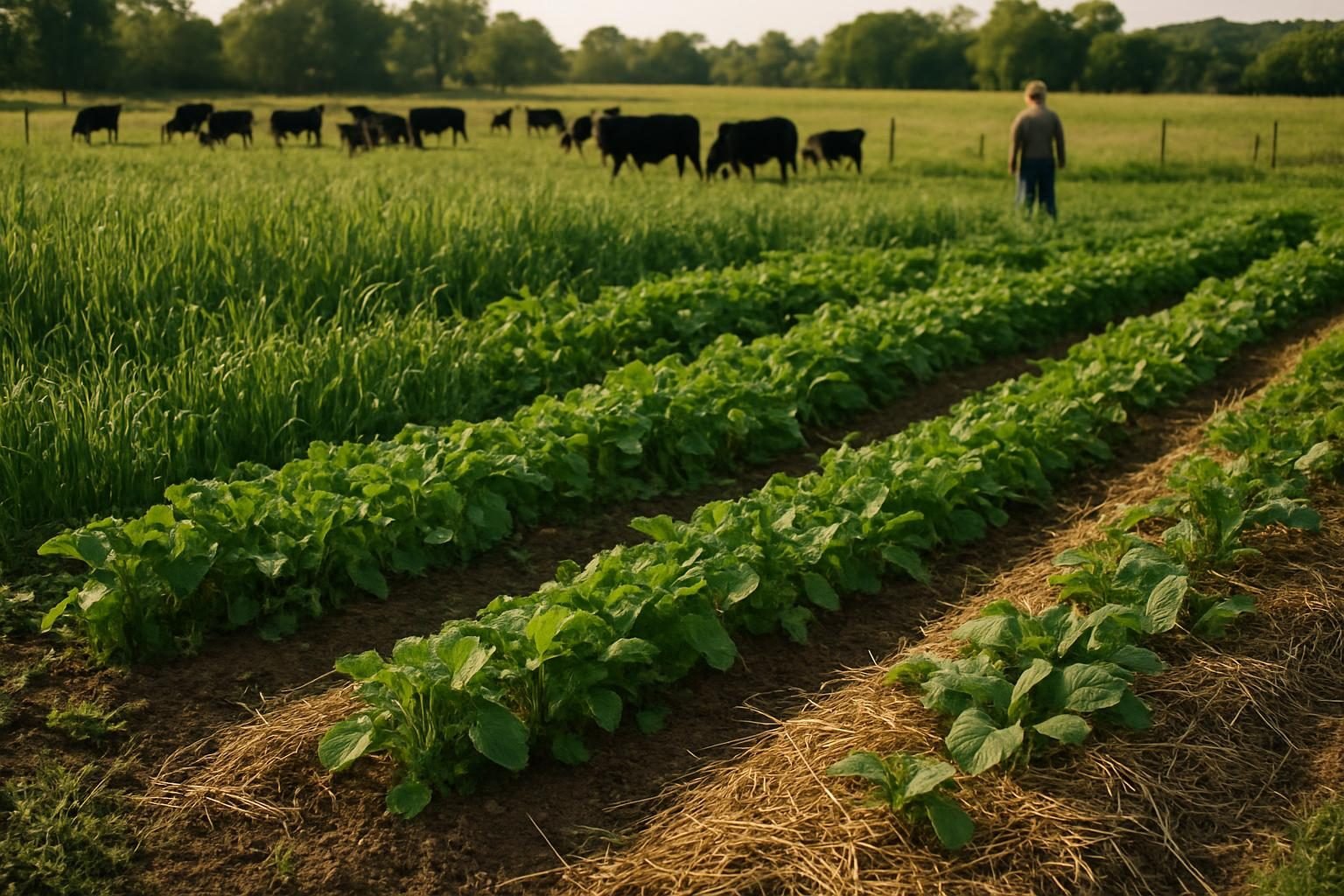
Different plants release different root exudates and support different microbial communities. More diversity above ground generally supports more diversity below ground, along with more resilience to pests, weather swings and price swings.
Grain farm: Extend a corn-soybean rotation by adding small grains, forage crops or a third or fourth crop. Plant multi-species cover crops instead of a single species. For mixes tailored to your goals, see our guide to the best cover crop mixes for soil health, grazing and weeds.
Ranch: Interseed legumes and forbs into pastures where appropriate, and favor a mix of cool-season and warm-season species suited to your region.
Market garden: Rotate crop families, plant flowers and herbs among vegetables, and use succession cover crops between plantings. In orchards or larger systems, alley cropping adds structural diversity with trees.
Principle 5: Keep living roots in the soil
Living roots feed soil microbes with sugars from photosynthesis. The longer the soil has a living plant growing in it, the more continuous that food supply. In many regions, the gap between harvest and the next planting is the biggest missed opportunity.
Ways to extend living roots
- Plant cover crops immediately after harvest, or interseed them into standing crops.
- Use perennial forages or rotational pastures in the rotation.
- Time grazing so pasture plants have enough recovery to regrow roots and leaf area.
- In cold climates, choose winter-hardy or winter-killed species depending on your planting system.
Grain farm: Drill cereal rye or an oat-based mix after soybean harvest where the growing window allows. In short-season regions, try aerial or early interseeding.
Ranch: Resist the urge to graze every plant to the ground. Rest periods let roots regrow, and the benefits show up in drought years.
Market garden: Follow early crops with a summer cover, and overwinter beds in rye and vetch or oats and peas where winters permit.
Principle 6: Integrate livestock
Grazing animals, managed well, cycle nutrients, stimulate plant growth and add manure and urine in a form soil biology can use. Livestock integration is the principle most dependent on infrastructure, labor and local markets, so it is often the last one farms add.
Grain farm: Graze cover crops or crop residue with your own animals or a neighbor’s, via a grazing lease. This can turn a cover crop cost into a feed or income source.
Ranch: Move animals frequently enough that no plant is grazed repeatedly during regrowth. Our complete guide to rotational and adaptive grazing is the best place to start. Higher-intensity approaches like mob grazing and bale grazing can build fertility on thin or tired ground, though they demand good fencing and water. See water systems for rotational grazing before you commit.
Market garden: Run a small flock of chickens or ducks through beds after harvest, or bring in a few sheep to graze cover crops, with attention to food safety timing guidelines from your local extension office.
Not everyone can or should keep livestock. If you cannot, compost and amendments from outside sources, along with practices like hot composting or vermicomposting, can partly fill the nutrient-cycling role.
Putting the principles to work
Do not try to change everything in one season. A practical sequence for most farms looks like this:
- Gather context: soil tests, maps, goals, and a realistic budget.
- Choose one or two changes with the best payoff, usually cover crops or reduced tillage, or adjusted grazing.
- Trial on a limited area and compare it to your usual practice.
- Measure what matters: infiltration, ground cover, input costs, yield, forage days.
- Expand what works and drop what does not.
For a phased approach, see our 3-year transition plan. To see how others have combined these practices, browse regenerative agriculture examples. If you are weighing the economics, the regenerative farming business guide covers funding, certification and sales. Cost-share programs such as the Conservation Stewardship Program may help, but confirm current eligibility and payment details with your local NRCS office.
Be honest about what to expect. Soil organic matter builds slowly, often fractions of a percent over several years, and results vary by climate, soil and management. For a balanced look at the claims, read what the evidence shows on benefits and the myths and criticisms, including the debate over how much carbon farms can store (more in our coming piece on regenerative agriculture and climate change).
Key takeaways
- The six principles are context, minimal disturbance, armor, diversity, living roots and livestock integration.
- Principles adapt to any farm size, region and enterprise; recipes often do not.
- Start with your biggest soil problem and one or two practices, and test on a small area.
- Livestock integration is powerful but depends on infrastructure and markets; alternatives exist.
- Expect gradual change, and track results with simple, repeatable measurements.
Frequently asked questions
What are the principles of soil health?
The commonly taught principles are to understand your context, minimize disturbance, keep the soil covered, increase plant diversity, maintain living roots year-round, and integrate livestock. Some sources present five rather than six, folding context into planning. The ideas are the same.
Do I need to follow all six soil health principles?
No. Most farms adopt them gradually and in the order that fits their operation. Even applying two or three, such as reduced tillage, cover crops and better grazing management, can improve soil function over time.
How long does it take to improve soil health?
Some indicators, like infiltration, residue cover and earthworm activity, can improve within a few seasons. Measurable gains in soil organic matter usually take longer, often several years, and depend on climate, soil type and management.
Can I build soil health without livestock?
Yes. Cover crops, diverse rotations, compost, mulch and reduced tillage all build soil biology without animals. Livestock add nutrient cycling and plant stimulation, but they are one tool among several.
What is the difference between soil health principles and organic certification?
Organic certification is a regulated standard that limits certain inputs and requires specific record-keeping. Soil health principles are management guidelines focused on soil function, and they are not a certification. Many farms use both. See our comparison of regenerative vs organic farming, and for how these ideas relate to other systems, our upcoming guide on permaculture vs regenerative agriculture.
Browse more foundations in our Regenerative Agriculture 101 category.