The benefits of regenerative agriculture are real, but they are not all equally proven, and they do not show up on every farm at the same speed. This guide sorts what the research and field experience support strongly from what is still emerging, so you can set realistic expectations before you change a single acre.
Quick answer: The best-supported benefits of regenerative agriculture are improved soil structure and organic matter, better water infiltration, lower synthetic input use over time, and more stable yields in stressful weather. Biodiversity, animal welfare, food quality, and community benefits are promising but vary widely by farm, region, and management. Carbon storage is real but modest and not permanent, so treat it as a bonus, not the business plan.
If you are new to the term, start with our overview of what regenerative agriculture is and its core principles. Everything below assumes you are working with those basics: minimal soil disturbance, keeping soil covered, keeping living roots in the ground, diversity, and thoughtful livestock integration.
How to read the evidence: strong, moderate, emerging
Regenerative agriculture has no single legal definition, and practices vary. That makes research messy. A benefit seen under no-till plus cover crops in Iowa may not appear under adaptive grazing in New Mexico. So here is how this article labels claims:
- Strong: repeated across many peer-reviewed studies, extension trials, and farms in multiple regions.
- Moderate: supported by good evidence, but results depend heavily on climate, soil type, and management.
- Emerging: plausible and sometimes well documented on individual farms, but research is thin, short-term, or inconsistent.
| Benefit | Evidence level | Typical timeline |
|---|---|---|
| Better soil structure, aggregation, biology | Strong | 1-5 years |
| Reduced erosion and runoff | Strong | Often within 1-2 seasons |
| Higher water infiltration and holding capacity | Strong to moderate | 2-8 years |
| Lower fertilizer and chemical inputs | Moderate | 3-7 years |
| Yield stability in drought or heavy rain | Moderate | Varies by year and region |
| Improved profitability | Moderate | 3-10 years; depends on system |
| Biodiversity gains | Moderate | Months to many years |
| Carbon sequestration | Moderate, with caveats | Slows over time, can reverse |
| Nutrient density and food quality | Emerging | Unclear |
| Rural community revitalization | Emerging | Long-term |
Soil benefits
Structure, organic matter, and biology (strong)
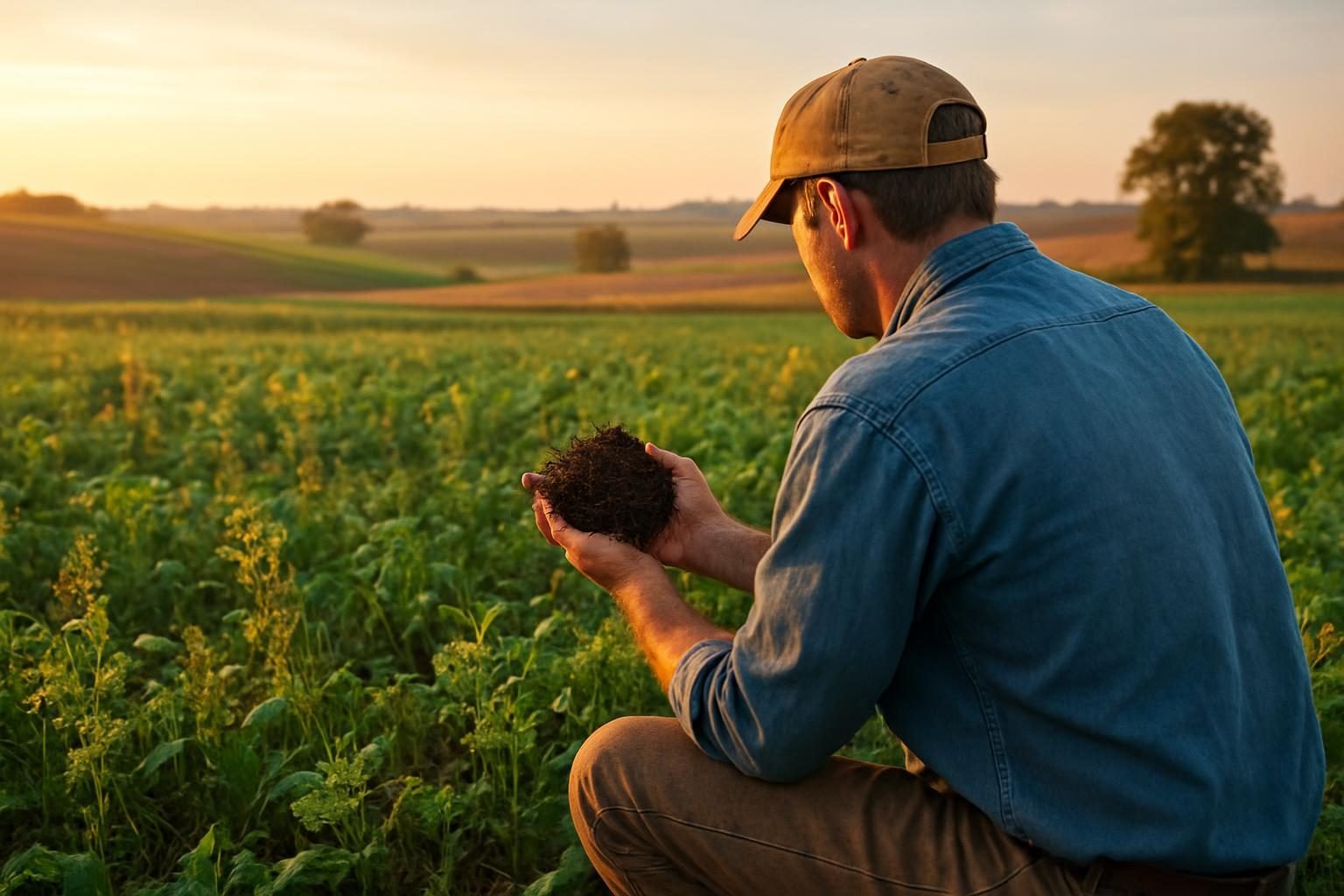
This is the foundation. Reducing tillage, keeping soil covered, and keeping living roots in the ground feed soil organisms, which build aggregates, the crumbly structure that lets air and water move. Many farms see organic matter rise gradually, often on the order of a few tenths of a percentage point over several years, though the rate depends on climate, soil texture, and starting point. Warm, humid Southern soils burn through organic matter faster than cool, dry ones, so gains come harder there. Learn more about no-till farming and how to implement this core practice.
Practical entry points include cover crops, reduced tillage, and compost or manure where appropriate. For the underlying logic, see our guide to the soil health principles.
Erosion control (strong)
Armored, rooted soil stays put. Farmers in the Corn Belt and Southeast who adopt cover crops and no-till commonly see far less sheet and rill erosion after storms. This benefit is one of the quickest to see and one of the easiest to explain to a landlord.
Water benefits
Infiltration and holding capacity (strong to moderate)
Better aggregation means rain soaks in rather than running off. Many growers report fewer ponding spots and less crusting. Be cautious with big claims, though. The oft-repeated idea that each percentage point of organic matter holds a huge, fixed volume of extra water is oversimplified. Real gains depend on soil texture, and sandy soils benefit differently than clay. Expect improvement, not miracles.
Water quality (moderate)
Cover crops and living roots can scavenge leftover nitrogen and hold phosphorus-bearing soil in place, reducing losses to tile drains and streams. Results vary with timing, species, and weather, so measure rather than assume.
Resilience to drought and flood
Resilience is the benefit most farmers care about and the one that is hardest to prove in a single study. The pattern across many trials and farm reports is that regenerative systems often hold yields better in extreme years, not necessarily higher in average years. Soil that takes in a downpour and releases moisture slowly buffers both ends of the weather spectrum.
Regional realities matter:
- Humid East and South: flood and erosion buffering is often the headline benefit; heavy residue can slow spring warming and complicate planting.
- Corn Belt: cover crop establishment after late harvests is a real constraint, and termination timing needs care.
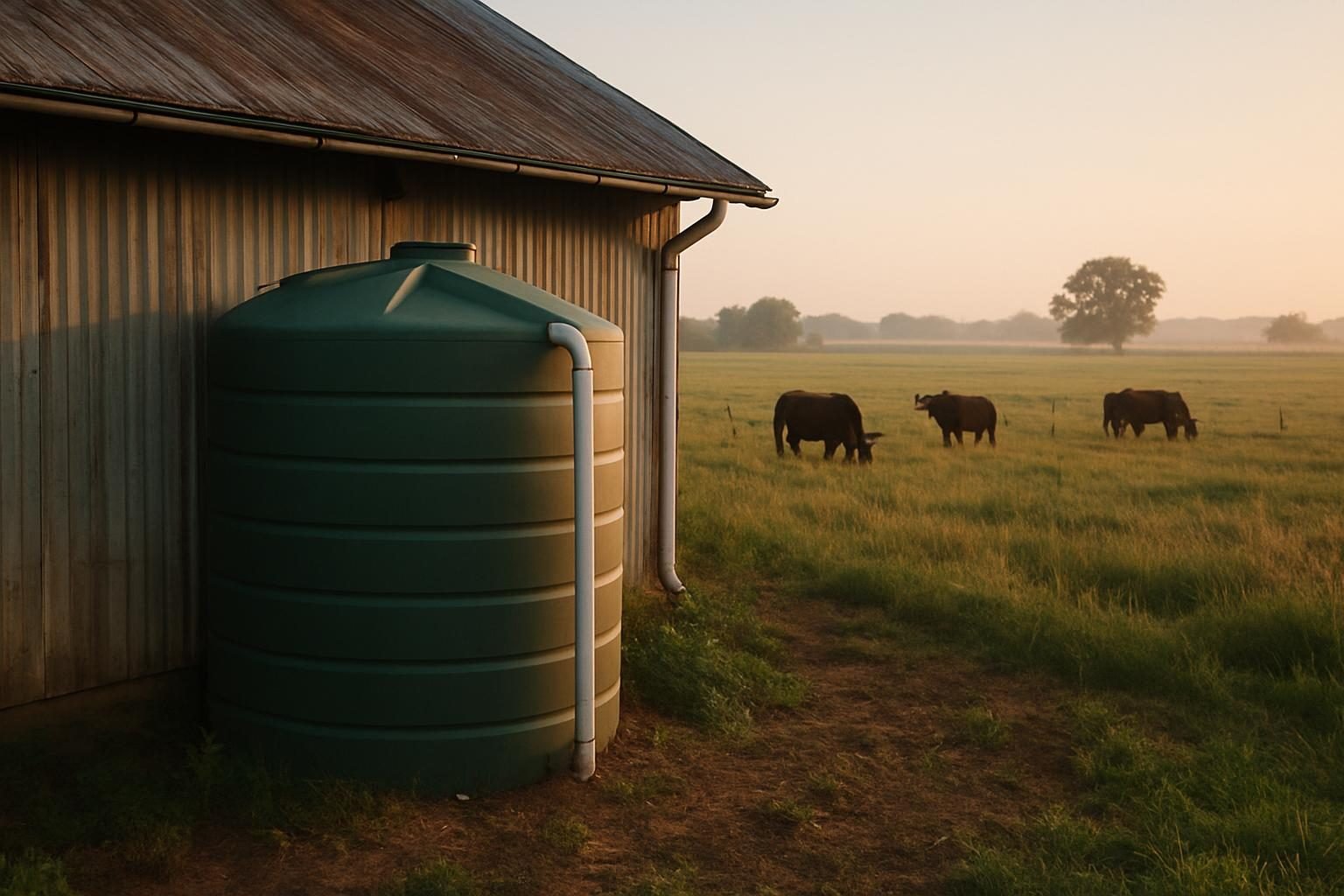
- Arid West and Plains: water for cover crops is a trade-off, and perennial cover and well-managed grazing often matter more than annual covers.
Biodiversity benefits
More plant species, more structure, and fewer broad-spectrum sprays generally mean more pollinators, beneficial insects, soil fauna, and birds. Hedgerows, field borders, and silvopasture add habitat layers that open pasture or clean-tilled fields lack. The evidence is solid that diversification helps wildlife and beneficial insects; it is thinner on whether that translates directly into measurable pest suppression or yield on your specific farm. Treat it as a long-term investment and monitor what you see.
Input costs and profitability
Here is where the numbers matter, and where honesty matters most. Many farms cut spending on synthetic nitrogen, herbicides, and sometimes feed or fuel as biology does more of the work. Others spend more at first on seed, fencing, water infrastructure, and management time. Typical patterns:
- Years 1-2: costs may rise (cover seed, equipment adjustments, learning curve) and yields can dip.
- Years 3-5: input savings often start to offset costs as fertility and structure improve.
- Years 5+: margins frequently improve through lower inputs, steadier output, and in some cases premium markets.
These are general patterns, not guarantees. Profitability depends on scale, commodity prices, land tenure, and your market. Cost-share can soften the transition; check current practices and payments with your local NRCS office through EQIP for regenerative farmers, and confirm details with the agency since programs change. For markets, certification, and funding, see our guide to the regenerative farming business. A staged plan helps; our upcoming roadmap on how to transition to regenerative agriculture covers the pacing.
Livestock and animal welfare
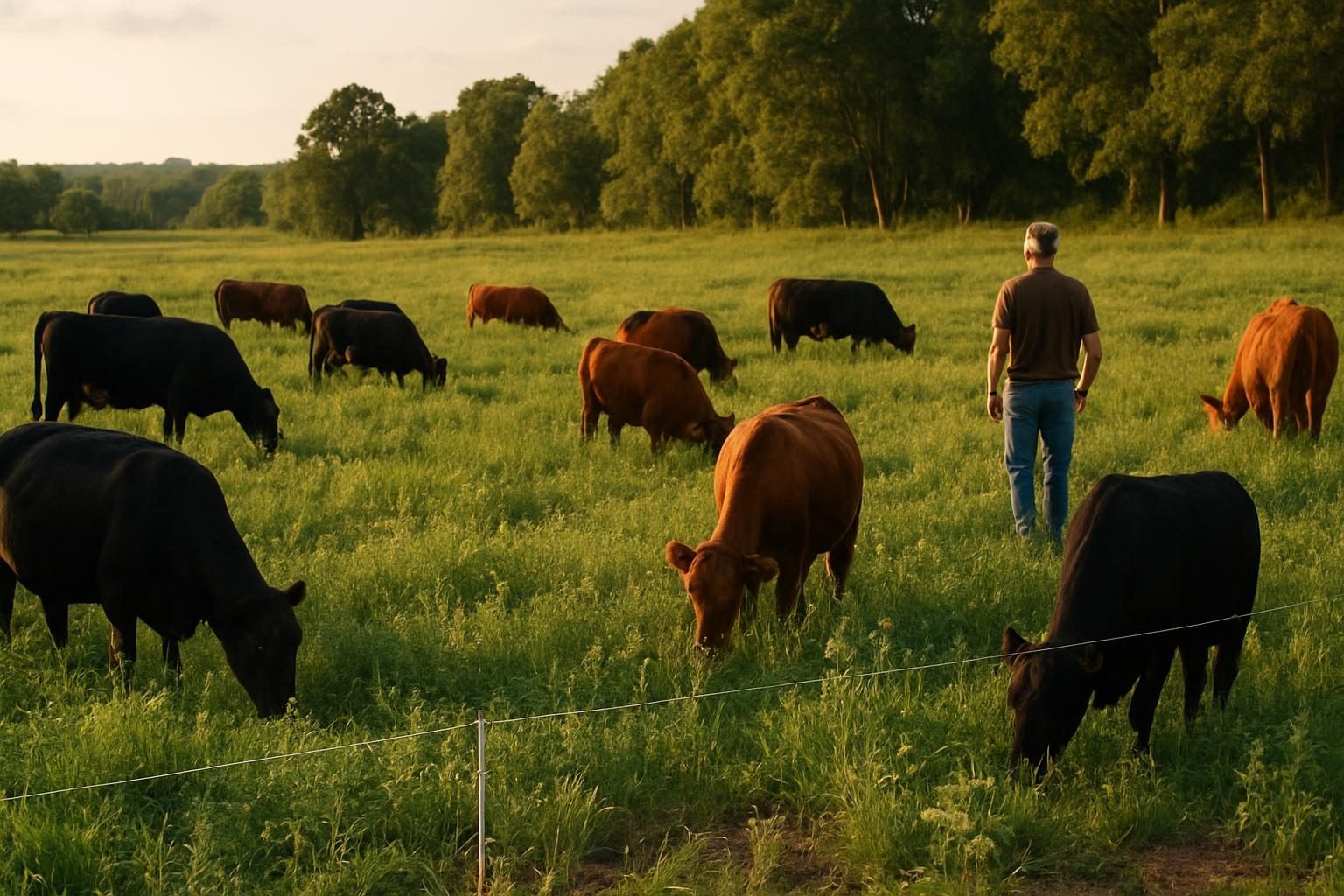
Well-managed grazing lets animals express natural behavior, eat fresh forage, and move away from their own manure, which can reduce parasite pressure and the need for hauled-in feed. Well-run rotational grazing and adaptive multi-paddock grazing are the main tools. The caveat: poorly managed grazing, whether overstocked or under-rested, harms both land and animals. The welfare benefit comes from the management, not the label.
Food quality
Some studies suggest differences in fatty acid profiles in grass-fed meat and dairy, and some report higher levels of certain plant compounds in produce from biologically active soils. But findings are inconsistent, and research directly comparing regenerative and conventional food on nutrient density is still limited. Treat nutritional superiority as an emerging claim. Flavor, freshness, and shorter supply chains are real selling points, but do not promise health outcomes to customers.
Rural communities
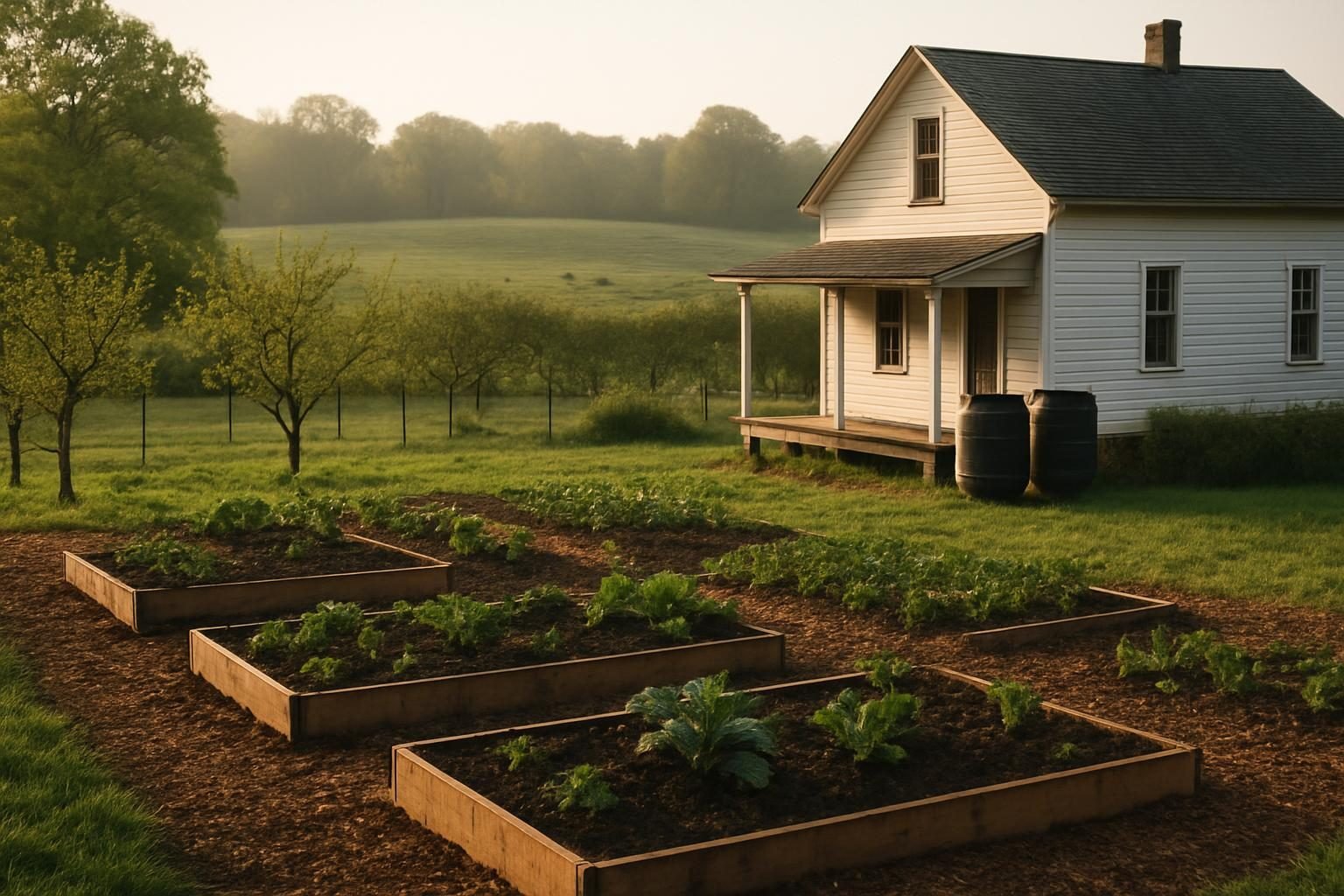
Regenerative systems often favor diversified, management-intensive operations that can support more skilled jobs per acre, local processing, direct sales, and spending at nearby suppliers rather than distant input companies. Small and urban producers add to this; see how to start a market garden for a low-capital entry point. Community-level economic effects are plausible but under-studied, so this is an emerging benefit.
What about carbon and climate?
Soil can store additional carbon under good management, but rates are modest, slow as soils approach a new equilibrium, and can be released if practices stop. Farms are not a silver bullet for climate. Our deeper look at regenerative agriculture and climate change covers what farms can and cannot do. Note too that healthy debate exists; see our upcoming piece on regenerative agriculture criticism for the main arguments. If you want to see what these ideas look like in practice, browse regenerative agriculture examples from working farms.
Is it right for your farm? A quick checklist
- Do you have a clear goal: erosion, input costs, drought buffer, or market premium?
- Can you start on one field or one herd rather than the whole farm?
- Do you control the land long-term, or can you negotiate a lease that rewards soil building?
- Have you talked to your local extension agent or NRCS office about regional recommendations?
- Are you tracking baselines (soil tests, infiltration, yields, costs) so you can see real change?
Differences with other systems are worth understanding too; our comparison of regenerative vs organic farming explains where they overlap and diverge. For more foundational guides, visit the Regenerative Agriculture 101 section.
Key takeaways
- Soil structure, erosion control, and infiltration are the best-supported benefits.
- Resilience shows up most in extreme years, not necessarily in average ones.
- Profitability often improves after a transition period, but early years can cost more.
- Biodiversity gains are real; direct links to pest control or yield are less certain.
- Food quality, community, and carbon claims are promising but should be stated modestly.
- Start small, measure, and adapt to your region.
Frequently asked questions
How long does it take to see benefits from regenerative agriculture?
Some benefits, like reduced erosion and better ground cover, show up within one or two seasons. Gains in organic matter, infiltration, and input savings typically take three to seven years, and profitability improvements often take longer. Climate and soil type change the timeline significantly.
Does regenerative agriculture increase yields?
Not reliably in the short term. Yields can dip in the first couple of years while systems adjust. Over time, many farms see more stable yields, especially in drought or wet years, though average yield gains are inconsistent and depend on crop, region, and management.
Is regenerative agriculture more profitable?
It can be, mainly through lower input costs, steadier production, and sometimes premium markets. But upfront costs, learning curves, and market access matter. Run partial budgets for one field first, and confirm any cost-share with your local NRCS office.
Can regenerative agriculture really store carbon?
Yes, soils can accumulate additional carbon under good management, but the amounts are modest, the rate slows over time, and the carbon can be lost if practices change. It is a useful side benefit, not a complete climate solution.
Do regenerative farms need livestock?
No. Many cropping and vegetable operations are regenerative without animals, using cover crops, diverse rotations, and compost. Livestock can add nutrient cycling and income when well managed, but they are optional and add complexity.