A rainwater harvesting system can cost less than a tank of diesel or more than a used tractor, and the difference comes down to scale and how clean you need the water to be. Most people overspend on tanks and underspend on the boring parts that keep the system working.
This guide breaks a rainwater harvesting system into its components and prices each one at barrel, mid-size and cistern scale, so you can budget realistically and decide where your own labor is worth the savings.
Quick answer: Typical all-in costs run roughly $100-$600 for a one- to three-barrel garden setup, $1,500-$6,000 for a mid-size system (500 to 2,500 gallons) with a pump, and $8,000-$30,000 or more for a cistern system of 5,000 gallons and up, especially if it feeds a house. These are rough ranges that vary widely by region, labor, and site. The tank is usually 30-50% of the total; filtration, pumps, plumbing, and site prep make up the rest. DIY saves the most on gutters, plumbing, tank pads, and simple first-flush devices, and saves the least on electrical work and potable treatment.
What actually drives rainwater harvesting system cost
Four things move the price more than anything else: how many gallons you store, whether the water must be pumped or can flow by gravity, how clean it needs to be, and how much of the work you do yourself. A gravity-fed barrel line to a vegetable bed is a weekend project. A pressurized cistern supplying livestock waterers or a house is a small construction job.
Before you price anything, work out your demand and your supply. Roof area times rainfall gives a rough catchment figure (about 0.6 gallons per square foot of roof per inch of rain, after losses). Our guide to rainwater harvesting for farms and homesteads walks through that math, and the permaculture approach of starting with needs is covered in permaculture design basics. Sizing first prevents the most expensive mistake: buying a tank that is too big or too small.
Cost by component at three scales
The table below shows typical installed ranges for each component. Treat them as planning estimates, not quotes. Material prices, shipping (tanks are bulky), and local labor rates swing these figures a lot, so get current local pricing before you commit.
| Component | Barrel scale (50-300 gal) | Mid-size (500-2,500 gal) | Cistern (5,000+ gal) |
|---|---|---|---|
| Gutters and downspouts | $0-$150 (often existing) | $300-$1,200 | $800-$3,000+ |
| Diverter / first flush | $20-$100 | $75-$400 | $200-$1,000 |
| Tank(s) | $50-$400 | $500-$3,000 | $3,500-$15,000+ |
| Tank pad / base | $20-$100 | $150-$800 | $500-$3,000 |
| Filtration | $10-$75 | $100-$600 | $500-$3,000+ |
| Pump and controls | $0 (gravity) | $150-$700 | $600-$2,500 |
| Plumbing and fittings | $20-$150 | $150-$800 | $500-$3,000 |
Gutters and downspouts
If your roof already has sound gutters, this line can be nearly zero. If not, seamless aluminum installed by a pro costs far more than sectional vinyl or aluminum you hang yourself. Metal roofing gives the cleanest, highest-yield catchment; asphalt shingles shed granules and are fine for irrigation but not ideal for anything you drink. Wood shake and treated roofs deserve a closer look before you collect from them.
Diverters and first flush
The first rain off a roof carries dust, bird droppings, and pollen. A downspout diverter sends water into a barrel and lets overflow continue down the pipe. A first flush diverter discards the dirtiest initial runoff before it reaches storage. A basic first flush device built from PVC pipe and a ball float is a classic DIY project at a fraction of the price of a commercial unit, as long as you size the chamber to your roof area.
Tanks
This is where the budget swings. Food-grade barrels are cheap but small and fiddly to link. Polyethylene tanks are the workhorse for mid-size systems. Cisterns run from poly to fiberglass, steel, concrete, and buried tanks, and burying adds excavation and anchoring cost. For materials, placement, and sizing trade-offs, see rainwater collection tanks.
A useful rule: the cost per gallon drops as tanks get bigger, but the total bill climbs, and an oversized tank in a dry region may rarely fill. Match storage to your rainfall pattern and your dry-season demand.
Barrel scale: what $100-$600 buys
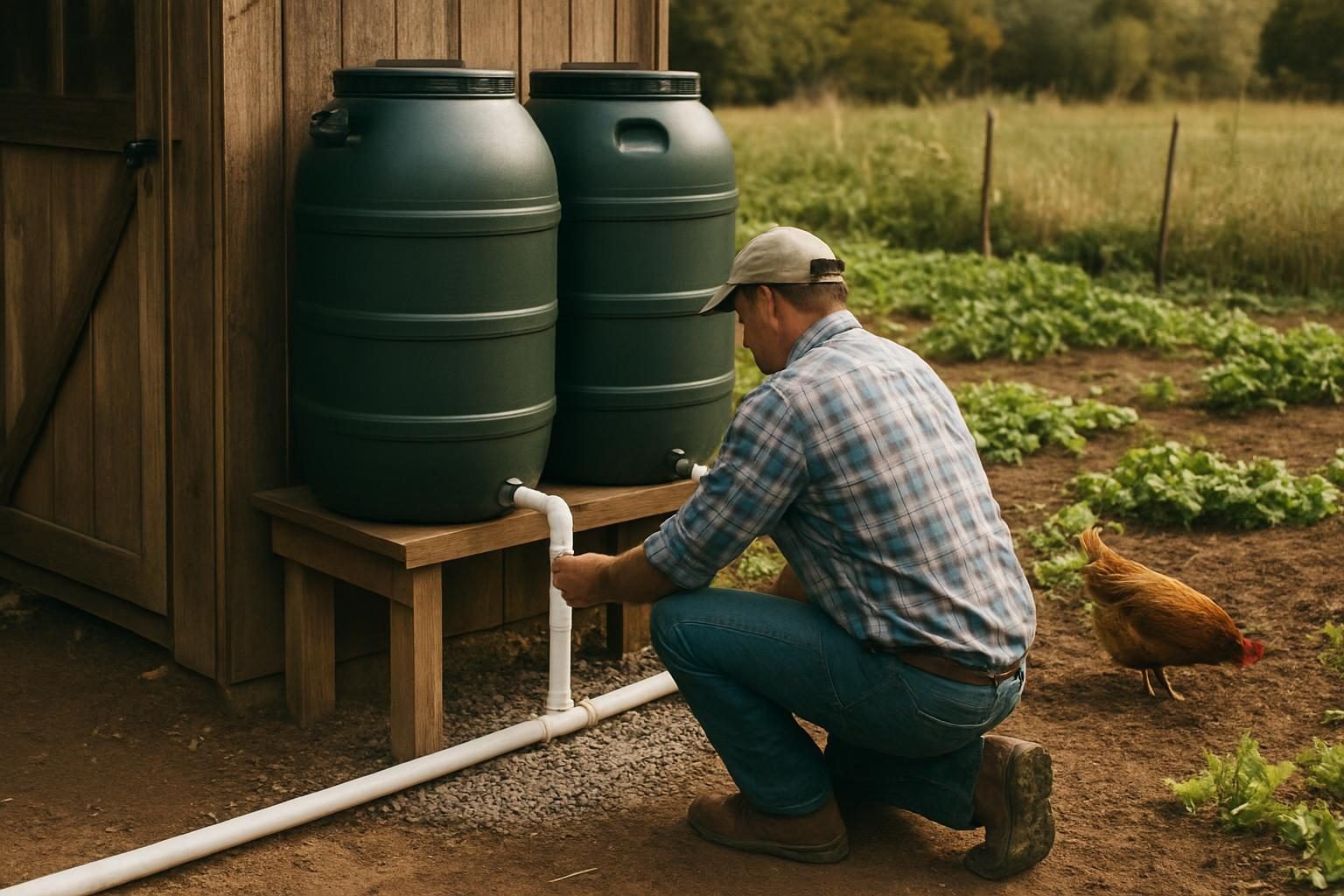
A barrel system is the entry point and often all a market gardener or backyard grower needs. A 55-gallon barrel in the stack is cheap, and the real cost is in the fittings: a bulkhead spigot, an overflow, a screen, and a stand. A raised stand matters because gravity gives you pressure, and roughly one foot of height yields under half a PSI, so elevation helps a hose or drip line.
Linking two to four barrels doubles or quadruples capacity for little extra money. The step-by-step layout is in our rain barrel system guide, and if you plan to run the water to beds, pair it with drip irrigation for small farms and market gardens, which works well at low pressure.
One cost people forget is cold weather. Barrels and lines can crack, so budget time (and sometimes parts) for draining and storage; see winterizing rain barrels, hoses and farm water lines.
Mid-size scale: $1,500-$6,000
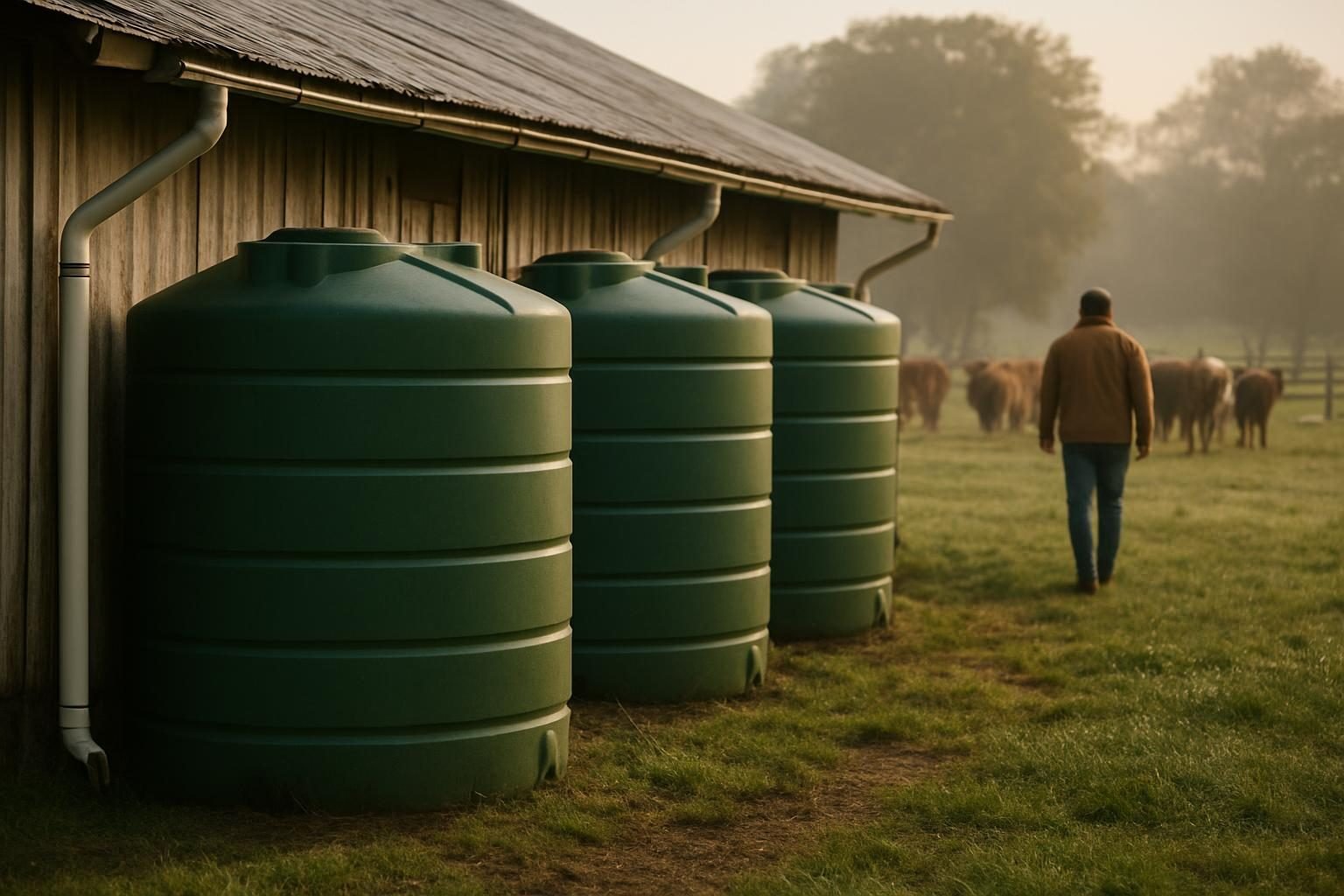
Between roughly 500 and 2,500 gallons you move into poly tanks, a proper base, a pump, and real filtration. This is the sweet spot for a small farm: enough storage to run livestock waterers, a greenhouse, or a drip system through a dry spell.
The pump is the first real decision. A gravity setup needs the tank uphill of the use point. If your site is flat, a small transfer or pressure pump with a pressure switch and tank lets you run hoses and drip zones. Pumps need power, and if you are off-grid, a solar-powered 12-volt pump can avoid trenching in electric service. Electrical work is the one area where hiring a licensed electrician is usually worth it.
Filtration at this scale generally means a leaf screen at the gutter, a first flush device, and a sediment filter before the pump. For stock and irrigation, that is often enough. See rainwater filtration for options by end use. For what the water can safely do once stored, a future guide on rainwater reuse will cover irrigation, livestock, and household uses.
Cistern scale: $8,000-$30,000+
At 5,000 gallons and up you are building infrastructure. Costs climb from excavation for buried tanks, a reinforced pad, a larger pump with a pressure tank, multi-stage filtration, overflow management, and longer plumbing runs. If the water will be treated for household use, add cartridge filtration and disinfection such as UV, plus periodic testing and maintenance. Potable systems are where regulation and health stakes rise, so confirm requirements with your county health department and state agency. Rules vary a lot, and a planned guide on rainwater harvesting laws by state will help you know what to check before you build.
Do not skip the overflow. A big tank in a big storm sends a lot of water somewhere, and that somewhere should be a planned landing spot, not your foundation or a neighbor’s yard. Directing overflow to a rain garden for runoff, a swale, or a pond turns a liability into a resource. See swales and farm pond for those options.
Where DIY saves money (and where it does not)
Labor is the biggest lever you control. A rough guide:
- Good DIY savings: hanging gutters, building a tank pad (gravel and pavers or a poured slab), cutting and gluing PVC plumbing, building a first flush device, setting up barrel stands, trenching, and installing gravity-fed drip.
- Mixed: tank installation (rental of equipment and anchoring needs vary), overflow grading, and basic pump hookups.
- Hire out: buried tank excavation and anchoring in high water tables, electrical service, potable treatment design, and anything touching your home’s plumbing and its backflow requirements.
A realistic way to cut cost is to phase the build. Start with one tank, a good diverter, and clean plumbing stubs, then add storage as the budget allows. Used food-grade totes and tanks can also save money, but check what they held before; anything that stored chemicals is out for plants and animals you eat.
Budgeting and financing
Build a contingency of 10-20% into the budget for fittings, delivery, and surprises like unstable soil or a roofline that fights your downspout locations. Some states and utilities offer rebates or incentives for rain barrels and cisterns, and USDA NRCS and local conservation districts sometimes cost-share water-conservation practices. Programs and amounts change, so confirm current details directly with the agency. For larger projects, farm credit options are explained in our upcoming guide to ag loans, and the broader business picture is in regenerative farming business.
Rainwater storage also pairs naturally with the rest of a water-smart landscape. It slots into agroforestry plans for establishing young trees, and into a fruit tree guild or food forest where a little reliable summer water makes the difference in the first years. You can browse more in the Agroforestry & Water category.
Key takeaways
- Barrel systems run roughly $100-$600, mid-size $1,500-$6,000, and cisterns $8,000-$30,000+, as rough planning ranges that vary by region.
- The tank is often 30-50% of the cost; filtration, pump, plumbing, and site prep add up fast.
- Size to your roof, rainfall, and actual demand before buying anything.
- DIY pays off on gutters, pads, plumbing, and first flush devices; hire out electrical and potable treatment.
- Plan overflow first, check local rules, and phase the build to spread the cost.
Frequently asked questions
How much does a basic rainwater harvesting system cost?
A basic barrel setup typically runs about $100-$600 including a barrel, spigot, screen, stand, and a diverter. Costs rise if you need new gutters or want to link several barrels. These are rough ranges, so check local prices.
Is a cistern worth the cost on a small farm?
It can be if you have steady, year-round demand such as livestock, a greenhouse, or irrigation through a dry season. If you only need occasional garden water, barrels or a mid-size poly tank usually give better value. Run the math on roof area, rainfall, and the gallons you really use.
What is the cheapest way to start?
Begin with one or two food-grade barrels on a sturdy stand, a leaf screen, and a simple diverter, then add capacity later. Putting water to use first, even with a small system, shows you what you actually need before you spend on a larger tank.
Do I need a pump?
Not always. If your tank sits higher than where you use the water, gravity can feed drip lines and hoses. On flat ground or for livestock waterers and sprinklers you will usually want a pump, which adds roughly $150-$700 at mid-size scale.
Is rainwater harvesting legal everywhere?
Collection is allowed in most of the U.S., but some states have rules on volume, use, or permits, and household potable use is typically more regulated. Confirm requirements with your state, county, and local health department before you build.