A regenerative farming business has to do two jobs at once: rebuild soil and pasture, and pay the bills while that happens. Healthy ecology does not automatically produce a healthy bank balance, and farms that treat the money side as an afterthought tend to quit before the soil pays them back. This hub walks through the whole business picture, from transition math to funding, certification, direct sales, pricing and carbon programs.
Quick answer: A regenerative farming business makes money by lowering purchased inputs, adding higher-margin products and selling closer to the customer, while using cost-share, grants and low-interest loans to cover the transition years. Expect a possible dip in yield or output early on, model it before you start, and treat certifications and carbon payments as optional extras rather than the foundation. Always confirm current program details with the agency or certifier.
If you are still getting oriented on the practices themselves, start with our guide to what regenerative agriculture is and how to start. The rest of this guide assumes you know the basics and want to know how the money works. Nothing here is legal, tax or financial advice; talk to your lender, accountant and local extension office about your own numbers.
The economics of the transition: input savings vs. yield dip
Most of the regenerative business case comes down to a trade. You spend less on things you buy (fertilizer, herbicide, purchased feed, fuel, vet bills) and sometimes give up a little output while the system adjusts. Whether the trade works depends on your starting point, your region and how well you manage the change.
Where the money moves
| Line item | Typical direction | What to watch |
|---|---|---|
| Synthetic fertilizer | Down over several years | Soil biology needs time; do not cut nitrogen overnight on cropland without a plan and soil tests. |
| Herbicides and pesticides | Often down | Weed pressure can rise in the first seasons of no-till or reduced tillage. |
| Cover crop seed | New cost, commonly about $15 to $50 per acre depending on mix | Seeding and termination add labor, fuel or equipment cost. |
| Purchased hay and feed | Down on well-managed pasture | Longer grazing seasons only help if the stocking rate matches the forage. |
| Fencing and water | Up front investment | Often the biggest startup cost for adaptive grazing; cost-share can help. |
| Yield or gain per acre | Flat to a modest dip early, with wide variation | Some farms see no dip; others see one for a few seasons. Plan for it. |
| Labor and management time | Up, especially at first | Moving animals, scouting and record-keeping are real hours. |
Published results vary widely by crop, climate and management, so be wary of anyone promising a specific percentage. A better habit is to build your own scenario: a conservative case where yields or gains dip for two or three years, and a better case where they hold steady. If the farm survives the conservative case, you can commit with confidence.
Change one piece at a time
The cheapest way to protect cash flow is to stage the transition. Convert your easiest field or paddock set first, keep good records, and expand once you have your own numbers. A trial on 10 to 20 percent of the acreage teaches you more than a full conversion that goes sideways. Keep a simple log of inputs, labor hours, yields or animal gains, and weather so you can compare treated and untreated ground honestly.
Do not forget the quiet gains
Some benefits are real but hard to put on a spreadsheet: better water infiltration during heavy rain, more resilience in drought, lower soil erosion and easier mornings when animals are on good forage. Count them as risk reduction, not guaranteed income. Extension services and SARE publish farmer-tested case studies for many regions, which are a better benchmark than marketing claims.
Cost-share programs: EQIP and CSP
The USDA Natural Resources Conservation Service (NRCS) runs the two programs most regenerative farmers use first. Both pay you for adopting conservation practices, and both are administered through your local NRCS field office. Funding levels, payment rates, ranking criteria and deadlines change with appropriations and farm bill updates, so confirm everything with NRCS before you plan around a payment.
EQIP: help with practice costs
The Environmental Quality Incentives Program generally reimburses a share of the cost of installing practices such as cover crops, prescribed grazing, fencing, livestock water systems, and nutrient management. Payment rates are based on NRCS cost estimates, not your actual invoices, and certain groups, including beginning, veteran and socially disadvantaged farmers, may qualify for higher rates or set-aside funding. Our deeper guide on EQIP for regenerative farmers covers the application process step by step.
CSP: rewarding the stewardship you already do
The Conservation Stewardship Program is aimed at farms that already manage land well and want to go further. It typically offers multi-year contracts with annual payments for maintaining existing conservation and adding new practices or enhancements. It can suit established grazing and cropping operations that have already put in the fence and water. Think of EQIP as help building the system and CSP as help sustaining and improving it.
How to approach NRCS
- Get your farm records in order. You will usually need to be registered with the Farm Service Agency and have a farm number and documented control of the land.
- Visit your local NRCS office early. Planning conversations can take months, and application cutoff dates matter.
- Ask what practices score well in your county. Priorities differ across the humid East, Corn Belt, arid West and South.
- Do not start work before approval. Practices installed before a contract is signed are usually not eligible for payment. Ask NRCS about any exceptions in writing.
- Plan for reimbursement timing. Payment typically comes after practices are installed and verified, so you need working capital or a short-term loan to bridge it.
Grants and loans for the startup and transition years
Cost-share is not the only help. Grants and loans can fill gaps for infrastructure, equipment, land and working capital, though competition for grants is real and most are small relative to total farm costs.
Grants
Common sources include state departments of agriculture, SARE farmer and rancher grants, local conservation districts, land trusts, and USDA programs aimed at value-added products or specialty crops. Many are for specific purposes such as research trials, processing, or market development. Our guide to farm grants for beginning farmers lays out where to look first. A few habits help with any grant: read the eligibility rules carefully, write to the funder’s stated priorities, and keep a budget you can defend line by line. Never count on a grant that has not been awarded.
Loans
The Farm Service Agency offers direct and guaranteed loans, including microloans for smaller operations and programs with favorable terms for beginning farmers, such as down payment help on land purchases. Loan limits, interest rates and eligibility change, so ask your county FSA office for current terms. Farm Credit institutions, community banks and credit unions also lend to farms, and some local lenders understand grazing, orchards or market gardens better than others. Interview more than one.
A practical rule: borrow for assets that earn their keep, such as water lines, fence, cold storage, a trailer or processing access, and be cautious about borrowing to cover recurring losses. A written farm business plan makes every conversation with a lender or grant reviewer easier, and it forces you to find weak spots before they cost you money.
Certifications and claims: what they cost and what they do
A certification can open doors to buyers and premium prices, but it also adds cost, paperwork and audits. It is not required to farm regeneratively, and there is no federal definition of “regenerative” on a label. Whatever you claim, make sure it is true, verifiable and, for meat and poultry, approved through the right labeling channels. Check with USDA FSIS and your state before printing label claims.
| Program | What it focuses on | Good fit for |
|---|---|---|
| USDA Organic | Federal standard for prohibited inputs and organic practices | Growers and ranchers selling to buyers who want a recognized national label |
| Regenerative Organic Certified | Builds on organic with added soil health, animal welfare and farmworker fairness requirements | Operations already organic and selling to brands or retailers that value the label |
| Land to Market (Ecological Outcome Verification) | Verifies ecological outcomes on the land through monitoring, with a focus on grazing systems | Ranchers who want outcome-based verification tied to a supply chain |
| Certified Regenerative (A Greener World) | Third-party certification of regenerative practices, with ties to animal welfare and farm audits | Diversified farms looking for a practice-based certification |
| Grassfed programs (for example, American Grassfed Association) | Forage-only diets and animal care standards for ruminants | Beef, lamb and dairy producers selling on the grass-fed claim |
Standards, fees and audit requirements change, so verify details directly with each certifier. Our comparison of Regenerative Organic Certified and other regenerative certifications goes deeper on the differences.
Questions to ask before you pay for a certification
- Will my actual customers recognize and pay more for this label, or do they buy because they know me?
- What are the application, inspection and annual fees, and what recordkeeping is required?
- How long does it take, and can I afford the wait without a premium?
- Does the standard match how I really farm, or will I need to change systems to qualify?
For many small direct-market farms, transparency is a perfectly good alternative: open farm days, photos, a written practices statement and honest answers to questions. For farms selling into wholesale or retail channels, third-party verification often matters more.
Selling direct: capturing more of the food dollar
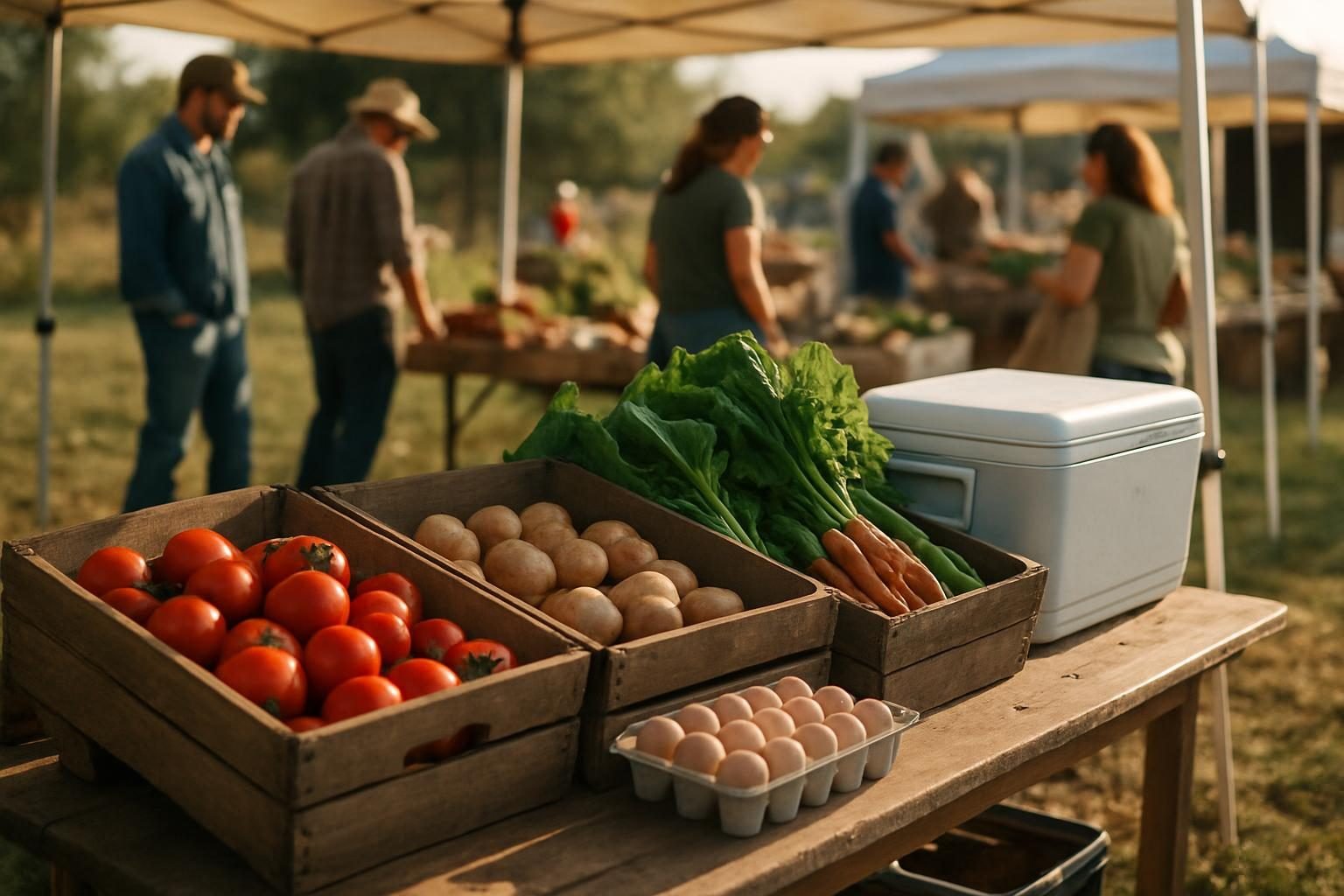
Commodity markets rarely pay extra for regenerative practices. Direct sales can, because you set the price and tell the story. They also demand time, marketing skill and customer service, so weigh the extra margin against the extra work.
CSA (community supported agriculture)
A CSA collects payment before the season, which helps with early cash flow and reduces market risk. It works well for vegetable, egg, flower and mixed farms. The trade-offs are the weekly packing and delivery commitment, member retention and the need to deliver variety and value every week. Start small, survey members every year and adjust.
Farmers markets
Markets give you quick feedback and cash, and they are the best place to test products and prices. The costs include booth fees, a full day or more of labor, and weather. Pick one or two strong markets rather than five weak ones. Our tips on selling at farmers markets cover display, sampling and repeat customers.
Online sales and pickup
Simple online ordering with scheduled farm pickup or local delivery can save you hours at the market. Email lists, text reminders and a basic website matter more than fancy tools. Shipping perishable food adds cost and regulatory questions, so check your state’s rules and consider keeping delivery local.
Freezer beef and other meat shares
Selling whole, half or quarter animals directly to customers is one of the most common ways pasture-based ranchers capture retail-level income. The details matter. In many states, selling shares of a live animal before slaughter to be processed at a custom-exempt facility is allowed, but the meat is typically for the owner’s use only and cannot be resold. Individual cuts sold by the pound usually require USDA or state-inspected processing. Rules vary, so read our guide to how to sell grass-fed beef direct to customers and check with your state department of agriculture before taking deposits. Book processing dates far in advance, because small plants often fill up a year out.
Pricing: cover your costs first, then reflect your value
Underpricing is the most common reason direct-market farms struggle. Customers who buy directly are rarely comparing you to the cheapest supermarket product; they are comparing you to other trusted local sources and to what they believe the product is worth.
- Know your true cost per unit. Include labor (including your own at a fair wage), land costs, feed, processing, packaging, marketing, insurance, fuel and depreciation.
- Add a margin that funds the business. You need money for repairs, taxes, savings and growth, not just a break-even number.
- Check the local market. Look at other farms, co-ops and natural food stores to see where your price sits.
- Test and adjust. Raise prices on products that sell out fast, and look at cost, not just price, on slow movers.
- Be clear about what is in the price. For beef shares, explain hanging weight versus take-home weight and processing fees so customers are not surprised.
If you want a worked method, see our guide on how to price farm products so your farm is profitable.
Enterprise stacking: more income from the same ground
Regenerative systems often support several enterprises on the same acres without needing much more land. Stacking spreads risk and uses resources that would otherwise go to waste, but each added enterprise adds labor and complexity. Add one at a time.
- Grazing sequences: Layer hens or turkeys behind cattle or sheep to work through manure and cut fly pressure, as in the multi-species systems described in our complete guide to adaptive grazing.
- Silvopasture and agroforestry: Combine trees with livestock or forage for shade, timber, nuts, fruit or woody florals over the long term.
- Cropping with livestock: Graze cover crops or crop residue to turn a cost into feed value.
- Value-added products: Jams, sausage, bone broth, eggs, flowers or farm stays can lift income from the same land base.
- Agritourism and education: Farm tours, workshops and u-pick can pay well if you enjoy hosting, but check zoning, insurance and liability requirements first.
Test each new enterprise on paper first: expected sales, labor hours, startup costs, and what you will stop doing to make room.
Carbon programs: possible income, real caveats
Soil carbon and other ecosystem service payments are getting attention, and some farms do earn money from them. They are not a business model on their own. Treat them as a possible bonus and read every contract with a skeptical eye.
- Payment size: Payments per acre are often modest compared with crop or livestock income, and they vary by program and market.
- Measurement and verification: Soil carbon changes slowly and varies across a field. Programs use sampling, modeling or both, and the results can shift with methods.
- Permanence: Carbon stored in soil can be lost if practices change. Contracts may require you to maintain practices for years, sometimes tied to the land title.
- Additionality and early adopters: Some programs only pay for new practices, which can leave out farmers who already did the work.
- Data and contract terms: Ask who owns your data, what fees are taken, how long the commitment lasts, and what happens if you sell or lease the land.
Ask your lawyer and accountant to review any agreement, and see our explainer on carbon credits for farmers and how soil carbon programs work for more detail. Do not change your management or take on debt because of a projected carbon payment.
A beginner roadmap: your first 12 months
- Months 1 to 2: Define the goal. Decide what you want the farm to earn, how many hours you can work and how much risk you can carry.
- Months 2 to 3: Know your baseline. Gather soil tests, forage inventories, financial statements and yield or gain records.
- Months 3 to 4: Write a simple plan. Include a conservative cash flow with a possible yield dip.
- Months 4 to 6: Talk to the agencies. Visit NRCS and FSA, ask your extension office about local grants, and meet two lenders.
- Months 6 to 9: Start a pilot. Change one field, herd or enterprise, and track costs and results.
- Months 9 to 12: Test your market. Sell through one direct channel, gather customer feedback and adjust pricing.
- After year one: Decide on certification, expansion or stacking based on your real numbers.
Browse more topics in our Farm Business & Funding section as you move through each step.
Key takeaways
- Model a conservative transition scenario, including possible yield dips, before you commit.
- Use NRCS programs such as EQIP and CSP, grants and FSA loans to reduce startup risk, but confirm current rules and never start work before approval.
- Certification is a tool, not a requirement. Pick it only if your buyers will pay for it.
- Direct sales can capture more margin, but they cost time. Start with one channel and do it well.
- Price to cover true costs, including your own labor, and add a margin the farm can live on.
- Stack enterprises one at a time, and treat carbon payments as a bonus, not a foundation.
Frequently asked questions
Is a regenerative farming business profitable?
It can be, but it is not automatic. Profit tends to come from lower input costs, better use of pasture or cover crops, and direct or premium markets. Early years may bring lower yields and higher labor or infrastructure costs, so plan cash flow carefully and start with a pilot.
Do I need certification to sell regenerative products?
No. Certification is optional, and there is no federal definition of “regenerative.” Many direct-market farms build trust through transparency and relationships. Certification can help with wholesale, retail or brand buyers, but weigh the fees and paperwork first and make sure any label claim is accurate and approved where required.
What funding is available for a regenerative transition?
Common sources include NRCS programs such as EQIP and CSP, FSA loans, state and local grants, SARE grants and private lenders. Availability, amounts and deadlines change, so check with your local NRCS, FSA and extension offices for current details.
Can I make money from carbon credits?
Some farms do, but payments are often modest and come with contract conditions around measurement, permanence and data. Read the agreement carefully, get professional advice, and do not rely on carbon income to justify major investments.
What is the easiest way to start selling directly?
Pick one channel that fits your product and schedule. A farmers market is good for testing prices and getting feedback, a CSA suits vegetables and eggs, and pre-sold freezer beef works for ranchers. Check state rules on processing and labeling, then add other channels as you gain customers.