Water is the part of a grazing system that quietly decides whether everything else works. If animals have to walk a quarter mile to a pond, you cannot move them freely, you cannot rest paddocks on a real schedule, and the banks of that pond pay the price. A good water system is what makes small paddocks and frequent moves practical.
This guide covers how much water your animals need, how far they should have to travel for it, and how to choose between above-ground and buried pipe, portable troughs, tanks, and solar pumping. It also covers freeze protection and where cost-share money may help.
Quick answer: The best water systems for rotational grazing put clean water within about 600 to 800 feet of every paddock. Most operations do that with a pressurized main line (buried or above-ground), quick-coupler hydrants, and portable troughs or fixed tanks. Plan for roughly 1 to 3 gallons per 100 pounds of body weight per day for most livestock, more in heat, then size pipe and storage for peak demand. NRCS cost-share may cover part of the cost, so confirm current details with your local office.
Why water design drives your grazing plan
In rotational grazing, paddock layout follows water. When every paddock has access to a trough, you can cut the pasture into whatever shape and size the forage calls for instead of whatever shape touches a creek. That flexibility is the whole point of adaptive multi-paddock grazing.
Distance matters because animals that travel far for water tend to trail along the same path, compact soil, and graze the area near water harder than the rest. Extension research generally finds that livestock drink more, and spread out more evenly, when water is close. Keeping animals out of ponds and streams also protects water quality and reduces hoof damage on banks.
How much water do your animals need?
Intake varies with temperature, forage moisture, lactation, and salt or mineral intake. The ranges below are typical figures from extension guidance; treat them as planning numbers, not guarantees, and size for your hottest weeks.
| Animal | Typical daily intake per head | Notes |
|---|---|---|
| Beef cow (dry or with calf) | 8 to 20 gallons | Upper end in summer heat and for lactating cows |
| Dairy cow (lactating) | 20 to 40 gallons | High demand around milking times |
| Sheep and goats | 1 to 4 gallons | Lactating ewes and does drink more |
| Horse | 8 to 15 gallons | Increases with work and heat |
| Pigs (grower to sow) | 1 to 6 gallons | Also need wallow or cooling water in heat |
| Chickens (per 100 birds) | 5 to 15 gallons | Roughly double in hot weather |
To size a system, multiply head count by the high-end figure, then add a safety margin. A 100-cow herd at 20 gallons per head needs around 2,000 gallons a day in a hot spell. Cattle tend to drink in a burst, often a large share of the herd within an hour or two, so trough refill rate matters as much as total volume. Mixed-species setups, such as those described in multi-species grazing, may need separate trough heights or access points.
How far should animals walk to water?
A common guideline from grazing specialists is to keep water within about 600 to 800 feet of any point in a paddock, and closer is better for lactating animals and in rough terrain. In flat, open country, some operators stretch toward 1,000 feet; in steep or brushy ground, they go shorter.
A few practical rules of thumb:
- Place troughs where several paddocks meet, so one tank can serve a cluster of pastures in a wagon-wheel layout.
- Put permanent tanks on well-drained, firm ground, and move portable troughs each time you move the herd.
- Keep water away from stream banks, wetlands and wells to protect water quality.
- On hilly ground, think about gravity feed from a high point; keyline design thinking can help you site storage and lines.
Above-ground pipe vs. buried pipeline
This is the biggest design decision, and the right answer depends on climate, budget and how permanent your paddock layout is.
Above-ground (surface) lines
Black polyethylene (poly) pipe laid on the surface is cheap, fast to install and easy to reroute. It is a good fit for leased land, new graziers still learning their layout, and seasonal operations in mild climates. Drawbacks: it can freeze, it gets hot in summer (water in a black line can warm noticeably), it can be chewed or run over, and it needs periodic checks for leaks. Burying a line across gates and lanes, or running it in a shallow trench, reduces damage.
Buried lines
A buried main, typically poly or PVC, gives you year-round, tidy, frost-protected water when laid below frost depth. It costs more up front, takes equipment and planning, and is harder to change later. Many farms compromise: a buried main along the lane or fence line, with hydrants every few hundred feet, and above-ground lateral lines that connect to portable troughs.
- Surface-only: lowest cost, most flexible, best for experimenting and short seasons.
- Buried main plus surface laterals: best balance for most working ranches.
- Fully buried with fixed tanks: best for permanent layouts and cold climates, but you commit to the paddock design.
Pipe diameter matters. Undersized lines cause slow refills and pressure drops over distance. As a rough guide, 3/4-inch to 1-inch pipe suits small herds and short runs, while larger herds or long mains commonly use 1.25 to 2 inch or larger. Your NRCS planner, extension agent or a pipeline supplier can run flow calculations for your herd and elevation changes.
Quick couplers, hydrants and portable troughs
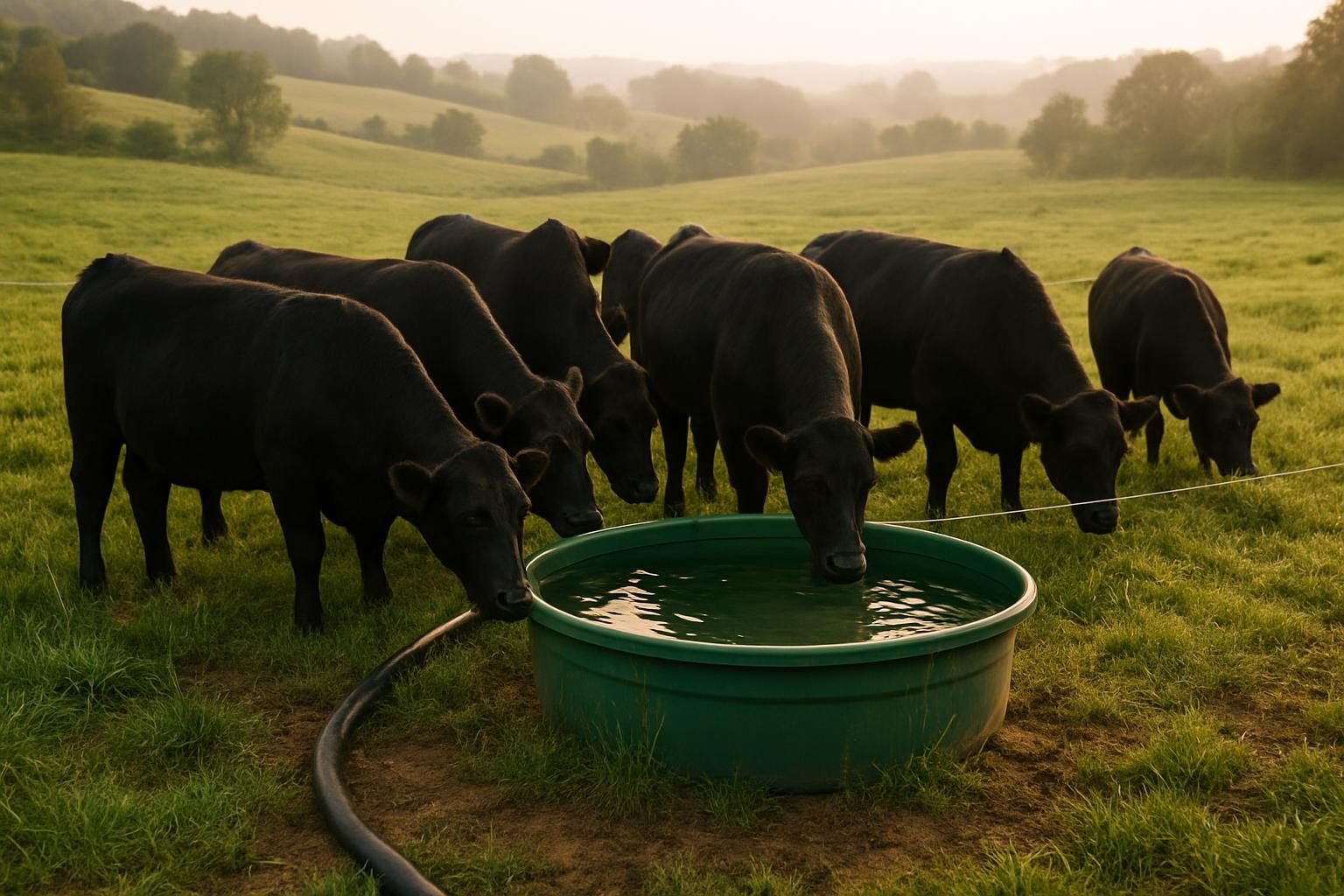
Quick couplers turn a pipeline into a flexible grazing tool. A hydrant or valve box sits along the main; you snap a hose or poly lateral into it, run it to a trough in the current paddock, and unhook when you move. Spacing hydrants every 300 to 600 feet keeps hose runs short.
Choosing portable troughs
- Size: A common rule is to hold at least a half-day to a full day of peak demand, or have a refill rate that matches the herd’s burst drinking.
- Float valves: Use a rugged, protected float, because cattle will break exposed ones.
- Material: Rubber and heavy poly troughs resist cold cracking better than thin plastic; concrete and steel suit permanent sites.
- Drain plug: Makes cleaning easy, and clean water means more drinking.
- Weight and tipping: Anchor or weigh down troughs in wind, and stabilize them against rubbing animals.
For pasture poultry and small stock, gravity-fed nipple or cup waterers on a hose line work well; see pastured poultry for how water fits into daily moves. Pigs are hard on equipment, so choose heavy-duty fixtures when you plan pastured pigs.
Tanks, storage and gravity feed
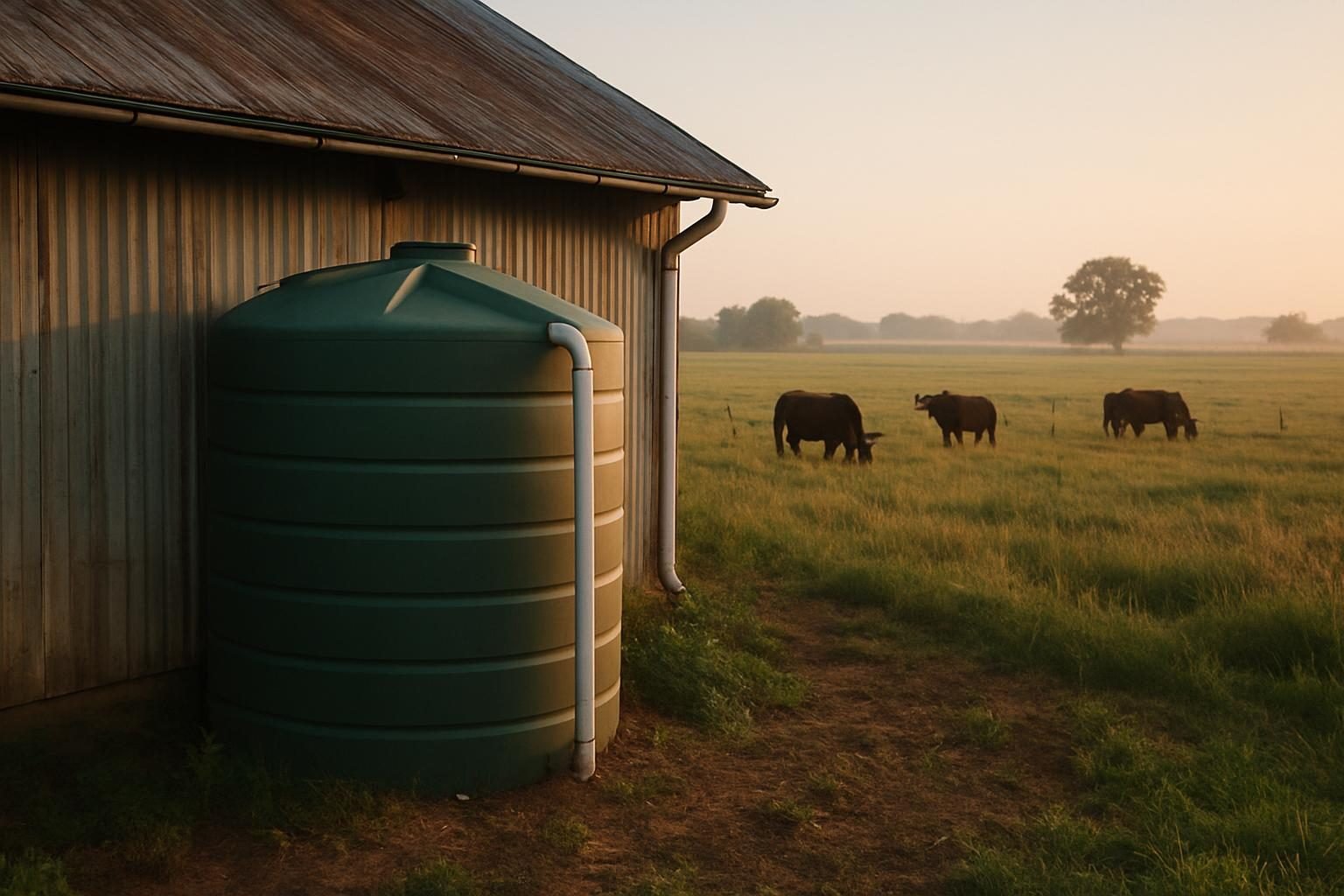
Storage tanks smooth out peaks. A tank on a hill can feed troughs below by gravity with no power at all, which is hard to beat for reliability. Even a few thousand gallons of storage gives you a buffer against pump failures, power outages, or a low-yielding well or spring.
Rule of thumb: store at least one to three days of peak herd demand where you can, more if your source is slow. Keep stored water shaded or buried where possible, because warm, sunny water grows algae and tastes worse. Check tanks in summer and during drought for sediment and algae.
Solar pumps for remote pastures
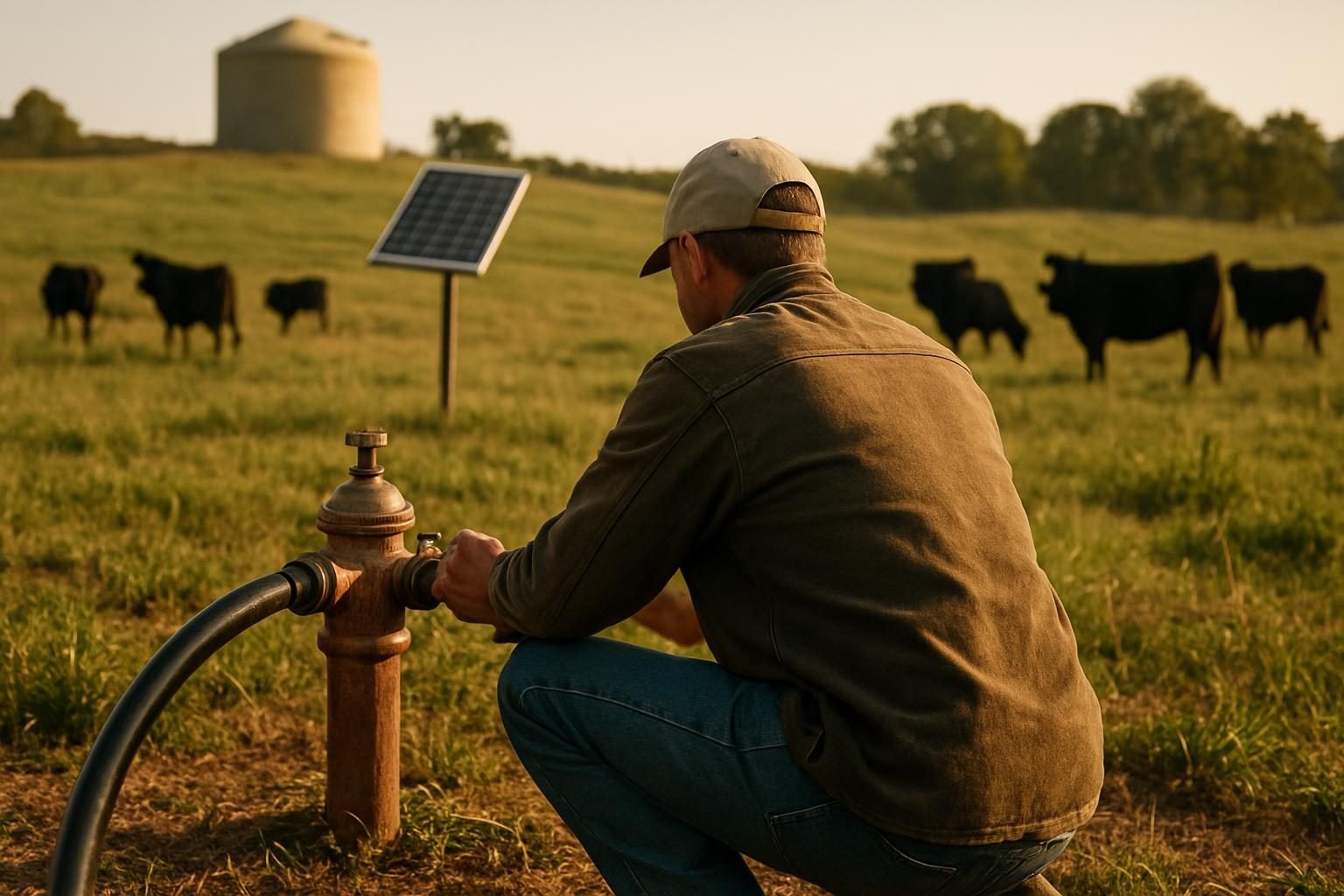
Solar pumping has become a practical answer for pastures with no power line. A typical system pairs one or more panels with a DC pump that moves water from a well, pond, or spring up to a storage tank, and gravity delivers it to troughs. Because the pump runs when the sun shines, you size the storage tank to carry animals through nights and cloudy days.
- Estimate peak daily demand (head count times high-end gallons per head).
- Measure the vertical lift and the pipe run length, since both set the pump size.
- Size panels and the pump to deliver that volume in your region’s worst-case sun hours.
- Add a storage tank that covers one to three days of demand.
- Install float switches and a filter or screen on the intake to protect the pump.
Pump ratings vary a lot by manufacturer and site, so get a flow-and-lift calculation from a supplier or NRCS planner rather than guessing. Theft, lightning and animal damage are real risks, so mount panels out of reach and fence them.
Freeze protection and hot-weather tips
In cold regions, plan for water from the start. Options include:
- Burying mains below local frost depth, which varies widely by region; ask your extension office for your number.
- Using frost-free hydrants and freeze-resistant fittings at permanent sites.
- Insulating or ground-sourcing tanks, or using propane- or electric-heated fountains where power exists.
- Keeping water moving, since flowing lines resist freezing better than still ones.
- Draining surface lines in fall in climates with hard freezes.
If you graze through winter, such as with bale grazing or stockpiling forage, water access in deep cold is often the limiting factor, so design for it first. In hot, arid regions, the reverse applies: shade your lines and tanks, keep flow capacity high, and watch for algae.
Cost-share through NRCS
USDA NRCS has historically offered cost-share for livestock water developments, including pipelines, tanks, troughs, wells, spring developments and pumping plants, usually through programs such as EQIP. Payment rates, eligibility, ranking and available funds differ by state and change from year to year, so confirm the current details with your local NRCS service center before buying anything. Practices generally have to be approved and planned before installation to qualify.
If you are already enrolled, ask whether water development can fit into your plan; our guide to the Conservation Stewardship Program covers one related option. Beginning farmers may also qualify for other support; see farm grants for beginning farmers, and for the bigger funding picture see the regenerative farming business hub.
A simple planning checklist
- Count animals and calculate peak daily water demand with a margin.
- Identify your water source and test its flow, quality and reliability.
- Map paddocks and mark where trough sites could serve several of them.
- Choose line type (surface, buried, or a mix) based on frost depth and how fixed your layout is.
- Size pipe, storage and pump using a flow calculation, not a guess.
- Add hydrants and quick couplers every few hundred feet.
- Plan for freeze and heat, then talk to NRCS before you buy.
Good water also supports good stocking decisions; once it is in place, revisit how many acres per cow and your move schedule, and consider whether mob grazing could work on your ground. For the full picture, see our Grazing & Livestock section.
Key takeaways
- Water placement shapes your paddocks, so design it first.
- Plan on roughly 8 to 20 gallons per beef cow per day, more in heat; size for peak demand and burst drinking.
- Keep water within about 600 to 800 feet of animals, and closer where terrain or lactation demands.
- A buried main with surface laterals and quick couplers works for many farms.
- Storage tanks and gravity feed add reliability; solar pumps reach pastures without power.
- Plan freeze protection early, and confirm NRCS cost-share before installing.
Frequently asked questions
How much water does a cow need per day?
Most beef cows drink roughly 8 to 20 gallons a day, with the high end in hot weather or during lactation. Dairy cows in milk can drink 20 to 40 gallons. For operations focused on grass finished beef, understanding water needs during the finishing phase is especially important. Size your system for your hottest week and for burst drinking, when much of the herd drinks at once.
How far should cattle have to walk to water?
A widely used guideline is about 600 to 800 feet from any point in the paddock. Shorter distances help on steep ground and for lactating cows. Closer water improves grazing distribution and reduces trailing and compaction.
Is buried or above-ground pipe better for rotational grazing?
Neither wins everywhere. Above-ground poly is cheap and flexible but can freeze and overheat. Buried lines cost more but give year-round water in cold climates. Many farms bury a main line and use surface laterals with quick couplers to portable troughs.
Can I run a rotational grazing system on solar power?
Yes. A solar pump can lift water from a well, pond or spring into a storage tank, with gravity delivering it to troughs. Size panels and pump for your lift and demand, and use enough storage to cover nights and cloudy days.
Does NRCS pay for livestock water systems?
NRCS has commonly offered cost-share for pipelines, tanks, troughs, wells and pumping plants through programs like EQIP. Rates, eligibility and funding vary by state and year, so contact your local NRCS office to confirm current details, and get approval before you start work.