Pygmy goats are small, hardy, friendly animals that fit on a homestead where a full-size dairy or meat goat would not. They are also escape artists, herd animals and surprisingly demanding about the basics. This guide covers pygmy goats care from the ground up: shelter, fencing, feed, minerals, hooves, parasites and how to graze them on a small acreage.
Quick answer: Pygmy goats need at least two animals, a dry draft-free shelter (roughly 10 to 15 square feet per goat indoors), tight fencing at least 4 feet high, free-choice loose goat minerals, good hay or browse, hoof trims every 6 to 10 weeks and regular parasite checks using FAMACHA scoring and fecal counts. Plan on a small, rotated pasture rather than one fixed lot, and do not expect them to clear dense brush the way larger breeds can.
Why pygmy goats suit small homesteads
Adult pygmies typically weigh 50 to 85 pounds and stand 16 to 23 inches at the shoulder. They eat less hay than a standard goat, are easy to handle and tolerate a range of climates. Many people keep them as pets, as lawn companions or as part of a diverse small-scale regenerative farm.
The trade-off is that small size does not mean small needs. A pygmy still has a four-chambered rumen, a strong herding instinct and a talent for finding the one weak spot in a fence.
Herd size: never keep just one
Goats are social. A single goat will often scream, pace and chew on everything, and no amount of human attention fully replaces a herd mate. The practical minimum is two. Two wethers (castrated males) or two does is the easiest setup.
- Wethers: Calm, no kidding, no odor of an intact buck. Best for pets and light vegetation work.
- Does: Can be milked in small amounts (pygmies are not high producers) and bred, but kidding adds work and vet considerations.
- Bucks: Smelly, noisy and need separate housing and sturdy fencing. Skip unless you are deliberately breeding.
If you do plan to breed, the principles in our guide to breeding goats, kidding and herd plans apply broadly, though pygmies are a smaller, slower-maturing type with their own quirks. Check local zoning and county rules before adding animals; some areas restrict livestock on small lots.
Shelter and bedding
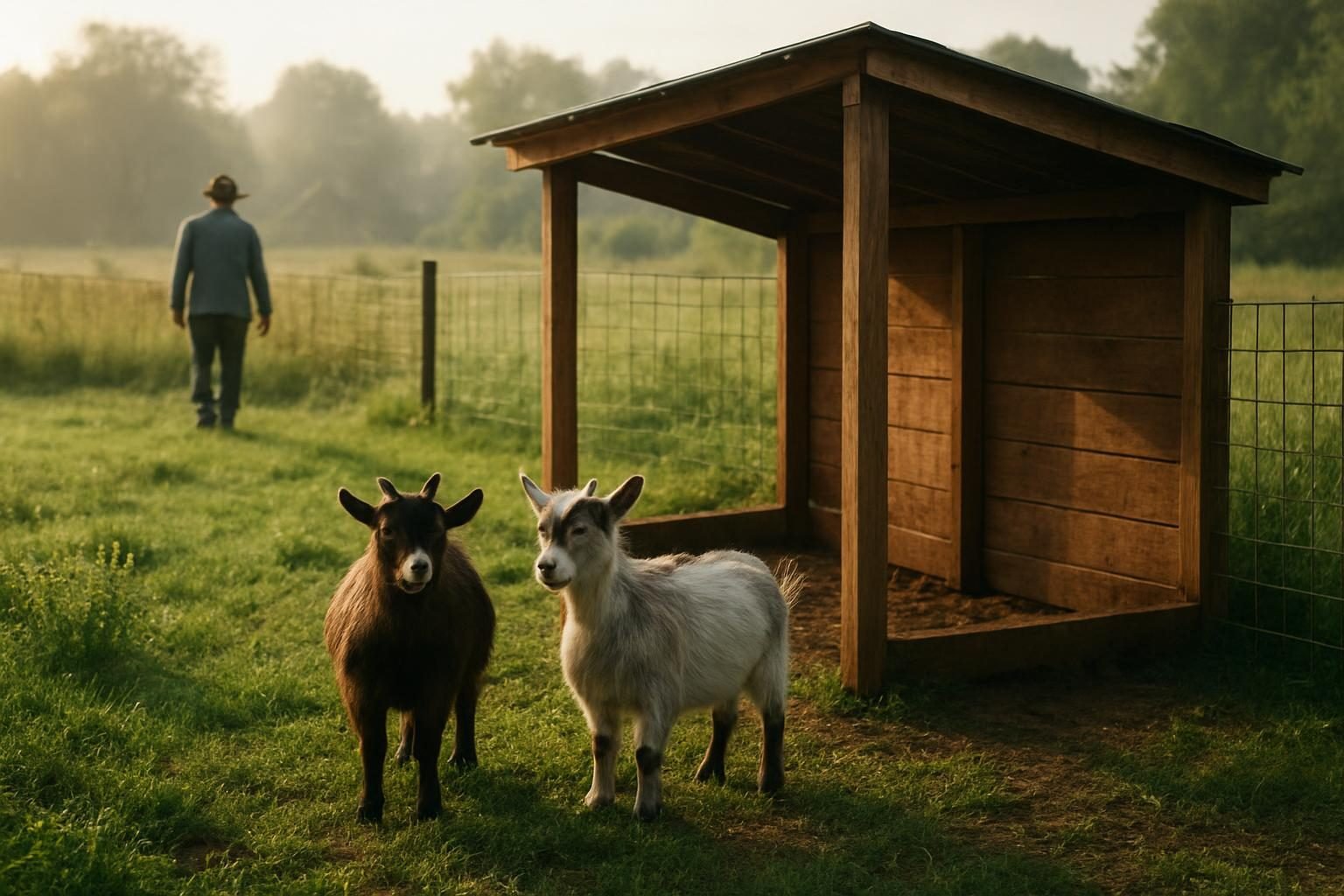
Goats hate wet weather more than cold. A three-sided shelter that blocks wind and rain, with the open side facing away from prevailing weather, is usually enough in most of the country. In very cold northern regions, a tighter, draft-free but ventilated structure helps, especially for kids and pregnant does.
Space and design
- Roughly 10 to 15 square feet per goat of covered indoor space, plus 20 to 30 square feet each of outdoor exercise area as a bare minimum (more is better).
- A raised sleeping platform gives goats a place to climb and stay off damp ground.
- Good ventilation matters. Ammonia buildup and damp air cause respiratory problems.
- Dry bedding: straw, wood shavings or the deep-bedding method, where you add fresh material over the top and clean out in spring.
The deep-bedding pack is worth saving: composted goat bedding makes a fine soil amendment. See our soil health guide for how to put that manure and bedding to work.
Fencing that holds a pygmy
Pygmies can squeeze through gaps you would not think a goat could fit, and they climb. Use 4-foot woven wire or cattle panels with openings small enough that heads and kids cannot get stuck. Avoid wide-mesh fencing with openings larger than about 4 by 4 inches for young animals.
Electric fencing can work, but you need a fence with enough wires and a charger strong enough for the vegetation load. Goats have thick hair and short legs, so low, closely spaced hot wires matter. If you are choosing equipment, our guides on choosing an electric fence energizer and electric fence setup for rotational grazing cover the principles, though goat fencing needs tighter spacing than cattle fencing.
Keep goats off ornamental trees you care about. They will strip bark.
Feed, forage and minerals
Goats are browsers first and grazers second. They prefer variety: leaves, twigs, forbs, weeds and grass. A diet built on good-quality grass hay, supplemented with browse, suits most pygmies well.
What to feed
- Hay or pasture: The foundation. Expect an adult pygmy to eat roughly 2 to 4 percent of body weight in dry matter daily, which works out to a few pounds of hay.
- Browse: Leaves and twigs from safe trees and shrubs add variety and nutrients.
- Grain: Usually unnecessary for wethers and non-lactating does. Overfeeding grain is a common cause of obesity and urinary problems in males.
- Fresh water: Clean, available all the time. Goats refuse dirty water.
Minerals and urinary health
Provide a loose, goat-specific mineral free-choice. Do not substitute sheep mineral, which lacks adequate copper that goats need, and avoid block salt as the only source. Wethers are prone to urinary calculi (stones), which can be fatal. A calcium-to-phosphorus ratio of around 2:1 in the overall diet helps, and so does avoiding heavy grain feeding. Ask a local vet or your extension office about regional selenium and copper status, as soils vary widely.
Plants to avoid
Goats can be poisoned by rhododendron, azalea, laurel, wilted wild cherry leaves, yew and others. Walk your pasture and fence lines before turning goats out, and check with your extension service for toxic plants specific to your region.
Small-space grazing rotation
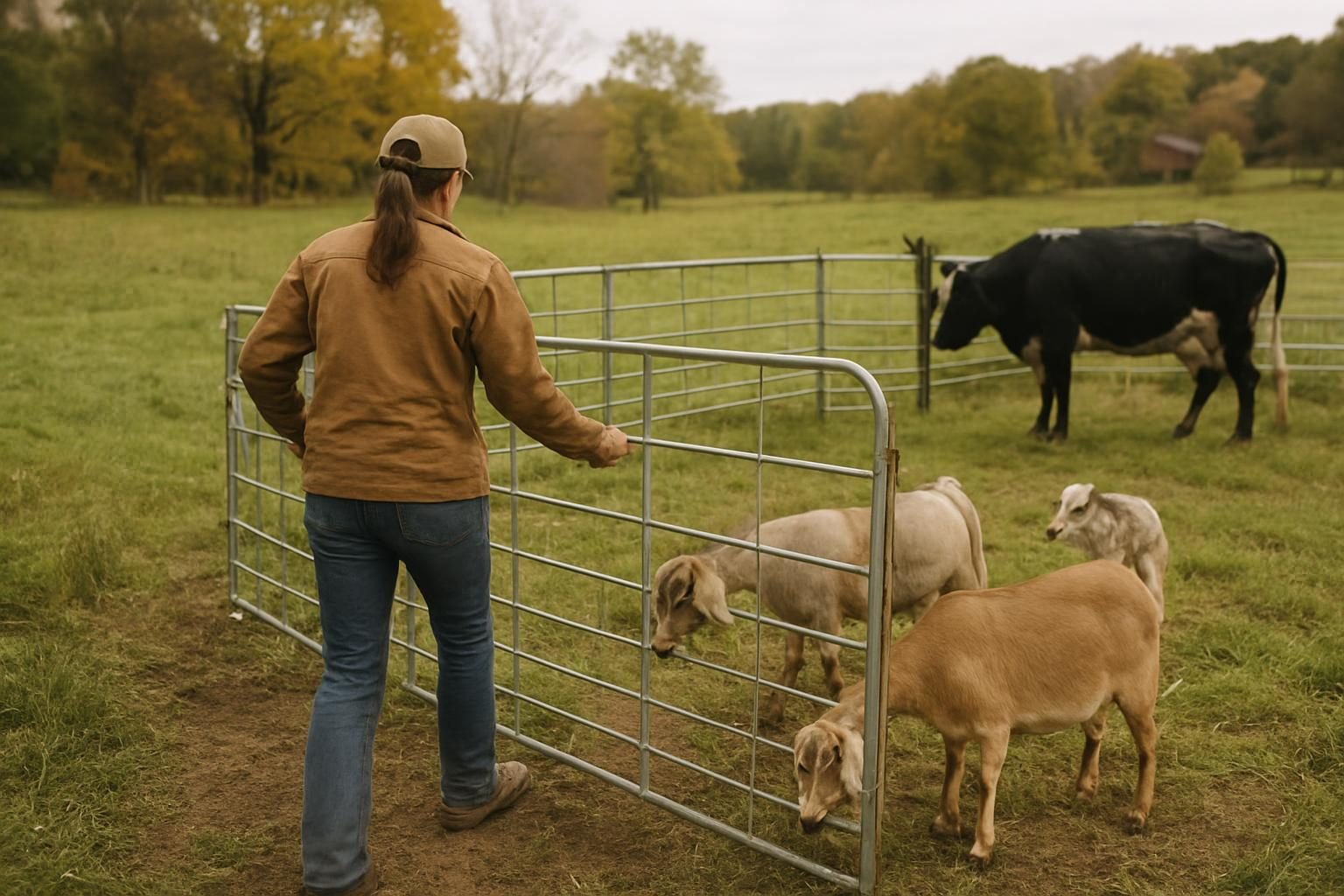
Letting goats roam one small lot until it turns to dirt is hard on pasture and drives up parasite pressure. Rotating them through smaller paddocks keeps forage healthier and breaks parasite life cycles. The same principles from rotational grazing for beginners apply, scaled down.
- Divide your space into at least three or four paddocks using portable fencing or cattle panels.
- Move goats before they graze plants down to a few inches. A rough guide is to take about a third to half of the forage height.
- Rest each paddock long enough for full regrowth, often 30 to 60 days in growing season, longer in dry or cold conditions.
- Give goats access to the shelter and water from every paddock, or use a hub-and-spoke layout around a central shelter.
- In wet seasons, rest paddocks longer to avoid parasite buildup in warm, damp conditions, especially in the humid East and South.
Watering is easier than you think but easy to underbuild; see our guide to water systems for rotational grazing for small-scale tank and trough ideas. For the bigger framework, the complete guide to rotational grazing is the hub for this topic, and the Grazing & Livestock category collects related guides.
Hoof care
Hooves grow constantly. Overgrown hooves cause lameness, foot rot and poor posture. Trim every 6 to 10 weeks, more often on soft ground and less often on rocky or abrasive terrain.
- Use sharp hoof trimmers and trim after rain when hooves are soft.
- Aim for a flat sole and a heel level with the toe, trimming away overgrown wall and avoiding the pink tissue.
- Stop if you see blood. Keep styptic powder or cornstarch handy.
- Check for foul smells, heat or swelling between the toes, which point to foot rot or scald.
If you have never trimmed hooves, ask an experienced goat keeper or a vet to show you once.
Parasite checks and basic health
Internal parasites, especially barber pole worm (Haemonchus contortus), are the biggest health threat in many regions, particularly warm and wet ones. Routine, blanket deworming has driven resistance, so most extension programs now recommend targeted treatment.
A simple monitoring routine
- FAMACHA scoring: Check the lower eyelid color of each goat every 2 to 4 weeks in grazing season. Pale tissue suggests anemia. Training is available through many extension offices.
- Fecal egg counts: Your vet or a lab can run them, especially before and after any treatment.
- Body condition: Feel the spine and ribs. Thin goats or those with bottle jaw (swelling under the chin) need attention quickly.
- Treat selectively: Work with a vet on which animals and which dewormer, rather than treating the whole herd on a calendar.
Other routine items to discuss with your vet: CD&T vaccination, coccidiosis in kids, lice and mites, and disease screening such as CAE and CL if you buy animals or breed. Buy from herds with testing records where possible, and quarantine new animals for several weeks. This article is general information, not veterinary advice.
When pygmies suit brush control and when they do not
Pygmies will eat brush, but their size limits what they can accomplish. They reach only so high and have less body mass to power through thick, woody growth.
| Situation | Pygmies suitable? | Notes |
|---|---|---|
| Small yard, tall weeds and light brush | Yes | Good fit for low vegetation and edges. |
| Poison ivy, blackberry, multiflora rose seedlings | Partly | They will browse young growth; mature thickets need larger or more animals. |
| Dense, tall woody brush over several acres | No | Standard-size meat or fiber goats do far better. |
| Steep, rocky ground | Sometimes | Nimble, but predators and fencing are harder to manage. |
| Orchards and young trees | No | Bark stripping and browsing will damage trees without protection. |
For serious vegetation work, look at our guide to raising goats for brush control and profit. If you want to mix species, multi-species grazing shows how goats, sheep and cattle complement each other, and raising sheep for beginners is a useful companion if you are weighing options. Where trees are part of the plan, see agroforestry and silvopasture, and be cautious about putting goats among young trees.
Key takeaways
- Keep at least two pygmies; single goats are stressed and noisy.
- Provide a dry, draft-free shelter and secure 4-foot fencing with small openings.
- Feed good hay and browse, offer free-choice goat minerals and limit grain, especially for wethers.
- Trim hooves every 6 to 10 weeks and check parasites with FAMACHA and fecal counts.
- Rotate small paddocks to reduce parasite pressure and protect pasture.
- Pygmies suit light weeds and yard work, not dense brush clearing.
Frequently asked questions
How much space do pygmy goats need?
A common minimum is about 10 to 15 square feet of covered shelter per goat and 20 to 30 square feet each of outdoor space, though more is better. For grazing, a few animals do well on a small acreage if you rotate paddocks and supplement with hay.
Can pygmy goats live alone?
They should not. Goats are herd animals, and a lone goat is usually stressed, vocal and destructive. Keep at least two, and consider wethers if you do not want to breed.
What do pygmy goats eat?
Mostly grass hay, pasture and browse such as leaves and twigs, plus clean water and free-choice goat minerals. Grain is usually not needed and can cause urinary stones in males, so use it sparingly if at all.
How often do pygmy goats need hoof trimming and deworming?
Trim hooves about every 6 to 10 weeks. Rather than deworming on a fixed schedule, monitor with FAMACHA scoring and fecal egg counts and treat only animals that need it, working with a vet or your extension service.
Are pygmy goats good for clearing brush?
They help with weeds and light, young brush, but they are too small to clear dense or tall woody growth over large areas. Standard-size meat goats are a better choice for serious brush control.