Goats are the most capable brush-clearing livestock most farms can own, and they turn weeds, vines, and woody regrowth into meat, milk, or a paying service. They are also escape artists with a talent for parasites, so success depends on fencing, rotation, and health management more than on the animals themselves. This guide covers how goats eat, how to contain them, how to build a targeted grazing business, and how to run them alongside cattle.
Quick answer: Goats are browsers, not grazers: they prefer woody plants, vines, forbs, and leaves over short grass, which makes them ideal for brush control. Raising goats profitably means pairing high stock density and short moves with tight fencing (typically 4 feet or taller, woven wire or multi-strand electric), strict parasite management, and either meat and breeding sales or paid targeted grazing contracts. Expect roughly 4 to 8 goats per acre for short, intense brush-clearing periods, far fewer for long-term pasture.
Browse vs Graze: Why Goats Eat Differently
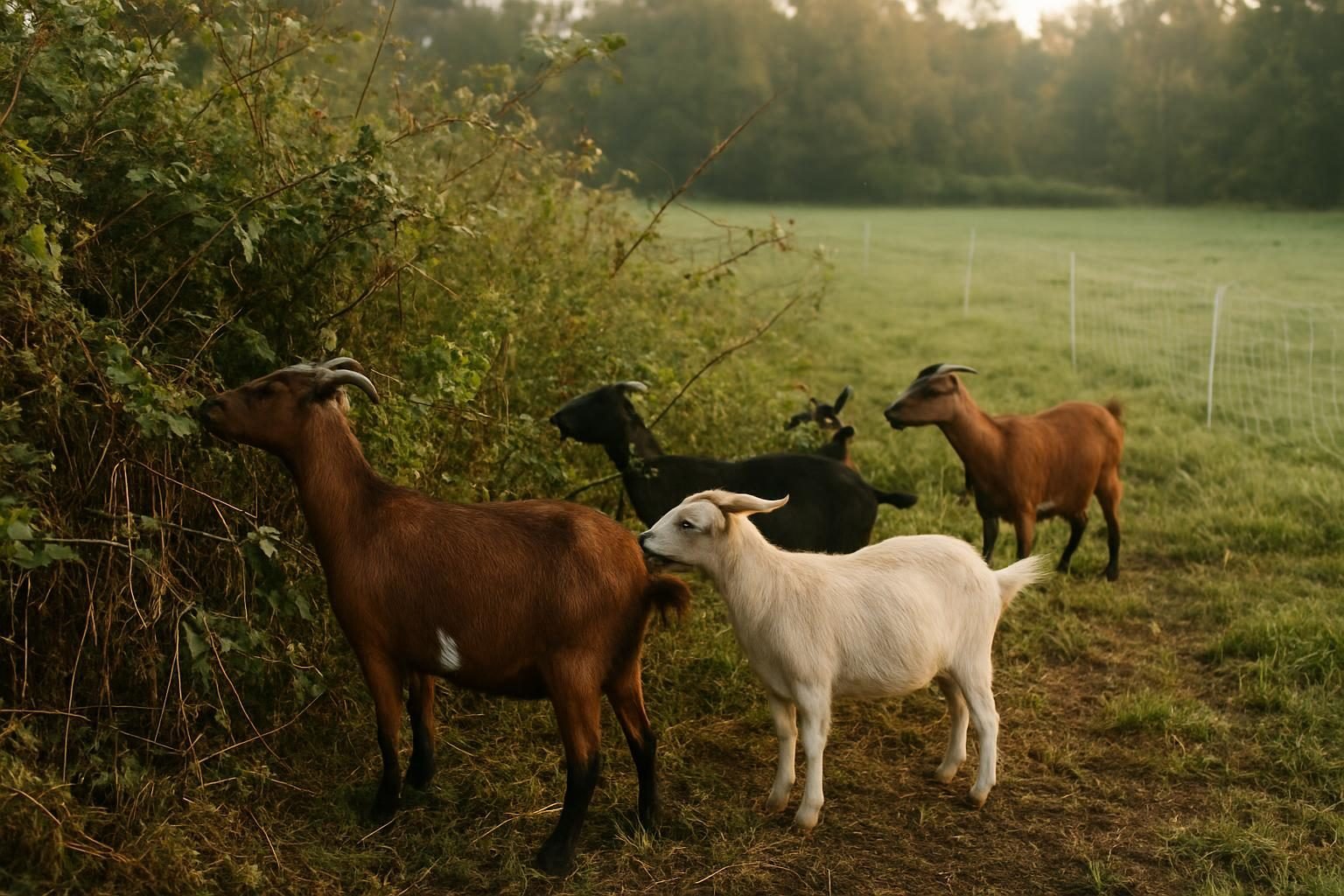
Cattle and sheep are mostly grazers. They bite grass close to the ground. Goats are intermediate feeders that lean heavily toward browsing: they reach up, strip leaves and twigs, and often stand on their hind legs to do it. Their upper lip is mobile and selective, so they pick the most palatable parts of a plant first.
In practice, a typical goat diet on mixed vegetation might be well over half browse and forbs, with grass filling the remainder. Exact proportions vary by season and what is available. This matters for three reasons:
- Brush control: Goats will eat multiflora rose, blackberry, honeysuckle, privet, kudzu, poison ivy, and many young tree sprouts that cattle ignore.
- Parasite risk: Goats that feed at head height pick up fewer worm larvae than goats forced to graze short pasture, which is why browse-rich ground is healthier for them.
- Forage quality: A pure grass pasture is a poor fit. Goats grazing a lawn-like sward fare badly compared to goats in rough, varied country.
Some plants are toxic, including mountain laurel, rhododendron, azalea, wild cherry wilted leaves, and oleander, depending on your region. Hungry goats in a small paddock will eat things they would normally avoid. Walk new ground before turning goats in and confirm local toxic plants with your county extension office.
Fencing Goats: The Make-or-Break Skill
Most failed goat enterprises fail at the fence. Goats test every wire, climb every slope of a sagging panel, and squeeze through gaps that look impossibly small. A fence that holds cattle often does nothing for goats.
Fence options
| Type | Typical height | Strengths | Trade-offs |
|---|---|---|---|
| Woven wire (field fence) | 4 ft or more | Durable, good for permanent perimeters | Goats climb it and bend it; horned goats get stuck |
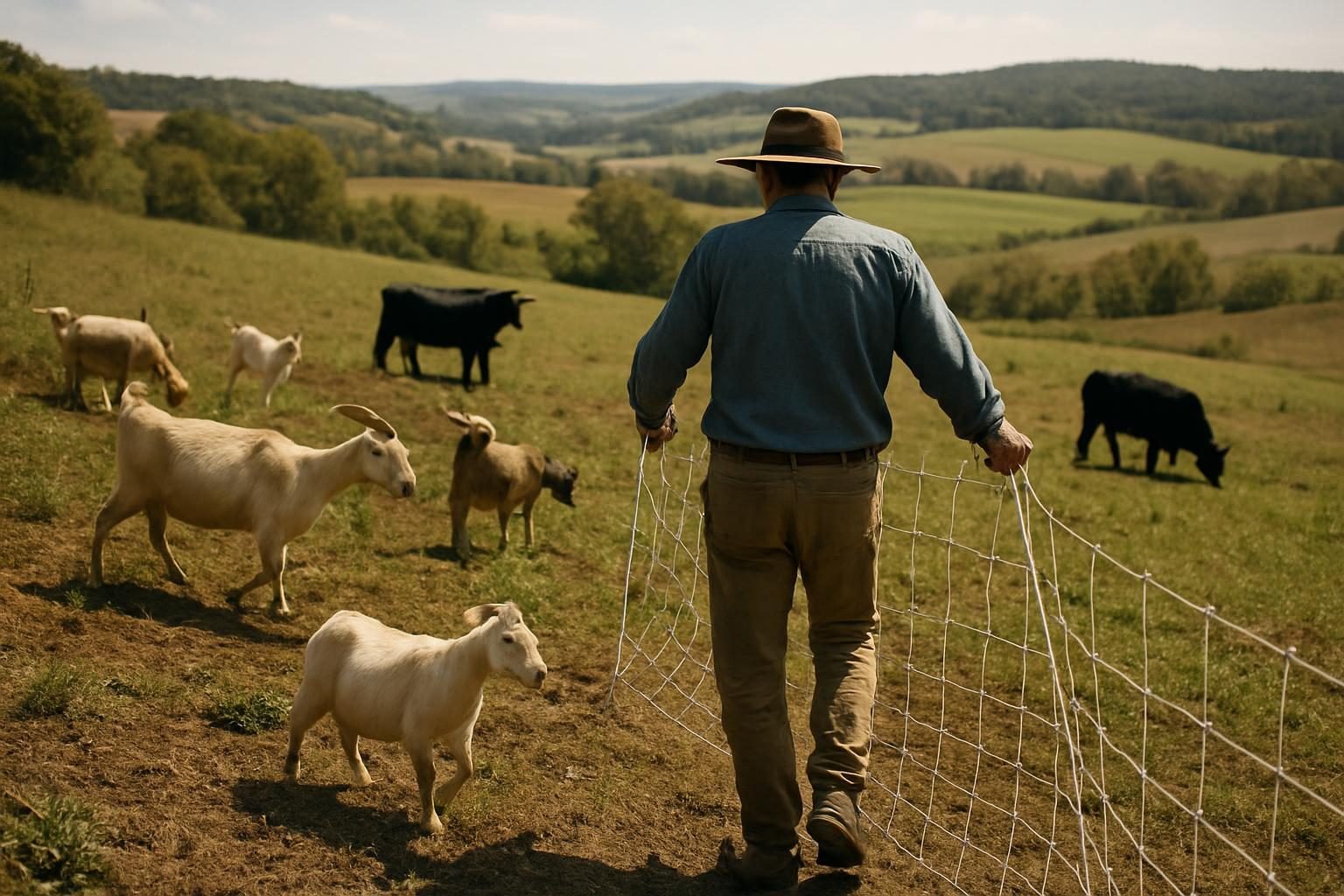
| Electric netting | 35 to 42 in | Portable, fast for rotation, good for predators | Needs a strong charger and a good ground; kids and tangles can be an issue |
| Multi-strand high-tensile electric | 5 to 7 strands | Cost-effective for larger areas | Requires training and consistent voltage |
| Cattle panels | 50 in | Rigid, good for handling pens | Expensive per foot for large areas |
Whatever you choose, electricity does the real work. Goats respect a hot fence once trained, and ignore a dead one immediately. Size your charger to the fence length and the weeds growing beneath it. Our guides to choosing an electric fence energizer and setting up electric fence for rotational grazing apply directly, with the caveat that goat wires sit lower and closer together.
Training goats to electric
- Set up a small, strongly charged training pen with solid corners.
- Keep goats in it for several days so they learn the shock before they are rewarded for pushing through.
- Check voltage daily at the far end of the fence; goats find weak spots fast.
- Remove brush from the fence line regularly so it does not short the wire.
Predators are part of the fencing question. Coyotes, dogs, and in some regions bears and cougars take goats readily. A livestock guardian dog, a donkey, or a llama, combined with night penning for kids, is standard practice in most regions.
Setting Up Goat Rotation
Goats do best on the same logic that works for any ruminant: high density, short stays, long rest. Moving them frequently keeps them eating brush instead of being forced onto the ground where parasite larvae concentrate. If you are new to the framework, start with rotational grazing for beginners and the broader complete guide to adaptive grazing.
Typical practice for brush paddocks:
- Stay times of one to seven days, depending on density and how thorough you want the browsing.
- Rest periods of 30 to 90 days or longer, long enough for browse to regrow and for worm larvae on the ground to die back.
- Move goats out when the preferred plants are hit hard, not when the paddock is bare.
Because stocking depends so heavily on vegetation type, season, and region, treat any number as a starting point. The same logic in our stocking rates explainer applies: observe, adjust, and keep records.
Water is easy to overlook. Goats are fussy about dirty water and will not drink from a fouled trough. A portable, easily cleaned setup pays off; see water systems for rotational grazing for layouts that move with the herd.
Targeted Grazing as a Business
Many farms make more from renting out goats than from selling kids. Landowners, utilities, solar developers, municipalities, and homeowners pay for vegetation management without herbicides or heavy machinery. This is often called targeted grazing, and it can work well on steep ground, in woods, and anywhere a mower cannot reach.
What you are actually selling
Clients buy a result and a story: cleared fence lines, reduced fire fuel, controlled invasives, no chemicals. You provide animals, portable fencing, water, monitoring, and daily or near-daily checks.
Common pricing models
- Per acre: Simple for clients, but you carry the risk if the vegetation is heavier than expected.
- Per goat per day or per week: Easier to price, and rewards you for stocking appropriately.
- Flat project fee: Works for small or well-defined jobs.
Rates vary enormously by region, terrain, and demand, so research what comparable services charge near you rather than copying a number from somewhere else. Talk to your extension office and to existing grazing contractors.
Business checklist
- Check local rules on livestock transport, zoning, and public-land or utility contracting requirements.
- Carry appropriate liability insurance; confirm needs with an insurance agent.
- Write a contract covering stocking density, duration, fencing responsibility, water, predator risk, and what happens if animals escape.
- Own reliable transport and portable fencing before you sell the first job.
- Document results with before and after photos; word of mouth drives most repeat work.
Targeted grazing rarely replaces income on its own at small scale. It tends to work best layered on top of meat, breeding stock, or a farm store. For funding, certification, and sales channels, see our guide to the regenerative farming business, and if you will need trailers, panels, or a stock truck, review farm equipment financing options first.
Goat Health Basics
Goats are tougher than they look in some ways and fragile in others. The single biggest killer in much of the country is the barber pole worm (Haemonchus contortus), a blood-feeding parasite that thrives in warm, wet conditions. Hoof and mineral issues come next.
Parasite management
- Check eyelid color with the FAMACHA system, learned through a certified training course, rather than deworming on a calendar.
- Treat only the animals that need it, to slow dewormer resistance, which is widespread in goats.
- Keep goats off short, wet pasture; rotate and give long rests.
- Cull animals that repeatedly need treatment and breed from resilient ones.
Other routine care
- Minerals: Provide a goat-specific loose mineral. Sheep minerals often lack the copper goats need, and the reverse can be dangerous for sheep.
- Hooves: Trim a few times a year, more often on soft ground.
- Shelter: Goats hate rain. A dry, draft-free shelter is non-negotiable, especially in the humid East and South.
- Vaccination: CD&T is standard in most programs; ask your vet about regional needs.
Find a large-animal veterinarian before you need one, and confirm drug use and withdrawal times with them. For detail on herd growth and kidding, see our upcoming guide to breeding meat goats, and if you are keeping smaller animals on a homestead, pygmy goats care covers breed-specific needs.
Multi-Species Pairing With Cattle
Goats and cattle complement each other. Cattle eat the grass; goats eat the brush and forbs cattle leave. Run together or in sequence, they use more of the plant community and can reduce the weed pressure that otherwise builds in cattle-only pastures. Some research suggests mixed grazing can also lower parasite loads, because the two species do not share the same worm species, so each one acts as a dead end for the other’s larvae. Results vary, so treat it as a tendency, not a guarantee.
Practical points for pairing:
- Fence to the goats, not the cattle. The goat fence will also hold the cows.
- Do not feed cattle mineral that contains ionophores, such as monensin, in a place where goats can reach it; it is toxic to them.
- Watch for competition at feed and water, and give goats their own supplement stations if you feed grain.
- Sequence matters: put cattle on first, then goats, or run them together at a low goat ratio and adjust by what the vegetation shows.
The full approach, including sheep, is covered in multi-species grazing: cattle, sheep and goats together. If sheep are on your radar too, read raising sheep for beginners for how their needs differ.
Goats in woodlots and silvopasture
Goats can clear understory and keep invasives down, but they also kill young trees by browsing and girdling bark. Protect planted trees with tubes or fencing, and time grazing to avoid vulnerable stages. For design ideas, see our agroforestry guide to silvopasture. Pigs are another option for woody ground; compare in pastured pigs: raising hogs on pasture and in woodlots.
Benefits to Soil and Land
Clearing brush with goats leaves manure and urine distributed through the site, opens the canopy so grasses and legumes return, and avoids the soil disturbance of heavy machinery. The gains are not automatic. Overstocking, repeat grazing of the same patch, and wet-season grazing on slopes can cause erosion and bare ground. Monitor cover and rest, and read the basics in our soil health guide. Goat and poultry systems also pair well; the best chicken breeds for pasture can follow goats through a paddock, though you will want to keep an eye on predator pressure when mixing species.
Key Takeaways
- Goats browse first and graze second; give them brush, vines, and forbs, not a mowed lawn.
- Fencing and predator protection decide whether a goat enterprise survives.
- Move goats often and rest paddocks long to control parasites and protect regrowth.
- Targeted grazing can pay well, but it requires contracts, insurance, transport, and reliable fencing.
- Test for parasites with FAMACHA and treat selectively; barber pole worm is the main threat in warm, humid regions.
- Pairing goats with cattle uses more of the vegetation and can reduce parasite pressure, with mineral safety caveats.
Frequently asked questions
How many goats do I need to clear an acre of brush?
There is no single answer, because it depends on how dense and palatable the vegetation is. A common range is roughly 4 to 8 goats per acre for a short, intense stay of a few days to a couple of weeks, then a move and a long rest. Start low, watch what they eat, and adjust. Extension offices and local targeted grazers can give region-specific guidance.
What is the best fence for goats?
There is no perfect fence, but a combination of tight woven wire or multi-strand electric with a strong charger works for most farms. Portable electric netting suits rotation, and 4-foot or taller permanent perimeters suit long-term herds. Whatever you use, keep it powered and free of brush, because goats test it constantly.
Can I make money raising goats?
Yes, but margins are thin if you rely on a single product. Common income streams include meat kids, breeding stock, milk and cheese, and paid targeted grazing contracts. Most profitable operations stack two or more, keep costs low with pasture and browse, and control parasite losses. Do a budget with local prices before buying animals.
Can goats and cattle graze together?
They can, and the combination often improves use of the vegetation. Fence to goat standards, keep ionophore-containing cattle minerals away from goats, and watch for competition at feeders. Some producers run them together, others graze them in sequence; the best approach depends on your pasture and goals.
What is the biggest health risk for goats on pasture?
Internal parasites, especially barber pole worm in warm, wet climates, are the leading cause of goat losses. Manage them with rotation, long rest periods, FAMACHA scoring, selective deworming, and culling susceptible animals. Foot problems, mineral deficiency, and pneumonia are also common, so work with a large-animal vet.