If water pools on your fields, roots turn sideways at an invisible wall, or the shovel bounces off the ground in June, you probably have compaction. Learning how to fix compacted soil starts with understanding that it is mostly a pore-space and biology problem, not just a hardness problem. The good news is that you can rebuild structure over a few seasons without running a deep ripper every year.
Quick answer: To fix compacted soil, first confirm where the compaction layer sits (shovel and penetrometer), then stop what caused it: wet-soil traffic, bare ground and overgrazing. Rebuild structure with deep-rooted cover crops like tillage radish, cereal rye and sorghum-sudan, keep living roots in the soil as long as possible, and confine wheel traffic to set lanes. Use mechanical subsoiling only for a confirmed, deep, restrictive layer, and follow it immediately with roots. Expect meaningful improvement in two to four seasons, not one.
How to diagnose compaction before you treat it
Treating the wrong problem wastes a season. Poor yields can come from low fertility, disease, drought or compaction, and they can look alike. Spend an hour in the field before you spend money.
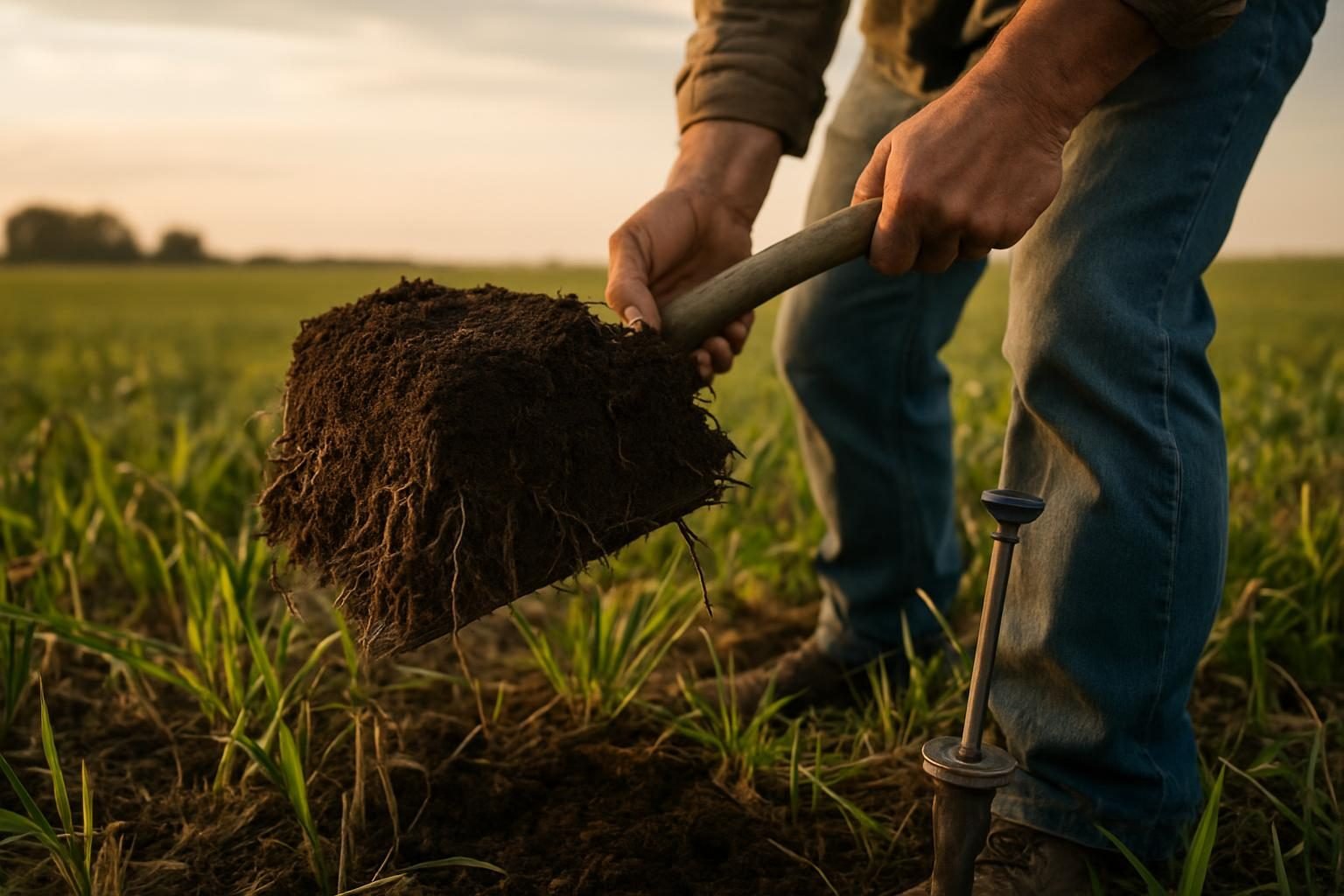
The shovel test
Dig a clean block of soil about 8 to 12 inches deep, ideally a day or two after a moderate rain when the soil is moist but not saturated. Look for:
- Flat, horizontal roots or roots that turn 90 degrees or hook at a certain depth.
- Platy structure, where soil breaks into thin layers like stacked pancakes, versus crumbly granules.
- Gray, blue or mottled colors and a sour smell, which point to poor drainage and low oxygen.
- Few or no earthworm channels and root pores below the compacted layer.
- Resistance when you push a knife or wire flag into the profile. The depth where it gets hard tells you where the layer is.
The penetrometer
A soil cone penetrometer gives you a number and a depth. As a rough rule of thumb used by extension services, readings climbing above about 300 psi begin to restrict root growth for many crops, and readings near 400 to 500 psi or higher can stop roots in many soils. Those thresholds vary by soil texture and moisture, so treat them as a guide, not a verdict. Always test when soil is near field capacity, since dry soil reads artificially hard. Take at least 10 to 15 readings across a field and compare a suspect area to a healthy fencerow or pasture edge.
Other quick checks
- Infiltration: push a ring or open-ended can a few inches into the soil, fill it, and time how long the water takes to drain. Slow infiltration compared with a healthy reference spot suggests poor structure.
- Bulk density: a lab or your local conservation district can help you sample. Rough problem ranges differ by texture, with sandy soils becoming restrictive at higher densities than clays.
- Field patterns: compaction often shows up on headlands, gateways, wheel tracks, feeding areas and livestock lanes.
For a wider view of what your ground is doing, pair these checks with the lab approaches covered in soil testing for regenerative farmers.
What causes soil compaction
Compaction squeezes the air-filled pores that roots, water and soil life depend on. The common causes are fairly consistent across regions:
- Traffic on wet soil. The single biggest cause. Wet soil has little strength, so heavy axle loads push particles together, sometimes well below plow depth.
- Heavy equipment. Axle load drives how deep the damage goes. Surface pressure from tires matters for the top layer.
- Repeated tillage at the same depth. This builds a tillage pan, a dense layer just beneath the working depth.
- Bare, crusted ground. Raindrop impact seals the surface and breaks down aggregates.
- Low organic matter and poor biology. Without the glues from roots, fungi and microbes, aggregates collapse easily. See mycorrhizal fungi for how fungal networks help hold soil together.
- Livestock concentration. Hooves on wet ground, around waterers and in sacrifice areas can cause severe surface compaction and pugging.
Soil type changes the picture. Clay-rich soils compact easily when wet but rebuild structure with wet-dry and freeze-thaw cycles. Sandy soils are less prone to severe compaction but can still form dense layers. Humid regions tend to have more wet-soil traffic windows to worry about, while arid western soils may be hard from sodium or natural cemented layers that biology alone will not fix, so get a local diagnosis.
Biological fixes: let roots do the work
Roots are the cheapest, lowest-risk tool you have. They open channels, feed the biology that builds aggregates, and leave behind pores that stay open after the root decays. This lines up with the broader soil health principles of keeping soil covered, minimizing disturbance and keeping living roots in the ground.
Cover crops that break compaction
| Cover crop | Root type | Best use | Notes |
|---|---|---|---|
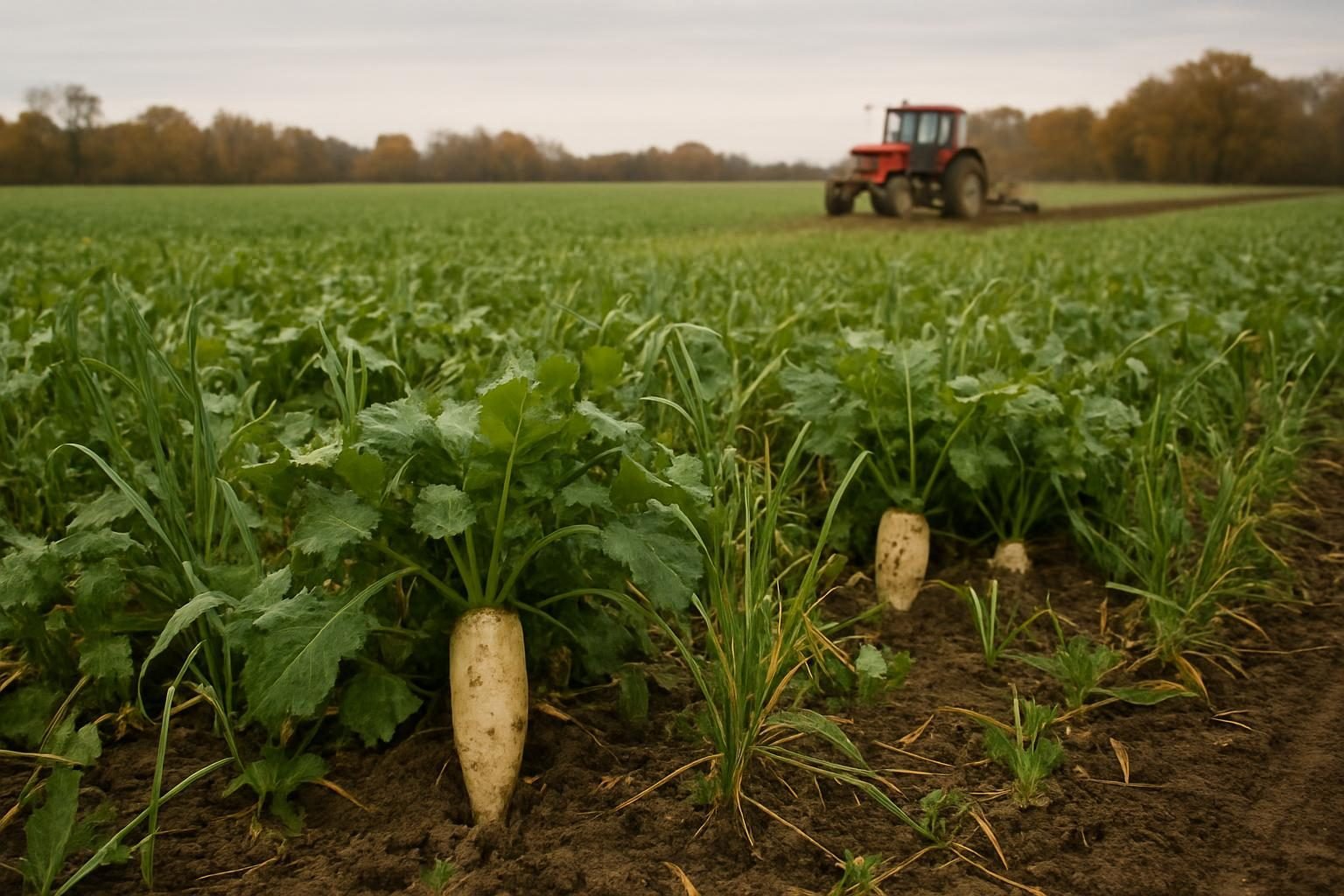
| Tillage (daikon) radish | Thick taproot, often reaches well below the surface layer | Fall seeding in the upper South, Midwest and East | Winterkills in cold climates, leaving open channels. Decomposes fast and can release nutrients early. |
| Cereal rye | Dense fibrous, extensive | Fall seeding nearly everywhere; very cold hardy | Excellent for structure and weed suppression. Manage termination timing to avoid tying up nitrogen. |
| Sorghum-sudangrass | Deep, aggressive fibrous roots | Summer cover in warm regions | Needs warm soil and adequate moisture. Watch grazing guidelines for prussic acid. |
| Forage sunflower or safflower | Deep taproot | Warm-season mixes | Handy in dry areas with deeper moisture. |
| Sweetclover | Deep taproot, nitrogen fixer | Biennial in rotations | Good in some regions; manage seed set and termination. |
| Chicory, alfalfa | Deep perennial taproots | Pasture and hayfield renovation | Perennials give years of root channels. |
A mix often beats a single species: a taproot to punch through, a fibrous grass to stabilize the pore network, and sometimes a legume to feed the system. Our guides to cover crop mixes and cover crops for beginners walk through seeding rates, timing and termination. If your fall window is tight, interseeding cover crops into a standing cash crop can get roots going earlier.
Be realistic about radish
Tillage radish gets a lot of attention, and it does open the upper profile and leave visible holes. But it will not break a thick, dense layer by itself, and one season of radish is not a cure. Think of it as a good first step inside a multi-year plan. Research results on its effect on yield and compaction are mixed and depend on soil, climate and the severity of the layer.
Feed the soil, too
Aggregates hold together because of organic matter, root exudates and fungal hyphae. Raising organic matter is slow, but it is the durable fix. See how to increase soil organic matter for realistic timelines. Compost and manure can help, and a well-made batch from hot composting adds both organic matter and biology. Be skeptical of quick-fix products: compost tea and similar biological amendments should not replace fixing the cause.
Reduce traffic: controlled traffic and timing
No fix lasts if you re-compact the soil every spring. Most of the damage from a field pass happens on the first pass, so the goal is to confine it.
- Match wheel spacing across tractor, sprayer, planter and combine where possible, so all wheels run in the same lanes year after year.
- Use permanent lanes or beds in gardens and market farms. Walk only on paths, plant only on beds.
- Stay off wet ground. Do the squeeze test: if a handful of soil at working depth forms a ribbon or ball that holds together, wait.
- Lower tire pressure and use wider or flotation tires or tracks where practical. Reduce axle loads when you can, since deep compaction is driven by weight per axle.
- Make fewer passes. Combine operations and consider whether each trip is needed.
Moving toward no-till farming removes a whole class of passes and stops creating a new tillage pan. A roller crimper can terminate a cover crop without tillage, though it adds a pass of its own, so plan your lanes accordingly.
Livestock compaction
On pasture, compaction usually comes from animals standing too long on wet ground or concentrating around water, feed and shade. Move animals before they graze too low, keep them off saturated paddocks, and move waterers and feeders regularly. Rotational grazing gives plants time to recover roots, and well-planned water systems for rotational grazing reduce trampling around a single tank. Hooves can also help in the right conditions, which is part of the logic behind bale grazing, but wet-season concentration needs careful management.
When subsoiling makes sense
Mechanical fixes are a tool, not a taboo. Subsoiling or deep ripping can help when you have confirmed a distinct, restrictive layer, typically 10 to 20 inches down, that roots demonstrably cannot get through, and when biology alone is not breaking it in a reasonable time.
Use it when
- A shovel or penetrometer finds a clear pan at a consistent depth.
- Roots are visibly stopped or turned at that depth.
- You can till when soil is dry at depth. Ripping wet soil smears and makes things worse.
- You can commit to the follow-up: cover crops and traffic control right afterward.
Do it carefully
- Set shank depth just below the layer, not deeper than needed. Dig a test pit to check it is actually shattering, not just slicing slots.
- Use low-disturbance shanks and avoid inverting topsoil.
- Plant a deep-rooted cover immediately so roots occupy the new cracks before they re-collapse.
- Do not make it an annual habit. Repeated ripping without roots and organic matter tends to produce temporary relief followed by re-compaction.
Equipment costs, fuel and benefits vary widely, so check with your local extension office or NRCS field office for guidance on whether it fits your soil. Some conservation programs support practices like cover cropping, and the Conservation Stewardship Program is worth a look; confirm current eligibility and payment details with NRCS.
Preventing compaction from coming back
- Keep soil covered and rooted year-round as much as your climate allows.
- Rotate rooting depths: alternate shallow and deep-rooted crops and include perennials or long-season forages where possible.
- Grow organic matter through residue, covers, compost and diverse rotations.
- Plan access: keep heavy loads on headlands, farm roads and designated lanes.
- Watch the calendar: build wet-weather plans, like off-field feeding and sacrifice paddocks, so you are not forced onto soft ground.
- Retest: repeat shovel and penetrometer checks each year in the same spots to see if you are improving.
If you are earlier in the journey, start with what regenerative agriculture is and browse the full Soil Health category for more.
Key takeaways
- Diagnose first: dig a hole, read the roots, and use a penetrometer at field capacity.
- Stop the cause, usually wet-soil traffic, bare ground or concentrated livestock, or the fix will not stick.
- Deep-rooted covers like tillage radish, cereal rye and sorghum-sudan rebuild structure, but expect two to four seasons for real change.
- Controlled traffic and staying off wet soil protect your gains.
- Subsoil only for a confirmed, deep, restrictive layer, in dry soil, and follow it with roots.
- Organic matter and biology are the long-term glue that keeps soil open.
Frequently asked questions
How long does it take to fix compacted soil?
Surface compaction can improve in one to two seasons with covers and reduced traffic. Deeper layers and heavy clay often take three to five years or more, and progress depends on climate, soil type and how well you avoid re-compacting it.
Does tillage radish really break up hardpan?
It helps open the upper profile and leaves channels after it winterkills, but it is not a one-season cure for a thick, dense layer. Use it as part of a mix and a multi-year plan, alongside traffic control.
Can I fix compaction in a raised bed or garden without a tiller?
Yes. Use a broadfork to loosen soil without inverting it, add compost, mulch heavily, plant deep-rooted covers in the off-season, and stay on permanent paths so you never step on the beds.
Is deep ripping bad for soil?
Not inherently. Used in dry soil to shatter a confirmed layer and followed immediately by roots, it can be useful. Done repeatedly, in wet soil or with no follow-up, it tends to give short-lived relief and may cause more damage.
What is a good penetrometer reading?
As a rough guide, readings below about 300 psi are generally fine for root growth, while 300 to 400 psi can start to restrict it and higher values can block roots in many soils. Readings depend on moisture and texture, so compare to a healthy reference spot and confirm with a shovel.