Green manure is a crop grown specifically to be cut and returned to the soil while it is still green, feeding the next crop with organic matter and, in the case of legumes, nitrogen. It is one of the oldest soil-building tools we have, and it works in a quarter-acre garden or a 500-acre rotation. The tricky parts are choosing the right species and getting the termination timing right.
Quick answer: Green manure is a cover crop grown mainly to be incorporated or terminated in place as a fertility and organic matter source. Legumes (clovers, vetch, field peas) add nitrogen; grasses and cereals (rye, oats) add biomass and scavenge nutrients. Terminate at flowering for legumes and boot-to-early-heading for grasses, then wait about 2 to 4 weeks before planting small-seeded crops.
What is green manure, and how is it different from a cover crop?
The terms overlap, and plenty of farmers use them interchangeably. The practical distinction is intent. A cover crop is any crop grown for soil protection, weed suppression, forage, or erosion control, whether or not you ever “turn it in.” A green manure is a cover crop with a specific job: to be terminated and returned to the soil as fertilizer and organic matter for the following cash crop.
So every green manure is a cover crop, but not every cover crop is a green manure. A winter rye stand you graze in April is a cover crop. A crimson clover stand you mow and incorporate ahead of tomatoes is a green manure. If you are new to the broader topic, our guide to cover crops for beginners covers choosing, planting, and terminating in more general terms.
Why use green manure?
The benefits are real, but they are not magic, and they depend on species, climate, and management.
- Organic matter and feed for soil life. Fresh residue is quick food for bacteria and fungi, which supports aggregation and the wider soil microbiome. Building lasting soil organic matter takes years of consistent inputs, as we explain in how to increase soil organic matter.
- Nitrogen from legumes. Well-nodulated legumes can supply a meaningful part of the next crop’s nitrogen. Typical estimates run from roughly 30 to over 100 lb N/acre depending on species, biomass, and termination timing. Treat those as ranges, not guarantees.
- Weed suppression. Dense stands shade out weeds; cereal rye also has allelopathic effects on small-seeded weeds.
- Erosion control and structure. Roots hold soil and open channels for water. Deep-rooted species can help with compaction; see how to fix compacted soil without heavy tillage.
- Pollinator forage. Clovers and vetches in bloom feed bees before you terminate them.
The trade-offs: seed cost, labor, water use in dry regions, and the risk of poor timing tying up nitrogen or delaying planting. In the arid West, a green manure that uses scarce soil moisture may not pay off without irrigation.
Legumes vs grasses: choosing the right green manure
The core decision is what you need from the crop. Legumes make nitrogen; grasses and cereals make biomass and catch leftover nitrogen. Many of the best stands combine both, which is where a good cover crop mix earns its keep.
| Crop | Type | Best season | Main benefit | Notes |
|---|---|---|---|---|
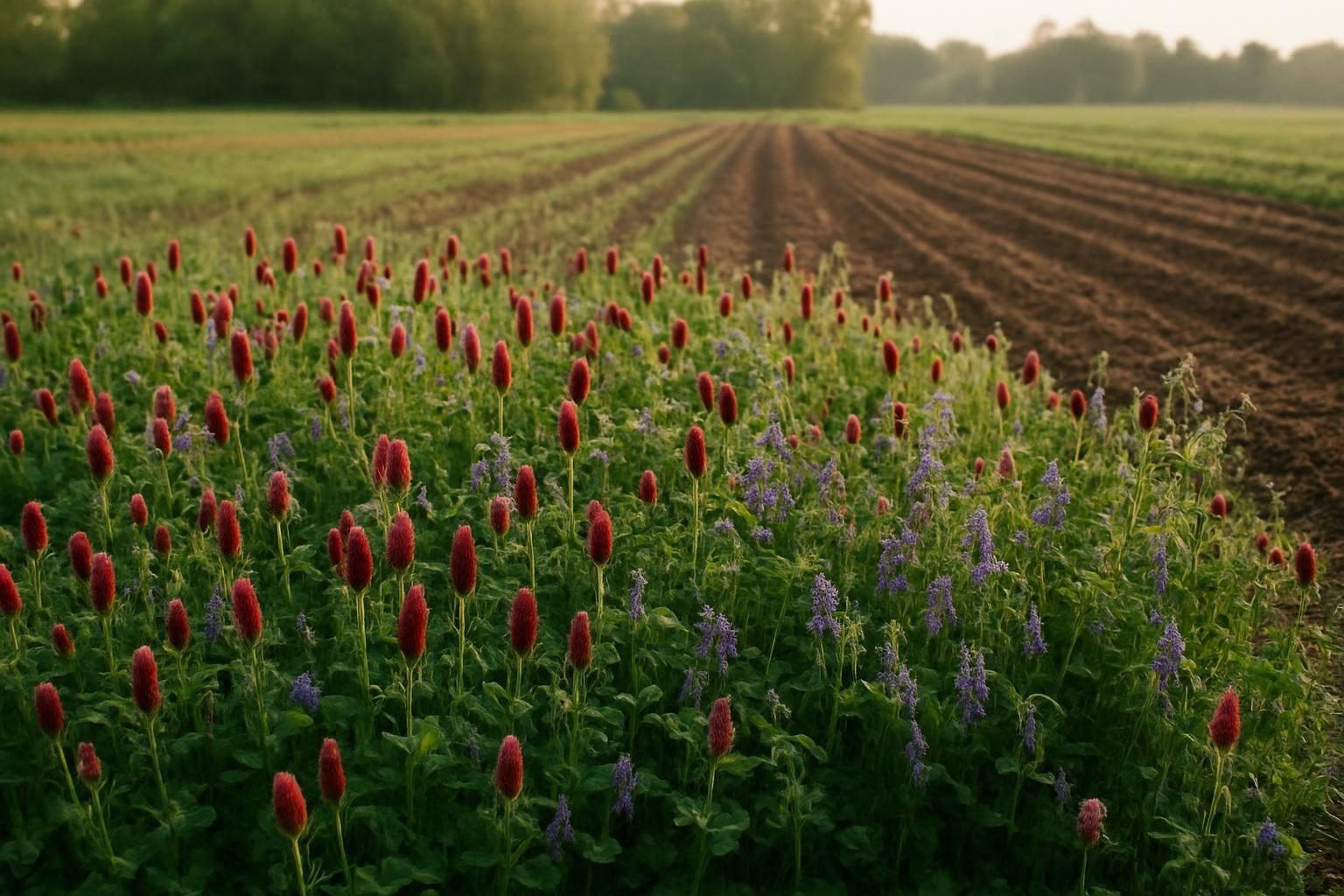
| Crimson clover | Legume | Fall sow, spring kill (mid-South, East) | Nitrogen, pollinator bloom | Terminate at full bloom; limited winter hardiness in the north |
| Hairy vetch | Legume | Fall sow, spring kill | High nitrogen, winter hardy | Can become weedy; seeds can set if terminated late |
| Field peas (Austrian winter) | Legume | Cool season | Nitrogen, quick biomass | Good in mixes with oats |
| Red and white clover | Legume | Spring or late summer | Nitrogen, perennial options | White clover for living mulch in gardens |
| Cowpea / sunn hemp | Legume | Summer, warm regions | Fast nitrogen and biomass | Frost kills them; good in the South |
| Buckwheat | Non-grass broadleaf | Summer gap | Weed suppression, quick cover | Matures in 6 to 8 weeks; not a nitrogen source |
| Cereal rye | Grass | Fall sow, spring kill | Biomass, weed control, nutrient scavenging | Can tie up nitrogen; manage termination timing |
| Oats | Grass | Late summer sow | Biomass, winterkills in cold regions | Easy to manage, no-fuss termination |
Legume + grass is usually the sweet spot
A pure legume stand breaks down fast and releases nitrogen quickly, which is great for a hungry crop but can leach in wet conditions. A pure grass stand has a high carbon-to-nitrogen (C:N) ratio, so it may temporarily immobilize nitrogen as microbes break it down. Pairing, say, hairy vetch with cereal rye, or crimson clover with oats, balances the C:N ratio and gives you both nitrogen and structure. For additional soil carbon building, consider combining green manure with biochar for soil. Match seeding rates to the mix guidance from your seed supplier or local extension office.
If you farm heavy ground, see our list of the best cover crops for clay soil, since species performance varies a lot with drainage and texture. Where wet soils are the underlying problem, you may also want to read up on how to improve soil drainage.
When to turn in green manure: timing is everything
Timing drives both the nitrogen you get and how smoothly the next crop establishes. Two rules cover most situations.
Terminate by growth stage
- Legumes: terminate at early to full bloom. Biomass and nitrogen are near their peak, the plants are still tender, and you avoid hard seed set. Waiting past bloom risks reseeding (especially with vetch) and tougher, slower-decomposing residue.
- Grasses and cereals: terminate between boot stage and early heading, before seed set. Younger, leafier growth has a lower C:N ratio and breaks down faster. Mature rye straw is tough, slow to decompose, and more likely to tie up nitrogen.
- Buckwheat: terminate at or just after first flowers, before seed sets.
Leave a gap before planting
Decomposing residue can temporarily suppress germination and tie up nitrogen. As a typical range, wait about 2 to 4 weeks after incorporation or termination before seeding small-seeded crops like carrots or lettuce, and a bit less for transplants or large-seeded crops like beans and corn. Cooler soils slow decomposition, so lean toward the longer end in the early spring North. Always confirm local guidance with your extension service, since climate, soil temperature, and crop all shift the right window.
Planning in a rotation? Work backward from your planting date: if you want to transplant tomatoes in mid-May, aim to terminate the green manure in mid-to-late April, and plan your fall sowing so the stand has time to reach bloom.
Incorporation vs no-till termination
There are two broad ways to end a green manure, and they suit different systems and values.
Incorporation (tilling or spading in)
Mow or chop, then turn the residue into the top few inches with a tiller, disc, or spade. This speeds decomposition and nitrogen release, and it is common in market gardens. The downsides are real: tillage oxidizes organic matter, disrupts fungal networks and soil structure, and can leave soil exposed to erosion. If you do incorporate, keep it shallow, avoid working wet soil, and consider reading our breakdown of when to till soil and what to do instead.
No-till termination
Leave residue on the surface as mulch and plant through it. Methods include:
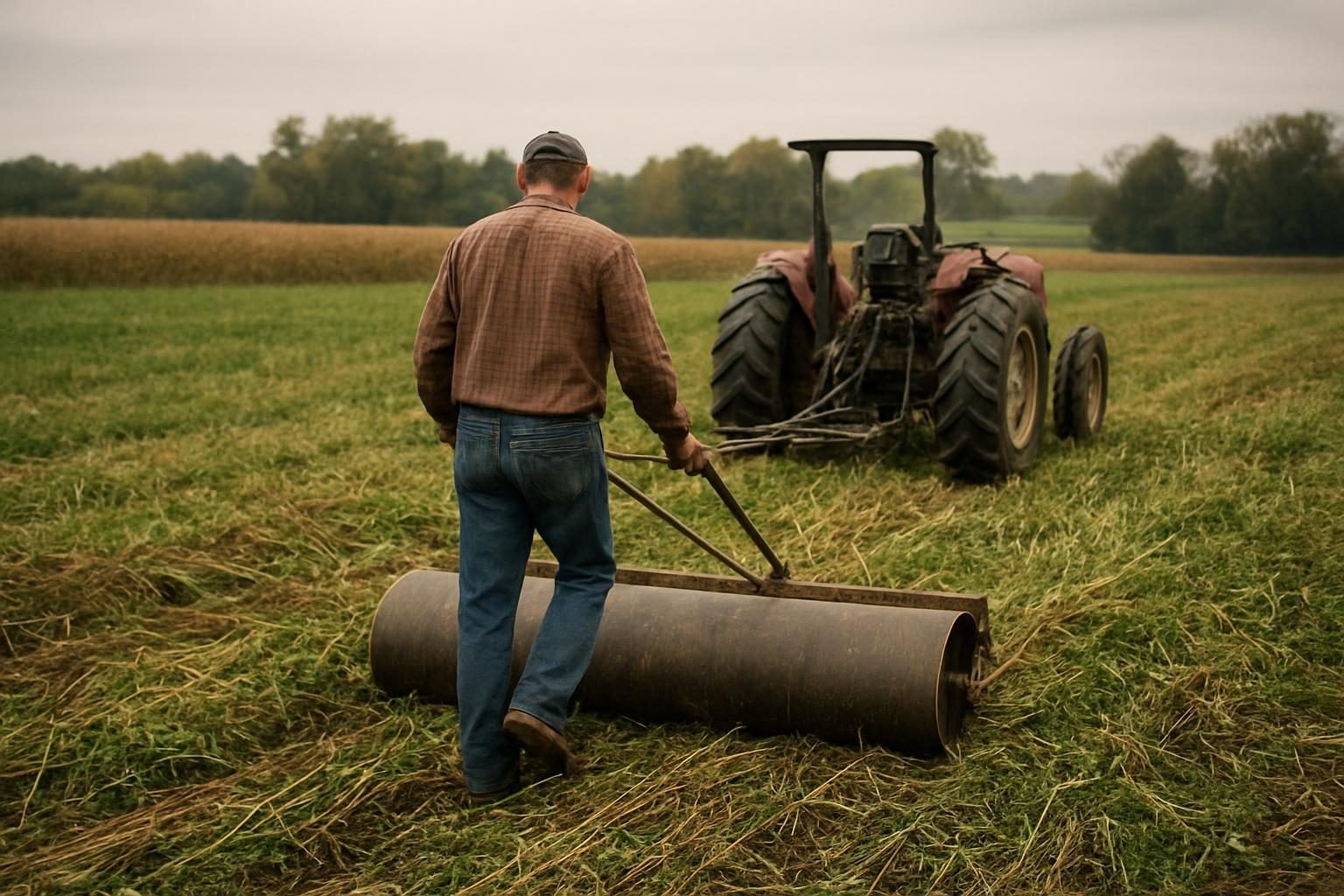
- Roller crimping: a roller crimper lays cover crops flat and crimps stems to kill them mechanically, best done at flowering for legumes and anthesis for cereal rye. See our guide to roller crimpers and terminating cover crops without herbicide.
- Mowing or flail chopping, often followed by transplanting into the mulch.
- Winterkill: species like oats and field peas die with hard freezes in cold regions, leaving a self-terminating mulch.
- Tarping (occulation): on small plots, cover cut residue with an opaque tarp for several weeks to terminate regrowth and speed breakdown.
- Herbicide: used by some no-till farmers. We cover the trade-offs in no-till farming; check current labels and local rules.
Surface residue releases nitrogen more slowly than incorporated residue, so a no-till green manure acts more like a slow-release feed and a mulch than a quick fertilizer shot. For a deeper look at the system, our no-till switch guide walks through the transition.
Step by step: running a green manure
- Pick the goal. Nitrogen, biomass, weed suppression, or a mix.
- Choose species for your season and region. Check hardiness and frost dates with your local extension office.
- Prepare a seedbed. Light raking or shallow cultivation in gardens; drilling or broadcasting plus light incorporation in fields. Good seed-to-soil contact matters more than depth.
- Inoculate legume seed. Use the correct rhizobia inoculant for the species so nodules actually form.
- Seed on time. Fall stands need enough growing days before dormancy; spring stands need to reach bloom before your cash crop date.
- Monitor growth stage. Check for bloom (legumes) or boot/heading (grasses).
- Terminate and manage residue. Mow, crimp, till, or tarp.
- Wait, then plant. Allow 2 to 4 weeks, adjusting for soil temperature and crop.
Garden scale vs field scale
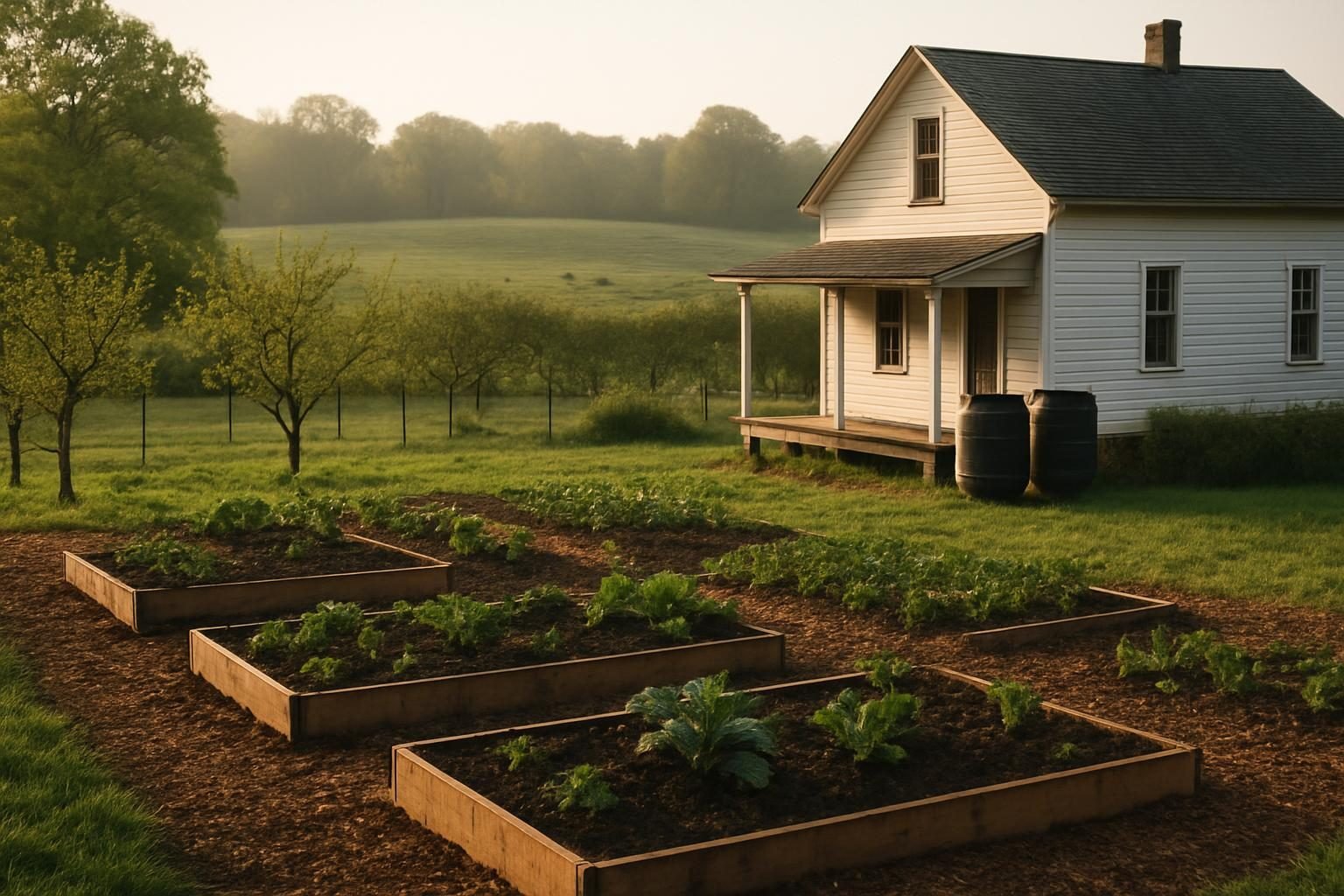
In the garden, green manures fit into gaps: a bed resting between spring greens and summer tomatoes, or a fall sowing of oats and peas after the last harvest. A hand scythe, string trimmer, or lawn mower can terminate small plots, and tarps handle the rest. If you grow in raised beds, a green manure can complement the compost you add; see compost for raised beds and our guide to how to make compost. For tiny acreages, our guide to small-scale regenerative farming shows how these tools fit a bigger plan.
In the field, equipment, moisture, and the cropping calendar drive decisions. Corn Belt farmers often fit cereal rye or a rye-vetch mix between soybeans and corn, or experiment with interseeding cover crops into standing corn and soybeans to gain growing days. In the humid East and South, longer seasons make legume-based green manures easier to fit. In the arid West, evaluate water use carefully, since a thirsty cover crop can rob the following crop of moisture.
Check what it’s actually doing
Don’t assume the green manure is paying off; measure it. Compare yields, plant vigor, and soil biology in treated and untreated strips. Periodic soil testing helps you adjust fertilizer credits and track organic matter over time, and our overview of what soil health is and how to measure it explains the indicators worth watching. Green manure is one piece of the bigger picture described in our complete soil health guide, and more articles live in our Soil Health category.
Key takeaways
- Green manure is a cover crop grown specifically to be terminated and returned to the soil as fertility and organic matter.
- Legumes supply nitrogen; grasses build biomass and scavenge nutrients; mixes usually balance both.
- Terminate legumes at bloom and grasses between boot and early heading, before seed set.
- Allow roughly 2 to 4 weeks between termination and planting, longer in cool soils or for small seeds.
- Incorporation releases nitrogen faster but costs soil structure; no-till termination protects soil and releases nutrients more slowly.
- Local climate and moisture matter. Confirm species and timing with your extension service.
Frequently asked questions
Is green manure the same as a cover crop?
Not exactly. A cover crop is any crop grown to protect or improve soil. A green manure is a cover crop grown specifically to be cut and returned to the soil as fertilizer and organic matter. In practice, the same species often do both jobs.
How long before planting should I turn in green manure?
A typical range is about 2 to 4 weeks, allowing residue to begin breaking down so it doesn’t tie up nitrogen or inhibit germination. Use the longer end in cool soils and for small-seeded crops like carrots or lettuce, and the shorter end for transplants and large-seeded crops.
Do I have to till green manure in?
No. Many growers terminate by mowing, roller crimping, tarping, or winterkill and plant into the surface residue. This protects soil structure but releases nitrogen more slowly than incorporation, so plan your fertility accordingly.
What is the best green manure for nitrogen?
Legumes such as hairy vetch, crimson clover, field peas, and, in warm regions, cowpea or sunn hemp. Nitrogen contribution varies widely with species, biomass, inoculation, and termination timing, so treat published figures as ranges and confirm local recommendations.
Can green manure cause problems?
Yes, if mismanaged. Late termination can lead to hard seed set (vetch can become weedy), high-carbon grass residue can temporarily tie up nitrogen, and thirsty stands can deplete soil moisture in dry regions. Matching species, timing, and your local climate avoids most issues.