Pastured pigs are one of the most rewarding and most misunderstood enterprises on a regenerative farm. A hog on good ground is a rototiller, a composter, and a premium-pork product all in one animal. Left unmanaged, that same hog can turn a pasture into a mud lot in a week. Like raising sheep for beginners, raising pigs well requires proper planning and management. This guide covers how to do it well: breeds, fencing, rotation, land clearing, feed, shelter, and what the numbers look like.
Quick answer: Raise pastured pigs by choosing a hardy, forage-capable breed, training them to a two-strand electric fence, moving them to fresh ground every few days to weeks depending on density, and feeding a balanced grain ration alongside what they forage. Pigs cannot live on pasture alone, so feed is your biggest cost. Done well, they clear brush, fertilize, and finish into premium pork in about 6 to 9 months.
Why raise pigs on pasture or in woodlots?
Pigs express natural behavior outdoors: rooting, grazing, wallowing, foraging for acorns and roots. That behavior is useful. Rooting breaks up sod, incorporates manure, and can prepare ground for reseeding or a garden. In woodlots, pigs can suppress brush, eat nuts and fallen mast, and open up ground for tree planting.
The trade-off is that rooting is also the main risk. Pigs concentrate nutrients in a few spots (usually near feeders, waterers, and shelter) and can damage sod, stream banks, and tree roots if stocked too heavily or left too long. Management matters more than the animal.
Pigs are also a natural partner to other livestock. They follow cattle or sheep in a rotation, break up manure pats, and use ground that ruminants have already grazed. If you are new to moving animals across a landscape, start with our guide to rotational grazing, since the same logic applies here.
Breeds suited to pasture
Any pig can go outside, but some handle it far better. Heritage and traditional breeds generally have better foraging instincts, hardier constitutions, thicker coats, and more fat cover for outdoor conditions. Commercial confinement genetics grow fast on high-protein feed but often struggle with sunburn, cold, and rough forage.
| Breed type | Examples | Strengths | Trade-offs |
|---|---|---|---|
| Heritage lard/fatty types | Mangalitsa, Large Black, Red Wattle, Tamworth, Berkshire, Hereford, Duroc | Good foragers, hardy, excellent marbling and flavor, strong mothering | Slower growth, more fat, longer to finish |
| Commercial-leaning | Yorkshire, Landrace, Hampshire | Fast gain, leaner carcass, easy to source | Less hardy outdoors, light skin prone to sunburn, poorer foraging |
| Crosses | Berkshire x Duroc, Large Black x Tamworth, and similar | Hybrid vigor, balance of growth and hardiness | Inconsistent from litter to litter if sourcing varies |
For most small farms, a heritage-by-heritage or heritage-by-commercial cross offers the best balance. Match the breed to your market: if customers want heavily marbled, richly flavored pork, lard-type genetics earn their slower growth. If you sell to a conventional-minded buyer who wants lean chops, a leaner cross may sell better. Ask your local extension office or breeders about what performs in your climate.
Electric fencing and training
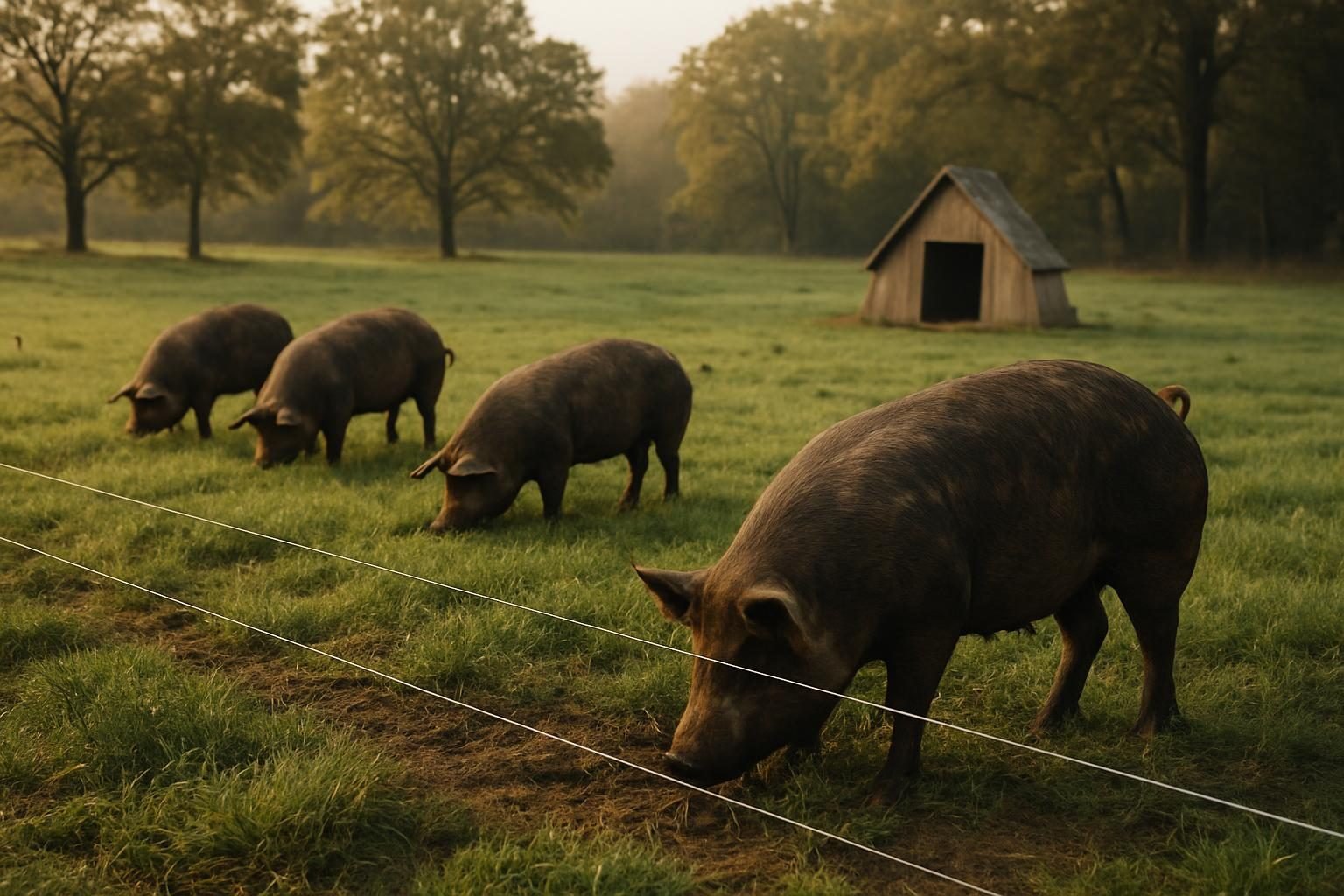
Pigs respect electric fence once they have learned it, and they learn fast if you set them up right. Poor training is the number one reason people give up on pastured pigs.
Basic fence setup
- Wire height: Two strands, with the lowest about 6 to 8 inches off the ground (nose height) and the second around 14 to 18 inches. Piglets need the low wire lower; adjust as they grow.
- Energizer: Use a quality low-impedance energizer rated for livestock, with enough joules to keep voltage high even with vegetation touching the wire. Aim for several thousand volts at the far end of the fence; check your manufacturer’s guidance.
- Grounding: Pigs are insulated by dry soil. Good grounding is critical, and in dry climates a ground-return wire system helps.
- Posts and wire: Portable step-in posts and polywire or polytape work for movable paddocks. Use sturdier perimeter fencing for permanent areas.
Training steps
- Start in a small, secure pen with a hot wire inside solid or woven-wire fencing so piglets cannot escape while they learn.
- Let them touch the live wire with their noses. One good shock teaches respect.
- Keep the fence hot at all times. Pigs test, and a dead fence undoes your training.
- Once they respect the wire, move them to the larger paddock with the same style of fence.
Always keep vegetation off the lowest wire, since pigs in wet grass can short a weak system. Bringing a few experienced animals in with new pigs can also speed training.
Rotation to avoid damage
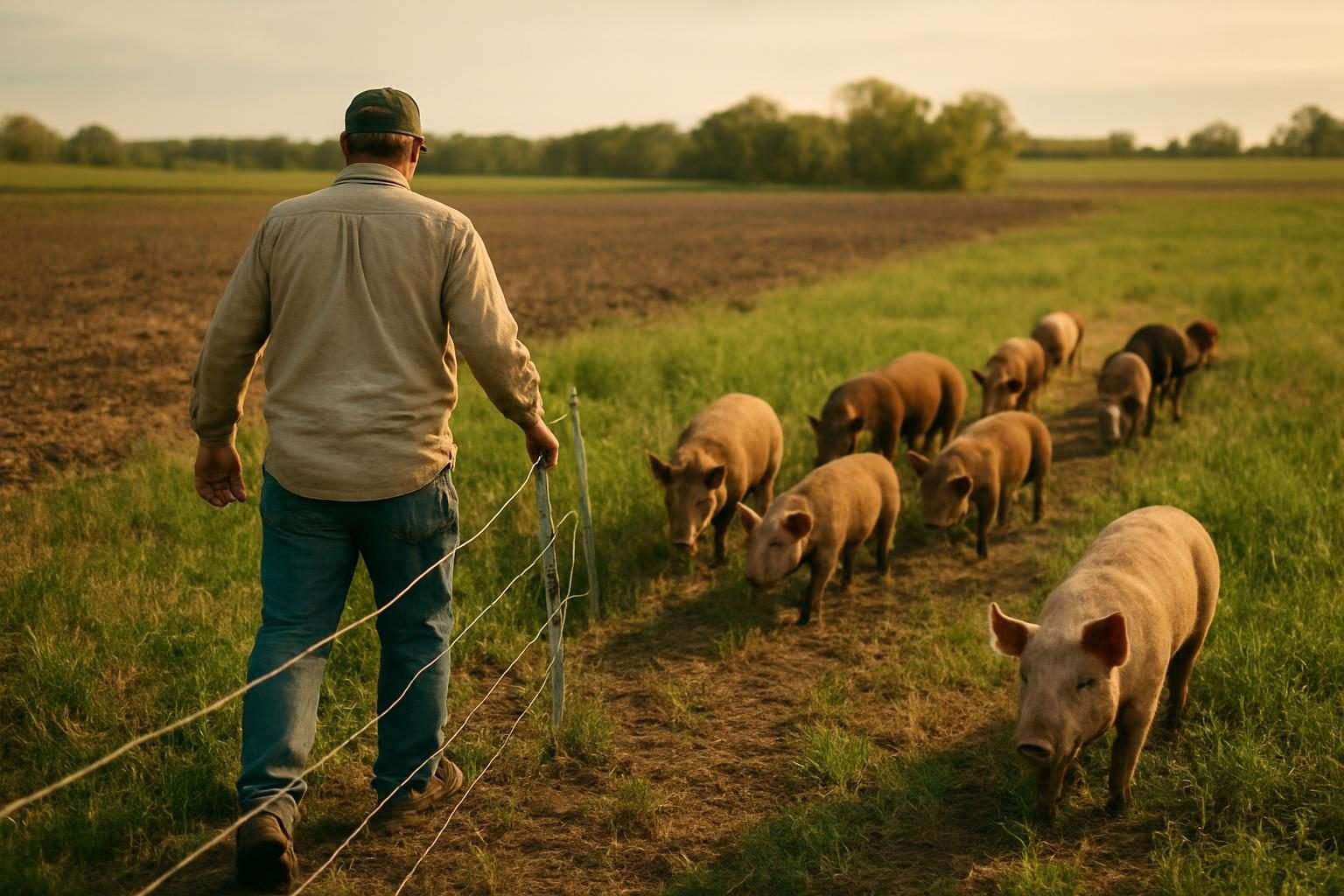
Rotation is what separates regenerative pig management from a destructive mud lot. How often you move depends on stocking density, soil type, season, and your goals.
- Moderate density, longer stays: A few pigs per acre can stay in a paddock for weeks if vegetation holds up. This suits sod preservation and long rest periods.
- High density, short stays: More pigs on small paddocks for a few days, then move. This maximizes rooting for land preparation but demands more fencing and labor.
- Rest period: Allow paddocks to rest and regrow, often months, before returning. Reseed disturbed ground with a cover or forage mix.
Watch the ground, not the calendar. When bare soil reaches roughly a third to half of the paddock, or you see ruts and runoff, move them. Wet weather and sloped ground need extra caution because pigs on saturated soil cause the worst damage. Keep pigs well away from streams and wet draws; see our guide on riparian buffers for protecting waterways.
Nose rings reduce rooting but also reduce the very behavior many farmers want for land improvement. Some use rings only in sensitive pastures. It is a trade-off between animal behavior and ground protection, so decide based on your goals and any certification or welfare standards your market uses. Pairing rotational grazing with proper fencing management can help protect vulnerable areas while maintaining the land-improvement benefits elsewhere.
If you already run cattle or sheep, pigs can slot into the sequence. Our overview of adaptive multi-paddock grazing explains how to plan moves around recovery rather than a fixed schedule, and multi-species grazing covers how different animals complement one another.
Using pigs for land clearing
Pigs excel at clearing overgrown ground: bramble, multiflora rose, small brush, bracken, and tough sod. They root out roots and tubers and eat much of the vegetation. They will not remove large trees or heavy stumps, and they will not handle every invasive species, so set realistic expectations.
A practical clearing approach
- Walk the site and mark trees you want to keep. Pigs can girdle and damage roots of valuable trees, so fence them out or protect trunks.
- Fence a small block with sturdy electric fence. Concentrate the pigs so they work the ground hard.
- Feed outside the area you want rooted, or place feeders to spread impact. Pigs root hardest where food and water are.
- Move them when the target area is turned over, then follow with a cover crop or pasture seed mix before weeds return.
In woodlots, pigs can thin understory and eat fallen mast, but they can also harm tree regeneration and native plants, and wooded land often has sensitive soils, wetlands, or protected species. Check local regulations and consult your extension forester or NRCS office before turning pigs into a woodland. If you are planning a silvopasture or orchard system, our piece on nut trees for agroforestry shows how mast crops can feed pigs while protecting young trees.
For ground that has been compacted by past use, pigs are one tool among several; see how to fix compacted soil without heavy tillage for other approaches.
Feed needs
Here is the honest part: pigs are not ruminants. They cannot turn grass into meat the way cattle can. Pasture, roots, nuts, and insects supplement the diet, but a growing pig still needs a balanced ration with adequate protein and amino acids, especially lysine. Pasture might offset a modest share of feed, often cited in the range of 10 to 30 percent depending on forage quality, season, and pig size, but treat that as a rough estimate for your own records to refine.
- Grower ration: Typically a grain-based mix with a protein source such as soybean meal, peas, or a purchased balanced feed. Protein needs are higher for young pigs and decline as they approach finish weight.
- Non-GMO or organic feed: Common in direct-market pork but costs notably more. Check what your customers actually value before paying the premium.
- Alternative feeds: Surplus dairy, spent brewers’ grain, culled produce, and nuts can lower costs, but verify nutritional balance, consistency, and local regulations on feeding food waste, which are strict in many states.
- Minerals and salt: Offer free-choice minerals suited to pigs.
Always provide plenty of clean water. A pig can drink several gallons a day in heat, and wallows need management to avoid fouling. Our guide to water systems for rotational grazing covers pipe, tank, and trough setups; use pig-proof, sturdy troughs and keep them off soft ground.
Shelter and shade
Pigs do not sweat, so heat is a bigger danger than cold for most healthy animals. Provide shade and a wallow or sprinkler in hot weather. In cold climates, give a draft-free, dry, well-bedded shelter, such as a hoop shelter or A-frame hut with deep straw.
- Portable huts: Skid-mounted shelters can be dragged with a tractor to follow the rotation.
- Sun protection: Light-skinned pigs sunburn. Shade and wallow mud help.
- Farrowing: Sows need a dedicated, well-bedded farrowing space, and breeding adds considerable complexity. Most beginners buy weaned feeder pigs instead.
Economics: does it pencil out?
Pastured pork can be profitable, but the margin depends on feed cost, pig price, processing, and how you sell. Build your own numbers rather than relying on anyone else’s. A rough framework:
| Cost or revenue item | What to estimate |
|---|---|
| Feeder pig purchase | Local price per weaned pig |
| Feed | Total pounds per pig to finish times your cost per pound; this is usually the largest expense |
| Processing | USDA or state-inspected facility fees, kill and cut-and-wrap, often with long booking lead times |
| Fencing, water, shelter | Spread equipment cost across batches and years |
| Labor and hauling | Your time moving pigs, feeding, and transport |
| Revenue | Hanging weight or retail cuts times your price; whole, half, and cut-by-cut pricing differ |
Locate and book a processor before you buy pigs, because capacity is tight in many regions. Pricing matters as much as production, so work through our guide on how to price farm products, and plan where the pork will actually sell. Whole and half shares to direct customers, farmers market sales, and restaurants all behave differently; see selling at farmers markets for tips. For the bigger picture of funding, certifications, and sales channels, visit our regenerative farming business hub, and write a plan using our farm business plan template. Regulations on slaughter, labeling, and sales vary by state, so confirm with your state department of agriculture.
Pigs pair well with poultry in a diversified system; our guide to pastured poultry shows another fast-turnaround enterprise that shares fencing and marketing.
Key takeaways
- Choose hardy, forage-capable breeds or crosses, and match genetics to your market.
- Train pigs to electric fence in a secure pen first, and keep the fence hot.
- Rotate based on ground condition, not the calendar, and protect streams, slopes, and wet soil.
- Pigs are excellent land-clearing tools but will not remove large trees; protect trees you want to keep.
- Pasture supplements but does not replace a balanced ration; feed is your largest cost.
- Provide shade, wallows, clean water, and dry shelter.
- Book a processor early and run your own numbers before you buy pigs.
Frequently asked questions
How many pigs per acre on pasture?
It depends on soil, rainfall, forage, and how long they stay. As a rough starting range, many farmers run a handful of pigs per acre for extended stays, and more on tiny paddocks for short moves. Start conservative, watch the ground, and adjust. Learning rotational grazing paddocks and rest principles can help refine your approach. Your extension office can help calibrate for your region.
Do pastured pigs need nose rings?
Not always. Rings reduce rooting and protect sod but limit natural behavior that helps with land clearing and soil disturbance. Some farmers ring only in sensitive pastures. Welfare standards or certification programs may restrict or require rings, so check your market’s rules.
How long does it take to raise a pig to market weight?
Typically around 6 to 9 months for pastured feeder pigs, with commercial-type genetics on the faster end and heritage breeds often slower. Target weights and timing vary by breed, feed, season, and what your processor and customers prefer.
Can pigs live on pasture alone?
No. Pigs are monogastric and need a balanced ration with adequate protein and amino acids. Forage, roots, nuts, and insects can reduce purchased feed but do not replace it. Underfed pigs grow poorly and root harder looking for food.
Are pigs safe to use in woodlots?
They can be useful for clearing understory, but they can damage tree roots, native plants, soils, and wetlands if mismanaged. Protect valuable trees, keep pigs out of streams and sensitive areas, and check local rules and with a forester or NRCS office before starting.