Interseeding cover crops means planting your cover into a cash crop that is still growing, so the cover is established before harvest instead of racing winter after it. For corn and soybean growers in short-season regions, it can be the only realistic way to get a living root in the ground in fall. It works well some years and fails quietly in others, so the details matter.
Quick answer: Interseed cover crops into standing corn at roughly V4 to V7 (about 12 to 24 inches tall, canopy not yet closed), or into soybeans around V3 to R1, using shade-tolerant species such as cereal rye, annual ryegrass, red clover, or radish. Seed with a high-clearance drill, broadcaster, drone, or aircraft, ideally just ahead of rain. Success depends on moisture, canopy light, and herbicide carryover, so test on a few fields first.
Why Interseed Instead of Seeding After Harvest?
In much of the northern Corn Belt, Upper Midwest, and Northeast, corn and soybeans come off in October or later. A cover seeded then often has too little time and too little warmth to produce meaningful biomass or roots. Interseeding buys you weeks of growth by getting the seed in the ground in early summer.
The main reasons farmers try it:
- Longer growing window. The cover germinates under the canopy and takes off when leaves senesce and light reaches the ground.
- Weed suppression. A cover under the canopy can fill gaps and compete with late flushes of waterhemp and other weeds, though it rarely replaces a herbicide program on its own.
- Erosion and nutrient scavenging. Established roots hold soil and take up leftover nitrogen in fall. This is the same logic behind the core soil health principles: keep soil covered, keep living roots in the ground, and minimize disturbance.
- Grazing or forage options. A well-established interseeded stand can feed livestock after harvest, which ties into rotational grazing systems.
- Flexibility in a tight fall. You are not competing with harvest, fall fieldwork, and weather for a seeding window.
The trade-off is real: you are asking a seedling to establish in the shade of a crop that is paying your bills. Plan for some failures.
Timing: Corn and Soybean Growth Stages
Timing is the biggest lever. Too early and the cover competes with the cash crop. Too late and the canopy is too dense for the seedlings to survive. Typical windows, which shift with region, planting date, and hybrid or variety:
| Cash crop | Typical seeding window | Notes |
|---|---|---|
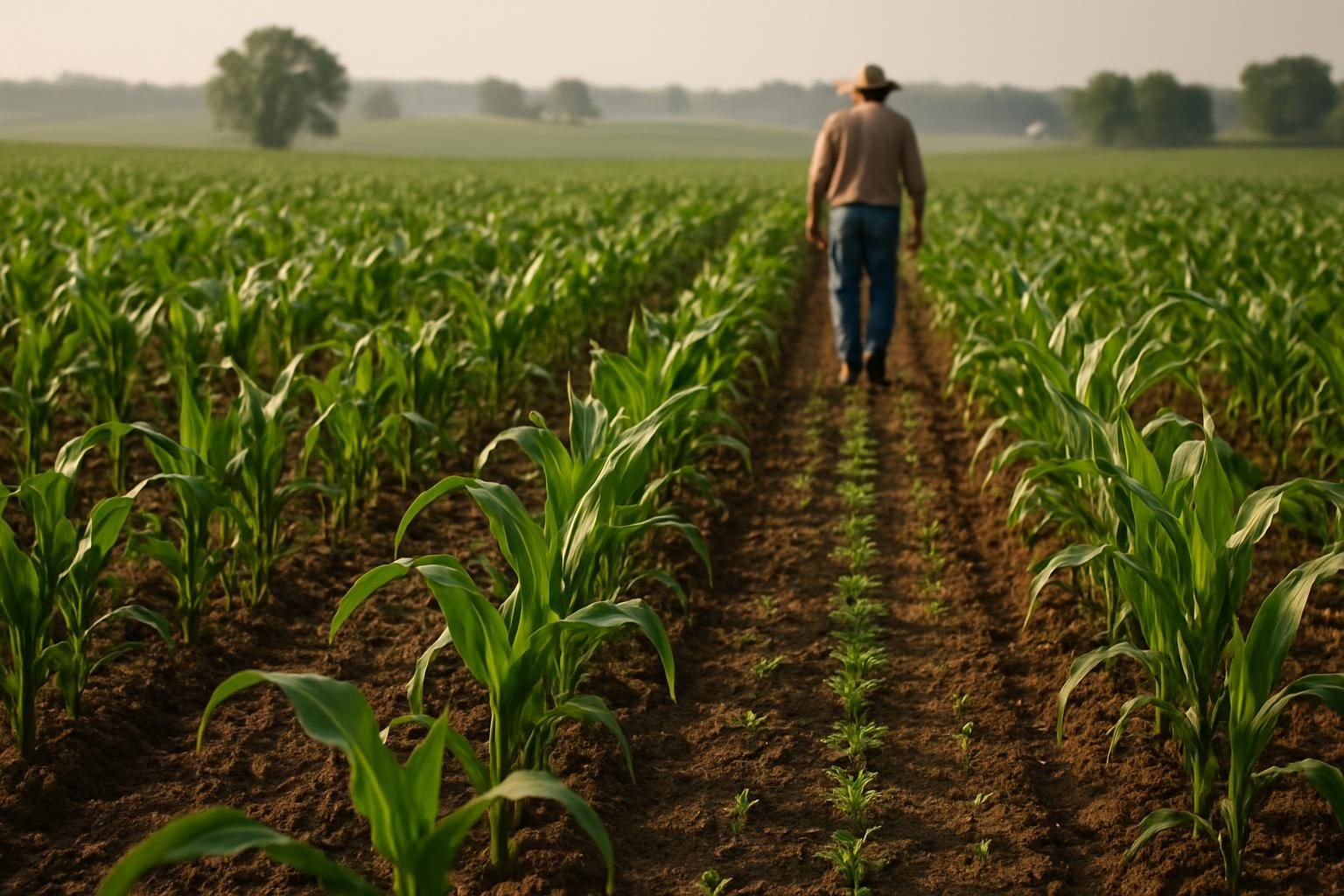
| Corn | V4 to V7 (roughly 12 to 24 inches) | Often aligned with sidedress or post-emerge herbicide timing. Canopy usually closes around V10 to V12. |
| Corn (late) | V8 to V12 with high-clearance gear | Lower light means lower success; favors very shade-tolerant species. |
| Soybeans | V3 to R1, or at leaf yellowing (R6 to R7) by broadcast or aerial | Early seedings face more competition; leaf-drop seedings rely on moisture and fast germination. |
Many growers choose V5 to V6 corn because it is a practical middle point: the corn is established enough to tolerate competition, and enough light still reaches the soil. Check your local extension service for tested windows in your area, since results differ between the humid East, the Corn Belt, and drier regions.
Species That Tolerate Shade
Not every cover can germinate and survive under a corn or soybean canopy. Broad categories that tend to work:
- Cereal rye and other small grains. Reliable, cold hardy, and forgiving. Rye is the most common choice for interseeding because of its establishment vigor, though it needs management ahead of the next crop.
- Annual ryegrass. Strong shade tolerance and quick fall growth, but it can be difficult to terminate in some conditions and may overwinter in milder regions. Check termination options before committing.
- Red clover and other clovers. Tolerate shade well, fix nitrogen, and can persist into the next season. Slower to establish, so they suit growers thinking beyond a single fall.
- Brassicas (radish, turnip). Quick germination and fall biomass, with winterkill in cold regions. Radish roots help with compacted soil, though results vary.
- Mixes. A grass plus legume plus brassica blend spreads risk, since whichever species suits the year will establish. See our guide to cover crop mixes for ratios and goals.
Seeding rates for broadcast or aerial application are usually higher than drilled rates to offset poor seed-to-soil contact. Treat any number as a starting range and confirm with your seed supplier and local extension, especially when selecting cover crops for clay soil.
Equipment Options
High-clearance drills and interseeders
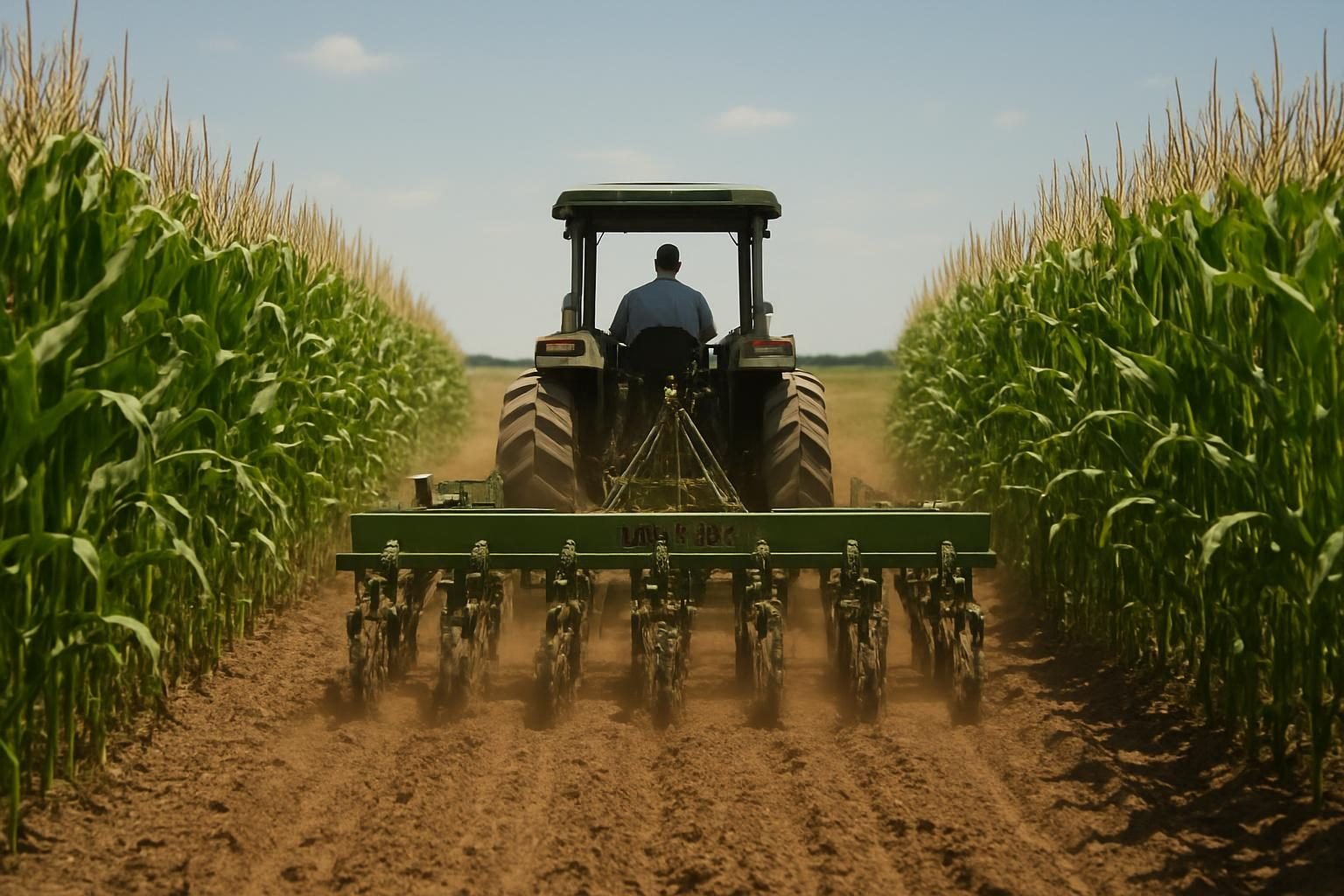
Purpose-built interseeders or modified high-clearance sprayers place seed in the row middles, sometimes with light soil contact. They give the best stands because seed lands on or in soil. The cost is capital, or a custom hire, plus a pass through the field.
Broadcast spreaders
Tractor-mounted or high-clearance broadcasters are the low-cost entry point. Seed lands on top of the residue or soil, so success leans heavily on rain soon after seeding. Many growers pair it with a sidedress or spray pass to save a trip.
Drones
Drone seeders can cover fields flexibly and avoid compaction and crop damage. They suit smaller or irregular fields and fill gaps in custom-application availability. Payload limits and regulations apply, so confirm current FAA requirements and any applicator licensing in your state.
Aerial application
Fixed-wing or helicopter seeding works well for large acreage and for seeding into mature canopy (such as leaf-drop soybeans or tall corn). Seed contact is the weakest, so timing with rain is important. The cost is per acre and varies by region and operator.
A Step-by-Step Plan for Your First Field
- Pick a forgiving field. Choose one with good fertility, decent drainage, and no history of herbicide carryover issues. Start small, perhaps 20 to 40 acres.
- Check your herbicide program. Some residual products can injure emerging covers. Read labels for plant-back or seeding restrictions and talk with your agronomist or extension educator.
- Choose species by goal. Erosion and scavenging favors rye. Nitrogen and next-year benefit favors clover. Compaction relief and quick biomass can favor radish in a blend.
- Watch the forecast. Aim to seed ahead of a rain event of about a half inch or more, or when soil is already moist. Dry stretches kill broadcast stands.
- Seed at the right stage. Use the table above as a starting point and adjust to your canopy and equipment.
- Calibrate and verify. Confirm your seeding rate, and check emergence two to three weeks later by walking the field with a hand count or photos.
- Plan termination. Decide ahead whether you will use tillage, herbicide, winterkill, or a roller crimper in spring.
Why Interseeding Succeeds or Fails
Most failures trace back to a short list of causes.
What helps
- Adequate moisture within a week of seeding
- Seeding before canopy closure, with enough light reaching the soil
- Good seed-to-soil contact, whether from a drill or from residue-light ground
- Species and rates matched to your region and goals
- Reading herbicide labels before choosing species
What hurts
- Dry weather after seeding, especially with broadcast or aerial methods
- Heavy canopy, thick residue, or thin seedlings shaded out
- Residual herbicide injury
- Cover competing with the cash crop when seeded too early or too thick
- Slugs, deer, or other pests in no-till, humid conditions
Expect variable stands across a field and between years. A thin stand is not necessarily a failure: even sparse cover can hold soil and build soil health, and some species will thicken after leaf drop and harvest. Be honest in your records about what you saw, since this is how you improve.
Fitting Interseeding Into Your Whole System
Interseeding works best as part of a broader approach. It pairs naturally with no-till farming, where residue and living roots both build soil. Over several years, consistent cover and reduced disturbance can help raise soil organic matter, though gains are slow and depend on climate and soil type. Use soil testing to track changes rather than guessing.
If you are new to cover cropping in general, start with cover crops for beginners before adding the complexity of seeding into a standing crop. For the bigger picture of why this matters, see what regenerative agriculture is, or browse our soil health category for related guides.
Key Takeaways
- Interseeding gives covers a longer growing window in regions where post-harvest seeding is too late.
- Corn at V4 to V7 and soybeans from V3 to early reproductive stages are common windows; adjust locally.
- Cereal rye, annual ryegrass, clovers, and radish are the most shade-tolerant options; blends reduce risk.
- Equipment choice trades seed contact against cost, speed, and field access.
- Moisture, canopy light, and herbicide carryover decide most outcomes. Start small and keep records.
Frequently asked questions
When is the best time to interseed cover crops into corn?
Most growers target V4 to V7, when corn is roughly 12 to 24 inches tall and the canopy is still open. Seeding later is possible with high-clearance or aerial equipment, but lower light usually means thinner stands. Local extension trials can refine the window for your area.
Will interseeded cover crops reduce my cash crop yield?
When timed and managed well, yield impacts are usually small or not detectable, but competition is possible if the cover is seeded too early, too thick, or in a dry year. Starting on a few fields and comparing to a no-cover strip helps you see the real effect on your farm.
Which cover crop species work best under a corn canopy?
Cereal rye, annual ryegrass, red clover, and radish or other brassicas are commonly used because they germinate and persist in low light, and their diverse root systems contribute to soil health. Mixes spread risk, since different species handle shade, moisture, and temperature differently.
Can I interseed by drone or airplane?
Yes. Drones and aircraft can seed into standing crops without a ground pass, which helps with timing and field access. Seed contact is weaker than with a drill, so rain after seeding matters more. Check current FAA and state rules and your applicator’s licensing before booking.
Does herbicide affect interseeded covers?
It can. Some residual herbicides applied to corn or soybeans may injure emerging covers, and labels often include plant-back restrictions. Review your program with an agronomist or extension educator before choosing species and timing.