Holistic management is a decision-making framework, not a grazing method. Allan Savory and colleagues built it so that farmers and ranchers could make choices about land, money and people that hold together over time instead of fixing one problem and creating three more. It sits underneath much of what people call regenerative grazing, and it is also one of the most debated ideas in the field.
Quick answer: Holistic management is a framework for making decisions by first writing a holistic context (what you want your life, land and finances to look like) and then testing each decision against that context. Planned grazing is its best-known tool, but the framework applies to any farm decision. The framework is widely used by ranchers; the science on its claims for livestock-driven land restoration is contested, so treat it as a thinking process and measure your own results.
What holistic management actually is
Savory, a Zimbabwean ecologist, developed the framework over several decades, and it is now taught by Holistic Management International and by certified educators in the United States and elsewhere. The core idea is that farms are complex systems where people, money and ecology are tangled together. Decisions made on only one axis, such as maximizing weaning weights or cutting feed costs, tend to backfire somewhere else.
The framework gives you a structure for slowing down and asking better questions before you act. It does not tell you how many cows to run or how long to graze a paddock. It tells you how to decide that for your place, your climate and your goals.
If you are new to the broader field, start with what regenerative agriculture is and how to start. Holistic management is one way of organizing the thinking, not the only one.
The holistic context: writing down what you are managing for
Everything starts with the holistic context, a short written statement with three parts.
- Who is the decision maker? Everyone with a stake in the outcome: you, your spouse, your partners, perhaps your landlord or a key employee.
- What do you have to work with? Land, water, livestock, equipment, money, skills, relationships and community. Include the resource base you want to protect.
- What is your holistic goal? A three-part description of the quality of life you want, the forms of production needed to support it, and the future resource base (land, community, culture) you want to leave behind.
A good goal is specific and written in the present tense. Instead of “make more money,” you might write that the family has weekends free during the growing season, that the ranch produces enough from forage to cover costs without purchased hay in a normal year, and that the creek and riparian areas are healthier than when you started.
Most people find this part harder than it sounds. Families discover they have never agreed on what they are working toward. That alone is often worth the exercise.
Testing decisions against your context
Once the context is written, every significant decision goes through a set of testing questions. The framework’s official wording varies by edition, but the questions generally cover these ideas:
| Test | What it asks |
|---|---|
| Cause and effect | Does this action address the root cause, or just a symptom? |
| Weak link | For biological, social or financial chains, is this action strengthening the weakest link? |
| Marginal reaction | Does this action give the best return for the money or effort compared with the alternatives? |
| Gross profit analysis | Which enterprises contribute most to covering overhead? |
| Energy and money source and use | Where does the energy or money come from, and is it appropriate? |
| Sustainability | Does this move you toward or away from the future resource base you described? |
| Gut feel | Does it still feel right once you have been through everything else? |
Here is how it plays out. Say your pastures are bare in late summer and your instinct is to cut stocking rate by a third. The cause-and-effect test asks whether stocking rate is really the cause, or whether it is how long animals stay on each paddock and how soon they return. The weak-link test asks what is limiting the system, perhaps recovery time, water access or fencing. You might still destock, but you would do it knowing why.
Planned grazing: the tool most people know
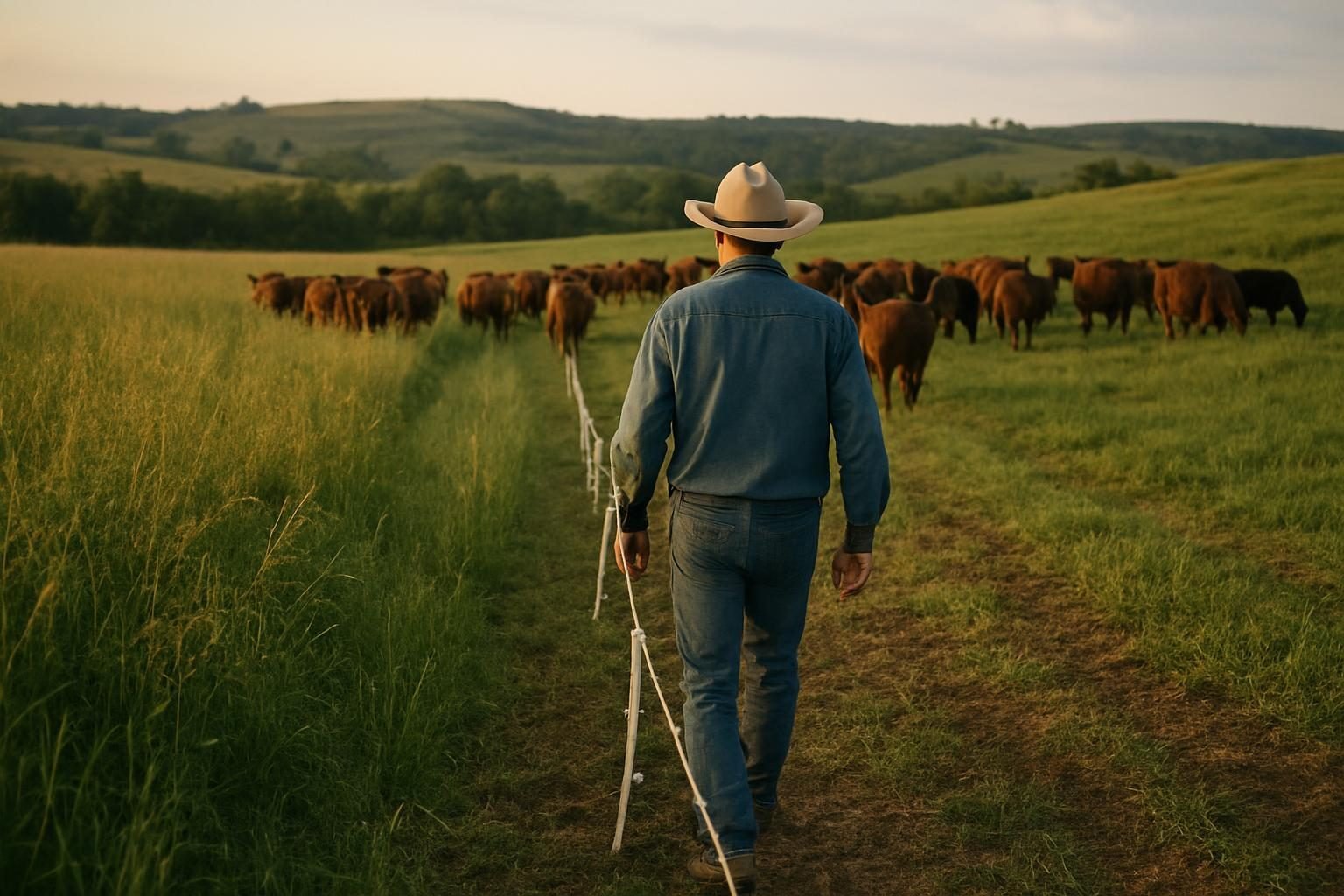
Planned grazing is the method of applying the framework to livestock. You build a written plan, usually a chart or spreadsheet, that tracks which herd is where, how long it stays, and how long each paddock rests.
Core planning principles
- Recovery period drives everything. Plants need enough rest to regrow. In fast-growing humid conditions that might be 20 to 40 days; in dry rangeland it can stretch to a year or more. Confirm local figures with your extension service or NRCS office.
- Short graze periods. Animals should leave before they regraze plants that have started to regrow, which is typically within a few days in the growing season.
- Flexible, not fixed. The plan is a living document. You adjust as rainfall, growth rates and animal condition change.
- Plan for the dry period. Know in advance how much forage you carry into dormancy, and decide in advance what you will do if rain fails.
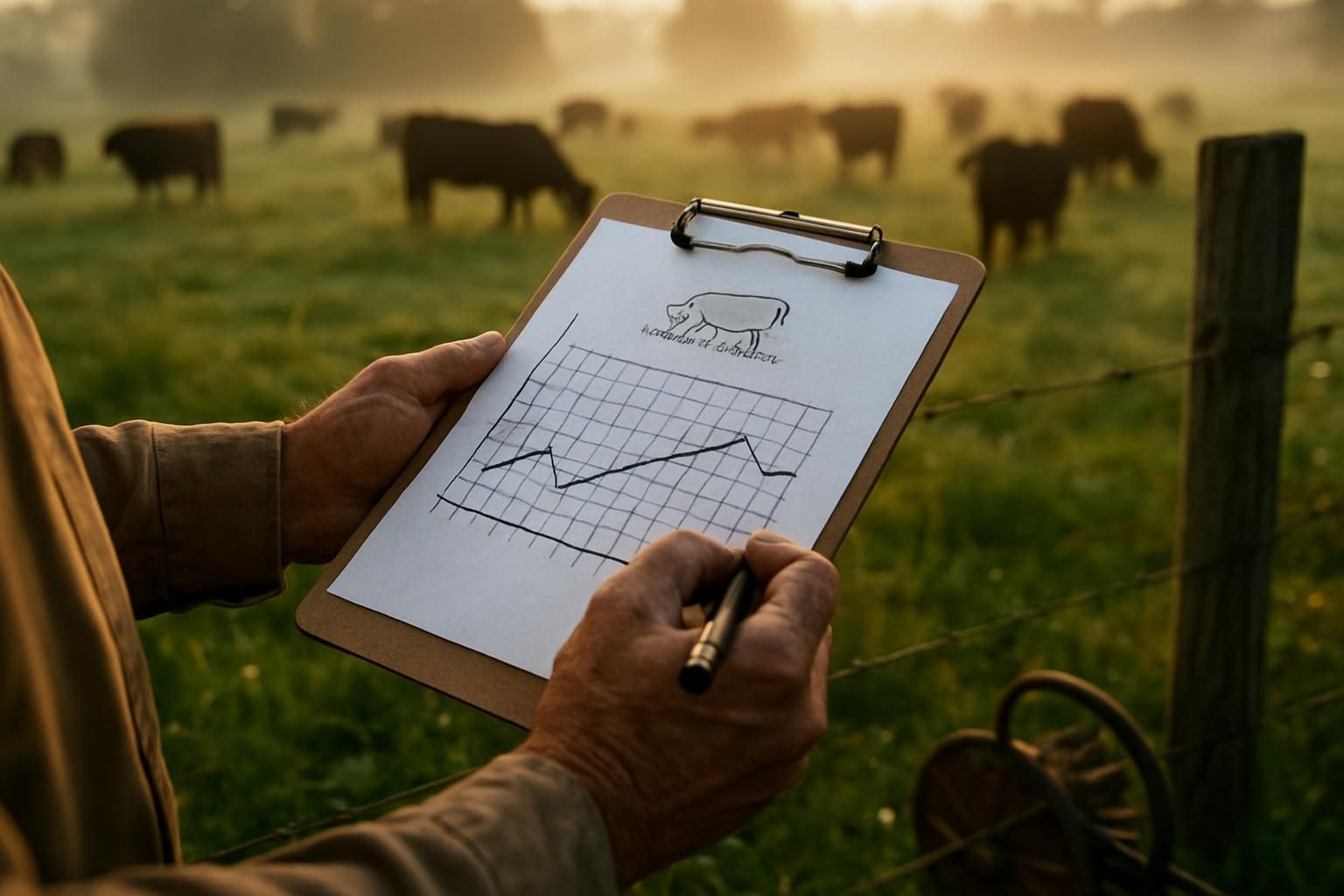
- Monitor and record. Photo points, forage inventory and soil cover tell you whether the plan is working.
For the mechanics of paddock design, water, and fence, see our guide to rotational and adaptive grazing and the practical piece on choosing an electric fence energizer for cattle.
Beyond grazing: how the framework applies elsewhere
Because the framework is about decisions, not cows, it applies to a market garden, an orchard or a farm-to-consumer business. A vegetable grower might use the gross profit analysis to see that a crop everyone loves growing barely covers its labor, while a less glamorous one carries the farm. An agroforestry planner might use the weak-link test to decide whether to invest in tree protection or irrigation first. See the guides on agroforestry and silvopasture and small-scale regenerative farming for places where this kind of thinking pays off.
It also pairs naturally with the six soil health principles. Those principles tell you what a healthy soil system needs; the framework helps you decide what to do first, given your constraints.
The evidence and the criticism
This is where honesty matters, because holistic management attracts both passionate advocates and serious skeptics.
What the research supports
- Many ranchers report that the framework improves their finances and quality of life, partly because the process forces clearer goals and better record keeping. Survey and case-based work supports this, though self-selection is a limitation.
- Well-managed adaptive and rotational grazing can improve ground cover, forage production and water infiltration in many settings, particularly in higher-rainfall regions. Results vary with climate, soils and starting condition.
What is contested
- Rangeland restoration claims. Savory has argued that high-density, planned grazing can reverse desertification on a very large scale. Many range scientists have reviewed controlled grazing experiments, especially in arid and semi-arid regions, and found that rotational systems often perform about the same as continuous grazing at comparable stocking rates. The disagreement is partly about experimental design and partly about whether small plots capture what happens in whole-farm management.
- Climate claims. Statements that grazing can sequester enough carbon to offset large shares of global emissions are not supported by the mainstream literature. Soil carbon gains from grazing management are real in some places but variable, slow and limited by soil and climate. For a balanced view, read our piece on regenerative agriculture and climate change.
- Method versus framework. Critics often evaluate planned grazing as a fixed technique. Supporters respond that the point is adaptive management, which is harder to test in a standard experiment.
A fair reading: the decision framework is a useful discipline with good anecdotal and some formal support for its economic and management benefits, while the largest ecological claims attached to it remain unproven or disputed. Our article on regenerative agriculture criticism, myths and the evidence goes deeper, and what the evidence shows on benefits is a good companion.
How to start using it on your farm
- Get the decision makers together and write the holistic context. Expect to revise it several times.
- Take a baseline. Photo points, a forage inventory, soil cover estimates and a simple financial snapshot.
- Run your next real decision through the tests. Pick something concrete, such as buying hay, adding fence or expanding the herd.
- Build a first grazing plan with recovery periods suited to your region, and chart it.
- Monitor monthly and adjust. Record what you changed and why.
- Review annually against your goal, not just against yield.
If you are weighing the whole shift, the three-year transition plan shows how to sequence changes without overextending. Consider taking a certified course from Holistic Management International or a local educator, and look for a mentor or grazing group in your area. Our upcoming list of regenerative agriculture books will point to good reading for the framework and its critics.
Key takeaways
- Holistic management is a decision framework first and a grazing method second.
- The holistic context, written with everyone involved, is the foundation. Do not skip it.
- Testing questions help you avoid fixes that create new problems.
- Planned grazing is a flexible, recorded plan built around recovery time.
- The economic and quality-of-life benefits are well reported; the large-scale ecological and climate claims are disputed.
- Measure your own land. Your photo points and records are better evidence for your decisions than any debate.
Frequently asked questions
Is holistic management the same as rotational grazing?
No. Rotational grazing is a livestock movement method. Holistic management is a broader decision-making framework, and planned grazing is how it is applied to livestock. You can rotate animals without using the framework, and you can use the framework on a farm with no livestock at all.
Does holistic management work in dry climates?
It can work as a decision process anywhere, and many western ranchers use it. The contested part is whether high-density planned grazing improves arid rangeland more than other management at the same stocking rate. Research is mixed, so start conservatively, monitor closely and consult local NRCS or extension staff.
Do I need to take a course to use it?
No, but training helps. The framework has specific terms and a structured process that are easier to learn with a certified educator or in a peer group. Books and workshops are widely available, and many farmers start by writing a holistic context and building from there.
Does holistic management reduce costs or increase profit?
Many users report lower input costs and better margins, often by extending the grazing season and cutting purchased feed. Results depend on your starting point, region, markets and debt load. Use the gross profit analysis on your own numbers instead of relying on averages.
Can a small farm or homestead use it?
Yes. The context and testing questions scale down well to a few acres, a market garden or a family homestead. The decision to buy a tiller, add goats or build a water system benefits from the same weak-link and cause-and-effect thinking used on a large ranch.