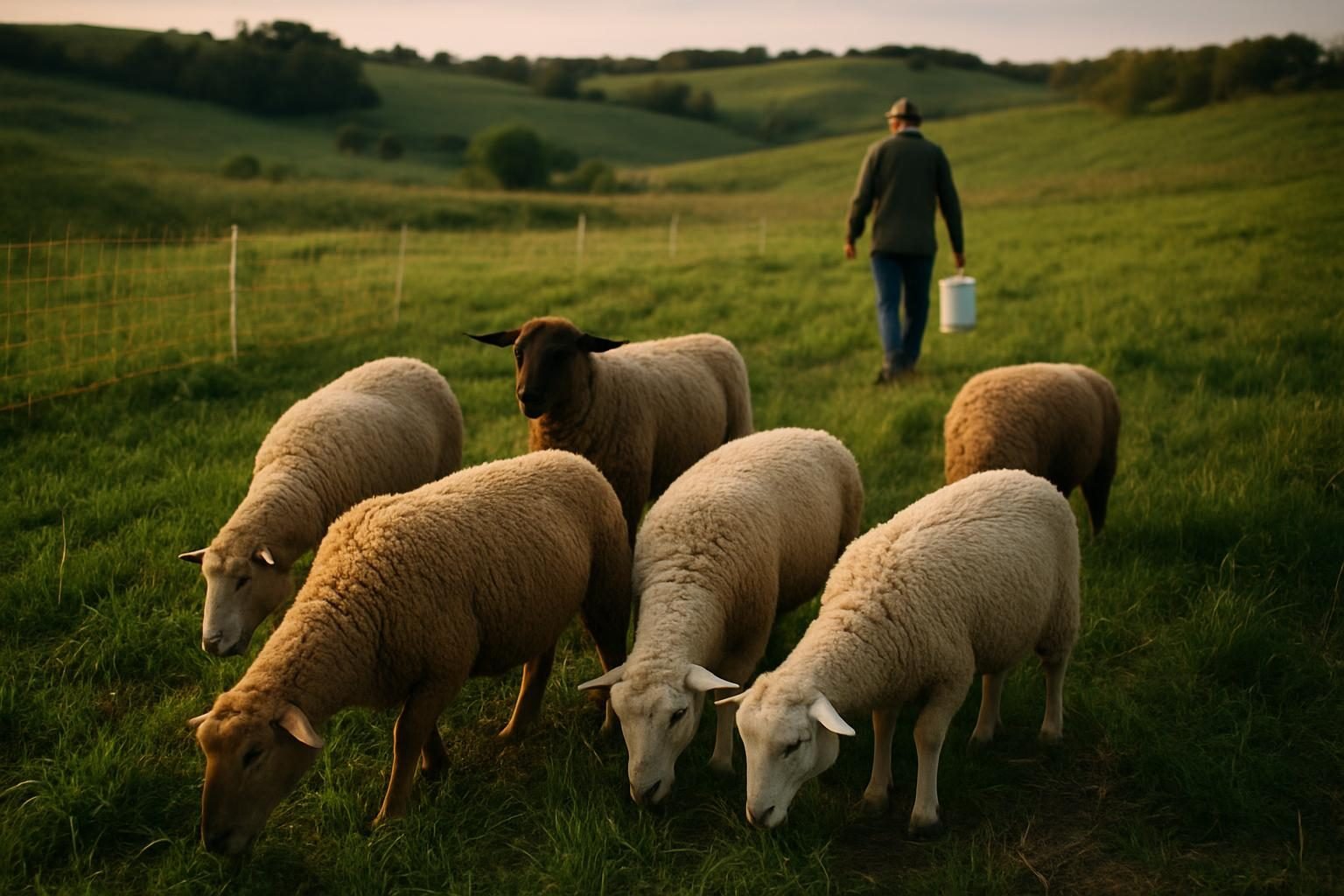
Sheep are one of the friendliest ways into livestock on a regenerative farm. They are small enough to handle alone, they graze a wide mix of grasses, clovers and weeds, and they fit on a few acres. This guide to raising sheep for beginners covers the decisions that matter most in year one: breeds, stocking, fencing, parasites, lambing, costs and markets.
Quick answer: Start with 3 to 6 ewes of a hardy, low-maintenance breed suited to your region. Stock at roughly 5 to 8 ewes per acre on good, well-managed pasture in the humid East, and far fewer in drier country. Use portable electric netting, move the flock often to break parasite cycles, and expect lambing, worm control and predators to be your biggest challenges. Lamb and wool sales rarely pay the bills at first, so keep costs low and sell direct.
Why sheep suit regenerative systems
Sheep graze close to the ground and prefer a broad diet, including forbs and browse that cattle often skip. That makes them useful for improving mixed pasture, cleaning up weedy edges and following larger animals in a multi-species grazing plan. Their light hooves and small bodies are gentler on wet ground than cattle, though they can still overgraze if left on a paddock too long.
The catch is that sheep are prey animals with a talent for dying in creative ways. They need good fencing, vigilant parasite management and some predator planning. None of it is hard, but it rewards attention. If you are still sorting out how grazing systems work, read our overview of rotational grazing first.
Choosing breeds for grazing
Pick for your climate, your parasite pressure and your market, not for looks. Hair sheep shed their coats and need no shearing. Wool breeds give you a fiber product but add shearing costs and fly-strike risk in wet climates. Ask local extension offices, nearby shepherds and your state sheep association which breeds actually thrive in your area.
| Type | Examples | Strengths | Trade-offs |
|---|---|---|---|
| Hair sheep | Katahdin, St. Croix, Dorper | No shearing, good heat and parasite tolerance, easy lambing | No wool income; some lines are smaller framed |
| Meat wool breeds | Suffolk, Hampshire, Dorset | Fast growth, strong lamb carcasses | Higher feed needs, more parasite and shearing management |
| Dual-purpose and heritage | Romney, Icelandic, Shetland, Jacob | Hardy, good mothers, fiber and meat | Slower growth; markets are niche |
| Fine wool | Merino, Rambouillet | Valuable fleece, suits arid ranges | Heavier shearing and flystrike management |
For most beginners in the humid South and East, parasite-resilient hair sheep are the easiest start. In cooler or drier regions, a hardy wool or dual-purpose breed can make sense. Buy from a breeder who culls hard for worm resistance and keeps records, and avoid sale-barn bargains with unknown health histories.
Stocking rates: how many sheep per acre
There is no single number. Typical ranges run from about 4 to 8 ewes per acre on productive, well-managed irrigated or humid pasture, down to one ewe per several acres on dry rangeland. Rainfall, soil, forage species and your rest periods all change the answer. As a rough rule, a mature ewe eats around 3 to 4 percent of her body weight in dry matter per day, more when nursing lambs.
Start low. It is easier to add animals than to repair an overgrazed pasture. Watch grass height and recovery, not just the animal count. Our guide to stocking rates explains the underlying math, which transfers to sheep with smaller animal units. Your local NRCS office or extension agent can help estimate carrying capacity for your soils.
Fencing and predator protection
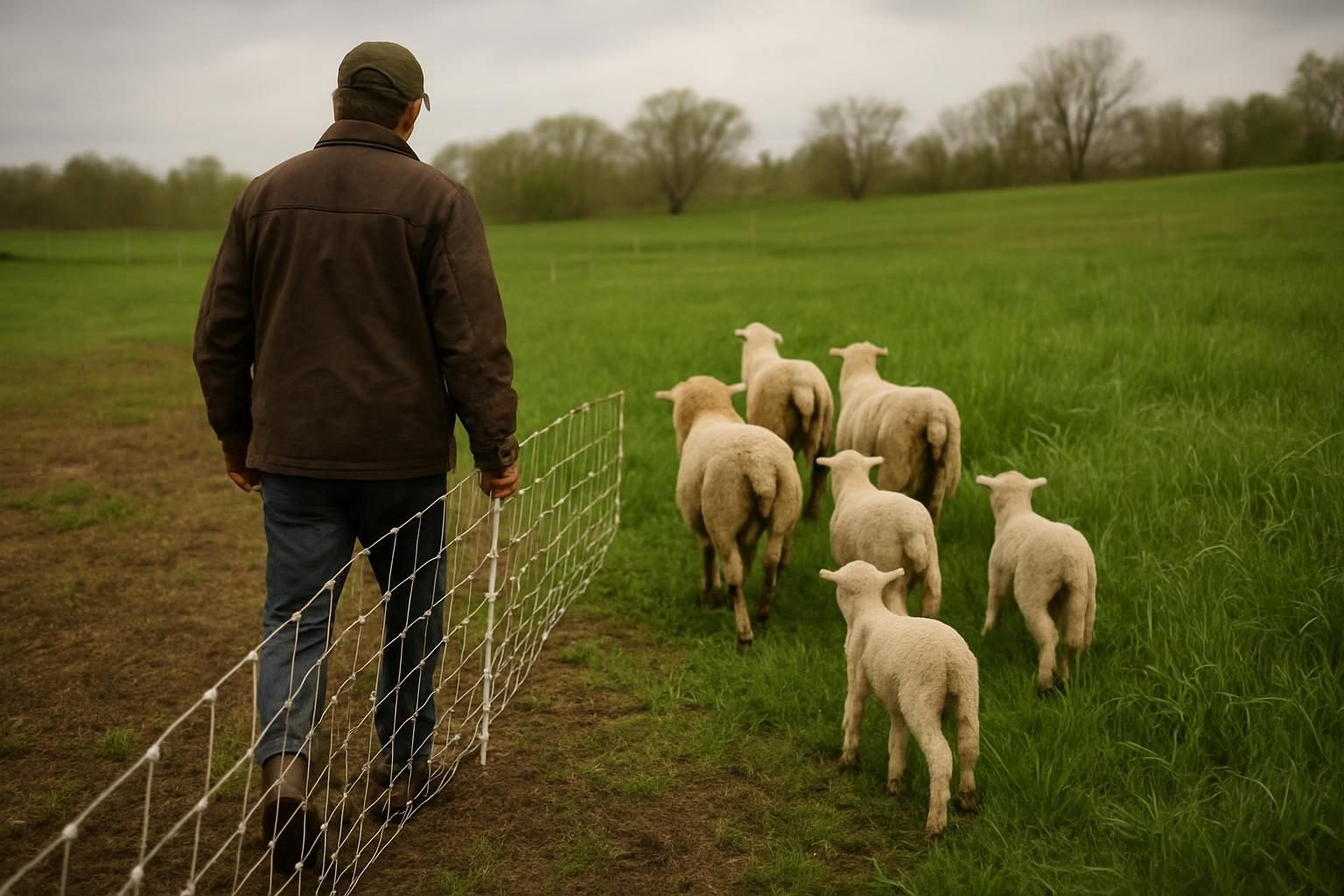
Good fencing is the foundation of a sheep operation. For most beginners, the best setup is portable electric netting (around 35 to 42 inches tall) powered by a solid energizer, with a permanent perimeter fence if you can afford one. Netting lets you move the flock daily or every few days, which is the heart of adaptive grazing. Many of the same principles apply as in our electric fence setup guide, though sheep need tighter spacing and a hotter, well-grounded system, especially with wool coats that insulate shocks.
- Train sheep to electric fence in a small, secure pen before turning them out.
- Keep vegetation off the bottom wires of netting or the charge will drain.
- Test voltage regularly; aim for several thousand volts at the far end.
Predators such as coyotes, dogs, bobcats and foxes are the top killer of beginner flocks. Livestock guardian dogs, llamas or donkeys, night penning and good fencing all help, and each has costs and trade-offs. Guardian dogs need training and a commitment to working animals, not pets. Movable shelters like chicken tractors can also protect vulnerable animals. Plan protection before the lambs arrive.
Water, shelter and feed
Sheep need clean water daily, around a gallon or more per ewe, and more in heat or when nursing. Portable troughs fed by hose or a pipeline work well; see our guide to water systems for rotational grazing. Shelter can be simple: a three-sided shed or shade and a windbreak is usually enough for hardy breeds, as long as animals stay dry and out of drafts.
Good pasture supplies most of the diet in the growing season. Winter is the cost driver. Plan for hay or stockpiled forage to stretch grazing, and provide a sheep-specific mineral. Never feed mineral made for goats or cattle without checking copper levels, because sheep are sensitive to copper toxicity.
Parasites and rotation
Internal parasites, especially the barber pole worm, are the biggest health threat to sheep in warm, wet regions. Larvae climb grass blades, sheep eat them, and the cycle repeats. Overgrazing short grass near the soil surface makes it worse, because that is where most larvae sit.
Rotation is your best tool:
- Keep sheep off the lower few inches of grass; move before they graze below about 3 to 4 inches.
- Give paddocks long rest, often 30 to 60 days or more in the growing season, so larvae die off.
- Do not return to a paddock sooner than the larvae can die in your climate.
- Check eyelid color with the FAMACHA system and treat only animals that need it, rather than deworming the whole flock on a schedule.
- Cull animals that repeatedly need treatment and keep daughters of resilient ewes.
Rotational systems built on rest and short graze periods, as described in our guide to rotational grazing for beginners, naturally cut parasite pressure. Work with a veterinarian on fecal egg counts and a plan, since dewormer resistance is widespread and treatment choices depend on your region.
Lambing basics
Most ewes lamb without help, especially in hardy breeds on pasture. Time lambing to match grass if you can. Spring lambing on fresh pasture keeps feed costs low, though it brings mud, cold snaps and predator pressure.
- Before lambing: Vaccinate and shear or crutch (trim around the tail and udder) as your vet advises, and make sure ewes are in decent body condition.
- Prepare: Have a clean, dry lambing area, iodine for navels, towels, colostrum or replacer, and your vet’s number ready.
- Watch for trouble: A ewe straining for an hour or more without progress needs help. Lambs that are cold, weak or not nursing within a few hours need intervention.
- After birth: Make sure each lamb gets colostrum in the first hours, dip navels and confirm the ewe accepts her lambs.
Plan for some losses. Even good shepherds lose a few lambs, and beginners usually lose more. Keeping a small flock, buying from proven bloodlines and being present during lambing will help.
Costs and getting started
Sheep are cheaper to start than cattle, but costs add up. Typical categories include breeding stock, fencing and energizer, water gear, hay, mineral, veterinary care, shearing and a guardian animal. Fencing and predator protection are often the largest startup expenses. Prices vary widely by region and year, so get local quotes instead of trusting a rule of thumb. Buying a few bred ewes from a reputable local flock is usually cheaper and less risky than buying many unknown animals.
If money is tight, borrow ideas from our guide on starting a small farm with little money, and look into farm loans for beginning farmers before you commit to large purchases. On a small acreage, our small-scale regenerative farming guide shows how sheep can fit alongside gardens and other enterprises. If you later want to add brush-eating animals, see our upcoming guide to raising goats.
Selling lamb and wool
Lamb is usually the main income. Common routes include direct-to-consumer freezer lamb, farmers markets, restaurants, ethnic and religious holiday markets, and auction or livestock buyers. Direct sales earn the best margin but require processing arrangements. Book a USDA-inspected or custom-exempt processor well ahead, since slots fill months in advance, and confirm current rules for your state with your department of agriculture.
Wool prices are often low enough that shearing costs eat the income, except for quality fleeces sold to hand spinners or niche buyers. Treat wool as a side product unless you have a fiber market. For help with certification, pricing and sales channels, see our guide to the regenerative farming business.
Key takeaways
- Start small, with a few ewes of a breed proven in your climate.
- Stock conservatively and watch pasture recovery rather than counting heads alone.
- Portable electric netting and a guardian plan are essential, not optional.
- Frequent moves and long rest periods are your best defense against worms.
- Lambing is manageable, but be present and prepared.
- Sell direct where possible, and treat wool as a bonus.
For the broader system sheep fit into, explore our Grazing & Livestock section.
Frequently asked questions
How many sheep should a beginner start with?
Three to six ewes is a sensible start. It is enough to learn handling, fencing, health care and lambing without risking much money or overwhelming your pasture. Sheep are flock animals and should never be kept alone, so buy at least two or three.
How much land do I need for sheep?
On good pasture in a humid region, an acre can carry several ewes with lambs if you rotate and rest paddocks. In drier regions you need much more. Even a few acres can support a small flock, but check your local carrying capacity with extension or NRCS.
Are hair sheep better than wool sheep for beginners?
For many beginners, yes. Hair sheep need no shearing, handle heat well and often show better parasite tolerance, which makes them popular in the South and East. Wool breeds make sense where you have a fiber market or a cooler, drier climate.
What is the biggest mistake new shepherds make?
Underestimating predators and parasites. Many beginners lose animals to dogs or coyotes, or to barber pole worm after overgrazing short pasture. Solid fencing, a protection plan and frequent moves prevent most of these losses.
Can I make money raising sheep?
Possibly, but not quickly. Profit usually comes from direct-marketed lamb, low input costs and good pasture management, and many small flocks break even or serve as one part of a diversified farm. Run honest numbers for your region before you scale up.