Zinnias are one of the easiest flowers to grow and one of the easiest seeds to save, which makes them a perfect first project for a new seed saver. One good planting can give you hundreds of seeds, enough to fill next year’s beds and share with neighbors. For gardeners building new planting areas, hugelkultur beds are an excellent way to establish productive zinnia growing spaces.
This guide covers how to save zinnia seeds from start to finish: knowing when a flower head is truly ready, drying and cleaning the seed, storing it, and understanding what to expect when you replant.
Quick answer: Let zinnia flowers fade on the plant until the petals are brown and the back of the head is dry and papery, usually 4 to 6 weeks after peak bloom. Cut the heads on a dry day, finish drying them indoors for 1 to 2 weeks, then rub out the seeds and separate them from the chaff. Store the fully dry seed in a labeled paper envelope in a cool, dark, dry place. It stays viable for roughly 3 to 5 years.
Why save zinnia seeds at all?
Zinnias earn their place on a farm or homestead twice over. As a cut-flower crop, they are a reliable, fast producer: the more you cut, the more they bloom, and they sell well at farmers markets and in CSA bouquets. As a pollinator crop, the open, flat-faced types (single and semi-double forms especially) give bees, butterflies and hoverflies easy access to nectar and pollen from midsummer until frost.
Saving your own seed turns a recurring seed expense into a one-time purchase. It also lets you select for what works on your ground: plants that handle your heat, humidity, powdery mildew pressure or short season. That kind of local adaptation is a quiet but real advantage, and it fits the same thinking behind small-scale regenerative farming, where you cut inputs and build resilience into the system. If you want the bigger picture of the practice, see our primer on seed saving for beginners.
Before you start: hybrids and cross-pollination
Two things decide whether your saved seed will grow into flowers you like: whether the parent was a hybrid, and who pollinated it.
Open-pollinated vs. hybrid zinnias
Open-pollinated (OP) and heirloom varieties generally come true from seed if they are kept isolated from other types. Examples include many of the ‘Benary’s Giant’, ‘State Fair’ and ‘Lilliput’ lines, though always check the seed packet or catalog description. F1 hybrids, such as some of the ‘Zahara’ series, will not reliably reproduce the parent. Seeds from a hybrid usually produce a mix of the parent’s traits, often with smaller, plainer or more variable flowers. They are not harmful, just unpredictable.
Cross-pollination
Zinnias are insect-pollinated, and bees and butterflies will happily move pollen between varieties growing in the same area. If you grow several types, seed from one plant may be a cross. That is not a failure, and some of the best surprise colors come from crosses. But if you want to keep a variety true, you have options:
- Isolate by distance: Separate varieties by a few hundred feet where pollinator traffic is heavy (a common general guideline; more distance is safer).
- Isolate by time: Stagger plantings so different varieties bloom at different times.
- Bag the flower: Cover a developing bud with a mesh or breathable bag before it opens, then hand-pollinate with pollen from the same variety.
- Grow only one variety: The simplest approach for home growers.
Many gardeners embrace the mix and simply save seed from their favorite plants each year, gradually selecting a personal strain.
When zinnia seed heads are ready
Timing is the step beginners most often get wrong. Zinnia seed is not mature when the flower is at its prettiest. The seed develops after the petals fade, and harvesting too early gives you pale, flat, empty or moldy seed.
Look for these signs on the flower head:
- Petals have faded, browned and dried, often drooping.
- The back of the flower head (the base under the petals) is brown and papery, not green.
- The stem just below the head has begun to brown and dry.
- The center cone feels firm and dry, not soft or damp.
A useful squeeze test: gently pinch the base of the head. If it feels dry and crisp, it is ready. If it feels spongy or green, give it more time. In most climates this is about 4 to 6 weeks after the flower first opened, though heat and humidity change the timeline.
Plan to harvest before a hard autumn rain or frost if you can, since wet weather encourages mold in the dense flower heads. In the humid East and South, consider cutting slightly early and finishing the drying indoors. In the arid West, heads can usually dry fully on the plant.
How to harvest, dry and clean zinnia seeds
- Pick a dry day. Wait until morning dew has burned off so the heads go in dry.
- Cut the heads. Snip the dead flowers with a few inches of stem. Choose heads from your best plants: strong stems, good color, healthy foliage, and good mildew resistance.
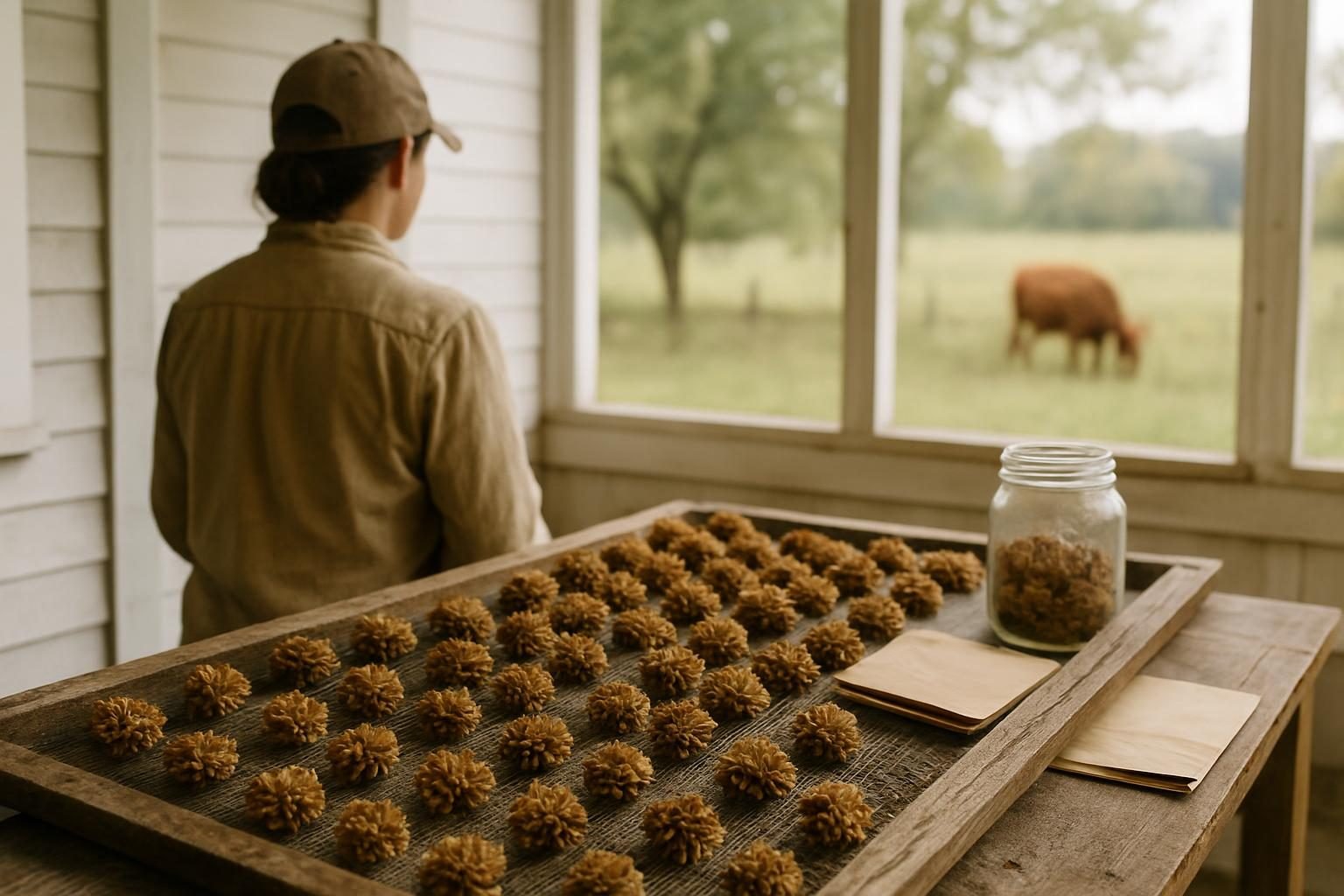
- Finish drying indoors. Spread the heads in a single layer on a screen, paper plate or newspaper in a warm, airy spot out of direct sun. Give them 1 to 2 weeks. Avoid plastic bags or sealed containers, which trap moisture.
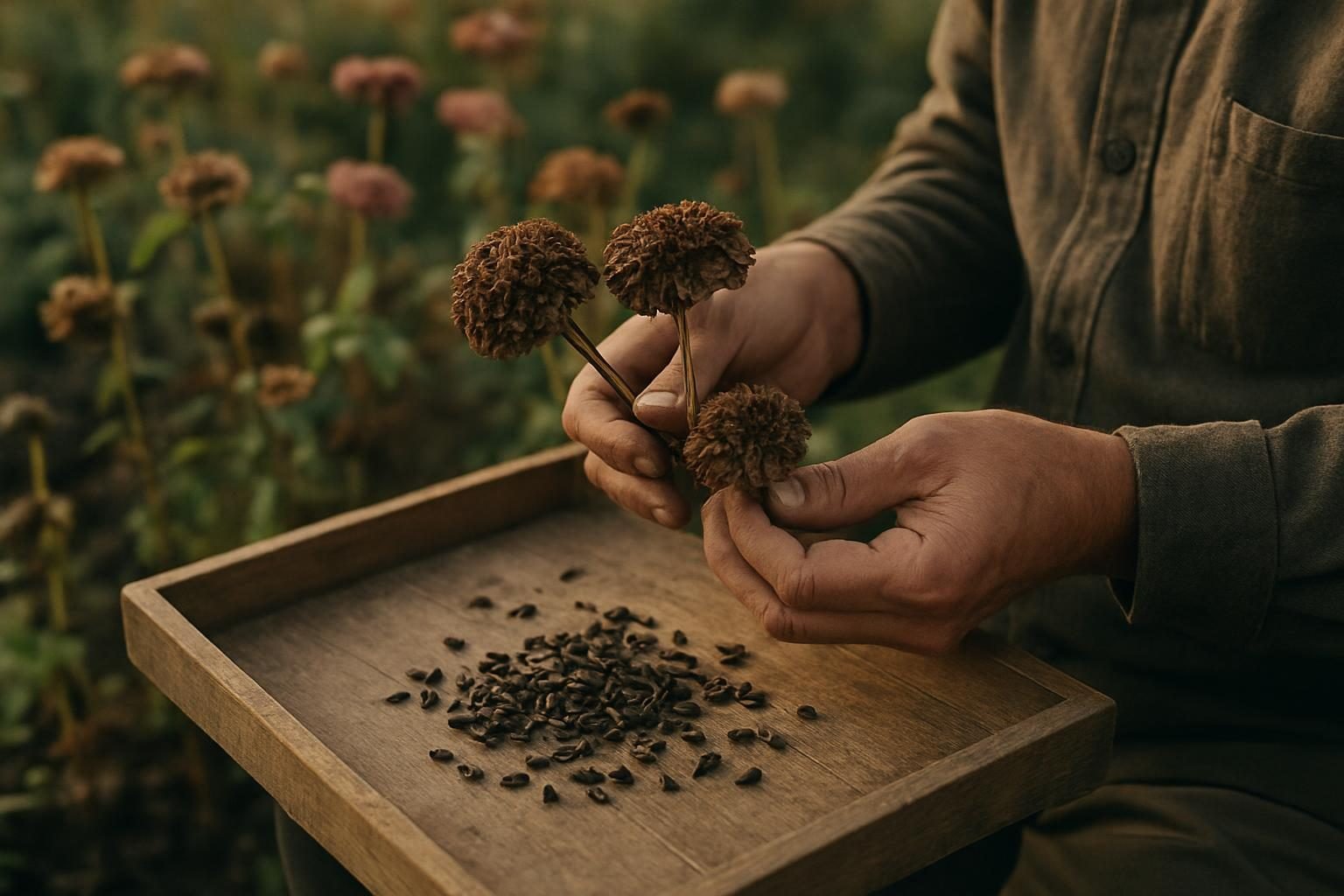
- Extract the seed. Rub the dried head between your palms over a bowl, or pull the seeds out by hand. Zinnia seeds are the flat, arrowhead or teardrop-shaped pieces; each seed typically has a small point and may carry a thin dried petal remnant.
- Separate seed from chaff. Pick out large debris by hand, then use a kitchen sieve or gentle breath to blow off lighter chaff. Plump, dark, firm seeds are viable; flat, pale, papery ones usually are not.
- Do a final dry. Let the cleaned seed sit on a plate or paper for another few days. Seed should snap rather than bend.
Quick reference: what good and bad seed look like
| Feature | Likely viable | Likely not viable |
|---|---|---|
| Color | Tan to dark brown or black | Pale, green or whitish |
| Shape | Plump, firm, filled out | Flat, thin, papery |
| Texture | Hard, snaps when bent | Soft, bends or crushes |
| Smell | Neutral, dry | Musty or moldy |
Do not worry about a fair amount of flat seed in any batch; zinnias naturally produce plenty of duds. A simple germination test (see FAQ) gives you a more reliable number than looking alone.
How to store zinnia seeds
Seed stays alive longer when it is dry, cool and dark. The greatest threat is moisture, so be sure the seed is completely dry before it goes into storage.
- Container: Paper envelopes work well because they breathe. For longer storage or humid climates, put the envelopes inside a sealed glass jar or airtight container with a desiccant packet or a spoonful of dry rice or powdered milk wrapped in tissue.
- Label everything: Write the variety (or “mixed”), color notes, and the harvest year on each envelope. Unlabeled seed is a common regret.
- Location: Keep it somewhere cool and stable, such as a closet or basement shelf. Many gardeners store sealed jars in the refrigerator. If you do, let the jar reach room temperature before opening to avoid condensation.
Properly stored, zinnia seed typically stays viable for about 3 to 5 years, with germination gradually declining over time. For storage lifespans across other crops, our guide to how to store seeds and how long they last by crop has a handy reference. If you are also saving vegetable seed, the same drying and labeling habits apply to saving tomato seeds and saving pumpkin seeds for planting.
Planting your saved seed
Zinnias are warm-season annuals that dislike cold soil and frost. Sow seed directly outdoors a week or two after your last frost date, when soil is reliably warm, or start seedlings indoors 4 to 6 weeks before planting out. Plant about a quarter-inch deep and thin to 6 to 12 inches apart depending on variety, giving good air flow to reduce powdery mildew.
Zinnias do well in sunny beds with decent drainage. If you are setting up new growing space, a healthy, biologically active bed is the best foundation, and approaches like no-till gardening and adding finished compost help build that. If you grow in containers or raised beds, see our notes on raised bed soil mixes and potting mix for a raised garden bed. Feeding the soil with homemade amendments from a compost bin closes the loop nicely.
A bonus for market growers: zinnias slot easily into a broader plan of profitable small-farm crops, and they work as a pollinator strip or companion planting in a permaculture garden layout.
Key takeaways
- Wait until petals are brown and the back of the head is dry and papery before cutting; early harvest gives empty seed.
- Finish drying heads indoors for 1 to 2 weeks in a single layer with good air flow.
- Hybrids will not come true; open-pollinated types will, if isolated from other varieties.
- Cross-pollination is common and can produce fun surprises, so save seed from your best plants.
- Store fully dry seed in labeled paper envelopes in a cool, dark, dry place; expect about 3 to 5 years of viability.
- Zinnias support pollinators and produce cut flowers all season, so the seed you save pays back in beauty and income.
Frequently asked questions
Can I save seeds from a store-bought zinnia packet’s flowers?
Yes, but check the packet first. If it says F1 or hybrid, the seed you save will not reliably match the parent plants. If it says open-pollinated or heirloom, the seed generally will come true if the plants were not crossed with other zinnias nearby.
Will saved zinnia seeds grow true to the parent plant?
Only sometimes. Open-pollinated varieties usually come close if isolated; hybrids and any plants visited by pollinators carrying other zinnia pollen can produce variable offspring. Many growers enjoy the variety, and you can select your favorites each year to stabilize a color or form.
How do I know if the seed is good before planting?
Try a quick germination test: place 10 seeds on a damp paper towel, fold it, slide it into a plastic bag, and keep it warm. Check after 5 to 7 days. If 7 or 8 sprout, you have roughly 70 to 80 percent germination, which is good. If fewer sprout, plant more seed per row.
Why are my zinnia seeds moldy or black inside?
Usually the heads were harvested too early or dried slowly in damp conditions. Mold is common in humid regions. Cut heads only when they are dry and papery, dry them in a single layer with airflow, and discard any seed that smells musty or looks fuzzy.
When is the best time to plant saved zinnia seed?
Plant after your last spring frost, once soil has warmed to roughly 60 to 70 degrees Fahrenheit. In short-season areas, start seeds indoors a month or so earlier. Your local extension office can confirm last frost dates for your area.