Learning how to save pumpkin seeds for planting is one of the easiest ways to cut seed costs and keep a variety that does well on your ground. The work takes an afternoon in fall, and the payoff is a jar of seed that can be planted next spring. The catch is that pumpkins and squash cross easily, so a little planning decides whether your saved seed grows true. For broader context on growing pumpkins and squash within permaculture garden systems, consider how seed saving fits into your overall garden design.
Quick answer: Choose a fully mature, healthy fruit from an open-pollinated (non-hybrid) variety, let it ripen until the stem is hard and the rind resists a thumbnail, then scoop out the seeds, rinse off the pulp, and dry them in a single layer for 1 to 2 weeks until they snap instead of bend. Store them cool, dark and dry in a paper envelope or glass jar. Seed from plants that were hand-pollinated or isolated will usually grow true to type; seed from open-pollinated patches near other squash may not.
Start with the right fruit and the right variety
Seed saving begins in the garden, well before the knife comes out. Two decisions matter most: the variety you grew and the fruit you pick.
Open-pollinated versus hybrid
Open-pollinated (OP) and heirloom varieties produce offspring that resemble the parent when properly isolated. Hybrids, often labeled F1 on the seed packet, are crosses between two parent lines. Seed saved from a hybrid will grow, but the plants are a lottery: you may get odd shapes, thin walls or poor flavor. If you plan to save seed, buy OP varieties. Many regional seed companies and seed libraries carry pumpkins and squash adapted to local conditions.
Choosing the parent fruit
Pick from your best plants, not just the biggest fruit. Look for:
- Full maturity. The fruit should be fully colored, the rind hard enough that a thumbnail will not easily puncture it, and the stem dry and corky.
- Healthy vines. Avoid fruit from plants hit hard by powdery mildew, squash bugs or wilt. Disease can travel with seed.
- True-to-type traits. Good shape, color, wall thickness and storage life are all worth selecting for.
- No rot or soft spots. Seed from a damaged fruit is more likely to carry mold.
Save from several fruits across several plants if you can. A broader base keeps the line from narrowing too fast. If you are new to the practice, our upcoming seed saving guide for beginners covers which crops are easiest to start with, and saving zinnia seeds is an excellent place to begin.
Understand cross-pollination before you trust your seed
This is the part that surprises most gardeners. Seed from a pumpkin does not always produce the same pumpkin, even when the parent was an heirloom. The reason is pollination, not poor seed handling.
How squash and pumpkins cross
Pumpkins and squash have separate male and female flowers on the same plant. Bees, especially squash bees and bumblebees, carry pollen from flower to flower, often across whole neighborhoods. The seeds inside this year’s fruit are the result of that pollination. So the fruit you eat looks like the plant you grew, but the seeds carry genetics from whichever plant supplied the pollen.
Crosses happen within a species, not between species. Most garden pumpkins and squash fall into four common species:
| Species | Common examples |
|---|---|
| Cucurbita pepo | Jack-o’-lantern pumpkins, pie pumpkins like Small Sugar, zucchini, acorn squash, delicata, many ornamental gourds |
| Cucurbita maxima | Hubbard, Atlantic Giant, Blue Hubbard, kabocha types, many large show pumpkins |
| Cucurbita moschata | Butternut, Long Island Cheese, cheese pumpkins, Seminole |
| Cucurbita argyrosperma | Cushaw and related types |
Check which species your variety belongs to. A pie pumpkin and a zucchini will cross because both are pepo. A pie pumpkin and a butternut will not. Seed catalogs and extension publications usually list the species on the variety page.
What a cross actually does
A cross does not change the fruit you harvest this year. It changes the seed inside it. Plant that seed next spring and you may get fruit that is smaller, a different color, bitter, or hollow-walled. Occasionally you get something interesting. Often you get something you would not have bought. Bitterness in squash relates to cucurbitacins, which can occur in some crosses with wild or ornamental gourds, so if a fruit from saved seed tastes strongly bitter, do not eat it.
How to keep your line true
You have a few options, from easiest to most reliable:
- Grow one variety per species. If you grow only one pepo variety, the main risk is a neighbor’s garden or a nearby ornamental gourd patch.
- Use distance. Home-garden guidance often suggests separating varieties of the same species by a quarter mile or more. More is safer in areas with lots of bees. Barriers like tree lines help somewhat.
- Hand-pollinate and bag. This is the dependable method for small gardens. In the evening, tape or clip shut a male and a female flower that will open the next morning. In the morning, pick the male flower, remove its petals, touch its pollen to the female stigma, then close and mark the female flower. Cover it again with a bag or mesh until the fruit sets. Label the fruit and save seed only from it.
- Accept the gamble. If it is a casual home garden and you are happy with surprises, saving open-pollinated seed is fine. Just do not rely on it for a market crop.
If you sell at market or run a CSA, predictable seed matters more. Review how variety performance affects margins in our guide to the most profitable crops for small farms and market gardens before deciding how much to save versus buy.
How to save pumpkin seeds for planting: step by step
Once you have a mature fruit from a variety you trust, the processing is straightforward.
1. Let the fruit fully ripen
Leave the fruit on the vine until the vine dies back, or cure it off the vine in a warm, dry place for a couple of weeks. Seed inside a fully ripe fruit is more mature and germinates better. Harvest before a hard freeze if you can, and keep the stem attached. For gardeners building soil health, hugelkultur beds offer an excellent way to incorporate organic matter alongside your seed-saving practice.
2. Cut open and scoop
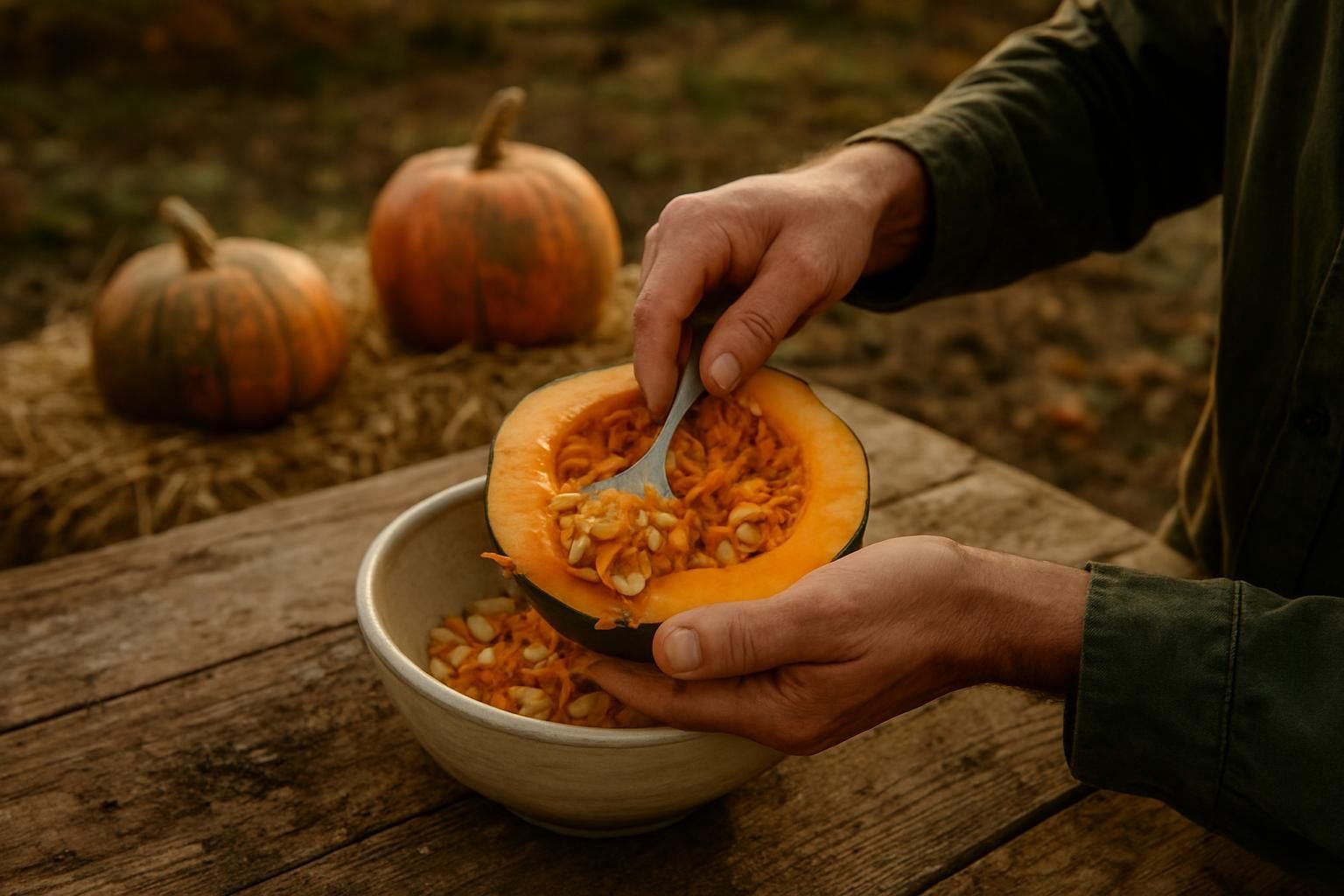
Slice the fruit and scoop the seeds and stringy pulp into a bowl. Reserve the flesh for cooking, since good seed saving and good eating go together.
3. Clean the seeds
Add water to the bowl and rub the seeds between your fingers to separate them from the pulp. Good seeds tend to sink and pulp floats. Pour off the debris and repeat until the seeds are clean. Unlike tomatoes, pumpkin seeds do not need fermentation. If you have saved tomatoes before, the contrast is clear: see how to save tomato seeds for the wet-seed method that does require fermenting.
Discard seeds that are flat, shriveled or papery, because they usually have no embryo inside.
4. Dry the seeds
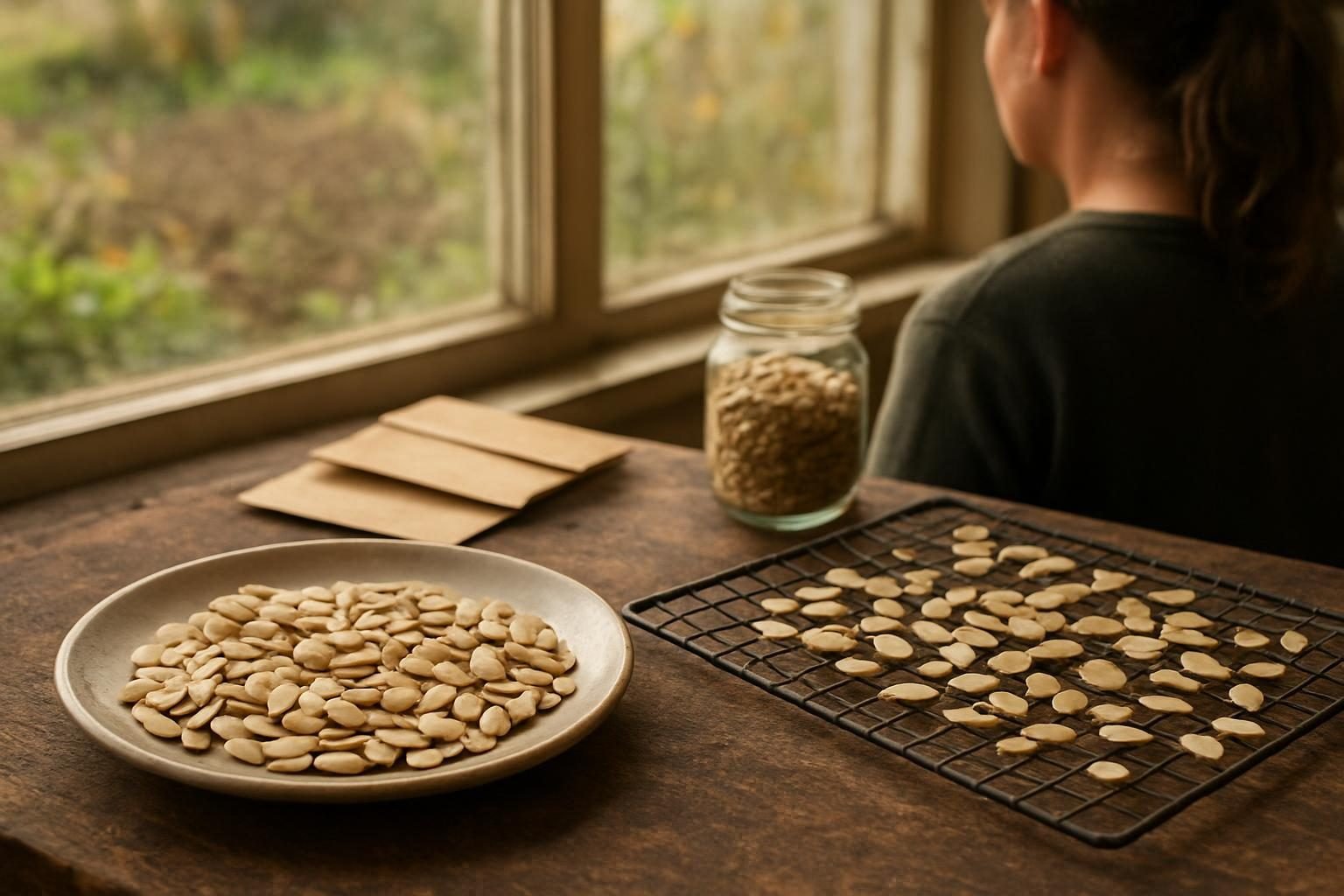
- Spread the seeds in a single layer on a ceramic plate, screen or coffee filter. Avoid paper towels, which stick, and avoid metal trays that can trap moisture.
- Put them in a warm, airy spot out of direct sun. A typical drying time is 1 to 2 weeks, longer in humid regions.
- Stir them daily so they dry evenly.
- Test for dryness: a fully dry seed snaps cleanly when you try to bend it. If it bends, keep drying.
Do not use an oven or dehydrator at high heat. Temperatures much above about 95 to 100 degrees F can damage the embryo. In humid parts of the East and South, a fan or a dry room with a dehumidifier helps. In the arid West, drying is quick, but keep seed out of intense sun.
5. Label and store
Put dry seed in a paper envelope or a clean glass jar. Label it with variety, year, species and any notes about isolation or hand-pollination. Store in a cool, dark, dry place. A closet shelf or a refrigerator works. For a deeper look at how storage conditions affect viability, see how to store seeds and how long they last by crop. As a rough guide, properly dried and stored squash seed often stays viable for about 4 to 6 years, sometimes longer, though germination rates drift down with age.
Test germination before you plant
A quick germination test takes the guesswork out of old or newly saved seed. Place 10 seeds between damp paper towels, slip them in a bag, and keep them warm (roughly 70 to 85 degrees F). Most viable squash seed sprouts within 3 to 7 days. If 8 out of 10 sprout, you have about 80 percent germination and can plant normally. If only 3 or 4 sprout, plant more heavily or start fresh seed.
Growing out saved seed in a regenerative system
Saved seed does best when it goes into healthy soil. Pumpkins are heavy feeders and sprawl widely, so they pair well with compost and mulch. A thick mulch or no-till system helps hold moisture and suppress weeds across those long vines. If you are building beds for next year, our guides on starting a no-till garden and compost for raised beds cover the basics. Healthy, biologically active soil supports seedling vigor, which is part of why locally saved seed can improve over time: each season you are selecting plants that thrive in your conditions.
For a broader view of the soil side, start with our soil health guide. And if you are scaling up a seed-saving practice on a small farm, the small-scale regenerative farming guide shows how it fits into the wider system. You can also browse more articles in the Small & Urban Farms category.
Common mistakes to avoid
- Saving from hybrids. The seed grows, but not reliably true.
- Harvesting immature fruit. Seed from underripe pumpkins has lower germination.
- Storing damp seed. Even slightly moist seed molds in a sealed jar. When in doubt, dry longer.
- Ignoring neighbors. Your own garden may be isolated, but a neighbor’s squash patch may not be.
- Skipping labels. You will not remember which jar is which by spring.
Key takeaways
- Save seed from open-pollinated varieties, not hybrids, and from fully mature, healthy fruit.
- Pumpkins and squash cross freely within the same species, so saved seed may not match the parent unless you isolate or hand-pollinate.
- Clean seed in water, dry it 1 to 2 weeks until it snaps, and store it cool, dark and dry.
- Run a simple germination test before planting, especially with older seed.
- Label everything with variety, species and year.
Frequently asked questions
Can I plant seeds from a store-bought pumpkin?
You can, and they will often grow, but the results are unpredictable. Many grocery and decorative pumpkins are hybrids, and the seed may be crossed with other varieties. You may get vines that produce smaller, odd-shaped or poor-tasting fruit. For reliable results, start with seed from a named open-pollinated variety.
Do pumpkin seeds need to be fermented like tomato seeds?
No. Pumpkin and squash seeds are dry-processed: rinse off the pulp, dry thoroughly and store. Fermentation is for crops with a gel coating around the seed, such as tomatoes and cucumbers.
How long do saved pumpkin seeds last?
When fully dried and kept cool, dark and dry, squash and pumpkin seed commonly stays viable for around 4 to 6 years, and sometimes longer. Germination rates decline with age, so do a quick paper-towel test on older seed before planting.
Will my pumpkins cross with zucchini or butternut squash?
Pumpkins cross with other varieties in the same species. Many jack-o’-lantern and pie pumpkins are Cucurbita pepo, so they can cross with zucchini and acorn squash. They generally will not cross with butternut, which is Cucurbita moschata. Check the species of each variety you grow.
How far apart should I plant varieties to keep seed pure?
Guidance varies, but a quarter mile or more between varieties of the same species is a common recommendation for home gardens, and more is safer where bees are abundant. If distance is not practical, hand-pollinate and bag the flowers on the fruits you plan to save from. Check your state extension service for local recommendations.