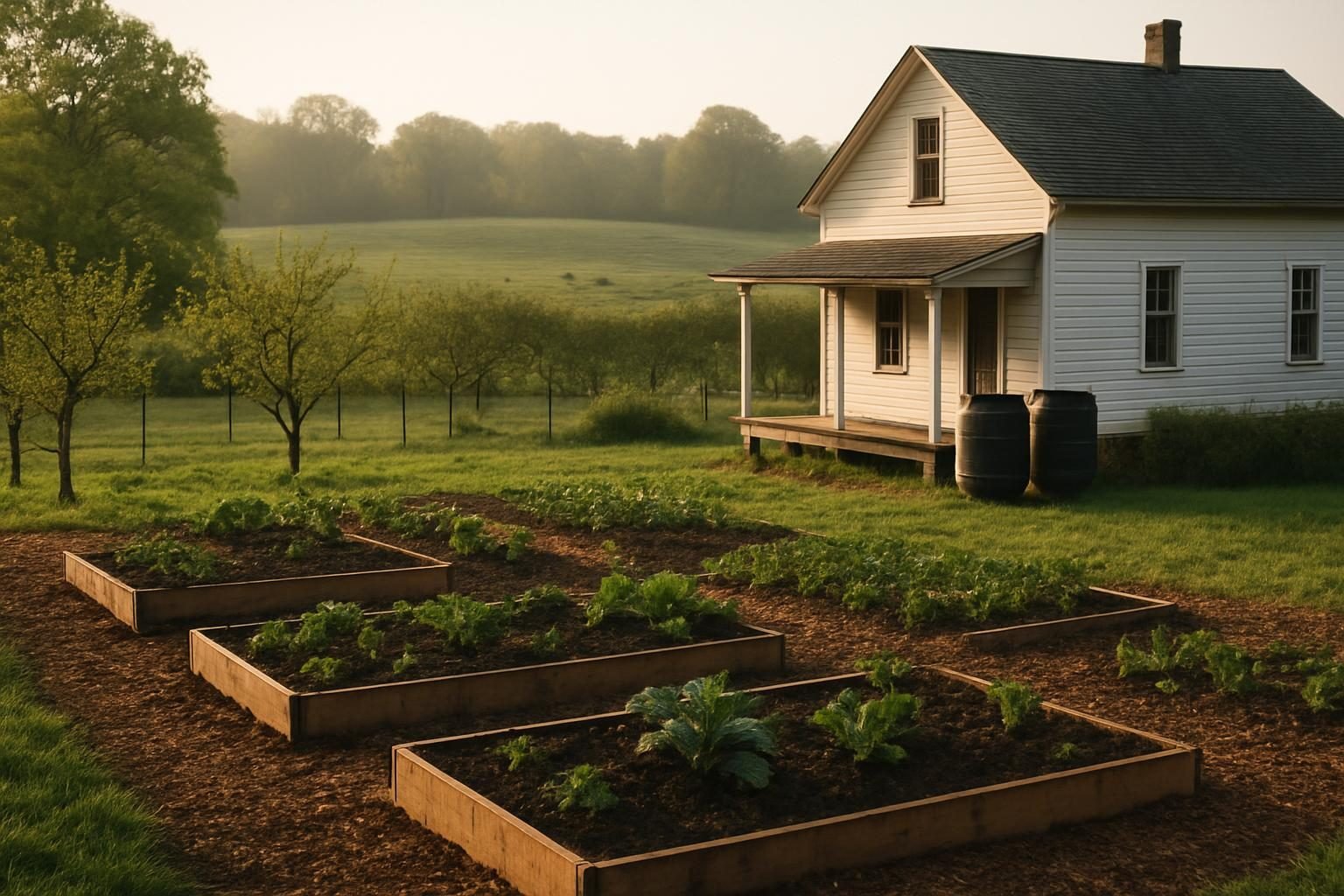
If you only have a quarter acre or a few raised beds, what you plant matters more than how much you plant. The most profitable crops for small farms share a few traits: they sell at a high price per pound or per bunch, they turn over quickly, and they fit the space you actually have.
This guide walks through the crops that tend to pay on small acreage, how to think about returns per bed foot, and how each one fits with regenerative practices like no-dig beds, cover cropping and diverse rotations. All figures here are typical estimates; your prices, climate and markets will differ.
Quick answer: The most profitable crops for small farms are usually microgreens, salad greens, cut flowers, garlic, herbs, specialty mushrooms and greenhouse tomatoes. They combine high prices, fast turnover and small space needs. Typical gross returns range from roughly $1 to over $10 per bed foot per season, depending on the crop, season length and market. Your best choice depends on your buyers, labor and climate.
How to judge what is “profitable” on a small farm
Gross sales per acre is a misleading number for a small grower. Better questions: How much can one 30-inch by 100-foot bed earn per season? How many times can you replant it? And how many hours of labor does it take?
Three measures help you compare crops honestly:
- Revenue per bed foot. Divide expected sales by bed length. This lets you compare a tomato bed to a salad bed on equal terms.
- Turnover. A crop that finishes in 30 days can be replanted several times a season. A crop that occupies a bed for nine months cannot.
- Labor and overhead. Harvest, washing, packing and delivery time can eat the margin on a high-priced crop. Track your hours for a season before you decide what to scale.
If you are still planning your overall setup, our step-by-step plan for how to start a market garden covers land, tools and crop planning in more depth.
Crop comparison: typical returns for small farms
The table below shows rough, typical ranges for direct-market growers in the U.S. Treat these as starting points for your own math, not guarantees. Wholesale prices run lower; farmers market and restaurant prices run higher in many regions.
| Crop | Typical turnover | Typical gross per bed foot (per season) | Labor intensity | Best fit |
|---|---|---|---|---|
| Microgreens | 10-21 days per tray cycle | High per square foot; measured per tray rather than bed foot | High, steady | Restaurants, farmers markets, indoor or protected space |
| Salad greens | Cut and come again; 3-6 plantings per bed | About $5-$15 | Medium-high | Farmers markets, CSAs, restaurants |
| Cut flowers | Season-long; perennials return yearly | About $5-$20 | Medium-high | Markets, florists, subscriptions |
| Garlic | 8-9 months in the ground | About $3-$8 | Low-medium | Markets, CSAs; seed garlic is a premium add-on |
| Fresh herbs | Repeated cuttings; some perennial | About $4-$12 | Medium | Restaurants, markets, grocers |
| Tomatoes (protected) | Long season, high yield | About $8-$20 in a hoop house | High | Markets, CSAs, early-season premium |
| Specialty mushrooms | Weeks to months per flush | Priced per pound; yield depends on setup | Medium | Restaurants, markets, shady wood lots |
The best crops for small farms, one by one
1. Microgreens
Microgreens are among the fastest paying crops per square foot, because a tray can go from seed to sale in about two weeks. They need little land but dependable temperature, water and a steady buyer. Restaurants and health-minded shoppers are the usual market.
The trade-offs are real: it is a repetitive, weekly production job, and the market can saturate in small towns. If you want to go deeper, see our planned guide to growing microgreens for profit. On the regenerative side, spent growing mix and root mats make good feedstock for compost.
2. Salad greens and baby leaf
Lettuce mix, arugula, spinach and baby kale are a market garden staple. Beds can be cut multiple times and replanted in succession, so the same footprint earns again and again. Customers buy them weekly, which builds relationships and repeat sales.
Greens love fertile, biologically active soil, which makes them a natural fit for no-dig gardening. Mulched, undisturbed beds hold moisture and suppress weeds, cutting two of your biggest labor costs.
3. Cut flowers
Zinnias, sunflowers, snapdragons, dahlias and lisianthus can out-earn many vegetables per bed foot, especially if you sell bouquets or subscriptions. Flowers also bring pollinators and beneficial insects onto the farm, which helps your vegetable crops.
Expect post-harvest handling, cooler space and design time to matter as much as growing. Perennials such as peonies and some shrubs pay back slowly but need less replanting.
4. Garlic
Garlic is easy to store, has strong demand, and asks for relatively little labor between planting in fall and harvest in early summer. It occupies the bed for most of a year, so its revenue per bed foot is moderate, but it pairs well with a following cover crop or late-season planting. Saving your best bulbs for seed can add a second income stream, with a premium for local, adapted varieties.
Fall-planted garlic under a thick mulch is a good example of keeping soil covered year-round, a core regenerative principle. For cover crop choices to follow garlic, see our guide to the best cover crop mixes.
5. Fresh herbs
Basil, cilantro, parsley, mint, chives, thyme and dill sell by the bunch and are in constant demand from chefs and home cooks. Perennial herbs such as thyme, oregano and chives need planting once and produce for years, which is excellent for margins. Basil is a seasonal money maker but dislikes cold nights.
6. Tomatoes, especially in protected culture
Field tomatoes are a crowd favorite, but the real premium comes from early, well-ripened fruit and heirloom or specialty varieties. A hoop house extends the season by weeks on both ends, protects against rain-driven disease in the humid East and South, and can raise both yield and price.
The costs are higher: structures, trellising, pruning labor and disease management. Rotate beds, build soil with compost, and consider grafted plants if disease pressure is high.

Specialty mushrooms and other niche options
Shiitake on logs, oyster mushrooms on straw or sawdust, and lion’s mane are well suited to shaded corners and wooded edges. They add a product to your table without competing for prime vegetable ground. Prices per pound are high, but yields depend heavily on your substrate, humidity and skill, so start small.
Other niche crops worth a look include ginger and turmeric in a hoop house, scallions and leeks, radishes and baby turnips for quick turnover, sweet potatoes in the South, and shoots or edible flowers for chefs. Always test a crop with a few beds before committing.
How profitable crops fit regenerative practices
High-value crops and healthy soil work together. Small farms that protect and build soil often reduce input costs and gain resilience when weather turns extreme. A few practical ways to line them up:
- Keep beds covered. Mulch, living cover or quick cover crops between plantings protect soil and moisture.
- Disturb soil less. No-dig and minimal-tillage systems save labor and protect soil life. See our overview of no-till farming.
- Feed the soil. Compost is the engine of intensive beds. Learn the basics of hot composting and consider vermicomposting for greenhouse and small-scale needs.
- Diversify. A mix of crops spreads risk across weather, pests and markets. Mixing flowers and herbs among vegetables supports beneficial insects.
- Track soil over time. Improvement takes patience; our guide on how to increase soil organic matter explains realistic timelines.
If you are working in a city, urban farming adds its own advantages, such as dense customer bases and short delivery routes, along with constraints like soil contamination and zoning.
Choosing your crops: a simple step list
- Start with your market. Talk to chefs, check what is missing at the farmers market, and survey potential CSA members before you plant. Our upcoming guide on how to start a CSA covers shares and pricing.
- Match crops to your site. Consider sun, water, season length and regional pressures: humid East disease, arid West irrigation, Southern heat.
- Pick two or three anchor crops. Choose a fast-turn crop (greens or microgreens), a steady seller (herbs or flowers) and one premium or storage crop (garlic or tomatoes).
- Run the numbers. Estimate revenue per bed foot, subtract seed, packaging, labor and fees, and compare crops on that basis.
- Trial small, then scale. Plant a few beds, record time and sales, and expand only what pays.
For funding, certifications and sales channels that affect your margins, see our hub on the regenerative farming business, and browse more guides in our small and urban farms section.
Key takeaways
- Judge crops by revenue per bed foot, turnover and labor, not by acreage.
- Microgreens, salad greens, cut flowers, herbs, garlic, protected tomatoes and mushrooms are common small-farm earners.
- All figures are typical estimates; your prices and costs will vary by region and market.
- Start with your buyers, then choose two or three anchor crops and test before scaling.
- Mulch, compost, diversity and reduced tillage support both profit and soil health.
Frequently asked questions
What is the single most profitable crop for a small farm?
There is no universal winner. Microgreens and salad greens often lead on revenue per square foot because of fast turnover, while cut flowers and protected tomatoes can also perform well. The best choice depends on your buyers, labor, climate and infrastructure.
How much can a small farm realistically earn per acre?
Intensive market gardens vary widely, from modest returns to well into five figures per acre in gross sales, depending on crop mix, markets and efficiency. Gross is not profit, so track labor and costs. Extension services and SARE publish useful benchmarks and enterprise budgets.
Do I need a greenhouse or hoop house to be profitable?
No, but protected space extends your season and can raise prices for early crops like tomatoes and greens. Many growers start in the field and add a hoop house once they have proven demand and cash flow.
Are regenerative methods compatible with high-value crops?
Yes. Mulching, compost, cover crops and reduced tillage suit intensive beds and can lower input and weed-control costs over time. Results build gradually, so expect benefits to accumulate over several seasons rather than overnight.
Where should beginners start?
Begin with a small footprint of salad greens, herbs and one or two other crops that match local demand. Learn harvest, washing and selling first, then add premium or specialty crops once your systems run smoothly.