Selling raw product at wholesale prices leaves many small farms stuck on thin margins. Value added farm products, meaning anything you transform, package or bundle beyond the raw harvest, let you capture more of the food dollar and use up seconds that would otherwise rot. This guide walks through proven ideas, the rules that govern them, and how to price so the extra work pays.
Quick answer: The best value added farm products use ingredients you already grow, need little equipment, and fall under your state’s cottage food or licensing rules. Shelf-stable items like jams, dried herbs and soap are the easiest starting points; bone broth, meat products and meal kits usually need more oversight. Rules vary by state, so confirm with your state department of agriculture or health department before you sell, and price from true cost, not from what looks fair.
Why value-added products make sense on a regenerative farm
Regenerative systems tend to produce variety: diverse vegetables, herbs, fruit, eggs, pastured animals. Variety is great for soil and resilience, but it can mean small quantities of many things, which is hard to sell wholesale. Turning surplus and cosmetically imperfect produce into shelf-stable or higher-value goods smooths cash flow across the year and gives customers a reason to keep buying through winter.
There is a catch. Processing adds labor, packaging, insurance and regulatory work. A product only helps if it earns more per hour than selling the raw item would. Run the numbers before you buy a single jar, and keep detailed records for year-end tax deductions.
Value added farm products to consider
1. Jams, jellies and fruit butters
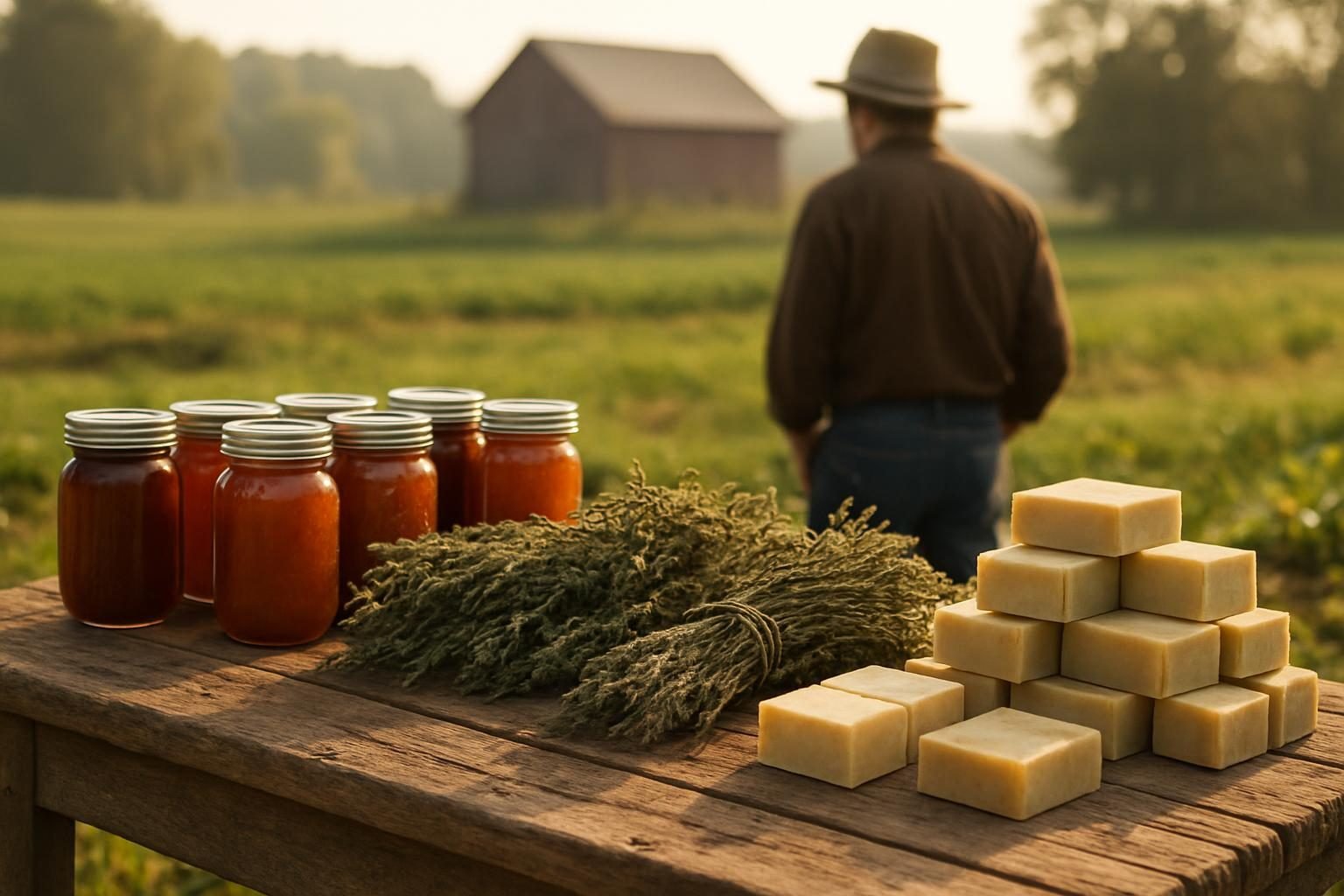
The classic cottage food product. Acidic, high-sugar preserves are generally allowed under most state cottage food laws, though some states restrict low-acid items or require tested recipes. Use recipes from your extension service or the National Center for Home Food Preservation. Typical strengths: long shelf life, strong gift appeal, easy use of seconds. Typical weakness: crowded market and sugar and jar costs that eat margin.
2. Dried herbs, teas and spice blends
Herbs are among the best value-per-square-foot crops, and drying is simple. Mint, lemon balm, chamomile, calendula, oregano and thyme all dry well. Blends (a tea sampler, a grilling rub) command higher prices than single herbs. Dry thoroughly and keep moisture low to prevent mold. Many states treat dried herbs as cottage food, but check whether your state limits culinary herbs versus medicinal claims.
3. Bone broth
Popular with customers of pastured meat farms, and a smart way to use bones. It is also one of the trickiest. Broth is low-acid and perishable, so it is often outside cottage food allowances and may require a licensed kitchen, commercial processing, or frozen-only sales rules. If your broth contains meat or poultry, federal or state meat inspection rules may apply. Read the details in our guide to USDA custom exempt processing versus inspected meat, then call your state agency before you invest.
4. Soap, salves and body care
Soap made from your own tallow, goat milk or infused herbs sells well and stores for months. Regulation is different here: true soap is generally regulated differently than cosmetics, and making health or skin-treatment claims can change how the FDA classifies your product. Labeling matters. Confirm current federal and state requirements, and consider product liability insurance.
5. Meal kits and recipe boxes
A weekly box of seasonal vegetables, herbs and a recipe card turns a CSA share into something a busy household will actually use. Kits that combine raw produce are usually simpler to manage than kits including prepared or perishable foods, which may trigger food handler and processing rules. Start with produce-only kits and add shelf-stable extras like a spice blend.
6. Pickles, ferments and hot sauce
Pickled vegetables and hot sauces use seconds and peak-season gluts well. Acidified foods have specific pH and process requirements, and many states limit or exclude them from cottage food exemptions or require process review. Fermented products are especially variable by state. Check before you sell.
7. Eggs, flours and baked goods
Baked goods without cream or custard fillings are the most commonly permitted cottage food. If you grow grain, stone-ground flour is a premium product. Egg rules involve washing, refrigeration, labeling and sometimes licensing, and differ widely by state.
8. Cut flowers, dried bouquets and wreaths
Non-food value-added products carry far fewer regulations. Dried flower arrangements, wreaths and seed packets extend the season and need minimal licensing in most places. Our guide on saving zinnia seeds shows one easy way to turn a flower crop into a second product.
9. Fiber, wool and natural dyes
If you raise sheep or goats, washed fleece, roving and yarn sell directly to fiber artists. Regulation is light, but quality, cleaning and consistent grading drive price.
How to compare your options
The table below uses general, typical patterns, not guarantees. Your costs, state and market will change the picture.
| Product | Regulatory burden (typical) | Startup cost | Shelf life | Best for |
|---|---|---|---|---|
| Dried herbs and teas | Low | Low | Long | Market gardens |
| Jams and fruit butters | Low to moderate | Low | Long | Orchards, berry growers |
| Soap and salves | Low to moderate | Low to moderate | Long | Livestock and herb farms |
| Pickles and hot sauce | Moderate | Low to moderate | Long | Vegetable farms |
| Bone broth | High | Moderate to high | Short (frozen) | Meat producers |
| Meal kits | Low to moderate | Low | Short | CSAs and small farms |
| Dried flowers and wreaths | Very low | Low | Long | Flower growers |
Cottage food laws and licensing: what to check
Cottage food laws let you make certain low-risk foods in a home kitchen and sell them directly, often with limits. These laws differ enormously from state to state, so do not rely on what a farmer two states over told you. Typical differences include:
- Annual sales caps. Some states cap gross sales; others have no cap.
- Where you can sell. Many states allow direct sales only, such as markets, farm stands and from home, and restrict online shipping, wholesale or retail stores.
- Approved product lists. Most states allow a defined list of non-hazardous foods and exclude anything needing refrigeration.
- Registration, permits and training. Some states require none; others require a registration, a food handler course or a kitchen inspection.
- Labeling. Expect required statements such as your name, ingredients, allergens and a notice that the product was made in a home kitchen.
For anything outside your state’s cottage food list, you may need a commercial or shared-use kitchen, a food processor license, or inspection. Meat, poultry and dairy typically involve additional agencies. Start with your state department of agriculture or health department, then ask your county extension office. This is general information, not legal advice; confirm current rules with the agency before you sell.
Pricing value-added products for real margin
Many farmers price by glancing at the shelf next to them. That is how products end up selling briskly and losing money. Build price from cost instead.
- Add up ingredient cost. Include the true cost of your own crops, not zero. Seconds are cheaper, but your land, labor and inputs still count.
- Count packaging and labels. Jars, lids, boxes and printing add up fast on small runs.
- Value your labor. Time the whole process, including cleanup, labeling and market time. Set an hourly wage you can live with.
- Add overhead. Licenses, insurance, kitchen rental, testing and market fees.
- Apply a margin. Many food producers aim for roughly double their total cost at retail, though your target may differ. Check it against what your customers will pay.
- Test and adjust. If a product sells out immediately, you may be too cheap.
Our full walkthrough on how to price farm products so your farm is profitable covers cost-plus and market-based methods in more depth.
Where to sell what you make
Direct sales usually deliver the best margins and are often what cottage food laws require. Farmers markets are the natural first stop, and selling at farmers markets gets easier with a clear display, samples where allowed, and a small number of strong products rather than twenty mediocre ones. If you have road frontage, a stand can work well; see our upcoming ideas on farm stand ideas that increase sales for layout and product mix.
Bundle products with your core offerings. A pastured meat customer may happily add broth and soap to the same order, as covered in our guide to selling grass-fed beef direct to customers.
Start small and plan the business side
Pick one or two products, run a small test batch, and sell it at one market before scaling. Write down what you learn. A short, honest plan helps you decide whether a product deserves more of your time; our farm business plan template is a good place to record costs, prices and goals. If you need equipment such as a dehydrator, a commercial kitchen build-out or a freezer, explore farm equipment financing and grants for beginning farmers, and confirm current program details with the sponsoring agency.
For the bigger picture of funding, certification and sales channels, see our hub on the regenerative farming business, or browse more in the Farm Business & Funding category. If you farm on a small footprint, small-scale regenerative farming shows how to fit these products into a compact operation.
Key takeaways
- Value added farm products work when they use crops and seconds you already have and pay you more per hour than raw sales.
- Start with low-regulation items like dried herbs, jams, soap and dried flowers; treat broth, meat and dairy as higher-hurdle projects.
- Cottage food laws vary widely by state. Confirm limits, labeling and licensing with your state agency before selling.
- Price from true cost, including your labor, packaging and overhead, then check it against your market.
- Test one or two products at a single market before scaling up.
Frequently asked questions
What are the easiest value added farm products to start with?
Dried herbs and teas, jams and fruit butters, dried flowers, and simple baked goods are common starting points because they are shelf-stable, need modest equipment and often qualify under cottage food laws. Your state’s rules determine what is actually allowed.
Do I need a license to sell value-added products from my farm?
It depends on the product and your state. Many shelf-stable foods can be sold under a cottage food law with little or no licensing, while perishable foods, meat, dairy and some acidified foods often require a commercial kitchen, permit or inspection. Check with your state department of agriculture or health department.
Can I ship cottage food products across state lines or online?
Often not. Many cottage food laws limit sales to direct, in-state transactions such as markets and farm stands, and some prohibit internet or mail-order sales. A few states allow more. Confirm current rules locally before you advertise or ship.
How much should I mark up value-added products?
There is no single number. Many producers aim for retail prices at roughly twice total cost, covering ingredients, packaging, labor and overhead, then adjust to what customers will pay. If a product sells out instantly, you may be underpriced.
Is bone broth a good first product?
Usually not. Broth is low-acid and perishable, and products containing meat or poultry may fall under inspection rules. Many farms begin with shelf-stable goods and add broth once they understand local licensing and have access to a licensed kitchen.