A good raised bed soil mix is the single biggest factor in whether your beds thrive or struggle five years from now. Get the blend right on day one and you spend the following seasons feeding a living system instead of fighting compaction, drought stress and nutrient swings.
This guide covers proven ratios, how to fill deep beds without buying a truckload of soil, how to top up each season, and the mistakes that quietly ruin beds.
Quick answer: A reliable raised bed soil mix is roughly 50-60% screened topsoil or loamy garden soil, 30-40% finished compost and 10-20% aeration material such as coarse sand, pumice, perlite or aged bark fines. Fill the bottom of deep beds with logs, branches and rough organic matter to save money, then add 1-3 inches of compost on top every season instead of replacing the soil.
What a raised bed soil mix actually has to do
Soil in a raised bed has a harder job than soil in the ground. It has no deep subsoil to buffer water swings, it warms and cools faster, and it settles over time. A good mix does four things at once:
- Holds water without turning soggy. Mineral soil and compost do most of this work.
- Drains and breathes. Roots need oxygen, and aeration material keeps pore space open.
- Feeds plants and microbes. Compost supplies slow-release nutrients and biology.
- Resists collapse. Stable organic matter and mineral particles keep the bed from sinking too fast.
If you want the bigger picture of why biology matters here, our complete guide to building living soil explains how structure, organic matter and microbial life work together.
Raised bed soil mix recipes by ratio
There is no single magic formula. The right blend depends on what you can source locally and what your native soil is like. These are typical ranges that work across most of the country, by volume.
| Recipe | Topsoil | Compost | Aeration material | Best for |
|---|---|---|---|---|
| Standard vegetable bed | 50-60% | 30-40% | 10% coarse sand, perlite or pumice | Most annual vegetables |
| Heavy clay region | 40-50% | 30-35% | 15-20% coarse sand or bark fines | Humid East and clay-heavy sites |
| Sandy or arid region | 40% | 40-50% | 10% bark fines or coco coir | Arid West, sandy Southern soils |
| Lightweight bed (rooftop, patio) | 0-20% | 40-50% | 30-40% coir, bark fines, perlite | Weight-limited sites; needs more frequent watering and feeding |
Two cautions on these numbers. First, treat them as starting points and adjust to what the mix feels like in your hand: it should crumble, hold together when squeezed lightly, and never form a slick ball. Second, a soil test of your topsoil and compost before you build (through your state extension service or a reputable lab) will tell you about pH, salts and nutrient levels and is well worth the small fee.
Choosing your topsoil
Topsoil is the cheapest and most variable ingredient. Look for screened, loamy material that smells earthy and has no weed seed bomb or construction fill. Ask the supplier what it was screened from and whether it has been tested. Avoid anything that arrives as a single dense, sticky clay or fine, dusty silt unless you plan to blend it with plenty of coarse material.
Choosing your compost
Finished compost should be dark, crumbly and smell like forest floor, not ammonia or sour garbage. Blending two or three sources (for example, municipal compost, mushroom compost and your own) spreads the nutrient and biology risks. Our guide to compost for raised beds covers types, ratios and timing in detail. If you want to produce your own, see how to make compost for gardens and farms, or speed things up with hot composting. A simple compost bin is all most gardeners need to get started.
Choosing aeration material
Coarse sand (not fine play sand), perlite and pumice are mineral options that last for years. Aged bark fines, coir and rice hulls are organic options that break down over time. Never mix fine sand into clay: it can produce something closer to concrete than loam. Biochar, charged with compost or worm castings first, can also help hold moisture and nutrients; see our guide to biochar benefits, limits and use before committing.
Filling deep beds cheaply with a rough-organics base
A bed 12 inches deep needs a lot of soil. A bed 24 inches deep needs far more, and buying it all as premium mix is expensive. The classic fix is to fill the bottom third to half with coarse organic material and put the quality blend in the top layer where roots do most of their work.
This is the logic behind hugelkultur: buried wood and woody debris act as a slow-release sponge and carbon source. The approach works best when you understand its trade-offs, so treat the steps below as a practical, modest version of it.
- Clear and prepare the footprint. Mow or flatten vegetation, or smother it with cardboard. If you are placing a bed over lawn, our guide to no-dig gardening shows how to build without tilling.
- Add the rough base. Lay logs, large branches and chunky woody material in the bottom 6-12 inches. Choose well-seasoned or partly rotted wood where possible. Avoid black walnut, treated lumber and heavily diseased material.
- Fill the gaps. Add leaves, straw, spent plant material, grass clippings in thin layers, and rough compost to fill voids and reduce settling.
- Water it in. Wet each layer as you go so the pile begins breaking down and settles early.
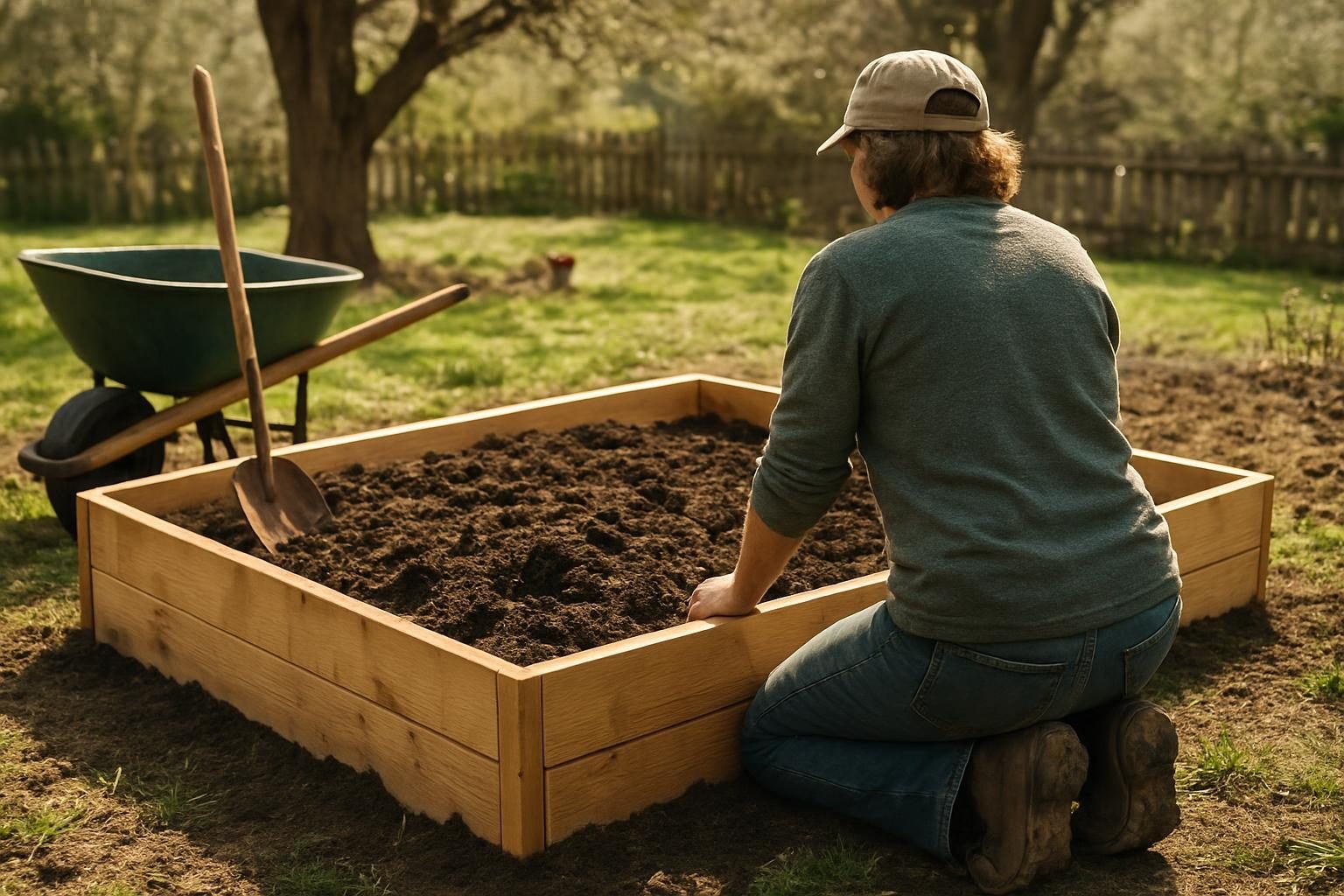
- Add the quality layer. Top with 8-12 inches of your topsoil, compost and aeration blend.
- Plan for settling. Expect the bed to drop several inches in the first year or two and top it up.
One honest caveat: fresh wood and high-carbon material can temporarily tie up nitrogen near the interface, and a rough base also settles unevenly. It is a smart way to cut cost and build long-term organic matter, but heavy feeders like tomatoes and squash may need extra compost or a nitrogen-rich amendment in year one.

Topping up each season instead of replacing soil
Soil in a bed does not wear out; it gets depleted and compacted. Your job each year is to feed the biology and replace what plants removed and what settling took away.
- Spring or after clearing a crop: add 1-3 inches of finished compost across the surface. Lightly fork it in or leave it on top, as in a no-till garden.
- Every 2-3 years: top up lost volume with your original blend, not just compost. Pure compost year after year can build excess phosphorus and salts.
- Between crops: sow a green manure or winter cover where the climate allows, then chop it and leave it as mulch.
- Every 2-4 years: retest soil to catch pH drift, salt buildup or nutrient gaps.
- Always: keep soil covered with mulch (straw, leaves, wood chips on paths) so you protect structure and moisture.
Worm castings are an excellent, concentrated top-dressing if you keep a bin; see our vermicomposting guide to get started.
Common raised bed soil mix mistakes to avoid
- Using 100% bagged potting mix. It is light, pricey and can dry out or shrink quickly in a deep bed. Potting mix has its place; our upcoming guide to potting mix for raised garden beds compares when it makes sense. If you are weighing bagged options, bagged organic raised bed soil reviews will help you decide what to buy and skip.
- Using 100% compost. Too rich, too salty, and prone to shrinking and nutrient imbalance.
- Skipping aeration. Heavy mixes compact and drown roots, especially in wet climates.
- Digging native clay straight in. Without blending in organic matter and coarse material, clay can seal the bed.
- Using unknown fill. Contaminated topsoil or herbicide-residue compost or manure can damage a bed for years. Ask suppliers questions and run a small bean or pea test before planting.
- Letting beds sit bare. Exposed soil loses carbon, structure and biology to sun, wind and rain.
- Ignoring regional conditions. Beds dry out fast in the arid West and heat-stressed South, and stay cold and wet in parts of the Northeast and Pacific Northwest. Adjust your mix and mulch accordingly.
Putting it together on a small farm or in a backyard
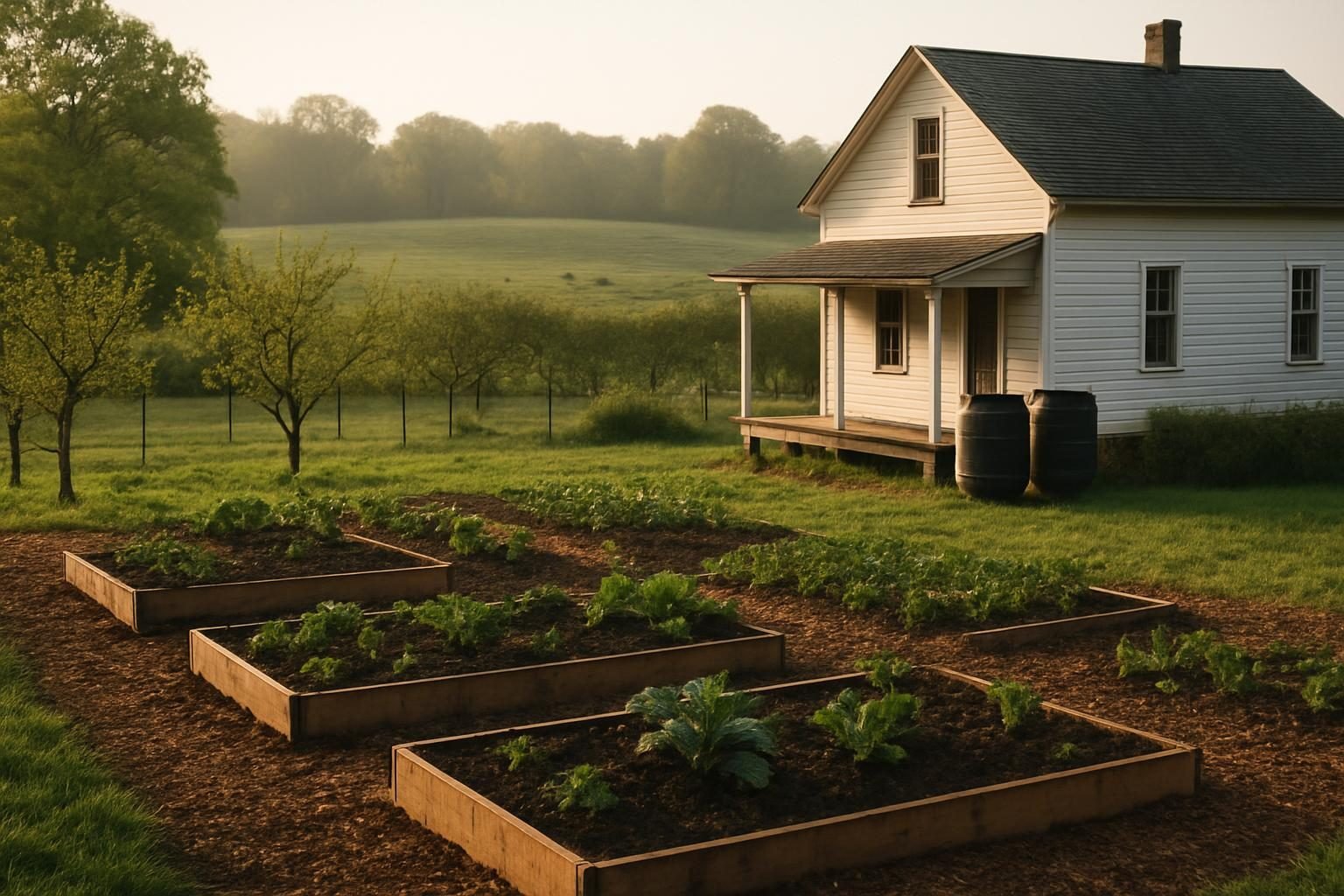
Whether you grow for your family or sell at market, the same principles apply: build a balanced mix, feed it with compost rather than replacing it, and keep it covered. For market growers planning many beds, bulk delivery of topsoil and compost is usually the best-value route, and our guides to starting a market garden and urban farming cover how beds fit into a larger plan. For the whole-system view of small plots, see our hub on small-scale regenerative farming, and browse more in the Small & Urban Farms category.
Key takeaways
- A dependable raised bed soil mix is about 50-60% topsoil, 30-40% compost and 10-20% aeration material, adjusted for your climate and native soil.
- Fill the bottom of deep beds with logs, branches and rough organics to save money and build long-term carbon.
- Top up with 1-3 inches of compost each season and replenish lost volume with your original blend every few years.
- Test soil and compost, and vet fill sources, to avoid contamination and nutrient imbalances.
- Keep beds covered, and avoid 100% compost, 100% potting mix and fine sand in clay.
Frequently asked questions
What is the best soil mix for raised beds?
A blend of roughly 50-60% screened topsoil, 30-40% finished compost and 10-20% aeration material (coarse sand, perlite, pumice or bark fines) suits most vegetable gardens. Shift toward more aeration in wet or clay-heavy regions, and toward more compost and organic matter in sandy or arid areas.
Can I use 100% compost in a raised bed?
It is not recommended. Pure compost can be too rich and salty for young plants, tends to shrink and compact, and may hold too much or too little water depending on its source. Blending it with mineral topsoil and aeration material gives better structure and more stable fertility.
How deep should a raised bed be?
Most vegetables do well in 10-12 inches of good soil, and deep-rooted crops like tomatoes, carrots and parsnips appreciate 12-18 inches. Taller beds can be partly filled with rough organic material underneath, as long as the top 8-12 inches is a quality mix.
How often should I replace raised bed soil?
Usually never. Instead, add 1-3 inches of compost each season and top up lost volume with your original blend every few years. Replace soil only if it becomes contaminated, waterlogged beyond repair or severely diseased.
Can I fill a raised bed with just native soil?
Only if your native soil is already a healthy, well-drained loam. Most native soils are better improved by blending with compost and aeration material. A soil test and a simple jar or squeeze test will show whether yours needs help. Avoid filling beds with subsoil, fill dirt or unknown material.